Article

The Long Way to In My Head: Bite To Break and a Cymbal Sale

The Wiener Neustadt Five-Piece Follows a Summer Debut with a Slam and Hardcore Second Single

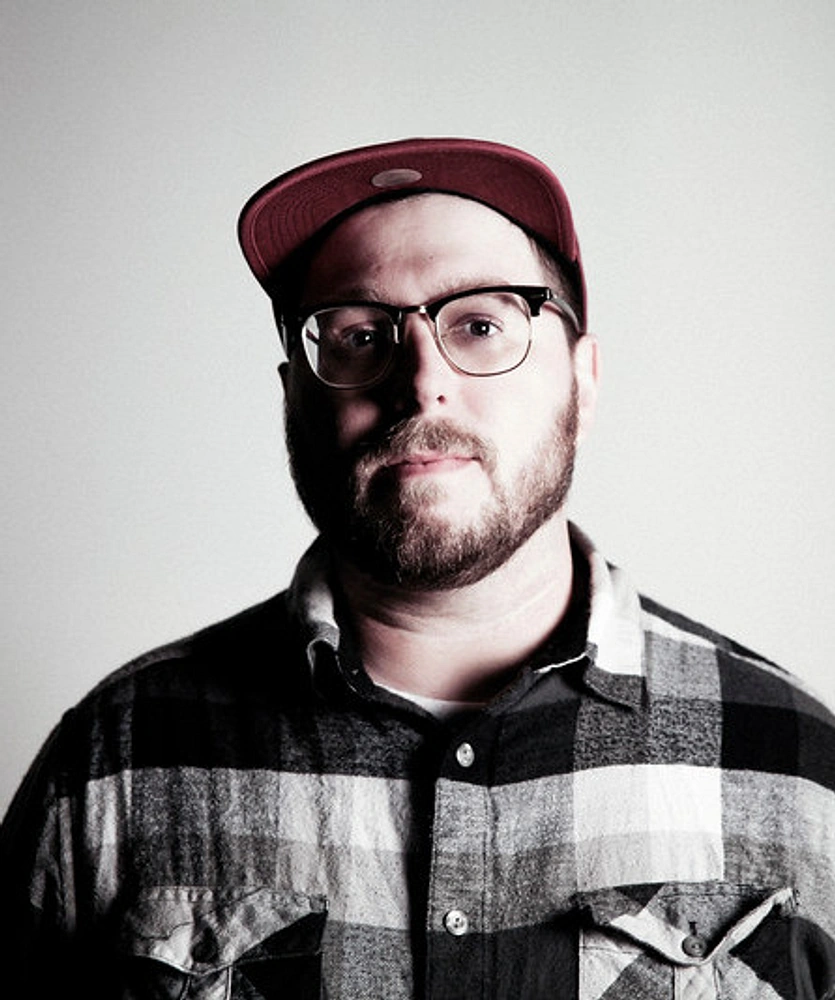
Patrick Manzey had one week. He met Bite To Break through a contact at their Wiener Neustadt rehearsal space and found three finished instrumentals waiting. Seven days later, he had lyrics for all three and was on stage with the band at a local party. That week is where the road to the second Bite To Break single, In My Head, begins.

Bite To Break are in the playlist below with In My Head, and the five-piece’s features so far sit on the Bite To Break artist profile. The single came to this desk through PopHits.Co Music Charts, which verifies independent artists and places their releases across its network of music news desks. Listen to it first, then keep reading for the week that completed the band.

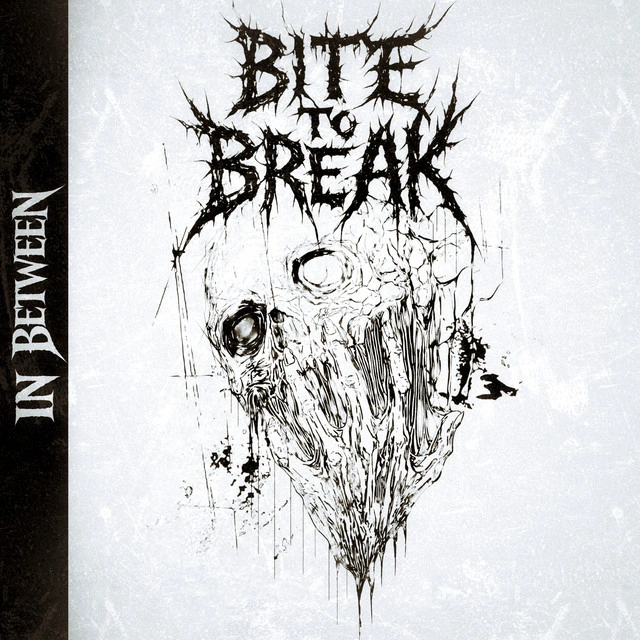
The Long Way to In My Head: Bite To Break and a Cymbal Sale

A Cymbal Sale and an Online Forum Completed the Line-Up in January 2026

That party was the first time the five-piece played as a complete line-up. It also closed a search that had taken years. The Austrian band date the project to 2023, yet they only completed the line-up in January 2026. Guitarist Lawrence Hildebrand and drummer Konrad Korntheur first crossed paths at a jam through a mutual connection, then lost touch. Years later they met again, and something clicked. From then on, they met several times a week to write and experiment.

The rest of the band arrived by stranger routes, as the band tell it on their official website. Guitarist Philipp Pecolt came to the rehearsal space to collect a cymbal. He had bought it from Konrad on a second-hand marketplace. A conversation about music turned into a jam, and he stayed. Meanwhile, the band found bassist Michael Schwarz through an online musicians’ forum. He brought a taste for extreme heaviness. That pushed the band to test how far an idea could go before it stopped being heavy.

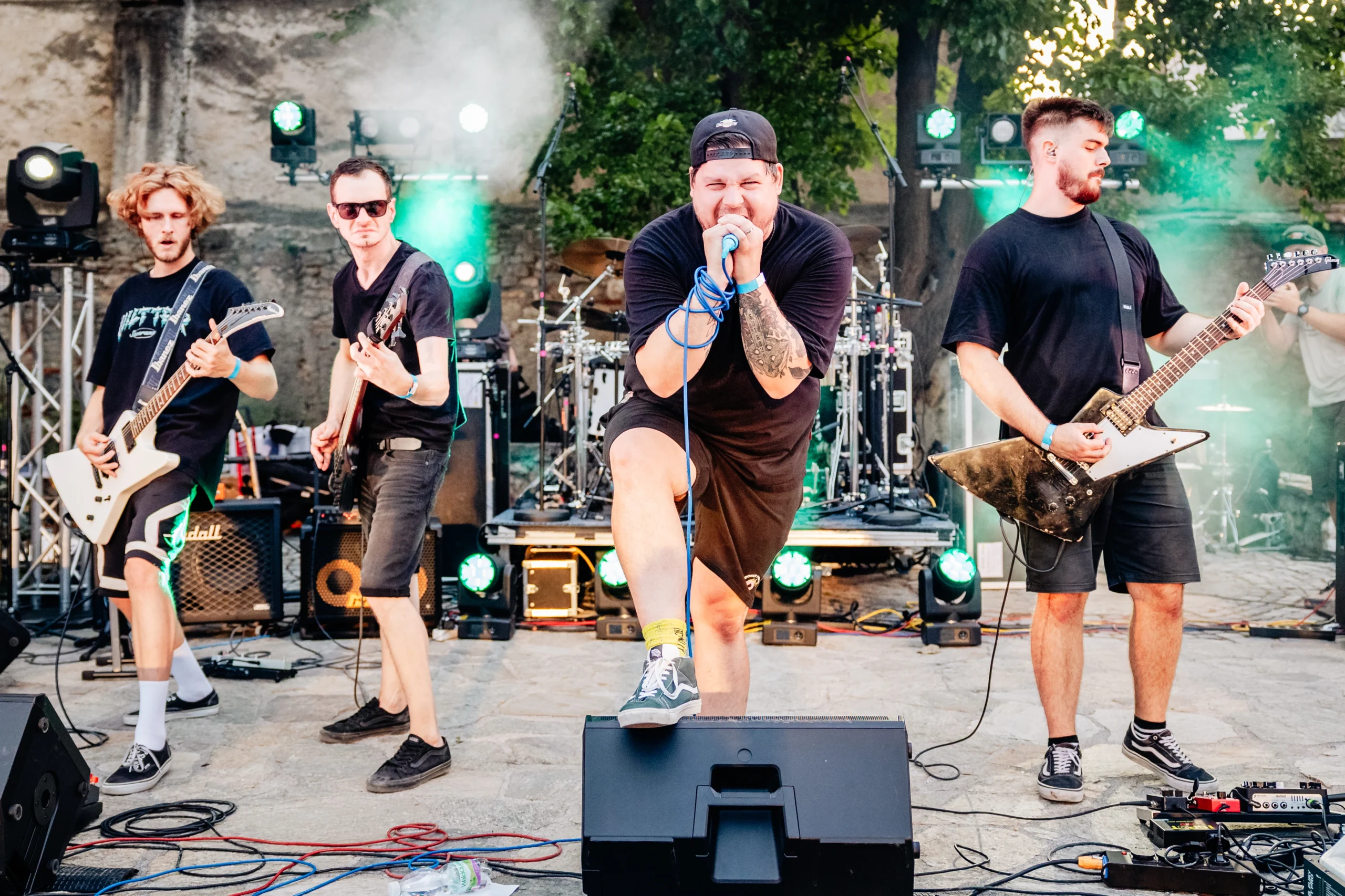
Seen from here, that rushed first week reads as a method rather than an accident. Over the summer, the debut single In Between drew reviews from Rock Era Magazine and Lelahel Metal. Then, on 1 August 2026, they played the Rock & Metal Open Air in the Bürgermeistergarten in Wiener Neustadt. The local paper MeinBezirk described their set as hard breakdowns, aggressive screams and melodic elements combined into an energetic sound. A sudden downpour hit the garden that evening, but most of the crowd stayed.

In My Head Lets the Hardcore Side of the Bite To Break Grindkoa Formula Lead

Bite To Break released In My Head on 17 September 2026 as the follow-up single. It came out alongside In Between as a double single. At three minutes and 32 seconds, it runs about half a minute shorter than In Between. That track sits just over four minutes.

The band file what they play under a word of their own, Grindkoa. Their shorthand defines it as slam plus hardcore plus death metal. On In My Head, though, the hardcore part of that sum carries the most weight. The Brazilian site Roadie Metal heard well-made metalcore that often lets its hardcore vein run strongest. It also singled out the vocal dynamics and guitars that balance weight with melody.

In other words, the single keeps the trade the band advertise in their own bio. The drums drive it, and the riffs are as filthy as that bio promises. Patrick Manzey, meanwhile, pushes his vocals to their limit. Even so, the emphasis has shifted since the debut. Rock Era Magazine heard In Between favour crushing riffs and a dark atmosphere over straightforward aggression. Lelahel Metal, for its part, pointed to a blues-inspired guitar break in the middle of it. In My Head, by contrast, is shorter and leans harder on its hardcore pulse. The band have also posted a guitar playthrough of the song on their YouTube channel.

Watch the video and check the artist’s YouTube channel for more.

The Long Way to In My Head: Bite To Break and a Cymbal Sale

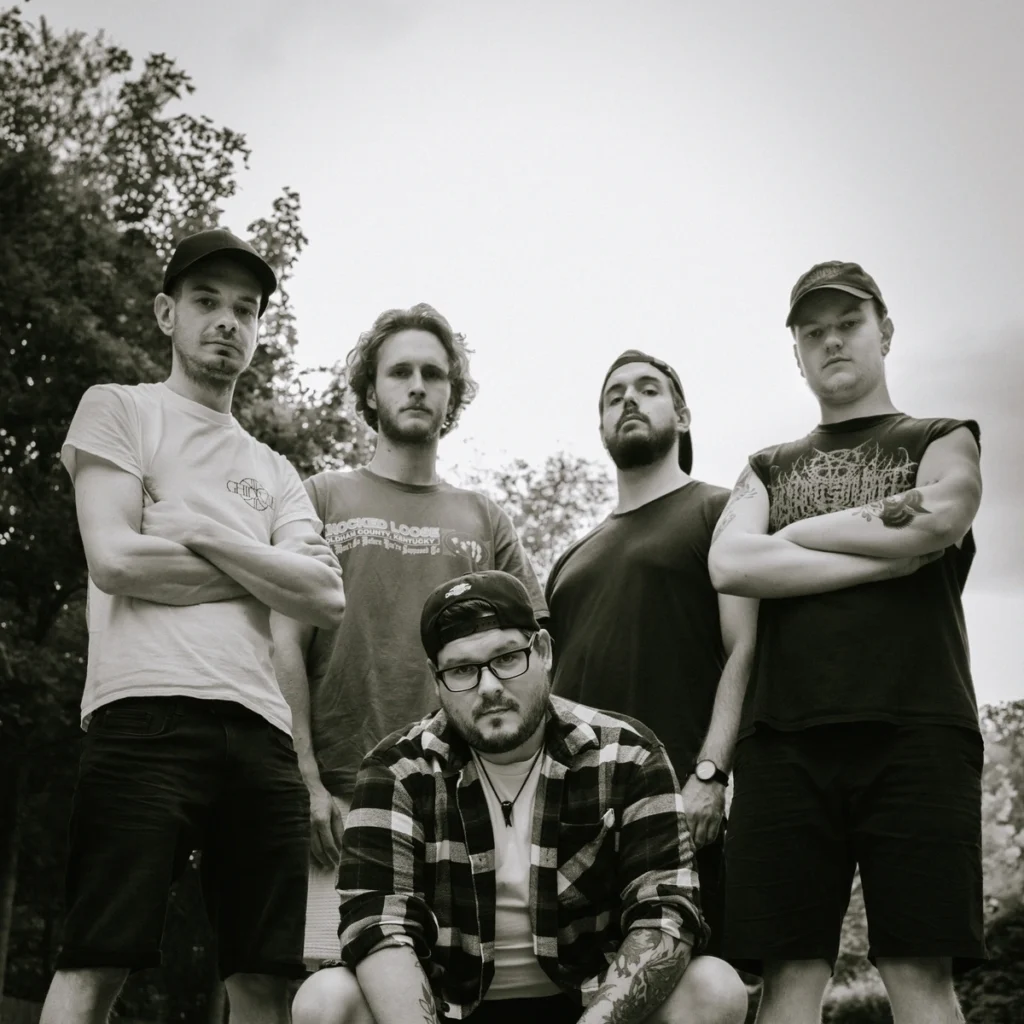
Photo by Busy Shutters: Bite To Break at the Rock & Metal Open Air, 1 August 2026.

NewMusic.News’s curator team: “A second single is where a band shows it can repeat a result on purpose. In My Head does it in three and a half minutes, and it changes the emphasis without changing the band.”

Three Reference Points From Byron Bay, Los Angeles and New Jersey

Mexico City’s Punkeando listed the band’s own reference points. They include All That Remains, August Burns Red, Parkway Drive, The Ghost Inside and Fit For An Autopsy. Those last three map this single most closely. First, Parkway Drive made the breakdown the centre of gravity on Horizons in 2007. Bite To Break, likewise, describe themselves as a band built around crushing breakdowns. Next, The Ghost Inside kept hardcore urgency at the heart of Get What You Give in 2012. That is the vein Roadie Metal heard running strongest here. Finally, Fit For An Autopsy showed on The Sea of Tragic Beasts in 2019 that deathcore weight can carry melody. The guitars on In My Head strike that same balance.

What In My Head Answers for Bite To Break Before Death Bringer Completes the EP

A debut single can be a lucky first draft. A second one answers whether the first was deliberate. In My Head answers it for Bite To Break by moving the weight without losing the identity. The riffs stay heavy and the vocals stay extreme, while the song tilts towards the hardcore end of their formula.

The answer also has a date attached. Death Bringer, due on 16 October 2026, is the final track of the three-track EP In Between. As a result, In My Head is the middle chapter of the band’s first record. Beyond that, the band say the next songs are already lined up and ready to be recorded.

Live, the next stop is the Escape Metal Bar in Vienna on 25 October. After that comes a hometown show at MÄX in Wiener Neustadt on 21 November. It sits on a Bandhouse Live Syndicate bill called Distortion. In fact, two members of that association were in the crowd at the open air in August. By then, they had already booked the band for November.

So listeners raised on Parkway Drive and The Ghost Inside should start with In My Head. It is the slam-leaning end of that sound, from a band at the start of its story. After that, In Between is the companion track, and Death Bringer completes the set in October.

Stream In My Head on Apple Music or Tidal, and hear both tracks of the double single on Spotify. Follow Bite To Break on Spotify, Apple Music, their YouTube channel, Instagram, TikTok and Facebook.


The Long Way to Late Night Drive, Where Gio 22/6 Brings Rado Ricky and Ty Lab Together

An Austrian Producer’s Year of Monthly Singles Reaches a Short Song for After Dark

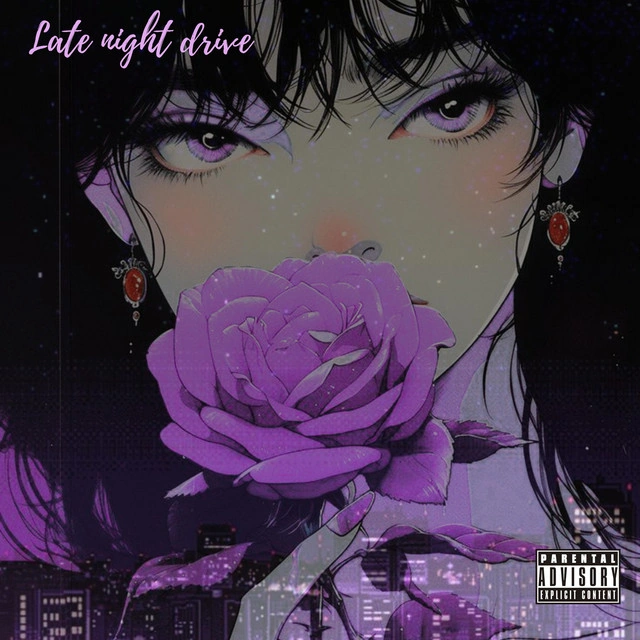
Late Night Drive lasts two minutes and twenty seconds. In that short space, Gio 22/6 makes room for two other voices, Rado Ricky and Ty Lab. The single came out on 13 August 2026. It arrived in the middle of a year in which the Austrian producer has released new music roughly once a month. That steady rhythm is the context for this song. It also explains why a track this brief carries so much of his story.

Gio 22/6 has Late Night Drive in the NewMusic.News hip-hop playlist below, and his full coverage history sits on his artist profile. Late Night Drive came to this desk through PopHits.Co Music Charts, which verifies independent artists and places their releases across its network of music news titles. Press play on the single, then read on for how it fits his year.


The Long Way to Late Night Drive, Where Gio 22/6 Brings Rado Ricky and Ty Lab Together

Why Late Night Drive Arrived in Mid-August, in the Middle of a Year of Monthly Releases

Gio 22/6 describes himself first as a producer. He builds R&B and hip-hop beats. His own description of the sound is soft and dreamy, music meant to let listeners settle into a world of their own. Over more than five years, he has kept refining it. Since 2023, he has also released songs in English with international artists, often working with rappers and singers from the USA.

The turning point came in 2024 with his debut mixtape, 21. He has described it as a deeply personal project. It helped him look back on his childhood and teenage years while he worked out what his own sound should be. Since that record, new music has arrived at a steady pace.

A Single Every Four or Five Weeks, With Ty Lab and Rado Ricky as Returning Voices

The pattern in 2026 is easy to follow. The year opened with the Teenage Emotion6 3 EP on 8 January. Then came a single roughly every four or five weeks. Hopeless arrived in February, Bad Habit in March and New Life in April. Forever followed in May, Risky in June and Lifestyle in July. Late Night Drive took the August slot. Since then, Overthinking has followed in September and Tipsy Interlude in October.

That schedule says something about how he works. A producer who releases once a month needs a circle of voices he can return to. In 2026, that circle has a clear centre. Ty Lab appears on most of these singles, from Bad Habit in March to Tipsy Interlude in October. Rado Ricky has come back more than once too, first on Sins in October 2025 and then on Forever this May. So Late Night Drive brings two of his returning partners onto a single track.

The timing also suits the title. Mid-August is the end of summer, when nights stay warm and drives run long. A song named for the hours after dark therefore lands at the right point in the calendar. The single is released on Mariahilf records, which holds the rights to the recording.

Watch the video and check the artist’s YouTube channel for more.

The Long Way to Late Night Drive, Where Gio 22/6 Brings Rado Ricky and Ty Lab Together

What Late Night Drive Answers, With Rado Ricky and Ty Lab on One Two-Minute Track

The first question is a practical one. What does a listener want from a song for the end of the day? Gio’s answer is brevity and atmosphere. At two minutes and twenty seconds, Late Night Drive does not ask for much time. Instead, Gio builds a soft R&B and hip-hop setting around his two guests.

The second answer comes from the collaborators. The Spotify page of Rado Ricky sets out the approach in plain terms. Being alone and being lonely are not the same thing, and the music sticks to what Rado Ricky knows from real life. That idea fits a song named for a drive late at night, when a listener is often alone but not necessarily lonely. Ty Lab, meanwhile, is the most frequent guest across the 2026 singles of Gio 22/6. As a result, the track also continues a partnership that listeners have followed all year.

Where Late Night Drive Is Travelling, From São Paulo and Johannesburg to Reykjavik and London

There is also the question of reach. A producer releasing from Austria now finds listeners far from home. At the time of writing, the top cities on his Spotify artist page are São Paulo, Johannesburg, Rio de Janeiro, Reykjavik and London. In other words, a song made with English-language collaborators is travelling across three continents.

Finally, there is the question of how to hear it. Gio shared a lyric video for the single on his YouTube channel, where he also posts beats for other artists to work with. For anyone following the run, the monthly rhythm means there is rarely long to wait for the next one.

From the NewMusic.News Curator Team: “Two minutes and twenty seconds is a brave length for a song with two guest voices. Late Night Drive makes it work by keeping the production soft and out of the way. It plays like a single scene from a longer drive. That is exactly what a monthly release should feel like.”

Stream Late Night Drive on Spotify, Apple Music and Deezer. Follow Gio 22/6 across platforms: YouTube channel, Instagram and his Apple Music artist page.


TOP NINJA and Hell Rell Take the Long Way to Birds Eye From Terrace Avenue

The Hempstead Rapper’s Second Single with Hell Rell Looks Down From the Top

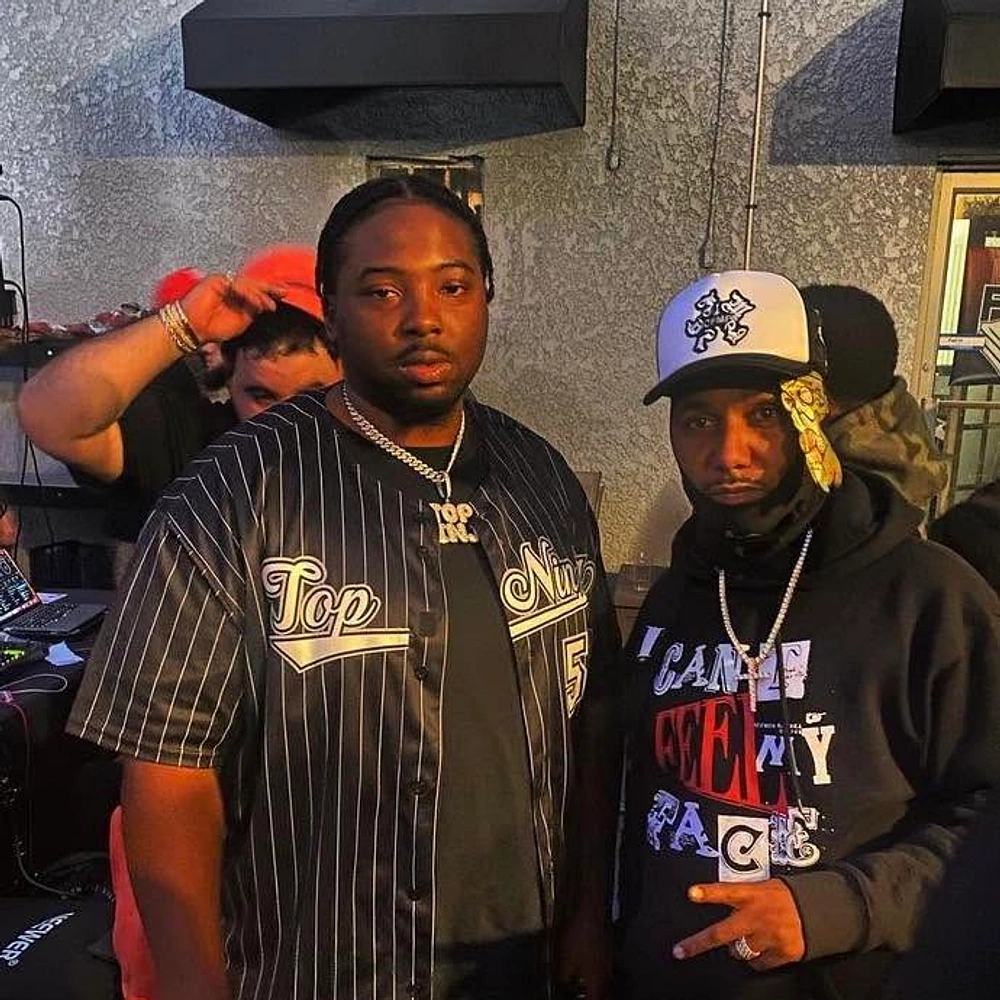
TOP NINJA wrote Birds Eye from two places at once. One is the heights and Terrace Avenue in Hempstead, where the Long Island rapper grew up. The other is the top of the world, where the song says they stand now. Released on 29 August 2026, the 2:46 single features Hell Rell, the New York hip-hop veteran who first came up on The Diplomats’ records in the mid-2000s.

TOP NINJA has Birds Eye in the NewMusic.News playlist below, next to other hip-hop picks, and every feature so far sits on the TOP NINJA artist profile. The single came to this desk through PopHits.Co Music Charts, which verifies independent artists and places their releases across its network of music news sites. Hit play, then keep reading for the story behind the view.


TOP NINJA and Hell Rell Take the Long Way to Birds Eye From Terrace Avenue

Why A Hempstead Independent And A Diplomats Veteran Keep Returning To The Booth Together

The moment around this record is a working relationship, not a single favour. TOP NINJA and Hell Rell first shared a track on the #WEDIFFERENT remix, released on 23 December 2025. Birds Eye followed eight months later. Then Im Sorry, a third song credited to both of them, arrived on 25 September 2026. Three releases in under ten months is a pattern, and it changes how Birds Eye reads.

In addition, Hell Rell brings a long history to that pattern. The rapper first appeared on the Freestyle Friday segment of BET’s 106 & Park around 2001. Between 2004 and 2006, Hell Rell featured on records by The Diplomats, the Harlem crew around Cam’ron and Jim Jones. Then, in 2007, the debut album For the Hell of It reached No. 5 on both the Billboard Top Independent Albums and Top Rap Albums charts. So a rapper with that background does not return to the same independent artist three times by accident.

The TOP NINJA Catalogue and the Long Island Map

TOP NINJA, meanwhile, has been building a catalogue for some time. Block Colder came out in April 2024, Momma in July 2025 and 1970 in December 2025. The artist’s own site sells a hat named after Momma, and in October 2026 it announced a remix of 1970 with Benny the Butcher. The same site is also home to Ninjas Worldwide, a boxing and wrestling club.

At the same time, Long Island gives all of this a deeper frame. Public Enemy came together there in the 1980s, Rakim grew up in Wyandanch, De La Soul came out of Amityville and EPMD out of Brentwood. Hempstead is part of that map. So when a Hempstead rapper builds a run of songs with a Diplomats veteran, it continues a long conversation between Long Island and the city.

TOP NINJA and Hell Rell Take the Long Way to Birds Eye From Terrace Avenue

What Birds Eye Answers About Terrace Avenue, The Heights And The View From The Top

The Single Itself

Birds Eye is short and direct. It runs 2:46, carries an explicit tag and keeps the focus on hard-hitting bars over a cinematic beat. In that short space, the song spends its time on the story it came to tell.

Specifically, that story moves between two heights. The first is the street: growing up on the heights and on Terrace Avenue, with the grit of survival that comes with it. The second, by contrast, is the view from above, which gives the song its title. The writing keeps the two side by side, so the listener hears where TOP NINJA started and where they stand in the same breath.

Hell Rell’s presence matters to that contrast. Hell Rell’s own records come from the Dipset era of New York street rap, and that voice on the track adds the weight of someone who has already made the climb once. As a result, the feature reads as a link between two generations of East Coast rap rather than a guest spot.

What the Song Answers for TOP NINJA

Every song built on a “then and now” story has to answer one question: how far is the top from where you started? Birds Eye answers it with distance and clarity. From above, Terrace Avenue looks smaller, but it also looks clearer. The song does not pretend the start was easy, and it does not pretend the view erases it.

Therefore, it fits listeners who like East Coast hip-hop with real places in the lyrics. It suits fans of gritty storytelling, followers of Hell Rell’s catalogue and anyone who tracks independent rap from Long Island. For new listeners, it is also the right way in, because it sits in the middle of the three Hell Rell collaborations and points both backwards and forwards.

From the NewMusic.News curator team: “Three songs together in under ten months is the detail to hold onto. One feature is a favour. A run like this is a working partnership, and Birds Eye is its middle chapter, which is why it is the best place to start.”

You can stream Birds Eye in the Spotify player above or on Apple Music. To follow the artist, TOP NINJA is on Spotify and Apple Music, with videos on the YouTube channel.

For updates between releases, TOP NINJA posts on Instagram, Facebook and X. The official site carries the music, the merch and the news.


Inside Effervescence: How Logan Threshold Built a One-Man Synth Rock Debut

A Classically Trained Vancouver Violinist Puts a New Name on Two Decades of Writing

Before Effervescence, the debut EP from Logan Threshold, there was a classically trained violinist named Matthew Logan. His YouTube channel still holds Grieg and Beethoven string quartet performances and a graduation recital piece called Electric Bach. On the four-track EP, however, he takes that training somewhere new. Synth lines and guitars carry the songs, and he wrote and played every part himself.

Logan Threshold’s Effervescence is in the NewMusic.News playlist below, next to other rock and alternative picks, and the Logan Threshold artist profile gathers the coverage. The EP reached this desk through PopHits.Co Music Charts, which verifies independent artists and places their releases across its network of music news sites. Hit play on the playlist, then keep reading for the story behind the record.


Inside Effervescence: How Logan Threshold Built a One-Man Synth Rock Debut

The Moment Matthew Logan Stepped Out As Logan Threshold With Effervescence

First, the decision at the centre of this record is a name. Logan is a Vancouver-based musician who has spent more than twenty years writing, performing and expanding his repertoire. Much of that work appeared under his own name, and his YouTube channel keeps the trail in plain view. There are string quartet performances and a recital that moves from an acoustic set to his own electric pieces. There are also five-string electric violin arrangements of songs by the progressive metal band Between the Buried and Me.

Effervescence, released on 24 February 2026, is the point where he gathered all of that under a new name. Logan Threshold is also a one-man band in the most literal sense. Logan wrote and performed every part on the record himself, so nothing here came out of a band negotiation.

He did not plan the genre mix either. Instead, the blend of alternative rock, indie rock and synth indie rock arrived during the sessions. It grew as he wrote and recorded the songs, and he let it stand.

A Classical Violinist’s Ear Shapes The Synth Rock Sound Of A One-Man Band

The visual idea he attaches to the project also helps explain the music. On his channel he describes it as a digital, Blade Runner style future fused with natural watercolour. Similarly, in its March 2026 write-up, Plastic Magazine heard the same split in the songs. Soft, organic sounds sit against darker electronic ones.

Even so, classical structure is still there underneath. Plastic Magazine traced it back to his years as a violinist. It also noted that he kept recognisable song shapes and strong vocal melodies. In other words, the experiments sit inside songs, not in place of them.

That balance is why the EP works as an introduction. Logan has played electronica, rock and progressive music over two decades. Yet Effervescence never feels like a showcase of everything he can do, because each track picks one direction and follows it.

Inside Effervescence: How Logan Threshold Built a One-Man Synth Rock Debut

Four Tracks And Fifteen Minutes Move From Synth Pop Drive To Charging Guitars

Altogether, the four tracks run to just over fifteen minutes. Opening track Decay is the most direct of them. Punchy drums, pulsing bass notes and woozy synth lines drive it, with Logan’s smooth vocal on top. Next, the title track slows things down with deep bass, shuffling drums and strings. The Mexican site Pop Punkers singled out the violin there as the part that stays with you.

After that, Weight of Power brings in spacey synth tones before the crash of drums and crunching guitar. Finally, Midnight Sun starts on delicate guitar picking. It then builds into charging guitars, rolling drums and lead guitar to close the EP.

Listeners who like that balance already have reference points. For example, Muse built a career on Matt Bellamy carrying classical piano training into rock songs. Along the way he quoted Chopin and Rachmaninoff, and Logan’s violin background does similar work on the structure of these tracks. Meanwhile, Radiohead showed on Kid A in 2000 that a rock band could fold electronic sounds into its songs. That is the same bargain Weight of Power strikes. For the dance-floor side of Decay, The Killers are the obvious cousin. Synth lines and big hooks drive the guitar songs on their album Hot Fuss.

From the NewMusic.News curator team: “The arrangements on Effervescence change from track to track, but the tune is always the first thing you hear. That is the classical training showing. It sounds as if Logan writes the melody first and then lets the synths and guitars serve it.”

What Effervescence Answers For Listeners And Where To Follow Logan Threshold Next

The question this EP answers is simple. What happens when a classically trained player writes alternative rock songs and lets the synths in? As a result, it suits listeners who follow alternative rock, indie rock and synth indie rock and want new artists to champion. It has already found some of them, too. Besides Plastic Magazine and Pop Punkers, the blog little chief picked Effervescence for its March roundup.

You can stream the EP on Apple Music as well as in the Spotify player above. To keep up with new music, follow Logan Threshold on Spotify, Apple Music, YouTube Music, Deezer and SoundCloud. For videos, there is also the YouTube channel.

The project posts updates on Instagram, TikTok, Facebook and X. Finally, every link sits on the Logan Threshold link page as well.


Brooke Washor on Two Chords, Spanish Guitar and the Making of Cowboy

A Panama City Beach Singer Builds a Country-Pop Singalong for Car Rides and Club Nights

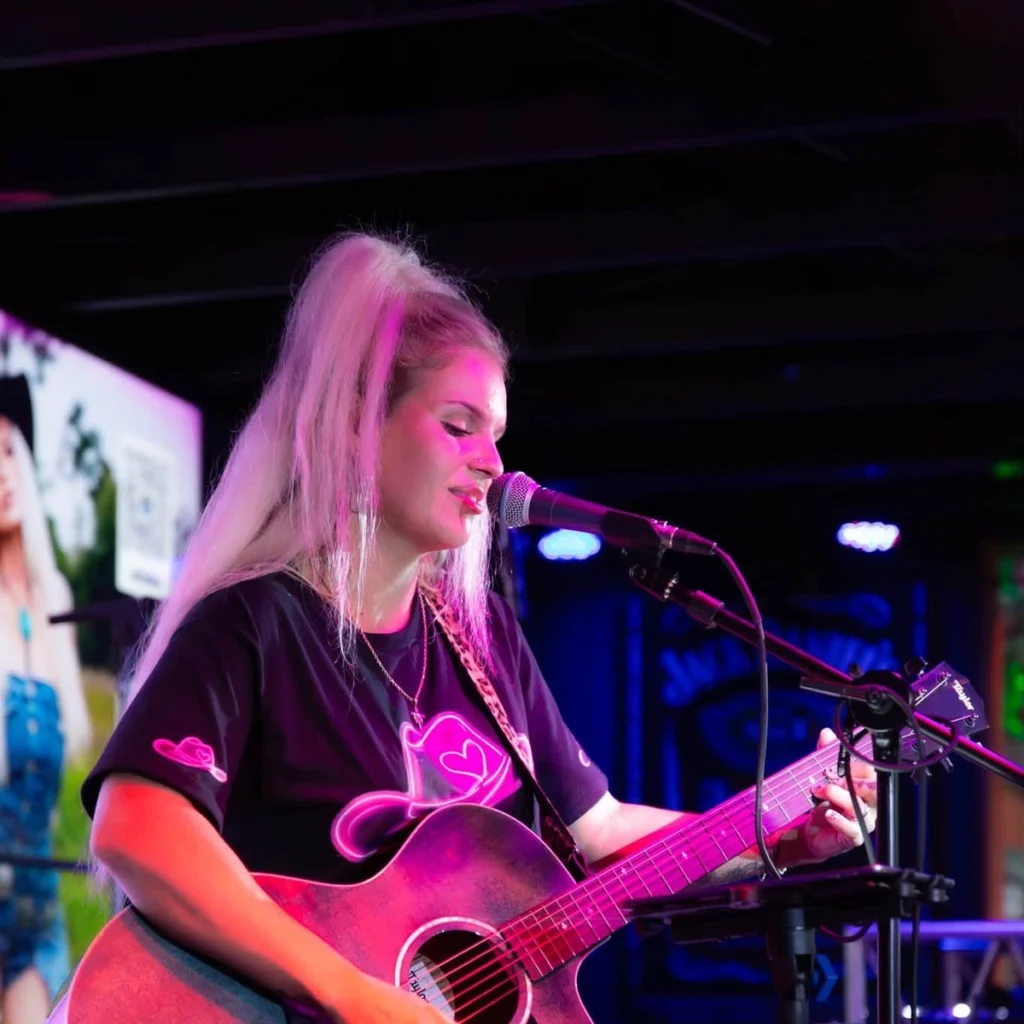
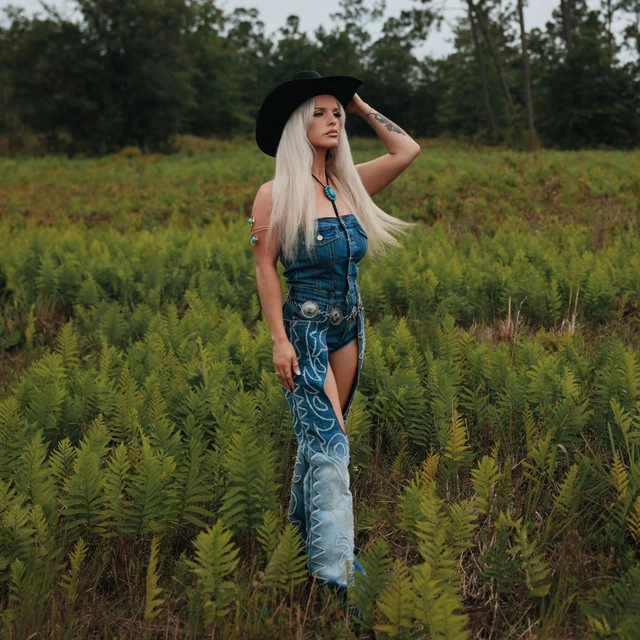
Brooke Washor started Cowboy with a single decision: the melody would sit on two guitar chords. Everything else was built on top. She released the single with Big Trip on 3 July 2026, as a country-pop song aimed at one moment: the second time it comes round, when you already know the words. That might be in the car, in the shower, at the club or while getting ready to go out.

Brooke Washor’s music is in the playlist below, and her full coverage history sits on her artist profile. Cowboy reached this desk through PopHits.Co Music Charts, which verifies independent artists and places their releases across its network of music news sites. Listen to the single first, then read on for how two chords became a singalong.


Brooke Washor on Two Chords, Spanish Guitar and the Making of Cowboy

The Instant Replay Moment Brooke Washor Wrote Cowboy For, From the Car to the Club

Most singles hope to be remembered. This one sets out to be repeated. In her own description of the song, Washor talks about the urge to hit replay. She also mentions catching yourself singing it for the rest of the day. That is a modest aim on paper, but it shapes every choice on the record.

The moments she names are ordinary ones. A drive, a shower, a night out, half an hour in front of the mirror. None of them asks the listener to sit still and concentrate. Instead, the song has to work in the background first and then pull you in. That is a harder trick than it sounds.

It helps that Washor writes from the stage. She plays a local residency in Panama City Beach, Florida, and that road-tested energy carries into the studio. A song that has to hold a room on a busy night learns quickly which parts people sing back.

Brooke Washor and Big Trip Dress a Two-Chord Cowboy Melody in Spanish Guitar, Banjo and Heavy Drums

The record itself starts from almost nothing. The two-chord melody came first. Then she asked her producer for everything else: Spanish guitars, banjos and heavy drums, all at once.

That contrast is the song’s engine. The chords stay simple enough to learn on one listen. Meanwhile, the arrangement keeps adding colour, from the bright Spanish guitar to the twang of the banjo and the weight of the drums. As a result, the track sounds bigger than its two chords, without ever losing the hook.

Big Trip shares the credit. The billing reads Cowboy featuring Big Trip. He arrives with his own busy run of 2026 singles, including Breathe, Say Your Name and Highly Favored. The track runs three minutes and 33 seconds. The music and lyrics sit with her own company, Brooke Washor Music LLC.

From the NewMusic.News Curator Team: “Keeping the melody to two chords is the bravest decision on Cowboy. It means every instrument on top has to earn its place, and the song still sounds like something a whole bar could learn before last orders.”

Brooke Washor on Two Chords, Spanish Guitar and the Making of Cowboy

What Cowboy Answers About a Decade of Live Sets and a Songbook Built on Covers

Cowboy answers a simple question: what does a working live singer sound like when she finally gets the full studio treatment? Washor has spent around ten years playing live music professionally. Her YouTube channel shows the songbook she has drawn on along the way.

Over the years she has posted covers of Tim McGraw’s Red Ragtop and Morgan Wallen’s Livin’ The Dream. There are also three songs by Kelsea Ballerini, including the other girl, her duet with Halsey. Ballerini, a five-time Grammy nominee, is a useful reference point here. Her records sit squarely where country storytelling meets pop production, and that is exactly where Cowboy aims. In November 2023, Washor also posted her online video submission for The Voice.

Her own list of influences explains the pop side of the equation. She names Britney Spears and Halsey, alongside the songwriter and producer Max Martin. His name sits on some of the most replayed pop choruses of the last three decades.

So the answer is clear enough. Cowboy takes the instincts of a live set, above all the need for a chorus people can shout back. Then it gives them a studio arrangement to match. Start here, then go back to R.I.P. from 2023 to hear an earlier step.

Cowboy is also on Apple Music. Follow Brooke Washor across platforms: Spotify, Apple Music, Deezer, YouTube, Instagram, TikTok, Facebook and X.


Inside Separate Myself From You: How Chris Harper Built a Summer Single About Letting Go

A Sussex Songwriter’s 2010s-Tinged Indie Pop Single About Missing Someone Without Mourning Them

Separate Myself From You opens on a small, telling habit. The narrator sings along to a favourite song and changes a lyric on purpose, just to make it rhyme. Chris Harper released the single on July 31, 2024, and built it as bright indie pop with a 2010s sheen. It catches someone remembering the one that got away on a summer day. For once, the memory brings no grief.

Chris Harper’s music is in the playlist below, and his full coverage history sits on his artist profile. Separate Myself From You reached this desk through PopHits.Co Music Charts, which verifies independent artists and places their releases across its network of music news titles. Give it a listen, then read on for the story behind it.


Inside Separate Myself From You: How Chris Harper Built a Summer Single About Letting Go

A Summer Day Memory and a Changed Lyric Set the Scene for the Chris Harper Single

The scene Harper sketches for the song is a simple one. On his own website, he describes a walk on a summer day and a mind that drifts back to an old relationship. It is the first time that memory arrives without grief. Instead of dwelling on the loss, the narrator remembers the good times.

That shift is the moment the single captures. The opening verse turns on a detail most people will recognise. Singing along to a favourite record, the narrator swaps in the wrong words for the sake of a rhyme. That private habit becomes a measure of how much of one person has rubbed off on another. The chorus then admits that the narrator still can’t pull the two apart.

The lyric also goes further than a standard break-up song. It describes someone who copied the narrator’s mannerisms and a couple splitting in two. It also suggests that half of an identity went with them. Harper is learning, as one line puts it, to live with and to live without. The song never pretends that the process is easy.

Early support came from The Cage, the music blog powered by Cage Riot, which picked the track up soon after release.

Inside Separate Myself From You: How Chris Harper Built a Summer Single About Letting Go

Two Minutes and 49 Seconds of Upbeat Indie Pop Carrying a Clear 2010s Two Door Cinema Club Influence

The single runs a brisk two minutes and 49 seconds. Harper calls it a summer indie anthem with hints of the 2010s, and he names Two Door Cinema Club as an influence. Those reference points tell you what to expect: bright, upbeat indie pop. He pitches it as music for a hot Saturday with friends or a drive to the coast.

The contrast is the point. The lyric is about missing someone and the little habits they left behind, yet the arrangement stays catchy and upbeat. As a result, the song keeps nudging the listener forward rather than holding them in the hurt. That push and pull gives the single its character.

Harper’s own story explains some of that openness. He comes from Sussex. In 2018 he started busking on the streets of Newcastle, partly to pay for nights out with friends at university. Along the way, he realised he had found a calling. On his website, he describes songwriting as an escape from a military household and regimented schools. It was also a way to channel ADHD, dyslexia and the feeling of being different. He writes, in his words, for anyone who has ever felt out of place.

That outlook runs through Separate Myself From You. The song is honest about an awkward feeling, but it never asks for sympathy. Instead, it turns a bruise into something you can sing along to on a bright afternoon.

From the NewMusic.News Curator Team: “What we like most is the ending. Rather than resolving the story, the last chorus simply repeats its central admission. That refusal to tie things up neatly is braver than a tidy happy ending.”

Why the Chris Harper Single Suits Anyone Learning to Live Without Someone They Still Miss

This single is for listeners who like their indie pop bright and their lyrics honest. Fans of Two Door Cinema Club’s early records will recognise the brightness at its core. Meanwhile, Harper names Sam Fender as one of his own influences. Fans of Fender will recognise a writer who puts everyday detail at the centre of a big chorus.

It also answers a question that most break-up songs avoid: what happens once the sadness wears off? Here the answer is a mix of fondness and frustration, carried by a tune that refuses to slow down. That makes it an easy recommendation for a summer playlist, even in the autumn.

The song has aged well inside a busy catalogue. Since July 2024, Harper has released the Social Battery EP and singles including Eyes Off You and Wish I Cared (But I Don’t). He also made THE BOYS with Angus Parkin and Ollie Wade, and four leaf cLOVER arrived in July 2026. Start with Separate Myself From You, then follow the thread forward.

Separate Myself From You is also on Apple Music. Follow Chris Harper across platforms: Spotify, Apple Music, SoundCloud, YouTube, Instagram, TikTok and X. Live dates are on his Linktree, and his official website carries the rest.


Inside I’ll See Myself Out: How Almighty VA Built an Album About Loss and Sobriety

A Norfolk Rapper’s Confessional Emo Rap Record About Grief, Sobriety and Closing a Chapter

Almighty VA recorded his album I’ll See Myself Out in a studio he built in his own basement. All 13 tracks keep that closeness, setting confessional emo rap verses over dark, heavy US trap production. The album came out on November 23, 2025, and it sees the Norfolk artist tell the truth about a hard year. Then, as the title promises, he shows himself out.

Almighty VA’s music is in the playlist below, including “Walk With Me”, the song at the centre of this album. Every article about the act is gathered on the Almighty VA profile. I’ll See Myself Out came to this desk through PopHits.Co Music Charts, which verifies independent artists and places their releases across its network of music news desks. Give it a listen, then read on for the story behind the record.


Inside I'll See Myself Out: How Almighty VA Built an Album About Loss and Sobriety
Inside I’ll See Myself Out: How Almighty VA Built an Album About Loss and Sobriety

A Year of Loss and Sobriety Became the Almighty VA Album Recorded in a Basement Studio in Norfolk

The story of I’ll See Myself Out starts with a year most people would rather keep off the record. Akt Music reviewed the album in December 2025 and shared the piece on Threads. Its review describes what Almighty VA was carrying at the time. He had lost his brother to suicide and fought to get free of alcohol dependency. A betrayal came on top of both. Instead of dressing those events up, he wrote them down plainly and built the songs around them.

Music Evolution reached a similar conclusion in its own review that month. It frames the album as a deliberate way to close one chapter of his life and move forward. That is also why the title works. After all, I’ll See Myself Out is what someone says when they leave a room on their own terms. The record carries that same quiet resolve from its opener, “Most High”, to its closer, “Blood When I Leave”.

The setting shaped the sound as much as the subject did. He made the album at home, in a basement studio he put together himself. As a result, Akt Music hears that room in the verses, which it calls close and deliberate. Both reviews also name Joe Budden as a guiding influence. That lineage is easy to follow, because each verse is a place to admit things rather than boast.

Thirteen Tracks of Heavy Trap Production and Confessional Verses With a Deliberately Short Guest List

At about 40 minutes, I’ll See Myself Out suits a single sitting. Two of its songs came out before the album did. Almighty VA released “Highs & Lows” and “Maybe I Might” as singles in May 2025.

The centre of the record is “Walk With Me”, featuring S.H.A.D.O.W and Passive The Rapper. Here Almighty VA narrates his brother’s final moments from his own point of view. That is a heavy creative risk for any writer, and it gives the album its most direct passage about grief. Later on, “Dark Clouds” with Rogue Jepson and “Vivitrol” turn to sobriety, relapse and shame. In fact, Vivitrol is the brand name of a medication for alcohol and opioid dependence. The title alone shows how literally he chose to write about recovery.

Inside I'll See Myself Out: How Almighty VA Built an Album About Loss and Sobriety
Inside I’ll See Myself Out: How Almighty VA Built an Album About Loss and Sobriety

The guest list is short by design. According to Akt Music, Almighty VA kept features to a minimum because an earlier project had lost its direction. This time he wanted every collaborator to serve the story. In practice that means six guests across five songs. Besides the three above, Milli joins “Nobody Knows”, MaLi joins “Running Away” and Pair-A-Dyce joins “Slide”. At five and a half minutes, “Nobody Knows” is also the longest song here. Meanwhile, “Stillwater (Interlude)” offers a short pause in the first half.

Musically, the record pairs heavy, trap-influenced US rap production with a dark, brooding tone. On top of it sits an introspective vocal delivery, which suits songs this personal.

From the NewMusic.News Curator Team: “What earned I’ll See Myself Out a place on our desk is its restraint. Grief and recovery tempt a writer to say everything at once. Yet Almighty VA keeps most of these songs under four minutes and lets one honest detail carry each verse.”

Why the Almighty VA Album Speaks to Emo Rap Listeners Who Want Honesty Before Polish

Listeners who grew up on Joe Budden’s Mood Muzik mixtapes will find this album familiar in the best sense. Those tapes turned family pain and depression into plain-spoken rap. Fans of Kid Cudi should listen too. His debut, Man on the Moon: The End of Day, paired moody, spacious production with lyrics about loneliness. It also helped open the door for emo rap. Almighty VA sits in that tradition, although he brings the heavier trap low end of current US hip-hop.

This is an album for people already living in emo rap and underground US hip-hop. They want the beats dark and the writing honest. It is also for anyone who has watched someone they love struggle. And it speaks to anyone choosing sobriety one day at a time, because the record treats both subjects with care.

Start with “Walk With Me” for the emotional core. Then go back to the top and play the album in order. If these subjects sit close to home, the US 988 Suicide and Crisis Lifeline takes calls and texts.

You can also stream I’ll See Myself Out on Apple Music. Follow Almighty VA across platforms: Spotify, Apple Music, Deezer, Audiomack, YouTube, Instagram and Facebook.


The Long Way to Numbfounded: Paradox & DJ Sean P, Fourteen Years After Mending

A Colorado Lyricist and a Trusted Producer Pair Hard Boom-Bap Drums with Soulful Lo-Fi Guitar

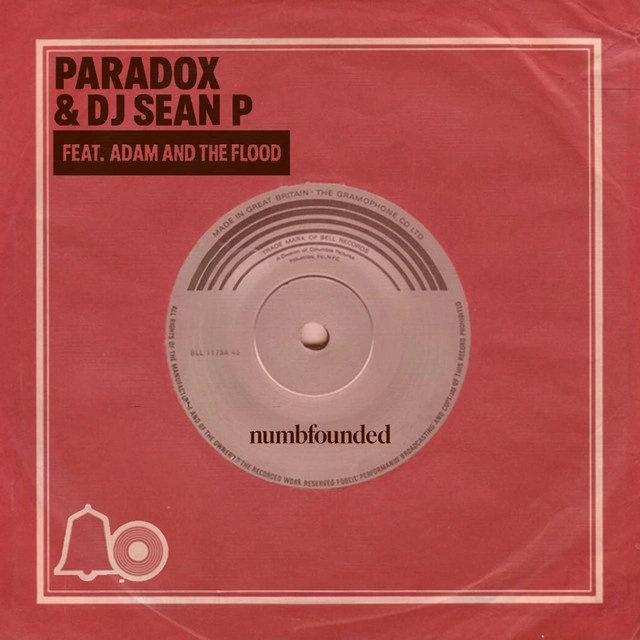
DJ Sean P produced and engineered numbfounded, building the beat from hard boom-bap drums and guitar-infused lo-fi textures. Paradox, a Colorado-based lyricist, carries the verses, and Adam and the Flood takes the guest spot. The single came out on 17 October 2025, credited to Paradox & DJ Sean P.

Paradox & DJ Sean P bring numbfounded to the hip-hop playlist below, among conscious and producer-led rap, and the duo’s coverage is collected on the Paradox & DJ Sean P profile. The single reached this desk through PopHits.Co Music Charts, which verifies independent artists and places their releases across its network of music news desks. Hit play on the track, then keep reading for the long road that led to it.


The Long Way to Numbfounded: Paradox & DJ Sean P, Fourteen Years After Mending

The Moment Numbfounded Came Together for Paradox & DJ Sean P

The partnership behind the track goes back a long way. Paradox and DJ Sean P first released a full album together, Mending, in 2011. That November, Sphere of Hip-Hop reviewed the record and praised its one-MC, one-producer format. The review singled out DJ Sean P’s production, and it also heard a bluesy guitar among the album’s classic influences.

More than a decade later, the pair returned with another full album, NOW. HERE. THIS., in January 2025. An edition of instrumentals and a cappellas followed a month later. So when they came back with numbfounded that October, they had years of records behind them.

The roles are clear. DJ Sean P sits at the desk, producing and engineering, while Paradox writes and performs. That division is one of hip-hop’s oldest arrangements. It suits a track that wants the beat and the bars to carry equal weight.

The sound they decided on blends classic boom-bap energy with contemporary underground hip-hop. The drums hit hard, but the melodic lo-fi layers keep the track warm. A guitar line also threads through the production, an echo of the bluesy guitar on Mending.

Then there is the guest. Adam and the Flood is the project of the rapper formerly known as Adeem. Under that name, the rapper won the Scribble Jam Emcee Battle in 1998 and 2001. Adeem was also part of the hip-hop group Glue. Bringing a battle-tested voice onto a lo-fi-leaning beat makes for a striking contrast. It also gives the track a second perspective.

The Long Way to Numbfounded: Paradox & DJ Sean P, Fourteen Years After Mending

A Two-Track Single From October 2025 Pairs Numbfounded With Its Instrumental

The release itself is compact. The single carries two versions: numbfounded with Adam and the Flood, and an instrumental of the same beat. Both run for two minutes and 56 seconds. The instrumental lets listeners hear DJ Sean P’s production on its own terms, without the verses on top.

Short running times are part of the style. At under three minutes, the vocal version gets in, makes its point and leaves. That suits a scene that values replays over long build-ups.

The single also sits inside two long catalogues. Paradox has released music since Hiatus in 2006, including the albums Called to Mind, Rest Assured, Grayscale and Enough. DJ Sean P’s catalogue includes A Small Fortune, a collaboration with Stik Figa. In 2026, the producer also released the beat tape Focus Group.

Coverage followed quickly. On 3 November 2025, the hip-hop blog Raw Drive posted numbfounded. Its post credited DJ Sean P on production and engineering, with Adam and the Flood on the guest spot. The collaboration also continued. The duo brought Adam and the Flood back for the 2026 single ONE-SIGHTED. Later that year, they released Father.

What Paradox & DJ Sean P’s Numbfounded Answers for Boom-Bap and Lo-Fi Listeners

Underground hip-hop listeners often face a choice between hard-hitting boom-bap and the softer, looped warmth of lo-fi. numbfounded answers that by refusing to choose. The drums supply the grit, and the guitar and lo-fi layers supply the warmth.

The producer-and-MC format has a long history behind it. Gang Starr paired the producer DJ Premier with the rapper Guru. Their records became a reference point for how a beatmaker and a writer can share credit. Pete Rock & CL Smooth did the same on their 1992 debut, Mecca and the Soul Brother. Its best-known song, They Reminisce Over You (T.R.O.Y.), built thoughtful verses on a sample of Tom Scott’s Today.

Paradox & DJ Sean P work in that tradition, on an independent scale. Like those duos, they credit the producer and the writer side by side. In fact, numbfounded gives the beat room to breathe in its own instrumental version.

For listeners who follow underground rap through playlists and blogs, this is a single worth adding. It is short and built with care. It also opens onto a partnership with fourteen years of records to explore.

NewMusic.News’s curator team: “numbfounded stays with us because of its balance. The hard drums and the guitar-infused lo-fi layers share the track without either one winning. That balance makes the instrumental worth hearing too.”

Stream numbfounded on Apple Music and Bandcamp. Then follow Paradox on Spotify, Apple Music, Bandcamp, SoundCloud, YouTube, Instagram, X and Facebook. DJ Sean P is on Instagram too.

Inside RECALIBRATED: How Amana Melome’ Built a Jazz Homecoming Out of Space Age Mama Jama

Jimmy Woode’s Granddaughter Closes the RECALIBRATION Chapter with House, Dub and Jazz Remixes

Space Age Mama Jama was the first song Amana Melome’ ever cut for an album. Four albums and many years later, she decided to go back to it. On RECALIBRATED, the remix album she released on 25 September 2026, pianist Deron Johnson gives that song a new jazz arrangement. It becomes the emotional centre of the record.

Watch the video and check the artist’s YouTube channel for more.

Amana Melome’ brings RECALIBRATION to the jazz playlist below, and the singer’s coverage across the network sits on the Amana Melome’ profile. RECALIBRATION to RECALIBRATED – The Remixes reached this desk through PopHits.Co Music Charts, which verifies independent artists and places their releases across its network of music news titles. Press play on the title track, then keep reading for how RECALIBRATED grew out of it.


Inside RECALIBRATED: How Amana Melome' Built a Jazz Homecoming Out of Space Age Mama Jama
Inside RECALIBRATED: How Amana Melome’ Built a Jazz Homecoming Out of Space Age Mama Jama

The Moment Amana Melome’ Returned to Space Age Mama Jama, Her First Recorded Song, with Deron Johnson

The decision makes more sense once you know where the song started. Space Age Mama Jama first arrived in 2009 as a whole album of versions. The original track sat among a dozen remixes. So, when Melome’ returned to it in 2026, she revisited a song that has always lived in several shapes.

This time she built it around a piano. Space Age Mama Jama RECALIBRATED is track nine on the new album. Deron Johnson arranged it, and his touring credits include Miles Davis and Alanis Morissette. In fact, Johnson was already part of this chapter of her work. He plays on several songs from RECALIBRATION, the album the remixes grew out of.

The result reminds listeners of how deep her jazz roots go. Her vocal is strong, but also sultry and playful, and the arrangement gives the old song a fearless, jazzy turn. The very next track keeps the idea going, with a further remix of the same song by Saverio ‘SAGE’ Principini.

Those roots are not a figure of speech. Melome’ is the granddaughter of the bassist Jimmy Woode, who played in Duke Ellington’s orchestra. He also recorded with musicians including Ella Fitzgerald, Sarah Vaughan and Miles Davis. Returning to her first song with a jazz pianist at the keys reads, in that light, like a homecoming.

Inside RECALIBRATED: How Amana Melome' Built a Jazz Homecoming Out of Space Age Mama Jama
Inside RECALIBRATED: How Amana Melome’ Built a Jazz Homecoming Out of Space Age Mama Jama

RECALIBRATED Hands a Healing Album to International Producers for Deep House, Dub and Disco Versions

To understand the remix album, it helps to start with the record behind it. RECALIBRATION, released on 17 February 2026, was her first full-length album in several years. She recorded it between Los Angeles and Spain after stepping away to focus on motherhood. The album moves from the slow, piano-led CON C.ALMA to TOMORROW IS ON IT’S WAY, a big band swing number. Alongside Johnson, it credits Saverio Principini, Enrico Mianulli, Don Brown, Riley Tanner, Jordan DeTiege, Nick Recktenwald, Ivan Malespin and Colm Fitzpatrick.

Even the titles carry ideas. Con calma means “with calm” in Spanish. With the dot placed before ALMA, however, the title also reads as “with soul.” Johnson recorded his piano in Los Angeles while Melome’ worked in Spain. Even so, the song still sounds close.

RECALIBRATED takes that material somewhere brighter. After a 16-second opening, LET’S GLOW, the album properly begins with SO DONE. It is an up-tempo deep soul house track from RECALIBRATION that was never released as a single, here remixed by Cee ElAssaad and Joel Holmes. From there, it moves through versions by Somos Animales, Opolopo, Eli Anai, Godblesscomputers and Principini, covering house, dub, disco and jazz.

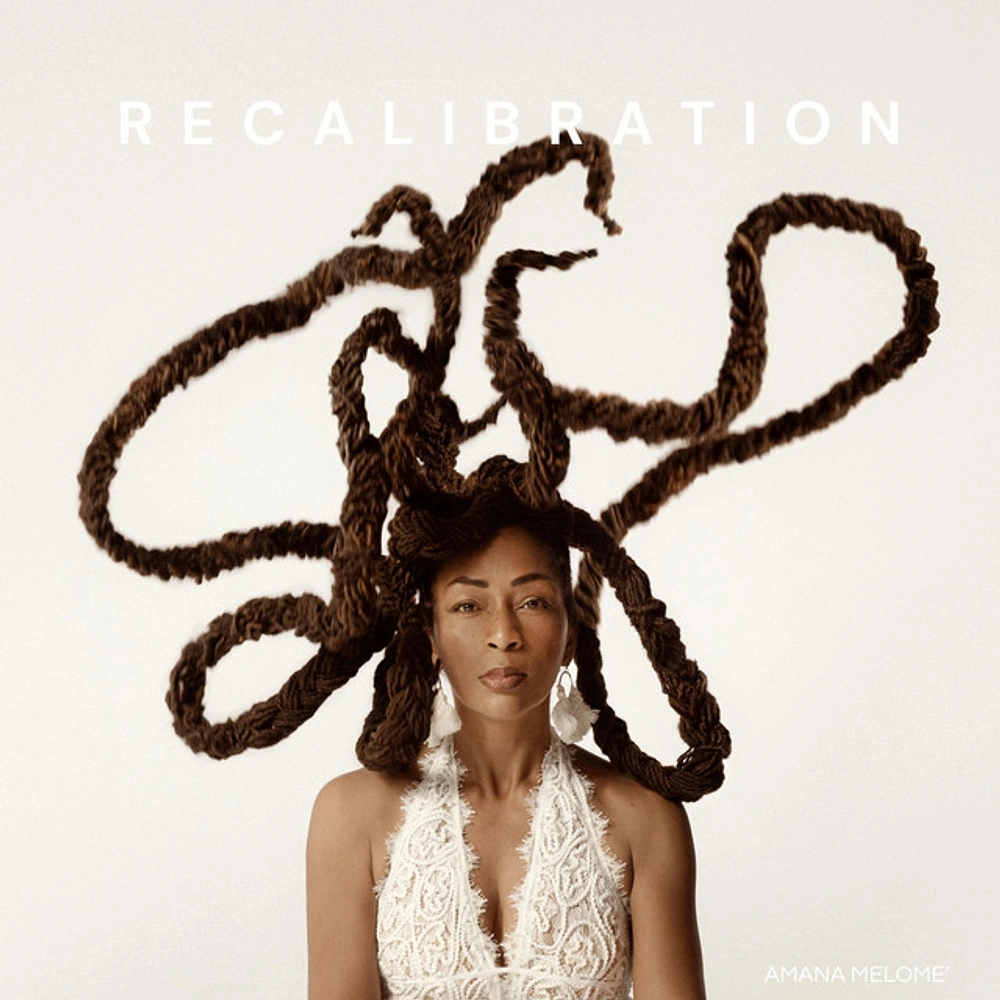
The album closes with 11:11, featuring the artist Sky. The cover tells the same story. It uses the same photograph as RECALIBRATION, with two completely different energies.

What RECALIBRATED and Space Age Mama Jama Answer After a Record About Processing and Starting Again

RECALIBRATION was the record of working things through. RECALIBRATED is what comes after that work is done. Melome’ describes it as a celebration of one’s own fire and magic. In her own words, “this album is a permission slip to take up space and shine unapologetically!”

That answer fits a life that has rarely stayed in one place. Melome’ grew up across continents, from Florence to New York and Los Angeles, and is now based in Spain. Her heritage is Euro, Caribbean and American. Her catalogue reaches back to Indigo Red in 2008, which her own site notes was the first album ever distributed by Whole Foods Market.

The response to RECALIBRATION came from outlets that heard the same mix of legacy and renewal. Music Arena GH wrote about the album’s release. Meanwhile, Project Timbre described it as the point where legacy and healing meet. RECALIBRATED now gives that story its final chapter.

NewMusic.News’s curator team: “RECALIBRATED works because it is generous. Melome’ hands her songs to producers from house, dub and disco, then keeps the most personal moment for herself. That moment is her very first song, rebuilt at the piano with Deron Johnson.”

Stream RECALIBRATED on Spotify or Apple Music, go back to RECALIBRATION on Spotify, and follow Amana Melome’ on Apple Music, SoundCloud, YouTube, Instagram and Facebook. Her official website tells the rest of the story.

NINJ on Time, Loss and the Making of No Replays

Two Decades in, a Denver Rapper Decides the Good Old Days Cannot Be Rerun

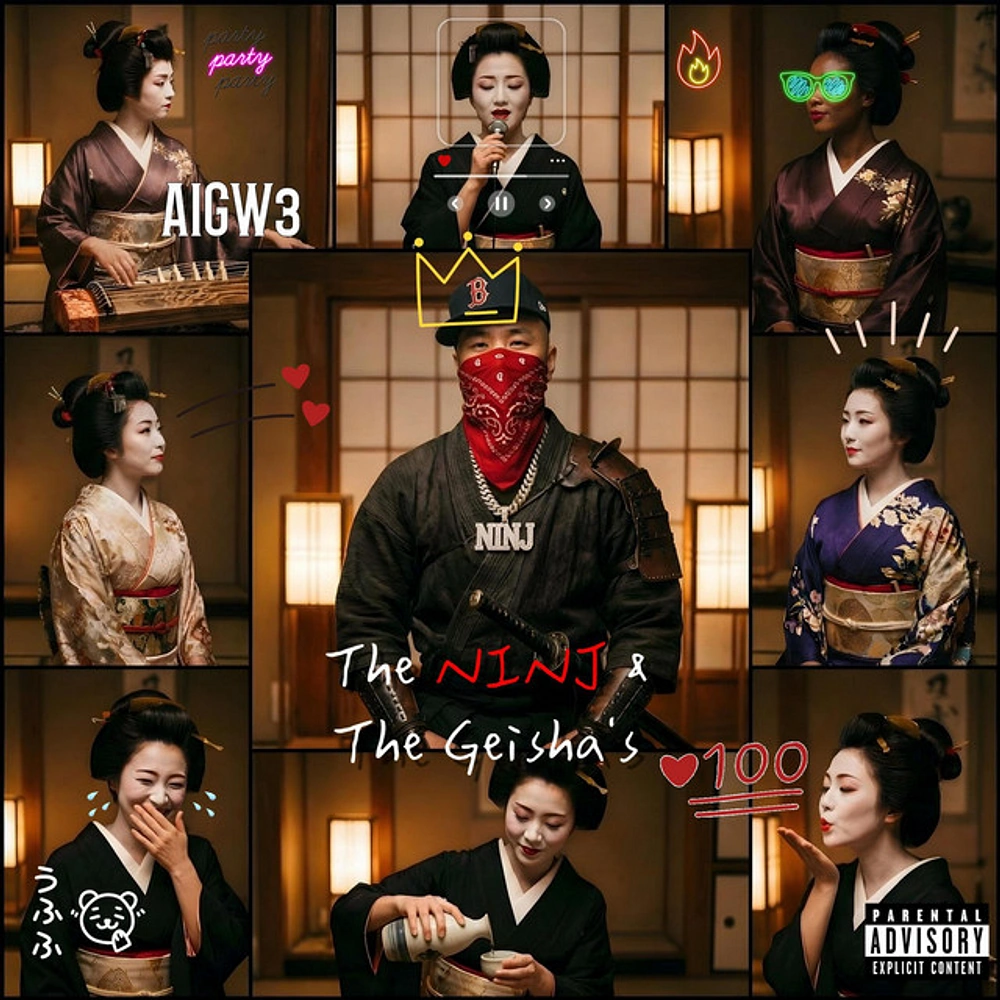
NINJ started out freestyling at house parties in Denver, trading verses with friends as a teenager. On No Replays, NINJ looks straight back at that era. The track sits sixth on The NINJ & The Geisha’s, the album NINJ released on 13 February 2026. Its central line says those days played out like a movie that cannot be rewound, so the hip-hop song reads as a decision to stop looking back.
NINJ is in the playlist below, so the Denver rapper’s reflective side is a single click away. The rapper’s full coverage history is collected on NINJ’s artist profile. No Replays came to this desk through PopHits.Co Music Charts, which verifies independent artists and places their releases across its network of music news titles. Listen to it first, then keep reading for the story behind the refrain.


NINJ on Time, Loss and the Making of No Replays

Twenty Years of Writing Arrived All at Once When NINJ Released No Replays in February 2026

The artist’s own website tells the story plainly. NINJ’s bio introduces a songwriter, rapper, beat maker and producer from Denver, Colorado. There are more than 20 years of making music behind them. The early chapters are hard ones. Alongside those house-party freestyles came poetry written in juvenile detention, and homelessness at 14. By the artist’s own account, music was the one thing that made sense. Over the years it became a craft: producing records, shaping a sound and building songs from the ground up.

What changed recently is the pace. The first releases on Spotify arrived in September 2025, with the single GANGSTA and the 14-track album AIGW. AIGW 2 followed in December. Then came the singles No Pressure and Vibes in January 2026, and The NINJ & The Geisha’s on 13 February. Since then the run has barely paused. Operation Heavy Rotation landed in April, the 26-track Denver’s Finest in June and the 27-track Fresh Air in August. In December 2025, HipHopEargasm covered the single 12 True Colors. It reported that the song dated back more than two decades and had only now reached its finished form. That detail explains the speed. A long archive is finally coming out.

Listeners who value that kind of patience will find familiar company here. J. Cole built much of his reputation on producing his own beats and writing reflective verses about where he came from. NINJ works the same way, building the instrumental and the lyric together. Fans of Nipsey Hussle will also recognise the theme of persistence. His long-running The Marathon series turned keeping going into a creed. No Replays shares that conviction, delivered as melodic rap.

No Replays Looks Back at the Parties, Then Pulls Away

The most careful reading of the song so far came from the Spanish-language Revista Soundloop, on 22 February 2026. Its writer heard melodic rap, a sharp lyric and solid production. The review also traced how the verses move. The first half is full of remembered motion: parties, reckless youth, friendship, fast money and excess. Images of a rollercoaster, Mardi Gras, winter and turning wheels keep it moving.

Then the song interrupts itself. A recurring phrase, “But it’s time”, cuts across the nostalgia each time it starts to settle. The review read it as the point where memory gives way to maturity. Later, mentions of friends who are gone turn the look back toward grief. Even so, the vehicle in the lyric keeps rolling forward. That is why the title line lands the way it does: “these movies ain’t got no replays”.

Watch the video and check the artist’s YouTube channel for more.

NINJ on Time, Loss and the Making of No Replays

Why NINJ Built No Replays Around a Refrain That Cuts the Nostalgia Short

That refrain also answers the question the catalogue raises: why is all this music arriving now? Revista Soundloop summed the song up as the moment someone understands that youth does not return. The only workable response, it argued, is to persist. In other words, the title is the thesis. Life offers no rehearsal, only the performance. So a writer sitting on two decades of songs has every reason to release them.

NINJ’s own description of the style fits the track closely. The artist talks about blending melodic rap with sharp lyricism and real emotion. The subjects are struggle, growth, discipline, identity and resilience. Some songs hit hard, and some are reflective. No Replays sits firmly on the reflective side, with a trap-leaning hip-hop sound under the melody. It stays warm in tone even when the subject turns to loss.

It has found listeners who share that taste. Hot New Songs Blog picked the track up on 23 February 2026 and filed it under hip-hop and rap. Meanwhile, the coverage around the album keeps returning to one theme: memory turned into motivation.

Where No Replays Sits on The NINJ and The Geisha’s

On the album, the song follows the opener Change The Song (Intro), then Vibes, Ghost Coastin’, No Pressure and Ever Present. After it come Man Up, Matador and Geisha Face. Vibes makes a useful companion. In February 2026, Blaze Muse and Kindline Magazine both heard it as a reflective record about memory and the people it honours. Together, the two tracks show the same writer looking at the past from two angles: one fond, one firm.

NewMusic.News’s curator team: “No Replays is a nostalgic hip-hop record with a deadline built into it. Every time the memories start to pull, the refrain pulls the song forward again, and that tension is what makes it worth a second listen.”

Start with No Replays and listen for the moments the refrain breaks the flashback. Then go back to Vibes on the same album. Finally, play Denver’s Finest to hear where the writing has gone since.

Stream NINJ on Spotify, Apple Music, Deezer and SoundCloud. Watch the official videos on YouTube, and find every release on the YouTube channel. Read more on the official site. Then follow along on Instagram, TikTok, Facebook and X.


The Long Way to In My Head: Bite To Break and a Cymbal Sale

The Long Way to In My Head: Bite To Break and a Cymbal Sale

The Wiener Neustadt Five-Piece Follows a Summer Debut with a Slam and Hardcore Second Single Patrick Manzey had one week.…

The Long Way to Late Night Drive, Where Gio 22/6 Brings Rado Ricky and Ty Lab Together

The Long Way to Late Night Drive, Where Gio 22/6 Brings Rado Ricky and Ty Lab Together

An Austrian Producer’s Year of Monthly Singles Reaches a Short Song for After Dark Late Night Drive lasts two minutes…

TOP NINJA and Hell Rell Take the Long Way to Birds Eye From Terrace Avenue

TOP NINJA and Hell Rell Take the Long Way to Birds Eye From Terrace Avenue

Inside Effervescence: How Logan Threshold Built a One-Man Synth Rock Debut

Inside Effervescence: How Logan Threshold Built a One-Man Synth Rock Debut

Brooke Washor on Two Chords, Spanish Guitar and the Making of Cowboy

Brooke Washor on Two Chords, Spanish Guitar and the Making of Cowboy

Inside Separate Myself From You: How Chris Harper Built a Summer Single About Letting Go

Inside Separate Myself From You: How Chris Harper Built a Summer Single About Letting Go

Inside I'll See Myself Out: How Almighty VA Built an Album About Loss and Sobriety

Inside I’ll See Myself Out: How Almighty VA Built an Album About Loss and Sobriety

The Long Way to Numbfounded: Paradox & DJ Sean P, Fourteen Years After Mending

The Long Way to Numbfounded: Paradox & DJ Sean P, Fourteen Years After Mending

Inside RECALIBRATED: How Amana Melome' Built a Jazz Homecoming Out of Space Age Mama Jama

Inside RECALIBRATED: How Amana Melome’ Built a Jazz Homecoming Out of Space Age Mama Jama

Return Trip on Film Scenes, Spanish Roots and the Making of ReScore

Return Trip on Film Scenes, Spanish Roots and the Making of ReScore

The Long Way to CRYING STARS: Alex Shkudun on a Year of Poems, Piano and Three Languages

The Long Way to CRYING STARS: Alex Shkudun on a Year of Poems, Piano and Three Languages

Inside Ghosts: How Abby Power Built a London Rap Single About Staying Yourself with SamXVI

Inside Ghosts: How Abby Power Built a London Rap Single About Staying Yourself with SamXVI

Brett Miller on Self-Doubt, One Second of Hope and the Making of Heaven

Brett Miller on Self-Doubt, One Second of Hope and the Making of Heaven

Rachel Chinouriri Built Her Second Album Around One Night Out

Rachel Chinouriri Built Her Second Album Around One Night Out