
Jazz

Ada Rovatti on Piloo, Her Late Father and the Making of Done Deal

A Comic Duet for Kurt Elling and Niki Haris Closes a Record Written Through Loss

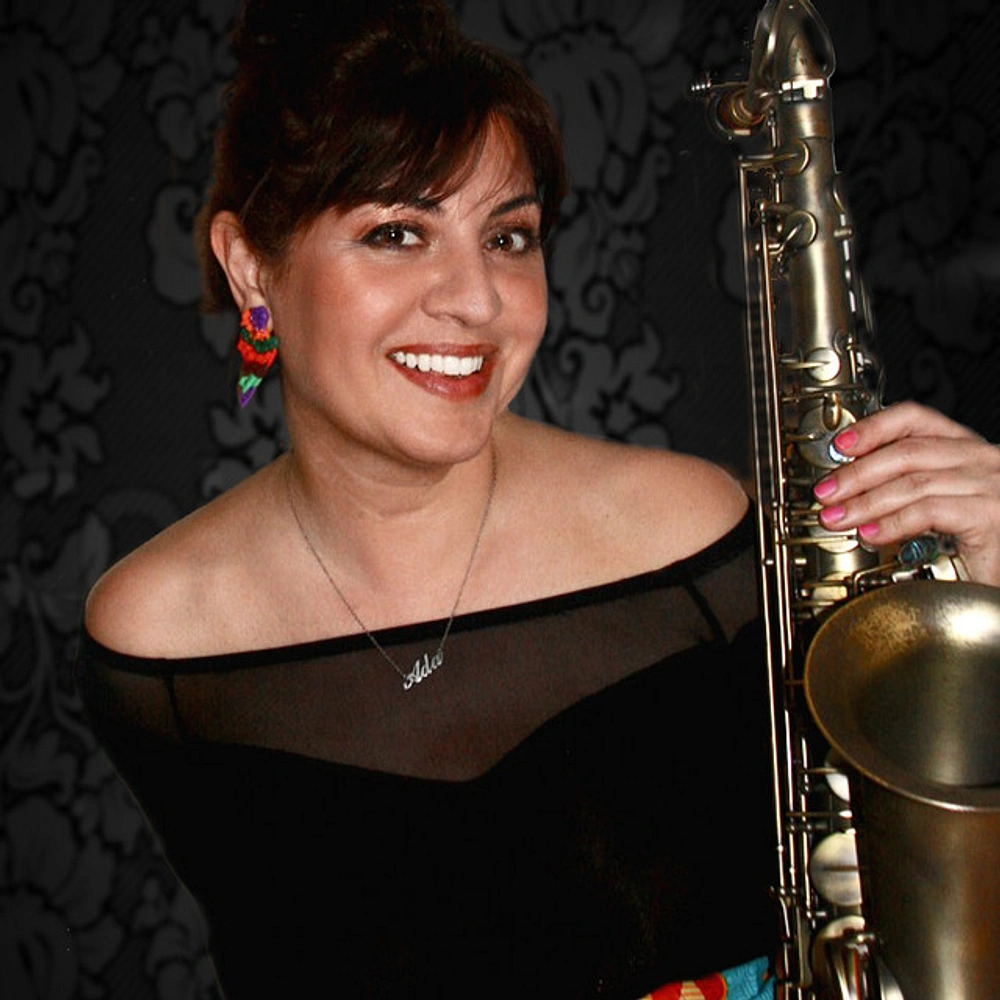
In July 2021, once travel reopened, Ada Rovatti flew home to Mortara to see her ailing father. She reached him a few hours before he died, and he greeted her as Piloo, her childhood nickname. Two and a half years later, Ada Rovatti closed the album named after that nickname with Done Deal. It is a comic gospel and jazz dialogue for Kurt Elling and Niki Haris.

Ada Rovatti’s Done Deal sits in the playlist below, among the jazz, classical and modern composition this desk has collected there, and her artist profile gathers her wider coverage. The single reached NewMusic.News through PopHits.Co Music Charts, which verifies independent artists and places their releases across its network of music news titles. Put it on, then keep reading for the story of the father behind the title.


Ada Rovatti on Piloo, Her Late Father and the Making of Done Deal

Written Through the Pandemic and a Final Visit to Mortara, a Record Took Shape Around Mario Rovatti

Rovatti wrote most of The Hidden World of Piloo during the COVID years. Speaking to Lee Mergner of WBGO, she described the album as a snapshot of that time in her life. That period ended with her father’s death in 2021. For a year and a half before then, she could not travel home to Italy at all.

She later told DownBeat that losing Mario Rovatti hit her hard, because the two of them were very close. He died one month short of his 90th birthday.

The title keeps him in plain sight. As a child, she heard a story about a mischievous little cat called Piloo. Her father gave her the name because she behaved the same way. Years later, she gave it to her own label, Piloo Records, which has released her albums since Green Factor in 2009. Naming the album after his word for her turns the whole record into a conversation with him.

The obvious route would have been an elegy. Instead, Rovatti decided against it. She told WBGO that she did not want the album to sound like a record of mourning. Rather, she meant it as a celebration of him. The father she describes explains that choice. In her telling, Mario Rovatti lived in Africa, travelled the world and was always the life of the party. He was a funny man who kept the family door open to visitors at any hour.

Ada Rovatti Closes the Album With Done Deal, a Bluesy Dialogue for Kurt Elling and Niki Haris

Ada Rovatti released Done Deal first, as a single on 4 January 2024. Two weeks later, it took the last place among the ten tracks of the album. The record arrived on 19 January, credited to Rovatti with her husband, the trumpeter Randy Brecker. At seven minutes and 45 seconds, it is long for a joke. It uses the time to tell a full story.

The words are hers. She told WBGO that she tried lyricists first. Their samples did not match how she felt, so she wrote her own. DownBeat described the result as an amusing dialogue that imagines God as a Black woman. In the song, a man believes he has met God and finds that God is a woman. He then goes home to pass on what he has learned about changing his life. By the end, though, he has slipped back into the same daily routine. That return to the ordinary is the final twist.

The casting explains why the joke works. Elling has won two Grammy Awards for Best Vocal Jazz Album, for Dedicated to You and Secrets Are the Best Stories. He also once studied at the University of Chicago Divinity School. That gives a song about meeting God a quiet extra layer. Haris, meanwhile, spent fourteen years as one of Madonna’s backing vocalists. She also sang lead on several Snap! singles in the early 1990s, and her pop and R&B background answers him from the other side.

Early listeners picked up on the mood. Hot New Songs Blog listed the single in a January 2024 round-up of new jazz. Similarly, the reviewer at Phil’s Picks heard it as the album’s bluesy finale.

Watch the video and check the artist’s YouTube channel for more.

Ada Rovatti on Piloo, Her Late Father and the Making of Done Deal

Why a Comic Meeting With God Ends a Record Rovatti Chose Not to Make Mournful

The album’s quieter songs carry the grief more directly. Rovatti finished Take It Home, a gospel-flavoured song sung by Haris, the day before she flew to see her father. She also wrote Make Up Girl for her teenage daughter, Stella. On record, she plays it with Brecker as a call and response between the two parents. Against that background, Done Deal answers loss with laughter. That suits a man his daughter remembers as the life of every party.

It also delivers the hidden side the title promises. Rovatti told DownBeat that people usually meet a cheerful, outgoing musician. This record, she said, shows a more private and observant one. Ending with a comic duet lets both versions of her share the last word.

For listeners, the track sits in a long line of saxophone-led records where church feeling meets a jazz groove. Cannonball Adderley showed with Mercy, Mercy, Mercy in the 1960s how far gospel phrasing could carry a jazz band. Similarly, Kirk Whalum has built a whole series of albums around The Gospel According to Jazz. Done Deal belongs to that conversation, with a story told in two voices on top.

The song suits listeners who like their jazz with a plot and their gospel with a smile. It also suits anyone who knows Elling from his ballads and wants to hear him play for laughs. For a wider view of the record, Piloo Records has posted an album trailer on YouTube.

From the NewMusic.News curator team: “Done Deal ends a record about loss with a punchline instead of a requiem. Elling and Haris trade the story line by line over a gospel groove. The closing return to ordinary life is the warmest joke on the album.”

Where to Hear Done Deal and Follow Ada Rovatti Online

Stream Done Deal by Ada Rovatti on Spotify and Apple Music. Then follow her on Spotify, Apple Music, Deezer and SoundCloud.

She shares news on Instagram and Facebook. Her official site carries the discography and upcoming dates.


Return Trip on Film Scenes, Spanish Roots and the Making of ReScore

Return Trip on Film Scenes, Spanish Roots and the Making of ReScore

A Cádiz-Based Composer Writes New Music for Scenes From The Sheltering Sky and Cosmos Laundromat On 17 June 2023, musicians…

The Long Way to CRYING STARS: Alex Shkudun on a Year of Poems, Piano and Three Languages

The Long Way to CRYING STARS: Alex Shkudun on a Year of Poems, Piano and Three Languages

A Ukrainian Songwriter Looks Down on Fallen Empires, Floods and Towers From the Night Sky Before CRYING STARS existed, Alex…

Inside Ghosts: How Abby Power Built a London Rap Single About Staying Yourself with SamXVI

Inside Ghosts: How Abby Power Built a London Rap Single About Staying Yourself with SamXVI

Brett Miller on Self-Doubt, One Second of Hope and the Making of Heaven

Brett Miller on Self-Doubt, One Second of Hope and the Making of Heaven

Rachel Chinouriri Built Her Second Album Around One Night Out

Rachel Chinouriri Built Her Second Album Around One Night Out

The Long Way to Yours Faithfully, OneNamedPeter's Album Signed off Like a Letter

The Long Way to Yours Faithfully, OneNamedPeter’s Album Signed off Like a Letter

Inside Proceed 2: How Kennard Built a Baltimore R&B Album From Loss and Patience

Inside Proceed 2: How Kennard Built a Baltimore R&B Album From Loss and Patience

WIL.SON on One Guitar, a Stomp-Box and the Making of Blues Tourist: Vol. 1

WIL.SON on One Guitar, a Stomp-Box and the Making of Blues Tourist: Vol. 1

Johnny Marr Road-Tested The Age of Everything Before Recording It

Johnny Marr Road-Tested The Age of Everything Before Recording It

Inside Husk: How Scarecrowz Built a Self-Produced Hard Rock Album in Their 25th Year

Inside Husk: How Scarecrowz Built a Self-Produced Hard Rock Album in Their 25th Year

Inside Walking the Tightrope: How Stephanie Phillips Built a Folk Album Between Grief and Joy

Inside Walking the Tightrope: How Stephanie Phillips Built a Folk Album Between Grief and Joy

Inside Into The Night: How Seadog Built a Haunted Dream Pop Single in Brighton

Inside Into The Night: How Seadog Built a Haunted Dream Pop Single in Brighton

Inside On y va: How Hub30 Built a Feel-Good Song From Reggae, House and a Bordeaux Lake

Inside On y va: How Hub30 Built a Feel-Good Song From Reggae, House and a Bordeaux Lake

Erick Castrillon on the Singularity, Generative AI and the Making of The Great Awakening

Erick Castrillon on the Singularity, Generative AI and the Making of The Great Awakening

Veludo Tropical on Human-Led Bolero and the Making of No Me Digas Adiós

A Campinas Project Revives the Vintage Bolero Farewell and Says Openly How It Was Made

Every Veludo Tropical song starts as a scene: a half-lit bar, a forgotten letter, a city under rain. No Me Digas Adiós, out since 20 August 2026, opens on a farewell. In this Veludo Tropical bolero, a mature female voice carries that goodbye over a vintage arrangement. The project behind it, based in Campinas, Brazil, is also unusually direct about how it built the song.

Veludo Tropical’s farewell bolero sits in the playlist below, among the jazz and modern composition this desk keeps returning to, and the project’s full run of coverage lives on the Veludo Tropical profile. No Me Digas Adiós reached NewMusic.News through PopHits.Co Music Charts, which verifies independent artists and places their releases across its network of music news titles. Press play, stay with the whole goodbye, then carry on reading.


Veludo Tropical on Human-Led Bolero and the Making of No Me Digas Adiós

Veludo Tropical Arrives as Bolero Becomes World Heritage and Streaming Asks How Songs Are Made

Two changes in the years before this single shape how it arrives. First, in December 2023, UNESCO added bolero to its Representative List of the Intangible Cultural Heritage of Humanity. Cuba and Mexico nominated the form together, and their nomination described it as identity, emotion and poetry turned into song. The committee also noted that composers are still writing new boleros, in a living dialogue with the tradition.

The second change came from the streaming side. In September 2025, Spotify said it would back a new DDEX industry standard for showing, in a song’s credits, where AI played a part. Its argument, moreover, was that listeners deserve a more nuanced picture than a simple yes or no.

Veludo Tropical therefore sits exactly where those two stories meet. It writes new boleros, and it also says plainly that generative tools are part of its process.

The Method Behind Every Veludo Tropical Song

The project describes its method in some detail. Each track begins with a human creative direction: a scene, a feeling, a story and an artistic intention. After that, generative and digital tools come in during production. Selection, revision, the mood each song aims for, the visual identity and the final decisions all stay in human hands. The project is also careful not to present the technology as the artist.

That openness is rarer than it should be, because plenty of machine-assisted music reaches streaming services with no word on how anyone made it. Here, by contrast, the project states its method up front, alongside a clear account of what the tools do and what they do not do.

The inspiration, however, is far older than any of the tools. Veludo Tropical draws on the classic nights of Latin America, blending bolero with smooth Latin jazz, serenade and sophisticated vintage arrangements. In fact, No Me Digas Adiós is its first release on Spotify.

Watch the video and check the artist’s YouTube channel for more.

Veludo Tropical on Human-Led Bolero and the Making of No Me Digas Adiós

No Me Digas Adiós Takes Nearly Five Minutes to Say One Goodbye

The title translates as “don’t tell me goodbye”, and the song gives that plea room to breathe. It runs to about four minutes and forty seconds. That is long for a single in 2026, yet right for a bolero, where a goodbye usually takes a whole song to say. Meanwhile, a mature female voice leads, and the arrangement leans on the vintage Latin colours the project names as its home ground.

The project’s YouTube channel bills the official video, embedded above, as a vintage romantic bolero. It also suits the song’s film-like staging, with one scene played out slowly.

Two reference points help place the mood, with no connection implied between the artists. For instance, Omara Portuondo, the Cuban singer long linked with the Buena Vista Social Club, has spent decades showing how much a mature voice can put into a bolero. Luis Miguel, on the other hand, took the form to a new generation in 1991 with Romance, on which he and producer Armando Manzanero reworked classic boleros. As a result, No Me Digas Adiós speaks to listeners who know both of those voices and still want new songs in the same spirit.

What This Veludo Tropical Bolero Answers, and Where the Project Goes Next

The question this release answers is a simple one: can a project that uses new tools still make a bolero that means something? Veludo Tropical’s reply is to keep the parts that matter in human hands, and then to tell you so. After that, the rest is the song’s job, and it takes its time doing it.

For listeners of classic bolero, smooth Latin jazz and film soundtracks, it is an easy one to add to a late-evening rotation. It should also make particular sense in Brazil, Mexico, Bolivia and Venezuela, where the project is aiming its first releases. Similarly, Spanish-speaking audiences who grew up with the form are a natural home for it.

The project has not stood still since. A second single, Perfume de Medianoche, followed on 11 September 2026. A third, Bajo la Luna de La Habana, already appears on the project’s site, where fans can pre-save it on all stores.

NewMusic.News’s curator team: “A bolero depends on patience, and No Me Digas Adiós has it: close to five minutes spent on one goodbye, with a mature voice and a vintage setting doing the work. We would also like more projects to follow its lead on disclosure, because telling listeners how you made a record costs nothing and earns trust.”

You can follow Veludo Tropical across these platforms:


Return Trip on Film Scenes, Spanish Roots and the Making of ReScore

Return Trip on Film Scenes, Spanish Roots and the Making of ReScore

A Cádiz-Based Composer Writes New Music for Scenes From The Sheltering Sky and Cosmos Laundromat On 17 June 2023, musicians…

The Long Way to CRYING STARS: Alex Shkudun on a Year of Poems, Piano and Three Languages

The Long Way to CRYING STARS: Alex Shkudun on a Year of Poems, Piano and Three Languages

A Ukrainian Songwriter Looks Down on Fallen Empires, Floods and Towers From the Night Sky Before CRYING STARS existed, Alex…

Inside Ghosts: How Abby Power Built a London Rap Single About Staying Yourself with SamXVI

Inside Ghosts: How Abby Power Built a London Rap Single About Staying Yourself with SamXVI

Brett Miller on Self-Doubt, One Second of Hope and the Making of Heaven

Brett Miller on Self-Doubt, One Second of Hope and the Making of Heaven

Rachel Chinouriri Built Her Second Album Around One Night Out

Rachel Chinouriri Built Her Second Album Around One Night Out

The Long Way to Yours Faithfully, OneNamedPeter's Album Signed off Like a Letter

The Long Way to Yours Faithfully, OneNamedPeter’s Album Signed off Like a Letter

Inside Proceed 2: How Kennard Built a Baltimore R&B Album From Loss and Patience

Inside Proceed 2: How Kennard Built a Baltimore R&B Album From Loss and Patience

WIL.SON on One Guitar, a Stomp-Box and the Making of Blues Tourist: Vol. 1

WIL.SON on One Guitar, a Stomp-Box and the Making of Blues Tourist: Vol. 1

Johnny Marr Road-Tested The Age of Everything Before Recording It

Johnny Marr Road-Tested The Age of Everything Before Recording It

Ada Rovatti on Piloo, Her Late Father and the Making of Done Deal

Ada Rovatti on Piloo, Her Late Father and the Making of Done Deal

Inside Husk: How Scarecrowz Built a Self-Produced Hard Rock Album in Their 25th Year

Inside Husk: How Scarecrowz Built a Self-Produced Hard Rock Album in Their 25th Year

Inside Walking the Tightrope: How Stephanie Phillips Built a Folk Album Between Grief and Joy

Inside Walking the Tightrope: How Stephanie Phillips Built a Folk Album Between Grief and Joy

Inside Into The Night: How Seadog Built a Haunted Dream Pop Single in Brighton

Inside Into The Night: How Seadog Built a Haunted Dream Pop Single in Brighton

Inside On y va: How Hub30 Built a Feel-Good Song From Reggae, House and a Bordeaux Lake

Inside On y va: How Hub30 Built a Feel-Good Song From Reggae, House and a Bordeaux Lake

Meshell Ndegeocello Recast Fifteen Duets as Same-Gender Pairs

Islands in the Stream was written by the Bee Gees and recorded by Kenny Rogers and Dolly Parton. On Synonym it is sung by Meshell Ndegeocello and Chaka Khan. I Got You Babe belonged to Sonny and Cher; here it goes to Ndegeocello and ANOHNI. Golden Ring, a George Jones and Tammy Wynette record about a wedding ring passing between owners, is handled with Brandi Carlile.

The rule holds across all fifteen tracks. Every duet on the album is performed by two people who identify as the same gender, and the songs were chosen from a canon that almost entirely assumes otherwise. Ndegeocello’s third Blue Note album arrives on 2 October 2026, and that single constraint is the whole design.

Why the Album Is Called Synonym

She has been direct about what the title means. “This project is an expression of queer liberation as a synonym for liberation of all kinds,” she has said, and the record is built to demonstrate the point rather than argue it.

A duet is one of the few song forms with gender written into its architecture. The call and response, the harmony parts, the narrative of who is asking and who is answering were all arranged around an assumption. Removing the assumption and changing nothing else is a cleaner experiment than writing new songs would have been, because the listener already knows what these records are supposed to sound like.

Fifteen Songs From Four Decades

The source material runs from the 1960s to the early 2000s and refuses to sit in one genre. I Knew You Were Waiting (For Me), the George Michael and Aretha Franklin record, opens the album with Cynthia Erivo. Don’t You Want Me, the Human League’s, goes to Cat Power. It Ain’t Me Babe, Bob Dylan’s, is taken with Madison Cunningham, and With God On Our Side, also Dylan, closes the album with Bill Callahan and Chris Thile.

Elsewhere the list reaches into R&B and hip-hop: Don’t Stop The Music with Nick Hakim and Robert Glasper, Always on Time with Laura Lee of Khruangbin, Don’t Look Any Further with Lianne La Havas, The Closer I Get To You with Destin Conrad and Moses Sumney. Be Real Black For Me, the Roberta Flack and Donny Hathaway song, is sung with Emily King and Lizz Wright. Hunger Strike, the Temple of the Dog track, goes to WILLOW.

Nineteen guests is a large number for a record with any coherence, and the spread of idioms is deliberate. Ndegeocello has described the songs as diverse in tone and representative of various genres, and the effect is to show that the constraint is not a genre trick. It works the same way on a country weeper as on a synth-pop single.

The Producer Who Made Her First Two Records

David Gamson co-produces alongside Ndegeocello and Abe Rounds. Gamson produced Plantation Lullabies in 1993 and Peace Beyond Passion in 1996, which makes this a working relationship resumed after roughly thirty years.

That is a pointed choice given the subject. Plantation Lullabies was noted at the time for presenting a distinctly androgynous persona, and it was one of the first releases on Maverick Records. Returning to the producer of that record to make an album about who is allowed to sing to whom closes a loop that has been open most of her career.

Players Rather Than Features

The instrumental credits explain why this reads as a Blue Note album rather than a covers project. Abe Rounds and Deantoni Parks share the drums. Chris Bruce plays guitar. Jake Sherman, Jebin Bruni and Larry Goldings handle keyboards. Josh Johnson and Levon Henry play saxophone, Elena Pinderhughes plays flute, and Bela Fleck plays banjo.

Goldings, Johnson and Pinderhughes are serious jazz musicians, and Fleck’s banjo on a record containing Dolly Parton and George Jones songs is a straight-faced instrumentation decision rather than a joke. The band is fixed and rotating rather than assembled per guest, which keeps fifteen different vocal pairings sounding like one album.

Ndegeocello has framed her own role in production terms, saying she wanted to do more collective music and to show what she can do as a producer. For an artist whose reputation was built on bass playing and songwriting, that is a real repositioning.

Two Grammys in Two Years

She has thirteen Grammy nominations and three wins. The first came for Best R&B Song, for Better Than I Imagined. The other two are consecutive awards for Best Alternative Jazz Album, for The Omnichord Real Book and then No More Water: The Gospel of James Baldwin, which were her first two Blue Note releases.

Those were also the first Grammys to honour her own albums across a recording career of more than thirty years, which is a strange fact about an artist widely credited with helping to spark neo-soul. Winning the same category twice running, immediately after signing to a jazz label in her mid-fifties, describes a late-career surge rather than a legacy lap.

Go-Go Bands in Washington

She was born Michelle Lynn Johnson in Berlin in 1968 and learned to play in Washington, D.C. in the late 1980s, working with go-go bands including Prophecy, Little Benny and the Masters, and Rare Essence. The surname she adopted means free like a bird in Swahili.

Go-go is relevant to what she does now. It is a live, percussive, call-and-response idiom built on continuous grooves and audience exchange, and the habit of treating a song as something two parties do to each other rather than a fixed text runs directly into an album made of duets.

The label history since then reads like a map of an artist nobody could file: Maverick and Reprise, then Shanachie, EmArcy, Decca, Mercer Street, Naïve, and finally Blue Note in 2023. Seven labels across three decades usually indicates a commercial problem. In this case it tracks a musician who moved between R&B, rock, spoken word, covers projects and jazz faster than any single roster could follow, and the Blue Note run is the first time the catalogue and the label have been pointed the same way.

The Argument Underneath

Her other stated position on the project is disarmingly plain: whatever the differences between people, what they want underneath is much the same, and she has named healthy food and a safe place as the example. That is a modest claim to hang a fifteen-track album on, and the modesty is the point.

She has also said she is not defining anything, because the absence of definition is where she feels most free. A record that reassigns famous duets without rewriting a word is exactly that principle applied to material rather than to identity. Nothing is explained; the pairings simply happen and the songs turn out to work.

What Follows

She plays the Blue Note Jazz Club in New York on 18, 19 and 20 September 2026 in a trio configuration with Chris Dave and Eric Gales, ahead of the album’s arrival at the start of October.

A run of small-room dates before a guest-heavy studio release is the right sequencing for what this is, because the album’s argument is finally about performance rather than production. It sits alongside Immanuel Wilkins recording three albums across two nights at the Village Vanguard as evidence of what Blue Note is currently doing, which is signing musicians with a formal idea and then letting them execute it at length.

Zoh Amba Put Down the Saxophone and Went Home to Tennessee

The first thing on Eyes Full is a guitar figure, plainly played, and a voice singing about a child whose medication changes how the world looks. The song is called OCD, it runs four and a half minutes, and there is no saxophone anywhere on it. For anyone who knows Zoh Amba’s work, that absence is the loudest thing about the record.

Amba spent the first years of their career as one of the most physically committed saxophonists in New York’s free jazz scene, a player critics reached for Peter Brotzmann and Albert Ayler to describe. Their first album, O, Sun, was produced by John Zorn. Eyes Full, released by Matador Records on 5 June 2026, is thirteen guitar songs with singing on them, and it was made by going home.

Kingsport, Tennessee

Home is Kingsport, in the north-east corner of Tennessee, and the return is both literal and structural. Guitar was Amba’s first instrument before the saxophone, so the record reaches back past the work they are known for to something earlier. The label frames the album as muddy, loose blues with sweet burnishes of Appalachian folk, which is accurate as far as it goes and undersells how much noise is in it.

The subject is the town rather than the self. Amba has described the songs as being about people who really need to be seen and heard, and the record keeps its attention on working-class lives in places that do not get written about. Dead End Street is a driving Southern rocker built over layers of guitar noise, and its subject is small-town American life without any of the softening that phrase usually carries.

Every Song Is About Looking

The unifying idea is stated in the title and then worked through thirteen times. Eyes Full, Child You’ll See, Smile With Your Eyes: the track list alone tells you what the record is circling. KLOF Mag identified vision as the thread running through all of it, tied to being noticed, to care, to belonging and to divinity.

That last one is not decorative. Amba practises monastic Hinduism, and the search for faith surfaces repeatedly, most directly on Another Time, the lead single, and on Weed Eating, which the same review called an extraordinary character study. A record about being seen, written by someone with a religious practice, is not really about visibility in the social-media sense. It is about being witnessed.

That framing also explains why the album resists the obvious autobiographical reading. Amba is the one who left the small town and made a name somewhere else, which is the standard shape of this kind of record: the narrator returns, observes, and reports. Eyes Full mostly declines the narrator’s vantage point. The songs sit level with their subjects, and the recurring language of sight is applied to other people at least as often as to the singer.

What It Sounds Like

The palette is wider than the folk description implies. OCD opens on minimal guitar and finds a chorus that sounds drawn from old, strange American songcraft. PG Tips sets nagging strums against screeching electric guitar. Thousand Years travels from bluesy licks into something closer to emo crunch, and Blueberry Thorn breaks down into what the review fairly called an avant-country finale.

Against those are the quiet ones. Southern Soil is a shuffling acoustic piece where the voice jumps and skips with emotion held back too long. Emahoy is sweetly acoustic and apparently casual while staying completely controlled. On the title track Amba’s voice sounds cracked and strong at once, old and ageless, which is the register the whole album is reaching for.

The Band Behind It

Amba did not do it alone. Jim White plays drums and Kevin Hyland plays lead guitar, and the trio’s instrumental approach has drawn comparisons to The Band, which is a compliment about interplay rather than about sound. The arrangements leave the guitars room to be ugly when the song wants it, and the drumming is loose in a way that a session player would have tidied away.

Thirteen tracks run just over forty minutes, and only one passes four minutes. Odd Jobs lasts two minutes and one second. That compression is unexpected from a musician whose free jazz work regularly runs to long-form improvisation, and it is the clearest sign that this is genuinely songwriting rather than an improviser borrowing the format.

The sequencing supports that reading too. The two most abrasive pieces, PG Tips and Child You’ll See, sit at eleven and twelve, deep in the second half, where a record aimed at winning over a new audience would have buried them or cut them. Placing them there and then closing on Smile With Your Eyes, a folk-rock track that folds in Southern Appalachian mountain music, gives the album a shape that returns to where it started rather than resolving outward. The circularity is deliberate: a record about seeing ends by handing the phrase back.

The Reviews Split

Reception has been genuinely divided, which is more interesting than acclaim would have been. One critic called it a wild, beautiful thing; another found it a missed opportunity. KLOF Mag landed emphatically on the positive side, calling it so complete and accomplished that it is hard to believe it is a first attempt at songwriting.

The split is easy to understand. Listeners who came for the saxophone playing that earned Amba their reputation will find none of it, and the songwriting, while strong, is working in a crowded field where Adrianne Lenker has already set the terms. Judged as a debut in an unfamiliar form, it is remarkable. Judged against the free jazz records, it is a different artist entirely, which is the point.

Why the Pivot Reads as Honest

Musicians change lanes for all sorts of reasons, and commercial ambition is usually somewhere in the mix. That reading does not fit here. A free jazz saxophonist with an avant-garde following does not increase their audience by making an album of Appalachian-tinged guitar songs about a Tennessee town, and Matador is not a label that requires it. If anything the move costs an audience: the free jazz constituency is small but devoted, and it does not automatically follow a player into songwriting.

The press around Amba’s saxophone work makes the contrast sharper. The Guardian described scalding emotional intensity and wildly uplifting music; The New York Times wrote of passion coming from somewhere deep inside alongside a soft and prayerful side. Those are notices most improvisers spend a career trying to earn. Setting that down to sing about odd jobs and weed eating in a Tennessee town is a decision that only makes sense if the songs were the point.

What the record sounds like instead is someone dealing with material they could not get at through improvisation. KLOF Mag read the return to Kingsport and the return to guitar as the same movement, an acceptance of the past that includes some difficult childhood memories. That is a hard thing to play on a saxophone and a straightforward thing to write a song about, which may be the whole explanation.

Where It Sits

Coming from the improvising world into songwriting is a well-worn path, and it usually produces respectful, slightly stiff records. This one is neither. It is unpredictable across its thirteen tracks and it commits fully to a form its maker had not previously worked in, in the same spirit as Immanuel Wilkins releasing three volumes of unedited live playing rather than one tidy album.

Both are musicians declining to give the audience the version that would be easiest to sell. Amba’s case is the more extreme, because it involves setting aside the instrument the audience came for. On the evidence of Eyes Full, the songs were always there underneath.

Immanuel Wilkins Made Three Albums in Two Nights at the Vanguard

On the evening of 15 May 2025, four musicians carried their instruments down the stairs into a basement room on Seventh Avenue South that holds about 130 people. They played there that night and again the next. Between the two evenings they recorded thirteen pieces of music, and rather than choose among them, Blue Note put out all thirteen across three separate volumes.

That decision is the story here. A live album is normally an act of compression: you play a run of nights, you take the best version of each tune, and you assemble a single record that sounds like one great evening. Immanuel Wilkins Quartet: Live at the Village Vanguard refuses that. Vol. 1 arrived on 20 March on vinyl, CD and digital, Vol. 2 on 17 April and Vol. 3 on 15 May, the last two digital only. Almost nothing was left out.

Two Nights, Thirteen Tracks

The maths explains part of it. These performances stretch. One piece on the first volume runs eighteen minutes, and it is not an outlier so much as a statement of how the group works. Four tracks fill Vol. 1, five fill Vol. 2 and four fill Vol. 3. Compress that into a single seventy-minute record and you would be cutting roughly two thirds of what happened in the room.

The sequencing across the volumes is deliberate rather than chronological tidying. Vol. 1 opens with Warriors, moves through Composition II and the Alice Coltrane cover Charanam, and closes on Eternal. Vol. 2 gathers The Big Country, Waiting Pt. 1, Citrine, Grace and Mercy and Go ‘Head Get Down. Vol. 3 holds Ring Shout, Composition IX, Dolla$ and Put 100 on the Blue Chain. Each set has its own arc.

The titles carry their own logic across the three records. Ring Shout, which opens Vol. 3, names a ritual form that predates jazz entirely, a circle dance from the Black American church built on shuffling feet and call-and-response. Grace and Mercy and Go ‘Head Get Down point the same way. Set against those are Composition II and Composition IX, deliberately plain labels for the most formally constructed pieces here. The pairing of devotional language with numbered exercises is not accidental, and it maps closely onto how the music actually behaves.

The Room Is Part of the Instrument

The Village Vanguard has been recorded so many times that its sound is itself a reference point, a slightly boxy warmth with the audience close enough to hear. Sonny Rollins, John Coltrane and Bill Evans all made records there that people still study. Playing a first live album in that room is a decision about lineage as much as acoustics.

Tina M. Campt, who wrote the liner notes, framed the project as an attempt to summon the room’s own recorded history and make it audible again. That is a fair description of what these performances do. The quartet is not imitating anyone who played there before, but the room keeps supplying the context, and the group plays into it rather than around it.

There is a practical dimension too. The Vanguard is small and its stage is shallow, so a quartet stands close enough to hear each other without monitoring. Groups that play there often describe it as the easiest room in New York to listen in, which matters enormously for music built on reacting rather than executing. Much of what sounds telepathic on these recordings is really just four people who can hear every detail of what the others are doing.

What Wilkins Means by Practice

Wilkins has described these sessions as practice, and he defines the word in a specific way: “working things out without a certain set of key variables; a refusal of the conditions expected of your production.” That is a working method, not modesty. It explains why passages are allowed to run past the point where a studio take would be cut, and why the group is comfortable letting an idea fail in public.

It also explains the three-volume structure better than the running times do. If the sessions are practice, then editing them into a highlights record would misrepresent what happened. Releasing everything keeps the searching in, including the parts that do not resolve.

The Alice Coltrane Cover at the Centre

Charanam is the only piece on Vol. 1 that Wilkins did not write. It comes from Alice Coltrane’s Turiya Sings, and its roots are in kirtan, the devotional practice built on call-and-response chanting. That structure survives the translation to a jazz quartet: the music moves in circles, with rhythmic repetitions gathering around Kweku Sumbry’s beat and Micah Thomas’s wide chords.

Over that, Glide Magazine noted Wilkins using a fluttering technique more commonly heard from trumpet players than saxophonists, alongside the spiralling solo lines that have become his signature. Choosing Alice Coltrane rather than a standard says something too. It places the record in a devotional tradition rather than a repertory one.

Where the Length Becomes the Argument

Not everything lands, and the reviews have been honest about it. Eternal builds on an eleven-note phrase that recurs for thirteen of its eighteen minutes, descending in volume over a two-chord bed. Glide found it ponderous, and suggested that what works as hypnosis in a room does not necessarily survive the trip to a recording.

That is a real limitation of documenting practice rather than editing it. But the same approach produces Composition II, modelled on Bach’s Well-Tempered Clavier and played with deliberate restraint: Ryoma Takenaga’s bass handled gently, Wilkins in a clear and unhurried tone, Thomas accompanying rather than filling. The record asks for attention and rewards it unevenly, which is what a real night in a club is like.

The Quartet Doing the Work

Micah Thomas has his own trio and three solo piano albums, and his playing here moves between wide harmonic support and near-silence depending on what the piece needs. Sumbry’s drumming is the engine on the faster material, kinetic without crowding. Takenaga anchors the quieter passages, which on this record is the harder job.

Wilkins came to the instrument through a community church in Upper Darby, Pennsylvania, then the Clef Club of Jazz and Performing Arts in Philadelphia, then Juilliard, where he studied with Bruce Williams, Steve Wilson and Joe Temperley. He is not yet thirty. This is his sixth album for Blue Note, after Omega in 2020, The 7th Hand in 2022 and Blues Blood, which earned him a Grammy nomination for Best Alternative Jazz Album.

He has also spent a substantial part of his twenties as a sideman, and the list is a good map of where contemporary jazz has been concentrated: four albums with the vibraphonist Joel Ross, two with the drummer Johnathan Blake, sessions with Kenny Barron, James Francies and Orrin Evans. That volume of collaborative work is audible in how he leads. He does not play like a soloist with a rhythm section behind him, which is the default shape for a saxophone-led quartet, and the long pieces here only function because the other three are given room to determine where things go.

Why the Label Backed the Long Version

Don Was, who runs Blue Note, has said that like Coltrane, people will be listening to Immanuel Wilkins sixty years from now. Labels say things about their artists, but the release strategy is the more reliable signal: issuing three volumes of long-form live improvisation, two of them digital only, is not a commercial play. It is an archival one.

It also fits where instrumental music has been heading. The most interesting records in this space keep refusing the shapes that streaming rewards, in the same way Nala Sinephro built a film score that declines to behave like one. Wilkins had two nights in a small basement room and thirteen pieces of music. Rather than decide which four mattered most, he let all of them stand.

Nala Sinephro Scored an A24 Fight Film Without Once Sounding Like One

The safe way to score a film about a cage fighter is to make the music hit. Low brass, percussion that lands on the impact, a rising figure under the training montage. It works, everyone recognises it, and it tells the audience what to feel at the moment they are already feeling it.

Nala Sinephro did approximately none of that, and the result is the most interesting thing about a soundtrack that runs barely twenty-five minutes.

Her First Score, and She Did Every Job on It

The Smashing Machine soundtrack was released on 3 October 2025 through A24 Music and Warp Records, with a vinyl edition following on 23 January 2026. Eight tracks, 25:16.

It is her first film score, and the credits are unusual to the point of being the story. She composed it, arranged it, produced it, recorded it and mixed it. The per-track credits repeat the same line down the whole record: produced, composed and arranged by Nala Sinephro, mixed by Nala Sinephro. Heba Kadry mastered it; Isabel Gracefield, Jay Sylvian and Tom Coath engineered the sessions.

For a studio film that is close to anomalous. Scores at this level are normally a division of labour, with orchestrators, additional-music writers and a mixing team, precisely because the schedule does not permit one person to hold every stage. Retaining all of it means every decision is answerable to a single set of ears.

Why a Jazz Composer Got the Call

Benny Safdie, who wrote and directed the film, approached her after listening to Endlessness, her 2024 album for Warp. The film itself is a straight-faced biographical drama about the mixed martial artist Mark Kerr, with Dwayne Johnson in the lead and Emily Blunt alongside him.

The pairing looks like miscasting on paper. It is better understood as a director hiring for contrast rather than for fit. A composer whose existing work is patient, harmonically open and built on sustain is not going to produce fight-scene punctuation, and hiring her is therefore a decision about what the film is actually about — a body being used up, rather than a sequence of contests.

Twenty-Five Minutes Against a Fight Film

The critical response is unusually consistent on this point, which is worth noting because critics rarely agree on scores at all.

Pitchfork described it as “a disarmingly rich, romantic sweep of starlit strings and yearning synths”. IndieWire observed that it “works antithetically to the toughness of the images onscreen”. The Irish Times heard it humming “with quiet menace”. Rolling Stone, less admiringly, called it “a woozy jumble of alt-jazz”, and BrooklynVegan noted it carries “the same allure as Nala’s proper albums”.

Those are five different verdicts describing the same behaviour: the music is not doing what the picture is doing. Even the unimpressed review identifies the same quality, which is generally how you can tell a stylistic choice from an accident.

The running order supports the reading. The title track alone is 8:43, a third of the entire score, while five of the eight pieces come in under two minutes — “The High” at 1:15, “Dawn II” at 1:08. That is not the shape of a cue sheet tracking scene by scene. It is one long central piece with fragments around it.

The titles reinforce it. Two of the eight are returns rather than new pieces: “Dawn” opens the record at 2:15 and “Dawn II” closes it at 1:08, while “Mark” (1:44) is answered later by “Mark II” (1:30). Bookending a score with a shortened reprise of its first idea is a novelistic move rather than a cinematic one — it assumes the listener remembers the opening, which is only true if they are listening to the record rather than watching the film. Between those bookends sit “Grand Prix” at 4:02 and “KO” at 4:41, the two pieces with titles that promise action and, characteristically, do not deliver the expected kind.

What Was in the Room at Abbey Road

The score was recorded at Abbey Road Studios in London in 2025, and Sinephro’s own instrument list is synthesizers, harp, modular synths and harmonium — an unusual combination for a film about combat sport, and one that explains the texture. Harp and harmonium both sustain and decay slowly; modular synthesis is unpredictable by design. None of them is good at hitting a cut precisely, which is presumably the point.

She did not play it alone. James Mollison contributes saxophone, Nubya Garcia saxophone and flute, Morgan Simpson drums, Lyle Barton rhodes and synthesizers, Dwayne Kilvington synth bass, with strings from the Orchestrate ensemble.

Several of those names recur from her album work, which matters more than a credit list usually does. Bringing an existing band into a first film commission means the vocabulary is already established: nobody is learning how she works while the clock runs at studio rates.

The engineering credits are worth reading too. Isabel Gracefield, Jay Sylvian and Tom Coath share the recording work across the sessions, and Heba Kadry mastered the record. Mastering is the one stage Sinephro did not keep, which is the conventional choice even among artists who do everything else: a mastering engineer is valuable precisely because they have not heard the record five hundred times.

Endlessness Is the Record That Got Her the Job

Endlessness arrived on 6 September 2024 through Warp, ten tracks titled “Continuum 1” through “Continuum 10”, running 45:19. She composed, produced, arranged and engineered that one too, and also arranged and conducted its strings.

It was received as a significant record rather than a promising one: a Metacritic score of 83, 8.5 from Pitchfork, 9 out of 10 from both PopMatters and Clash, five stars from The Skinny. It reached number one on the UK jazz and blues albums chart and ten on the independent chart, placed fifth on Pitchfork’s albums of 2024 and tenth on Paste’s, and co-won Best Jazz Record at the 2025 Libera Awards.

The continuous-numbering conceit is the relevant detail for what followed. An album built as ten movements of one idea is already closer to score-writing than to song-writing, so the film commission is less a departure than an application of the same instinct to picture. Readers interested in that long-form instinct may find our piece on jazz and the long take a useful companion.

Her instrument list on that album was almost identical, and so was the band: James Mollison, Nubya Garcia, Morgan Simpson, Lyle Barton and Dwayne Kilvington all appear on both, with the Orchestrate ensemble on strings. The film commission did not require assembling anything new.

What Doing It All Yourself Actually Buys

The obvious cost of holding every role is time, and on a film that is the scarcest thing there is. The obvious risk is that nobody catches your blind spot.

What it buys is coherence under revision. Film music gets changed late and repeatedly, as edits shift and scenes move, and every handoff in that process is a chance for intent to leak. A composer who is also the mixer can respond to a re-cut without re-explaining the idea to anyone.

That is the likeliest reason a twenty-five-minute score by a first-time film composer holds together as an object you would listen to away from the film — which, on the evidence of the reviews, is exactly how people are treating it.

The Smashing Machine (Original Motion Picture Soundtrack) is out on A24 Music and Warp Records.