

Blues

WIL.SON on One Guitar, a Stomp-Box and the Making of Blues Tourist: Vol. 1

A West Yorkshire Songwriter Records Eight of His Songs as He Plays Them Live

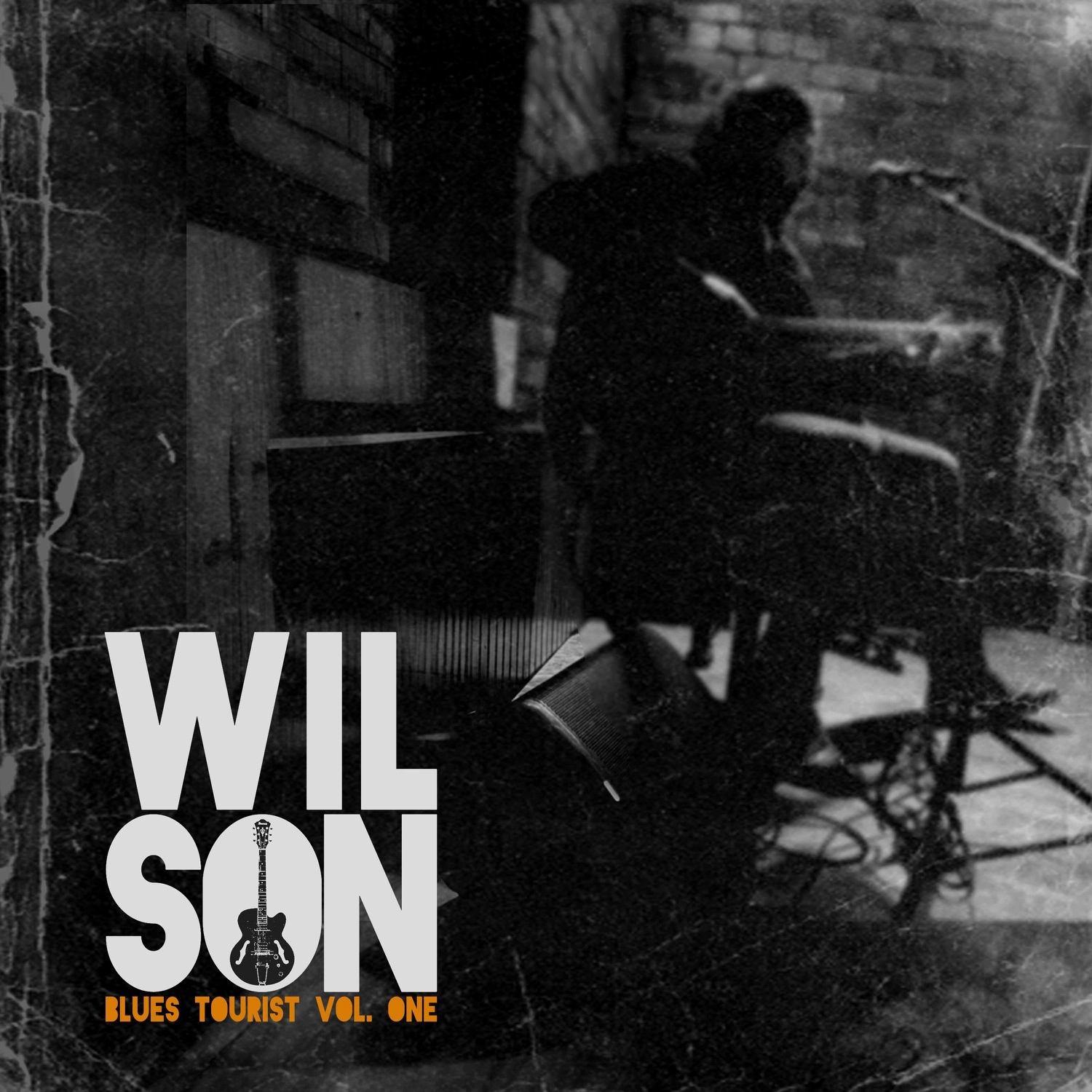
In June 2026, WIL.SON went back to an old song, and it became the first step towards Blues Tourist: Vol. 1. Devil On My Shoulder first appeared on Serpentine, his 2016 debut solo album. He recorded it again the way he plays it live: one guitar, his voice and a stomp-box, with no overdubs. Three weeks later, on 10 July, the West Yorkshire singer-songwriter applied the same rule to eight songs and had a stripped-back blues album.

WIL.SON’s Devil On My Shoulder, the opening song of Blues Tourist: Vol. 1, is in the playlist below, and his earlier coverage sits on his artist profile. The album reached this desk through PopHits.Co Music Charts, which verifies independent artists and places their releases across its network of music news titles. Give it a spin, then read on.

WIL.SON on One Guitar, a Stomp-Box and the Making of Blues Tourist: Vol. 1

Ten Years After Serpentine, WIL.SON Records Blues Tourist With Just One Guitar and a Stomp-Box

The timing makes sense. Ten years after Serpentine, WIL.SON has four studio albums behind him: Serpentine (2016), Afraid Of The World (2019), Black Is The Sky (2022) and Force Of Nature (2025). Every song on Blues Tourist: Vol. 1 comes from those records. This time, though, he kept only what he can play alone. The title also carries a volume number, which leaves room for more.

Three Decades of Writing Before One Guitar and a Stomp-Box

The decision also fits a long career. On his own site, WIL.SON says he has spent more than three decades writing, recording and performing. First came the 1990s live circuit with his band The Stand, including the Leeds venues The Duchess and The Cockpit. Later he formed the heavy rock band Down The Machine, signed with Ambicon Records and played Leeds Festival and Bingley Festival.

Meanwhile, he kept writing quieter songs. Those stripped-back acoustic tracks became the foundation of his first solo album. His first single as a solo performer, Closing In, came out in 2012. Since then he has played festivals across the UK, including The Great British Rhythm & Blues Festival. He has also shared stages with Toploader, and BBC Introducing’s Alan Raw has supported his music.

The blues thread runs back to the start, too. When the Spanish-language music site 120dB Bogotá covered Laying Low ahead of Force Of Nature, it described Serpentine as rooted in blues and alternative folk. The same article noted that radio stations from North Yorkshire to North Carolina had played songs from Black Is The Sky. It also pointed to the strings and piano around the guitar on Laying Low. Blues Tourist: Vol. 1 goes the other way.

Eight Songs From Serpentine to Force of Nature, Recorded Again With One Guitar and No Overdubs

The album opens with Devil On My Shoulder, the one song taken from Serpentine. Next come three from Afraid Of The World: Caught In The Rain, Coming Home and Snake And A Thief. After that, Black Is The Sky supplies three more, with Same Shit, Different Day, Don’t Wear Me Down and This Hell Of Mine. Finally, Don’t Get Me Wrong, first heard on Force Of Nature, closes the set in acoustic form.

The whole album runs for about 27 minutes, and no song passes four and a half minutes. Coming Home is the shortest at two minutes and 17 seconds, while Devil On My Shoulder is the longest at four minutes and 22 seconds. In other words, you can hear the set in one sitting and then follow each song back to its source album.

One Pass, One Guitar and a Foot on the Stomp-Box

The method is simple to describe. A stomp-box is a small box the player strikes with a foot, so it supplies the beat while both hands stay on the guitar. No overdubs means nothing was layered on afterwards. As a result, the guitar, the voice and the rhythm all come from the player in the room. On X, WIL.SON calls these recordings raw performances, caught as they happened.

His own site describes his sound as rock, blues, acoustic folk and alternative music, shaped by a love of honest but often dark songs. The titles here point the same way. Within eight tracks, a devil on the shoulder, a snake and a thief, and a private hell all turn up.

WIL.SON on One Guitar, a Stomp-Box and the Making of Blues Tourist: Vol. 1

Who Blues Tourist Is For, From John Lee Hooker Fans to Listeners New to WIL.SON

The first answer is practical. The album gives new listeners one clear way into a catalogue of four albums and more than a dozen singles. Anyone who starts here can trace each song back to the record it came from.

The second answer comes from blues history. In 1948, John Lee Hooker recorded Boogie Chillen’ as a solo performance: his voice, an electric guitar and rhythmic foot stomps. It was his debut release, and in 1949 it became the first down-home electric blues song to reach number one on the R&B chart. A stomp-box does the job Hooker’s foot did, turning one player into a rhythm section.

The third answer is closer to home. In Britain, Seasick Steve showed how far that setup can travel. On New Year’s Eve 2006 he played Dog House Boogie on Jools Holland’s Hootenanny, using a three-string guitar and a stomped wooden box he calls the Mississippi Drum Machine. After that show, his popularity in Britain took off. WIL.SON works with a similar kit: one guitar, one voice and a box under his foot.

So who is it for? It suits listeners who like one-player blues with plain-spoken, dark-edged titles. It also suits anyone who knew WIL.SON from the Leeds rock scene and never followed the solo albums.

From the NewMusic.News Curator Team: “Recording without overdubs leaves nowhere to hide, and that is the point of Blues Tourist: Vol. 1. It is the closest thing to a WIL.SON solo show you can hear at home, and it makes the original albums worth a second visit.”

How to Hear Blues Tourist and Where to Follow WIL.SON

Start with Devil On My Shoulder, then play the eight songs in order. After that, go back to the album each song came from and compare the two versions. If one song stays with you, its source album is the natural next step.

The album is also on Apple Music, and the album’s smartlink lists every other service. Then follow WIL.SON, who posts as Wilson Music UK, across platforms:


Ada Rovatti on Piloo, Her Late Father and the Making of Done Deal

A Comic Duet for Kurt Elling and Niki Haris Closes a Record Written Through Loss

In July 2021, once travel reopened, Ada Rovatti flew home to Mortara to see her ailing father. She reached him a few hours before he died, and he greeted her as Piloo, her childhood nickname. Two and a half years later, Ada Rovatti closed the album named after that nickname with Done Deal. It is a comic gospel and jazz dialogue for Kurt Elling and Niki Haris.

Ada Rovatti’s Done Deal sits in the playlist below, among the jazz, classical and modern composition this desk has collected there, and her artist profile gathers her wider coverage. The single reached NewMusic.News through PopHits.Co Music Charts, which verifies independent artists and places their releases across its network of music news titles. Put it on, then keep reading for the story of the father behind the title.


Ada Rovatti on Piloo, Her Late Father and the Making of Done Deal

Written Through the Pandemic and a Final Visit to Mortara, a Record Took Shape Around Mario Rovatti

Rovatti wrote most of The Hidden World of Piloo during the COVID years. Speaking to Lee Mergner of WBGO, she described the album as a snapshot of that time in her life. That period ended with her father’s death in 2021. For a year and a half before then, she could not travel home to Italy at all.

She later told DownBeat that losing Mario Rovatti hit her hard, because the two of them were very close. He died one month short of his 90th birthday.

The title keeps him in plain sight. As a child, she heard a story about a mischievous little cat called Piloo. Her father gave her the name because she behaved the same way. Years later, she gave it to her own label, Piloo Records, which has released her albums since Green Factor in 2009. Naming the album after his word for her turns the whole record into a conversation with him.

The obvious route would have been an elegy. Instead, Rovatti decided against it. She told WBGO that she did not want the album to sound like a record of mourning. Rather, she meant it as a celebration of him. The father she describes explains that choice. In her telling, Mario Rovatti lived in Africa, travelled the world and was always the life of the party. He was a funny man who kept the family door open to visitors at any hour.

Ada Rovatti Closes the Album With Done Deal, a Bluesy Dialogue for Kurt Elling and Niki Haris

Ada Rovatti released Done Deal first, as a single on 4 January 2024. Two weeks later, it took the last place among the ten tracks of the album. The record arrived on 19 January, credited to Rovatti with her husband, the trumpeter Randy Brecker. At seven minutes and 45 seconds, it is long for a joke. It uses the time to tell a full story.

The words are hers. She told WBGO that she tried lyricists first. Their samples did not match how she felt, so she wrote her own. DownBeat described the result as an amusing dialogue that imagines God as a Black woman. In the song, a man believes he has met God and finds that God is a woman. He then goes home to pass on what he has learned about changing his life. By the end, though, he has slipped back into the same daily routine. That return to the ordinary is the final twist.

The casting explains why the joke works. Elling has won two Grammy Awards for Best Vocal Jazz Album, for Dedicated to You and Secrets Are the Best Stories. He also once studied at the University of Chicago Divinity School. That gives a song about meeting God a quiet extra layer. Haris, meanwhile, spent fourteen years as one of Madonna’s backing vocalists. She also sang lead on several Snap! singles in the early 1990s, and her pop and R&B background answers him from the other side.

Early listeners picked up on the mood. Hot New Songs Blog listed the single in a January 2024 round-up of new jazz. Similarly, the reviewer at Phil’s Picks heard it as the album’s bluesy finale.

Watch the video and check the artist’s YouTube channel for more.

Ada Rovatti on Piloo, Her Late Father and the Making of Done Deal

Why a Comic Meeting With God Ends a Record Rovatti Chose Not to Make Mournful

The album’s quieter songs carry the grief more directly. Rovatti finished Take It Home, a gospel-flavoured song sung by Haris, the day before she flew to see her father. She also wrote Make Up Girl for her teenage daughter, Stella. On record, she plays it with Brecker as a call and response between the two parents. Against that background, Done Deal answers loss with laughter. That suits a man his daughter remembers as the life of every party.

It also delivers the hidden side the title promises. Rovatti told DownBeat that people usually meet a cheerful, outgoing musician. This record, she said, shows a more private and observant one. Ending with a comic duet lets both versions of her share the last word.

For listeners, the track sits in a long line of saxophone-led records where church feeling meets a jazz groove. Cannonball Adderley showed with Mercy, Mercy, Mercy in the 1960s how far gospel phrasing could carry a jazz band. Similarly, Kirk Whalum has built a whole series of albums around The Gospel According to Jazz. Done Deal belongs to that conversation, with a story told in two voices on top.

The song suits listeners who like their jazz with a plot and their gospel with a smile. It also suits anyone who knows Elling from his ballads and wants to hear him play for laughs. For a wider view of the record, Piloo Records has posted an album trailer on YouTube.

From the NewMusic.News curator team: “Done Deal ends a record about loss with a punchline instead of a requiem. Elling and Haris trade the story line by line over a gospel groove. The closing return to ordinary life is the warmest joke on the album.”

Where to Hear Done Deal and Follow Ada Rovatti Online

Stream Done Deal by Ada Rovatti on Spotify and Apple Music. Then follow her on Spotify, Apple Music, Deezer and SoundCloud.

She shares news on Instagram and Facebook. Her official site carries the discography and upcoming dates.


Inside Ain’t I the Fool: How Jack Hoban Built a Blues Confession Around Bernard Purdie’s Drums

A Jersey Shore Songwriter Hands the Drums on His Blues Confession to Bernard Purdie

For one song on his 2021 album Blue Beach, Jack Hoban gave the drum stool to Bernard “Pretty” Purdie. Purdie is the session drummer who gave his name to the Purdie shuffle. That song is Ain’t I the Fool by Jack Hoban, track five of twelve, released on 31 May 2021. It is a blues about owning your mistakes, recorded with a drummer who has spent six decades making other people’s songs move.

Jack Hoban’s Ain’t I the Fool sits in the playlist below with our R&B, neo soul and soul picks, and Jack Hoban’s artist profile holds the rest of the coverage. The single reached this desk through PopHits.Co Music Charts, which verifies independent artists and places their releases across its network of music news sites. Give it a listen first, then read on for how Bernard Purdie ended up on the drums.


Inside Ain't I the Fool: How Jack Hoban Built a Blues Confession Around Bernard Purdie's Drums
Inside Ain’t I the Fool: How Jack Hoban Built a Blues Confession Around Bernard Purdie’s Drums

Jack Hoban Recorded Blue Beach Through the Pandemic, With Bernard Purdie on Ain’t I the Fool

Blue Beach is Hoban’s second album of songs about, and inspired by, the sea. The first, BellaMar, came out in April 2020, and he returned to the same shoreline a year later. In his own notes on the album, he wrote that people call this kind of music yacht rock these days. Then he added, drily, that he does not own a yacht.

Many of the songs were written and recorded during the pandemic. He described the record as carrying both the happy and the sad feelings of that time. Life and music, in his telling, rise and fall like waves. That mood matters for Ain’t I the Fool. It is a song about looking back at your own mistakes with a straight face and a loose groove.

The album came out on Memorial Day, 31 May 2021. Hoban produced it with Steve Jankowski. Jankowski also engineered and mixed it at Jankland Recording Studio, and he played trumpet and trombone. Meanwhile, Randy Ledet played keyboards and Buddy Savino played bass, with Deb Lyons and Katie Stemkovsky on background vocals. Finally, Scott Hull mastered it at Masterdisk.

Bernard Purdie Plays Track Five of Blue Beach for a Jersey Shore Songwriter He Already Knew

The drums on Blue Beach were shared out song by song. Ilya Stemkovsky played on five tracks and Bobby Boyd on five more. Purdie played on exactly one, and it is Ain’t I the Fool.

His name carries a lot of history. He was Aretha Franklin’s musical director for five years from 1970. He also played the shuffle on Steely Dan’s Home at Last and Babylon Sisters. By most counts he has played on more than 4,000 recordings, and in 2013 the Modern Drummer Hall of Fame inducted him.

A Friendship Already on Record

Besides, Purdie was not a stranger to Hoban’s music by 2021. He produced Jersey Blue, Hoban’s jazz and blues album released in May 2020, with songs written by Hoban and Gene McCormick. In turn, Hoban wrote the songs, played guitar and co-produced Testify, a Purdie album. John Korba arranged it, and it was recorded at Lakehouse in Asbury Park and at Jankland. The two have played live together as well. In July 2021, Hoban’s YouTube channel posted clips of Purdie with Rogues on the Run at The Falcon. So when Purdie sat down to play on Ain’t I the Fool, he was playing for a songwriter he already knew well.

Watch the video and check the artist’s YouTube channel for more.

Inside Ain't I the Fool: How Jack Hoban Built a Blues Confession Around Bernard Purdie's Drums
Inside Ain’t I the Fool: How Jack Hoban Built a Blues Confession Around Bernard Purdie’s Drums

On Ain’t I the Fool, Jack Hoban Answers Heartache With Blue-Eyed Soul Swagger, Not Self-Pity

Hoban’s own songwriting has always leaned towards the blues. Alongside his solo records he plays with his band, Rogues on the Run, a jazz and blues outfit from the Jersey Shore. The band has played local venues and festivals and opened for BB King, and their retrospective album covers 1996 to 2015. Today he is based between New Jersey and Hawaii, and he writes everything from ballads to jazz-flavoured adult contemporary songs.

Ain’t I the Fool sits where those two lives meet: AOR polish, blue-eyed soul phrasing and a blues subject. Zillions Magazine heard a song that treats the blues as a badge of honour rather than a reason to sulk. In its reading, the lyric looks back at missed chances in love and chooses honesty about mistakes over self-pity. The same review singled out Hoban’s guitar as intense but smooth, and his voice as smoky and self-assured. It also named Purdie’s drumming as the thing that keeps the whole song moving.

In the end, that is the answer the song gives. It admits the foolishness in the title, laughs at it a little, and keeps the groove going anyway.

For Listeners Who Know Steely Dan and Hall & Oates

The comparisons almost suggest themselves, because Purdie has played for both. Steely Dan built their late-1970s albums on session players of exactly his calibre. His shuffle on Home at Last is part of why Aja still sounds so easy to live with. Hall & Oates used him on Abandoned Luncheonette in 1973, and the Philadelphia duo’s mix of rock, soul and rhythm and blues made them one of blue-eyed soul’s best-known names. Listeners who love either will find the same instincts in Ain’t I the Fool. The songwriting comes first, the drummer never overplays, and the vocal has a smile in it.

From the NewMusic.News Curator Team: “Ain’t I the Fool gives Bernard Purdie five and a half minutes and a song that knows how to laugh at itself. Jack Hoban wrote a confession and recorded it like a celebration, and that is the right call for a blues this honest.”

Where to Hear Jack Hoban and Ain’t I the Fool

Stream Jack Hoban on Spotify, Apple Music, Bandcamp and SoundCloud, and find Blue Beach on Deezer. His videos, including the Blue Beach uploads and the live clips with Purdie, sit on his YouTube channel. Follow him on Instagram, Facebook and X, and read about the rest of his catalogue on his official site.