Month: July 2026

Rachel Chinouriri’s Second Album Is One Night Out, Five Years Long

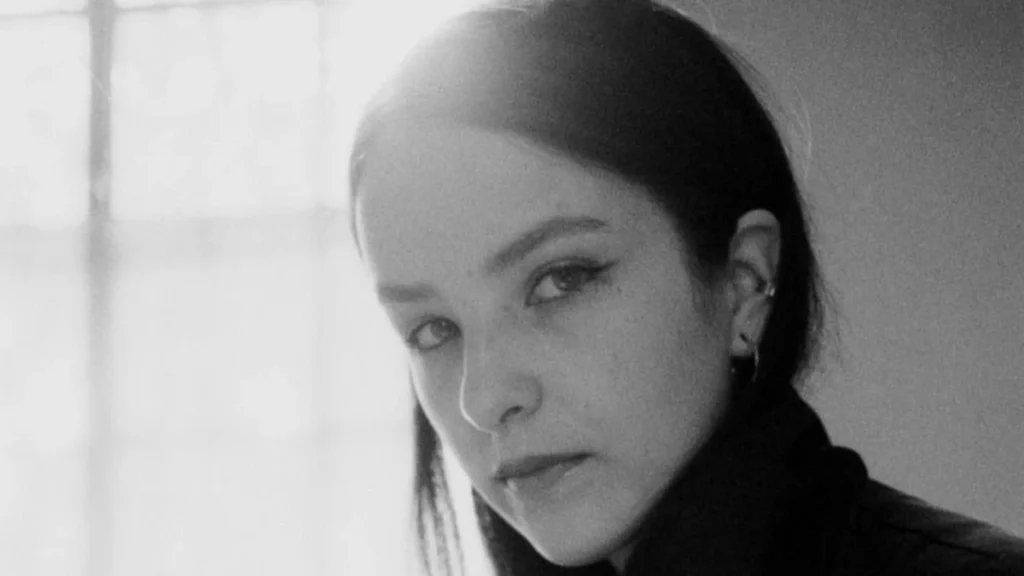
Rachel Chinouriri, photographed for the announcement of her second album I think I spoke too soon

Three place names sit on the credits of Rachel Chinouriri’s second album, and one of them does not belong with the others. London and Los Angeles are where British pop records get written. Hereford is not, and part of I think I spoke too soon was made there anyway.

That is the kind of detail that only reads as a decision in hindsight. The record arrives on 16 October through Parlophone and Atlas Artists, and its architecture is stranger than a release note makes it sound. Chinouriri did not write a set of songs about her twenties. She wrote one night out, and put five years inside it.

A Night Out That Took Five Years to Write

The governing idea of the album, as Chinouriri has described it, is that the whole thing lasts one evening. Her formative years are compressed into a single night, with every version of herself from that stretch sharing the same floor at the same time. The span she documents runs from twenty-two to twenty-seven, which in her case takes in the writing and release of a debut album and everything that followed it.

It is a structural choice before it is a thematic one, and it does a job that a chronological record cannot. A night out has a shape: the arrival, the stretch where everything is working, the hour where the room tips, the decision about when to leave. Threading half a decade through that shape gives a writer somewhere to put material that would otherwise sit as separate songs about separate years, each one arriving with its own explanation. Here the explanation is the setting.

Chinouriri has said the record takes in her sobriety, the transformation of her inner and outer worlds, femininity and relationships, and that the idea underneath all of it works as a kind of permission slip: that a person can change who they are at any moment, and forgive themselves at any moment. Forgiveness, in her framing, is the step that comes first. Everything else follows from it.

Why the Same Four Names Kept Coming Back

Four of the people on the credits are described as longtime collaborators: APOB, Mary Weitz, Glen Roberts and Daniel Hylton-Nuamah. On a major-label second album, that much continuity is worth noticing. The usual pressure after a debut that performs is to widen the room: to bring in writers with recent hits attached, to book sessions with people whose names do useful work on a credit sheet.

Keeping a settled writing room does something different. It removes the first two days of every session, the part where everybody establishes what the artist will and will not do, and it means a bad idea can be called a bad idea without anyone losing face. Records made this way tend to sound less negotiated. Whether that is what happened here is something the album will answer in October, but the personnel decision was made long before the release date was.

The Two New Voices in the Room

Two names are credited as new: Lucy Dacus and Eli Teplin. Adding a small number of outside writers to an established group is a narrower move than reopening the room entirely, and it is a common way to keep a second album from repeating the first without dismantling what made the first work.

It also changes the arithmetic of a session. A settled team knows the artist’s instincts well enough to protect them; a new writer has no reason to protect anything and will suggest the thing nobody in the room would have said out loud. Two of those against four people who know the catalogue is a deliberate ratio, not an accident of scheduling.

Three Cities on One Set of Credits

The writing and recording happened in London, Hereford and Los Angeles. Two of those are obvious. London is home and the industry’s centre of gravity; Los Angeles is where a British artist with an American touring calendar ends up spending session time whether or not that was the plan.

Hereford is the one that has to be chosen. Nobody drifts into recording there between other commitments, which makes it the closest thing on the credits to a stated intention: a stretch of work done somewhere with no industry to walk into afterwards and nobody dropping by. For an album built around the small hours and what a person admits to themselves in them, a location with nothing else going on is not a neutral detail. Read across all three, the geography of Rachel Chinouriri’s second album looks less like a schedule and more like a sequence of deliberate rooms.

The Single That Sits on the Edge of Leaving

The first song released from the album is “One song away from crying,” a synth-pop track with a video directed by Dora Paphides. It sets its scene on a dancefloor at the exact point where a good night stops being one.

“‘One song away from crying’ is about the precipice of a night out where you know you need to leave and have to make a decision,” Chinouriri said in the announcement. She has added that underneath the scene sits a deeper conflict with self-worth that has not yet been looked at directly.

As a lead single it is doing double duty. It works on its own terms, and it also explains the structure of the album in advance: this is a record that lives at the hour when the room is still full and one person in it has already decided to go home.

What Changed Since the Debut

Chinouriri’s first album, What a Devastating Turn of Events, came out in 2024 on Parlophone and reached the top twenty of the UK Official Charts. It brought two BRIT Award nominations, for Artist of the Year and Best New Artist, and it followed a run of releases that had already earned her an Ivor Novello nomination: the 2021 project Four° in Winter and the 2022 EP Better Off Without. An EP, Little House, came after the album.

That sequence matters to how the second record reads. This is not a debut written in private and released into silence, and it is not a rushed follow-up either. It is the album made by someone who has now watched her own songs travel, played them to rooms of people who already knew them, and had to decide what to do with the version of herself that existed before any of that happened. Putting that person on the same dancefloor as the current one is a fairly direct answer.

The Road to 16 October

The touring run around the record opened at the El Rey in Los Angeles on 26 August, with September dates in Dublin, London, Brussels, Paris, Amsterdam and Berlin before the album itself lands. Playing an album’s worth of unreleased material to rooms that have not heard it is its own kind of edit, and it happens here in the weeks directly before release rather than after it. Songs written for a specific hour of the night get tested in rooms the writer will only ever see once, which is a problem this desk has looked at before.

I think I spoke too soon is released on 16 October via Parlophone and Atlas Artists. Until then, the only evidence of what Rachel Chinouriri’s second album actually sounds like is one single, a set of credits and three cities that do not obviously belong on the same page.

This article was AI-assisted and edited for accuracy.
Czarface’s Mystery Rapper Has Never Confirmed He Is Tom Hardy

The most-discussed rapper on a record released this week has not given an interview about it, has not appeared in a photograph for it, and has never said who he is.

Czarface Meets Frankie Pulitzer arrived on 28 August 2026. Frankie Pulitzer, the name sharing the title, has been turning up on Czarface records since 2021 without ever stepping out from behind it.

Five Years of Verses Before an Album

The persona is not new, which is the part most of the coverage skips past. Czarface began working with the anonymous rapper in 2021, when Pulitzer appeared on their Good Guys, Bad Guys EP. Several of those tracks were used in Venom: Let There Be Carnage that same year.

More followed. Rolling Stone counts a run of appearances since, including a track called “Knull & Void” on which Pulitzer rapped alongside Method Man. Method Man returns on the new album, as do Busta Rhymes and El-P.

That sequence matters because it inverts the usual shape of a celebrity rap project. The normal version is an album first, announced loudly, with the famous name doing the announcing. This one ran the other way round: five years of guest verses on somebody else’s records, then a co-headline credit. Whoever Pulitzer is, he served an apprenticeship before he got a cover.

What the Reporting Actually Says

Billboard named the actor Tom Hardy outright when it covered the album announcement in June, describing Hardy as “stepping in the booth and turning on his rap persona Frankie Pulitzer, aka ‘Face Puller'”. Rolling Stone reported it the same way, calling the record Hardy’s debut rap album.

Wikipedia’s account of the group is more careful, and worth quoting exactly: the identification of Pulitzer as Hardy “has been widely speculated”, it notes, “although Hardy has never publicly confirmed this”.

Both things are true at once. Two major music publications have reported the identity as settled; the person concerned has said nothing. That is a distinction worth preserving rather than collapsing, and it is also, plainly, part of the appeal. An anonymous rapper whose anonymity everybody claims to have solved is a better character than either a confirmed celebrity or a genuine unknown.

A Rap Backstory That Predates the Persona

What makes the reporting credible is that it does not rest only on a voice. Rolling Stone points to a mixtape, Falling on Your Arse in 1999, which surfaced online in 2018: lo-fi tracks with Hardy rapping under the name Tommy No 1, over beats made by the British writer-director Edward Tracy. It was the first time anyone outside that circle had heard him attempt it, and it was received better than a curiosity of that kind usually is.

There is also a documented starting point for the Czarface connection. Billboard recalls Busta Rhymes visiting Hardy on a film set years ago and posting a photograph of the two of them with a caption hinting at work to come.

None of that confirms anything. It does establish that the rapping is not a sudden idea, and it explains why the group treated the collaboration as ongoing rather than as a one-off stunt.

The Group Was Built for This Kind of Thing

Czarface has always been a costume. The supergroup formed in 2013 from the underground duo 7L and Esoteric plus Wu-Tang Clan’s Inspectah Deck, and released its self-titled debut that February. Every Hero Needs a Villain followed in 2015 and A Fistful of Peril in 2016, both well received, and across those releases the group moved between Brick Records, Silver Age and latterly Virgin Music Group without the comic-book conceit ever wearing thin enough to drop.

Even the formation followed the pattern Pulitzer is now repeating. Inspectah Deck had appeared on two 7L and Esoteric records long before Czarface existed: “Speaking Real Words” on 2001’s The Soul Purpose, then “12th Chamber” on 1212 in 2010. Twelve years of occasional guest work came before anyone decided the partnership deserved a name. Set against that, five years of features before a co-headline credit is not an oddity. It is house style.

Esoteric has described the project’s origin as fun between friends that turned into a character standing in for all three of them. Inspectah Deck told Vice the name was chosen to echo Scarface, wanting their shared persona to earn the kind of devotion that film’s lead attracts. Deck’s account of the debut’s ambition, given to HipHopDX in 2013, was that it had no goal beyond making “something worth listening to”.

A group already operating behind a collective alter ego, with comic-book artwork and a villain mythology, is the natural home for a rapper who will not give his name. Pulitzer is not an anomaly inside Czarface’s world. He is the logical extension of it.

The Single Suggests He Can Hold the Room

“Brothers Grimm”, released with the announcement in June, is the evidence available. It runs on a Nineties East Coast beat, and the running order is instructive: Inspectah Deck and Esoteric take their verses first, and Pulitzer follows them.

The company on the rest of the album makes the same point. Busta Rhymes, Method Man and El-P have each spent decades being the most conspicuous voice on other people’s records, and placing an unidentified rapper among them invites precisely the comparison a vanity project would be built to avoid.

Following a Wu-Tang member is not a courtesy slot. Rolling Stone’s verdict on the result was blunt enough — the song, it wrote, “goes pretty hard”. Billboard printed the opening of Pulitzer’s verse in full: “I ride a pale horse with a face like Kaws / It’s the Source / Not the latest news / I’m divorced on the truth”.

Kaws is a contemporary artist, The Source a rap magazine of long standing, and the pale horse is Revelation. Whatever else is unresolved, the writing is doing work, and it is pitched at listeners who will catch all three references without help.

Why the Anonymity Holds

The commercial logic of a famous actor rapping usually points one way: use the name, take the coverage, accept that the music will be judged as a sideline. Withholding confirmation gives up that traffic on purpose.

What it buys instead is that the verses get assessed as verses. A listener who cannot be certain who is speaking has to judge the bars, and five years of features means there is a body of them to judge. Our piece on how features became a career strategy covers the more usual reason artists take that route; this is close to the opposite use of the same mechanism.

There is a practical wrinkle in it, too. A screen actor’s voice is his working instrument, and it is recognisable in a way a producer’s is not, so an anonymity that survives five years of released verses is either an open secret a lot of people have agreed to keep, or an identification less certain than the headlines make it sound. The coverage has settled firmly on the first reading. What is carrying that consensus, though, is the absence of a denial — and an absence is not a statement.

Czarface, for their part, have never treated the question as theirs to answer, and the album title poses it without resolving it. Five years in, that still looks like the point.

Czarface Meets Frankie Pulitzer is out now.

Flo Moved Their Album for Vocal Cord Surgery and Still Debuted at Five

On 30 June, six weeks after announcing their second album, Flo told their audience it would not arrive when they had said. The reason was not a mix, a sample clearance or a label calendar. One of the three singers needed surgery on her vocal cords.

Jorja Douglas’s operation moved Therapy at the Club from 24 July to 7 August. The record still opened at number five in the UK.

A Delay Announced Rather Than Disguised

Two weeks is a small move in absolute terms and a significant one in practice. An album release is a chain of bookings — press, radio, television, retail, playlists — and shifting the centre of it forces every link to be renegotiated.

What Flo did with the gap is the interesting part. Rather than let the original date pass in silence, they released their third single, “Remedied”, on 24 July, keeping the campaign alive through the fortnight the album was not there. The delay also bought the promotional run more room, which the group said openly was part of the reasoning.

Stating a medical reason publicly is not the default. The safer move is a vague note about wanting more time, because a singer’s voice is her livelihood and any suggestion of damage to it invites speculation about the future. Naming the surgery closed that speculation down instead of feeding it.

The Chart Result Made It a Footnote

The album entered the UK chart at number five. That placed Flo as the first British R&B girl group to debut both of their first two studio albums inside the top five, following Access All Areas, which reached the top three in November 2024 and also gave the group their first entry on the Billboard 200.

That debut had already brought a Grammy nomination, for Best Progressive R&B Album at the 68th Annual Grammy Awards, which went to Durand Bernarr. An “unlocked” edition of the record followed, adding “Recently Deleted”, “Do Too Much”, “Say Less” and “Conceited”.

A second album debuting close to the first is a harder result than it sounds. The audience that arrives for a debut is partly curiosity, and holding it through a second cycle is what separates a group with a career from a group with a moment.

The Album Started on a Twitch Stream

Flo formed in 2019 and built their audience through two EPs, The Lead in 2022 and 3 of Us in 2023, before the debut album. Writing for the second began soon after the 2025 Access All Areas Tour, which Douglas told Elle was deliberate: the group had come off a long cycle feeling out of practice, and starting early kept the pressure low.

The first public sign of it came on 4 February 2026, when the group appeared on a Twitch stream with the rapper and streamer PlaqueBoyMax. They cut live vocals for “Pose” in his studio, Juicy J turned up on the same stream, and they previewed “Leak It” there, confirming a March release. An NPR Tiny Desk appearance followed, where they aired the title track and “Haterbooth” before either existed as a release.

Debuting album material on a rapper’s livestream and a public radio session, rather than through a magazine exclusive, is a distinctly current way to run a rollout, and it puts the songs in front of listeners in unfinished form.

The Producer Roster Changed Shape

The most telling credit on Therapy at the Club is an absence. MNEK, the collaborator who shaped much of Flo’s earlier sound, produced exactly one track here, “Call Me”. The rest is spread across an unusually wide roster, including Amy Allen, Julian Bunetta, Oak Felder, Pop Wansel and Tommy Brown, with writing from Amma and Sevyn Streeter among others.

Handing a signature sound to twenty-odd producers is a risk, and it is the standard route by which a distinctive group becomes a generic one. The counterweight, according to the group’s Billboard interview, was that they took more creative control themselves: Renée Downer framed the record as a reflection of who Flo are as artists and as women, with speaking up in the studio central to how it came together.

That is the trade being made. More rooms, more collaborators, but a firmer hand from the three people whose names are on the cover.

The move was deliberate and the references were specific. Speaking to Elle, the group named Ariana Grande, Beyoncé and Christina Aguilera as touchstones, with Douglas and Downer pointing to Grande’s Yours Truly and Dangerous Woman as models for moving into pop-R&B. Downer’s reasoning was practical: working with more pop collaborators, they wanted examples of artists who were genuinely good at R&B and still made popular music.

Stella Quaresma described the process to the BBC in similar terms, enjoying the chance to blend genres and make bigger songs. The influence shows in the comparisons critics reached for: “Remedied” was measured against Aguilera’s “Ain’t No Other Man” and Raye’s “Where Is My Husband!”, both records that use live horns to do the lifting.

What the Title Actually Means

The album is pop and contemporary R&B, keeping the 2000s frame of the debut while pushing into jazz, acoustic, dance and synth-pop. It was recorded between July 2025 and January 2026 and runs to forty-six minutes.

The title came from the song rather than the other way round. Amma, who co-wrote for the debut, wrote the title track — a slow piano ballad closer to 1960s girl groups than to anything a club would play — and the group took the phrase from there.

Speaking to Zane Lowe, Douglas explained that “club” points at feeling rather than genre. “You don’t necessarily hear the riffs and runs in the club,” she said. “It’s more just about the emotions that we feel in the club.” Read that way, the record is a breakup album that happens to be set on a night out.

The Songs Range Wider Than the Concept Suggests

The sequencing bears that out. “Side Effects” opens with melodic rap over an R&B base, using drug side effects as a figure for the consequences of love. “Small Doses” turns synth-pop, drawing comparisons to “Unholy”. “Cry Ugly” is a 2000s R&B ballad with a syncopated groove that runs straight into the lead single.

“Leak It” is the clearest departure — an uptempo 2000s pop record that critics measured against Girls Aloud, the Pussycat Dolls and Sugababes rather than any R&B reference. Elsewhere “Pose”, featuring Juicy J, interpolates Technotronic’s “Pump Up the Jam”; “I Can’t Be High Around You Anymore” samples Bone Thugs-n-Harmony’s “1st of tha Month”; and Kwn appears on “Sex in Peace”.

It closes on “Haterbooth”, a doo-wop-inflected pop song that Clash called a Motown-inspired reverie, and which Downer has named as her favourite for being the strangest thing on the record.

Why This Campaign Is Worth Noting

Groups delay albums constantly, and the reasons given are usually unfalsifiable. What makes this one worth recording is the sequence: a specific medical cause, named; a substitute release on the original date so the audience got something; and a chart result that suggests none of it cost them.

It also sits against a wider pattern, where the pressure on a second album is to consolidate quickly and the temptation is to hide anything that looks like a setback. Flo did the opposite, and the top-five debut is the strongest available argument that being straightforward about it carried no penalty. Our piece on what release day means now looks at how much that date still governs a campaign.

Therapy at the Club is out now on EMI.

Ela Minus Drummed in a Hardcore Band Before She Built Synthesizers

Before she made records on analogue synthesizers, Gabriela Jimeno assembled them. Not as a hobby, and not as an art project — as employment, on a production line at the instrument maker Critter and Guitari.

It is the least likely line on a CV that already contains a teenage hardcore band and a Berklee degree, and it explains more about how Ela Minus records than any of the usual influence-spotting does.

From a Bogotá Hardcore Band to a Berklee Double Major

Jimeno was born in Bogotá in 1990, and her first instrument was the drum kit. From the age of eleven until she was eighteen she played for Ratón Perez, a local hardcore band that toured Colombia, and the run was long enough to earn her a real profile in the country’s independent scene before she had finished school.

At nineteen she left for the United States and Berklee College of Music in Boston. What redirected her was not the curriculum but the city’s clubs, and rather than abandoning one discipline for the other she took both: a double major in jazz drumming and music synthesis.

That pairing is the whole architecture of her music in a single decision. Jazz drumming teaches timing as something elastic and reactive; synthesis teaches sound as something you build from nothing. Most electronic producers arrive with one of those and acquire the other slowly, if ever.

The hardcore years matter too, and not as trivia. A hardcore drummer plays loud, fast, and for a room that is physically responding to her — which is closer to what a club producer needs to understand than a conservatoire education would suggest.

The Day Job That Shaped the Records

After graduating she went to work at Critter and Guitari, building and designing synthesizers. Her own records are made mostly on analogue synths and drum machines, and she has named Kraftwerk and early Daft Punk as touchstones while listing improvisational jazz and techno as the influences underneath.

Knowing an instrument from the inside changes the relationship with it. A producer who has soldered a synth together understands what it will do at its limits, which parts of its behaviour are design decisions and which are accidents, and how far it can be pushed before it stops being useful. That is a different kind of knowledge from having read the manual.

It also tends to produce restraint rather than excess. Her catalogue is compact and unhurried — three self-released EPs, First Words in 2015, Grow in 2016 and Adapt in 2017, then Acts of Rebellion for Domino in 2020, and Día in January 2025, which was met with broad critical praise.

The Domino relationship began in 2020 with a single pointedly titled “they told us it was hard, but they were wrong”, followed that year by “megapunk”, “el cielo no es de nadie” and “dominique”. The run since has kept the same unhurried pace — “Combat”, “Broken” and “Upwards” through 2024, then “QQQQ” and “Ghost Orchid” around Día.

She sings in English and Spanish, which is less a marketing position than a straightforward consequence of who she is and where she has lived. She is now based in Brooklyn.

Nick León Came From the Other Direction

Her collaborator reached similar territory by an entirely different road. Nick León is a Miami-born producer and DJ whose early credits were in rap and pop — work with Denzel Curry, The Underachievers and Rosalía — before the single “Xtasis” brought him international attention and a place in the Latin club movement.

His own description of the work puts it at the intersection of electronic music, hip-hop and global club culture, built from textural experimentation, buried melodies and the sounds of everyday life. His most recent project, A Tropical Entropy, came out through the Medellín label TraTraTrax and takes the contradictions of Miami as its subject.

He has kept both careers running rather than trading one for the other, still taking commercial production work in pop and hip-hop while operating as a figure in the underground, and his sets have moved from Miami dance floors to festivals across Europe and South America. The Fader and XLR8R have both backed the work.

So one half of this partnership learned club music by building the machines, and the other learned it by making rap records and then following the rhythms outward. Neither started in the place they ended up.

What the EP Is, and What It Is Not

Clash reported the details in June: qué les pasó a mis amigos? — “what happened to my friends?” — arrived digitally on 7 August through Smugglers Way, an imprint operating under Domino.

It is an EP rather than an album, which is worth stating plainly because collaborative records between two established producers are often oversold as something larger. The lead track, “espiral”, works club energy without either voice swallowing the other.

A physical edition follows on 20 November: a 12-inch carrying remixes by Loidis, Guedra Guedra and Brenda. Holding the vinyl back three months from the digital release is a deliberate sequencing choice rather than a delay, letting the remixes function as a second release instead of a bonus nobody notices.

The pair are also billed for the first Smuggler’s Way showcase, at London’s ICA on 3 September, alongside Alexis Taylor and Mike Simonetti, and Guedra Guedra — who appears on the remix package as well.

A Second Collaboration, Not a First

This is not new behaviour for her. In 2022 she released “Kiss U” with DJ Python, another producer working in the same broad space between club music and something more interior.

Two collaborative EPs in four years, both with club producers, both outside the main album sequence, suggests a settled way of working: the albums carry the songwriting, and the collaborations are where the rhythm ideas go. That is a healthier division than trying to force both into one record.

Her live history supports the same reading. She has played Coachella twice, in 2022 and 2023, along with Primavera Sound, Pitchfork Music Festival, III Points, Portola and Cruel World, and toured North America with Caribou. That is a festival CV built on performance rather than on a hit.

Why Two Hardware Producers Meet in the Middle

What makes the pairing work on paper is that both of them treat sound as something physical. She learned it at a workbench; he built a body of work out of field texture and the noise of a particular city. Neither approach starts from a preset.

That shared instinct is why a Bogotá-raised, Brooklyn-based synth builder and a Miami rap producer do not sound like a compromise together. They are solving the same problem — how to make electronic music that feels like it was made by hands in a room — from opposite ends of it. Our piece on why guitar bands went back to tracking live covers the same instinct arriving in a very different genre.

For a producer who spent her teens playing hardcore in Colombian venues and her early twenties assembling other people’s instruments, an EP made with a Miami club producer is not a departure. It is the most consistent thing she could have done.

Qué les pasó a mis amigos? is out now on Smugglers Way, with a 12-inch edition on 20 November.

Kenny Segal Makes One Album per Rapper, and Doomed! Gathers Three

Somewhere in the last third of Doomed! an unnamed woman appears in an interlude and says the quiet part out loud: “Break ups are… tough.” It is the smallest possible thesis for a record that spends forty-one minutes taking one apart.

What is easy to miss, underneath the wreckage, is that the man who built the room it happens in has done this before. Repeatedly. With almost everyone in it.

A Producer Who Works One Rapper at a Time

Doomed! — issued in full as DOOMED!: Rap Songs About a Relationship That Ends in Every Possible Universe — arrived on 14 August 2026 through Backwoodz Studioz. Fifteen tracks, forty-one minutes and thirty-two seconds, and a single producer credit: Kenny Segal, who also recorded and mixed it.

That credit is the pattern of his whole career rather than a one-off. Segal does not scatter beats across other people’s albums so much as sit with one rapper and make an entire record. The list runs long: So the Flies Don’t Come with Milo in 2015, Hiding Places with Billy Woods in 2019, Back at the House with Hemlock Ernst the same year, Purple Moonlight Pages with R.A.P. Ferreira and the Jefferson Park Boys in 2020, Ajai with Serengeti that year too, and Maps with Billy Woods again.

It is an unfashionable way to work. The economics of production reward volume and placement — a beat here, a co-sign there, a credit on something that charts. Committing months to one voice is the opposite bet, and it only pays if the record is good enough that people remember who made it.

Segal came to it sideways. He was raised in Rockville, Maryland, played cello in school orchestras, and went to the University of Southern California on a computer engineering scholarship before switching his major to audio recording. He started out playing drum and bass at the Konkrete Jungle party in the 1990s, met rappers from the Project Blowed collective there, and moved toward hip-hop from that direction. He was among the first musicians to perform at Low End Theory. By 2018, Mixmag was calling him “one of the best hip-hop producers in the city”.

The Guest List Is His Own Back Catalogue

Doomed! carries three guests: Billy Woods, Gothic Tropic and Hemlock Ernst. Two of those three have already made an entire album with the man producing this one.

Billy Woods made Hiding Places with Segal in 2019 and Maps after it, and runs Backwoodz Studioz, the label releasing Doomed!. Hemlock Ernst — Samuel T. Herring of Future Islands, under his rap name — made Back at the House with Segal, also in 2019. Woods turns up on “She Swear I’m Colorblind”; Ernst on “Unfinished Concrete Initials”.

A features list is usually assembled for reach: who brings an audience, who is having a moment, whose name changes the algorithm’s mind. This one reads instead like a producer’s address book, and it says something specific about how these records get made. The people Segal calls are the people he has already spent a full album with.

It is also the reverse of the approach a debut usually takes. Our piece on the debut that arrived with no guests at all covers an artist who declined every relationship he had; Doomed! spends the ones its producer built.

What Segal Actually Put Under the Words

The production leans warmer and heavier than the records Open Mike Eagle has made lately. Pitchfork’s Dash Lewis, scoring it 7.8, describes a palette of childlike synth melodies and classic funk grooves “slathered in the faded-memory haze of tape-hiss saturation”, and notes that even at their dreamiest the beats push harder than the cassette-loop psychedelia of Eagle’s recent work.

The reason that matters is structural rather than decorative. “Segal makes sure to keep the low frequencies hefty and the drums chunky,” Lewis writes, “offering Eagle solid ground to stand on at a time when he’s most at risk of floating away.” On a record where the writer is coming apart, the producer’s job description is ballast.

There are real players on it, too, which is part of why it does not sound like a laptop. Aaron Shaw plays saxophone on two tracks and flute on one, Jordan Katz adds french horn and trombone to the opener, Ryan Crosby and Mekala Session bring guitar, bass and drums to the early run, Diego Gaeta plays Rhodes, and Daddy Kev mastered it.

A Breakup Told in Comic Books and Cancelled Plans

Eagle, raised in Chicago and based in Los Angeles, wrote the album out of a five-year relationship that had recently ended, and he mostly refuses to be solemn about it. On the title track he lists everything he has ever bailed on — his therapist, his family, a run of anime shows — before landing on the indignity underneath: “This breakup shit is ass. I saw Superman by myself, I saw the Fantastic Four movie by myself.”

The jokes are the delivery mechanism, not the point. “The Many Hustles of My Lonely Time Traveling Uncle” piles up absurd rackets until the hook arrives — “I used to make a lot of money” — and reframes the whole thing as someone talking too much at a dinner party that is going badly. “The Irredeemable Magic Man” is blunter: “I know what I did, ’cause I did it so many times.”

Lewis notes that Eagle strips away much of the multisyllabic rhyming he is known for in favour of plainer sentences, and delivers a lot of the record close to a whisper. The album closes on “Watching a Movie Called Freedom by Myself”, nearly six minutes long, with a line that refuses the comfort the rest of the record has been circling: “Ain’t no post-credits scene / We can all just leave.”

The Critics Split on the Same Quality

Doomed! holds a Metacritic score of 83 from nine reviews and 7.8 at Any Decent Music from eight. Slant gave it four and a half stars, AllMusic four, Anthony Fantano 8 out of 10, Paste a B, and Pitchfork 7.8.

The interesting part is that the outlier disagrees about the same thing everyone else praises. Jon Negroni at Slant admired how “the music remains restrained, allowing Eagle’s bombastic thoughts to simmer”, crediting Segal with dusty loops and worn-down samples that make each track “feel lived-in rather than merely produced”. AllMusic’s Paul Simpson called it “easily Open Mike Eagle’s most relatable work” for anyone who has been through a hard breakup.

The Guardian was cooler, at three stars, summarising the album as a pair who “muster a breakup record with glistening beats and lovelorn lyrics that mull over grievances without resolve”. Even Pitchfork, broadly admiring, concedes that the hushed delivery can make the record hard to sit with.

Restraint is the quality being argued over in every one of those verdicts. Whether it reads as control or as withholding depends on what a listener wants from a breakup album, and the record declines to settle it.

Why the Partnership Model Keeps Producing

What the Segal method buys is consistency of intent. An album assembled from eight producers has eight ideas about what the rapper is; an album with one has a single argument, and the argument can be revised over months rather than negotiated over email.

It also builds something the industry does not otherwise generate much of: a small group of people who have each been through the entire process together and can be called back years later. That is what the Doomed! guest list actually is — not a reach play, but three rappers who have all made a record with the same man, in a room, at length.

For a producer six months removed from his own Antinomian Pandemonium, and a rapper a year on from Neighborhood Gods Unlimited, that turns out to be a workable way to keep making things.

Doomed! is out now on Backwoodz Studioz.

Overmono Oven-Baked a Cymbal to Get the Sound of Pure Devotion

Most producers chasing an unusual texture reach for a plugin. Overmono put a cymbal in an oven.

It had been coated first, in coffee grounds, crisps and vinegar. That is one of several things the Welsh duo did to their equipment while making Pure Devotion, and it is the clearest statement of what the record was for.

Damage as a Working Method

Announcing the album in May, Tom and Ed Russell said they wanted it to carry the physicality of the studio itself rather than the smoothness of software. “We ran tape over magnets, blew up some speakers, and finally utilized that dirt-cheap, overclocked FX unit we snaffled years ago in Bromley,” the pair said. “We even oven-baked a cymbal covered in coffee grounds, crisps, and vinegar.”

What sounds like a novelty is a reasonable answer to a real problem. Software instruments are consistent by design, which is exactly what makes them hard to make strange. A ruined speaker distorts in a way nobody has modelled, and a cymbal that has been baked in vinegar rings differently from every other cymbal on earth, because there is only one of it.

The Bromley FX unit is the detail that gives the method away. Keeping a cheap, unreliable box for years and finally building a record around it is not gear fetishism; it is the opposite. The value is in the unpredictability, and unpredictability is the one thing an expensive, well-behaved instrument cannot supply.

Two Producers Who Started at Opposite Ends

The brothers did not arrive here from the same direction. Before Overmono, Tom produced hard techno as Truss and Ed made drum and bass and rave records as Tessela, including 2013’s “Hackney Parrot”. They played together briefly in 2012 as TR/ER, then began producing as a duo in 2015, and released their first EP, Arla, through XL Recordings in 2016.

Those two starting points are further apart than they look. Hard techno is built on repetition and pressure; drum and bass on rhythmic complexity and speed. Overmono’s records keep both instincts in play, which is why they can move between a locked four-to-the-floor pulse and broken breakbeat without either sounding like a guest appearance.

The separate careers were substantial in their own right rather than warm-ups. Tessela’s “Hackney Parrot” became one of the more widely played British club records of its year, and Truss had built a reputation in a techno scene that rewards severity over melody. Merging those two catalogues into a single project meant giving up two established names, which is a genuine cost and not one most producers accept.

They also run their own label. Ed founded Poly Kicks in 2013, and it has put out music by Joy Orbison and Special Request alongside the duo’s remix of For Those I Love’s “I Have a Love”. The name Overmono comes from Overmonnow, the part of Monmouth they grew up in, which is a fairly literal way of signalling that the project is a family concern first.

What Is Actually on the Record

Pure Devotion runs to eleven tracks and came out on 7 August through XL, three years after their debut Good Lies. Four guests appear across it: John Joseph Holt on “Knight in Shining Prada”, Kindora on “Even Angels Ghost” and again on “Ballad” alongside Rock Floyd, and Ruthven on “Gem Lingo (ovr now)”.

The rest — “Slowmotion”, “Barum”, “Mialon”, “Laxbrook”, “Adre”, “After the Rain” — carries no feature at all. For a duo whose profile has been rising through collaboration, that is a notably self-contained tracklist, and it fits an album whose selling point is the sound of its own making.

The lead single, “Lockup”, works from an unexpected source. It reshapes “What a Waste” by the Birmingham post-punk group Fast Relief into a driving four-on-the-floor club track — a post-punk record turned into dance music rather than the more familiar traffic in the other direction.

That choice of source says something about where the duo look for material. Fast Relief are not a canonical sample, and rebuilding a guitar band’s song as a club track requires stripping out most of what made it work in the first place. The gamble is that the remaining fragment carries enough character to survive being put on a four-to-the-floor grid.

The guest list is unusual for a similar reason. Ruthven, Kindora, Rock Floyd and John Joseph Holt are not names chosen to move an album up a chart, and four features across eleven tracks is restrained by the standards of a duo who have recently shared singles with Fred Again.. and Lil Yachty. Overmono have also released through AD 93 alongside XL, and the record keeps the smaller-label instincts of that side of their catalogue.

Three Years Spent Getting Louder

The gap since Good Lies was not idle. Overmono spent it sharpening the live act: a world tour, a Boiler Room set recorded in Manchester, and a Glastonbury performance. They had already been named UK’s Best Live Act at DJ Mag’s Best of British awards in 2021, before the debut album existed.

They stayed visible on record, too. In 2024 they remixed the Streets’ “Turn the Page” and worked with Fred Again.. and Lil Yachty on the single “Stayinit”. Pitchfork placed “Good Lies” at number 80 on its 100 best songs of 2023.

That is a lot of momentum to carry into a second album, and it usually pushes an act toward the safer, bigger-sounding record. Choosing instead to build one around broken equipment is a deliberate turn away from that pressure.

Why Ruined Gear Sounds Like Something

There is a long precedent for this in dance music, even if the cymbal is a new variation. The genre’s defining sounds have almost all come from equipment being used incorrectly: the Roland TB-303 was built to imitate a bass guitar and failed, and acid house came out of the failure.

What the Russells are doing is that principle applied by hand. Rather than misusing a machine’s controls, they are altering the machine physically — heat, magnetism, overload — so the thing producing the sound is materially different from the one the manufacturer shipped.

The trade-off is that none of it is repeatable. Bake a second cymbal and it will not match the first, which means the record cannot be reproduced exactly even by the people who made it. For an album about physicality, that is arguably the point rather than a flaw. Our piece on how the loudness war quietly ended covers the opposite instinct, an industry spending two decades making records behave.

A Second Album That Refuses the Obvious Route

The conventional second album after a well-received debut consolidates: bigger features, cleaner production, a song built to be played at the largest possible stage. Pure Devotion has four guests, most of them from outside the obvious pool, and a sound palette assembled from things the duo damaged themselves.

It is a bet that the audience Overmono built through touring came for the texture rather than the polish. Given that the live show is what earned them the award before they had an album at all, that looks like a reasonable read of their own crowd.

Pure Devotion is out now on XL Recordings.