
Electronic

Inside On y va: How Hub30 Built a Feel-Good Song From Reggae, House and a Bordeaux Lake

A Solo French Songwriter Wrote a Song About Moving Forward Together, and Made It Alone

Hub30 writes beside a coastal lake near Bordeaux, and the light on that water is where On y va begins. Released on 31 October 2025, the French single sets a reggae groove and a quiet house pulse under a pop melody. Its title, French for let’s go, is an invitation the whole song keeps repeating.

Hub30 is in the playlist below with On y va, a feel-good French single built on reggae and house, and his artist profile lists the rest of his coverage. The song reached this desk through PopHits.Co Music Charts, the programme that verifies independent artists and places their releases across its network of music news desks. Press play first, then read on for the lake behind it.


Inside On y va: How Hub30 Built a Feel-Good Song From Reggae, House and a Bordeaux Lake

Hub30 Writes Beside a Sea Lake Near Bordeaux, and Its Changing Light Runs Through On y va

The scene is worth holding on to. Qobuz picked Hub30 as one of ten French chanson artists to follow in 2026. In that piece, it placed him by a sea lake near Bordeaux, drawing on the changing light and the softness of the water. Beside it, the magazine wrote, he makes utopian songs in which he dreams of people uniting and of air that is easier to breathe.

The magazine even compared the project to Henri Matisse’s Open Window, Collioure, a painting that carries strong feeling through pure colour. The comparison suits the record, since On y va also works with a few clear colours: a pop melody, a reggae groove and a house pulse.

A Solitary Songwriter From Bordeaux Builds French Pop Around the Idea of a Crowd Moving Together

Hub30 is the project of Hubert Trentesaux, and he works alone. Extravafrench, the French music site, reviewed the single in December 2025. It called him a solitary figure from Bordeaux with a universal dream. It also heard his synths as if they had been rinsed by the Atlantic wind. In its words, he makes pop the way you open a window: to let the salt air in.

That is the contradiction at the heart of the record, and it is a good one. One person, writing by the water, makes a song whose whole subject is a crowd moving in the same direction. His own description of the track says it plainly: a mellow groove and a chorus that brings people together.

The French roots matter too. According to Qobuz, Hub30’s music starts in French songwriting and then takes regular detours into house and reggae. Even so, it never loses its feel for a simple, catchy melody. In fact, the magazine pointed to the offbeat On y va as proof of that balance.

Meanwhile, the lake was in the songs long before the press noticed it. Près du lac came out in December 2023, and Living by the Lake followed in February 2024.


Inside On y va: How Hub30 Built a Feel-Good Song From Reggae, House and a Bordeaux Lake

On y va Answers a Tired, Anxious World With a Mellow Groove and a Chorus Built to Gather People

The release itself is short and bright. On y va runs two minutes and fifty-two seconds, moving between pop softness, a reggae groove and a house pulse. Extravafrench heard the reggae touches as a nod to Bob Marley, a figure of peace and bright defiance. Then, it wrote, a discreet house beat turns the song into a place to gather, somewhere people dance to survive, or to love better.

The lyric stays direct on purpose. Extravafrench praised the catchy melodies and plain words. It also argued that this kind of clarity takes real precision rather than less effort. Beyond that, it heard the shadow of the Beatles, and of John Lennon above all, in the way the song reaches for utopia without sounding naive. That is the line Lennon walked on Imagine in 1971.

What the song answers is the mood around it. Extravafrench described On y va as a soft but determined call to catch your breath in a world saturated with anxiety. Seen that way, the title is less a slogan than an instruction: stop waiting, start walking, and do it together.

From the NewMusic.News Curator Team: “What we admire is how little the song asks of you. Two minutes and fifty-two seconds, one simple phrase, and a rhythm that does the persuading. Hub30 trusts the groove to make the case, and it does.”

Hub30 Followed On y va With Tu Déchires, and Where to Hear the French Single Now

The single also sits inside an unusually steady run of work. Hub30 has released 29 singles on Spotify since April 2023, starting with Les oiseaux migrateurs. After On y va came Tu déchires in January 2026, then Dunes in Motion, Au clair de la dune and To Do List.

The songs around it share its outlook. For example, Call Me Daddy, released in September 2025, captures the impatience and tenderness of a father-to-be. Similarly, his own site pitches Tu déchires as a song to wake up your inner strength and drive. So for listeners who like their French pop warm, unhurried and touched by reggae, On y va is the right place to start.

Stream On y va in the Spotify player above, or on Apple Music, Tidal, Amazon Music and YouTube. His 2024 song Living by the Lake is on YouTube Music, and his own Spotify playlist, Saison 1 : Hub30, gathers more of his songs.

Follow Hub30 on Spotify, Apple Music, Deezer, Tidal, SoundCloud, YouTube channel, Instagram, TikTok, Threads, X, Facebook and the official site.



Return Trip on Film Scenes, Spanish Roots and the Making of ReScore

Return Trip on Film Scenes, Spanish Roots and the Making of ReScore

A Cádiz-Based Composer Writes New Music for Scenes From The Sheltering Sky and Cosmos Laundromat On 17 June 2023, musicians…

The Long Way to CRYING STARS: Alex Shkudun on a Year of Poems, Piano and Three Languages

The Long Way to CRYING STARS: Alex Shkudun on a Year of Poems, Piano and Three Languages

A Ukrainian Songwriter Looks Down on Fallen Empires, Floods and Towers From the Night Sky Before CRYING STARS existed, Alex…

Inside Ghosts: How Abby Power Built a London Rap Single About Staying Yourself with SamXVI

Inside Ghosts: How Abby Power Built a London Rap Single About Staying Yourself with SamXVI

Brett Miller on Self-Doubt, One Second of Hope and the Making of Heaven

Brett Miller on Self-Doubt, One Second of Hope and the Making of Heaven

Rachel Chinouriri Built Her Second Album Around One Night Out

Rachel Chinouriri Built Her Second Album Around One Night Out

The Long Way to Yours Faithfully, OneNamedPeter's Album Signed off Like a Letter

The Long Way to Yours Faithfully, OneNamedPeter’s Album Signed off Like a Letter

Inside Proceed 2: How Kennard Built a Baltimore R&B Album From Loss and Patience

Inside Proceed 2: How Kennard Built a Baltimore R&B Album From Loss and Patience

WIL.SON on One Guitar, a Stomp-Box and the Making of Blues Tourist: Vol. 1

WIL.SON on One Guitar, a Stomp-Box and the Making of Blues Tourist: Vol. 1

Johnny Marr Road-Tested The Age of Everything Before Recording It

Johnny Marr Road-Tested The Age of Everything Before Recording It

Ada Rovatti on Piloo, Her Late Father and the Making of Done Deal

Ada Rovatti on Piloo, Her Late Father and the Making of Done Deal

Inside Husk: How Scarecrowz Built a Self-Produced Hard Rock Album in Their 25th Year

Inside Husk: How Scarecrowz Built a Self-Produced Hard Rock Album in Their 25th Year

Inside Walking the Tightrope: How Stephanie Phillips Built a Folk Album Between Grief and Joy

Inside Walking the Tightrope: How Stephanie Phillips Built a Folk Album Between Grief and Joy

Inside Into The Night: How Seadog Built a Haunted Dream Pop Single in Brighton

Inside Into The Night: How Seadog Built a Haunted Dream Pop Single in Brighton

Erick Castrillon on the Singularity, Generative AI and the Making of The Great Awakening

Erick Castrillon on the Singularity, Generative AI and the Making of The Great Awakening

Erick Castrillon on the Singularity, Generative AI and the Making of The Great Awakening

A Los Angeles Composer Recorded a Conversation Between Person and Machine in Culver City

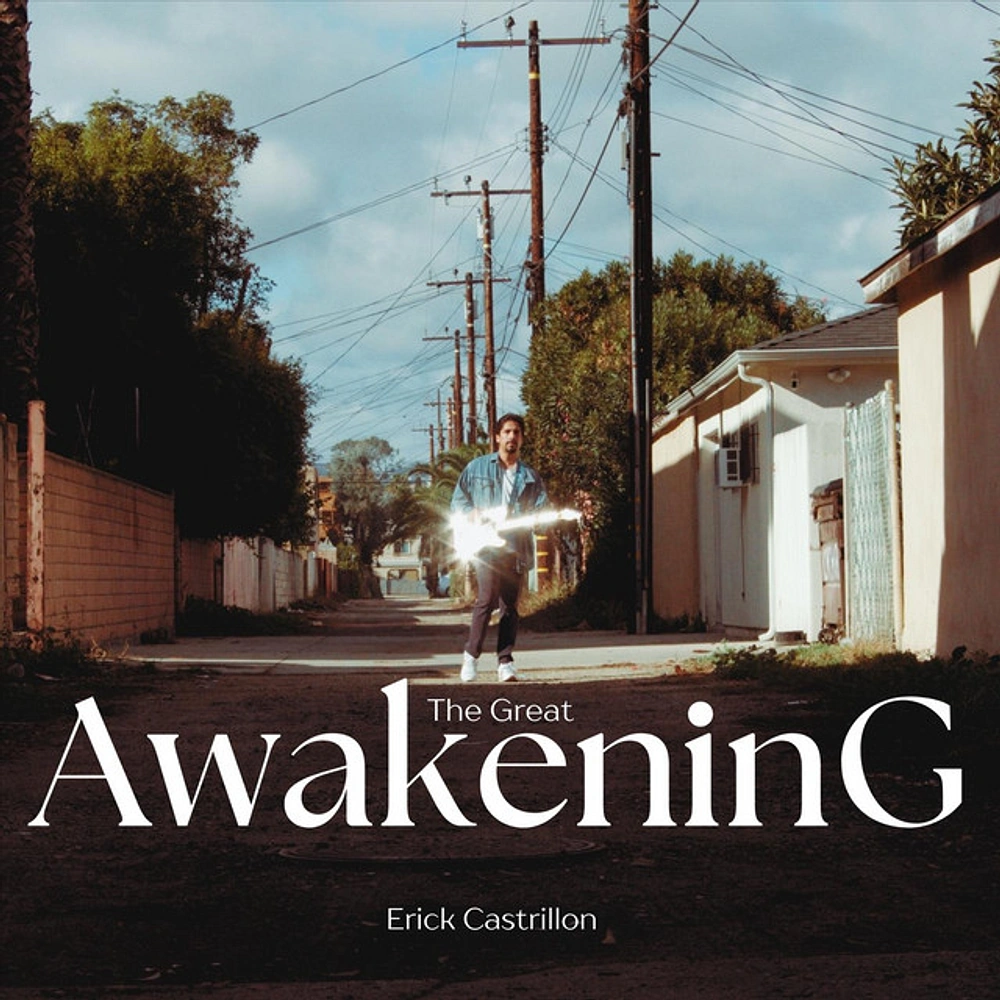
The Great Awakening sets its tone with an enigmatic guitar line, and the whole track was recorded in Culver City, California. Erick Castrillon released the single on 30 November 2023. It is a short alternative rock track that imagines the moment a machine wakes up and starts to notice the people who made it.

Erick Castrillon’s single sits in the playlist below with our art rock and alternative picks, and his full coverage history is collected on his artist profile. The Great Awakening reached this desk through PopHits.Co Music Charts, which verifies independent artists and places their releases across its network of music news desks. Press play, then read on for how the series around it took shape.


Erick Castrillon on the Singularity, Generative AI and the Making of The Great Awakening

Erick Castrillon Released The Great Awakening a Year to the Day After ChatGPT Went Public

Timing gives this record much of its weight. OpenAI opened ChatGPT to the public on 30 November 2022, and Castrillon’s single arrived on the same date a year later. By then, generative AI had moved from a curiosity to an everyday tool for millions. Even so, the song does not mention any product. Instead, it goes straight to the larger question that year kept raising: what happens when artificial intelligence becomes aware of itself.

Castrillon has been clear about that subject. In comments published by Karl Is My Unkle on release day, he described the song as being about enlightenment. He also called it the fourth part of a series on the new era of technology. In it, he writes about the singularity, the point at which artificial intelligence becomes a sentient being. He added that generative AI had brought that event closer than ever.

That framing is what makes the song a product of its moment rather than a generic science-fiction piece. After all, it was written while the conversation was live, and it treats the idea as something already under way.

Erick Castrillon Built The Great Awakening From World Instruments, Synths and Techno Beats in Culver City

The arrangement matches the subject. According to Musikepool, the track combines world instruments, synthesizers, techno beats, pop melodies, samples and experimental sounds. As a result, it unfolds like a conversation between a person and a machine. The lyric gives the machine a voice that is aware of what humans are doing. In turn, the usual fear of AI becomes something closer to a mirror.

The vocal carries much of that effect. Edgar Allan Poets singled out the effects applied to the voice, which add a layer of mystery. The same review noted that the mix keeps the vocal in front, and it heard darkwave, alternative rock and avant-garde influences meeting in one track. Meanwhile, Karl Is My Unkle described a grunge-adjacent feel under the sound design. That texture keeps the song rooted in rock rather than drifting into pure electronica.

The whole piece runs under three minutes. That brevity suits the idea: a single moment of awareness, captured and then left for the listener to sit with.

Erick Castrillon on the Singularity, Generative AI and the Making of The Great Awakening

What The Great Awakening Answers in Erick Castrillon’s Series About the New Era of Machines

Read in sequence, the series has a clear shape. The Machine came out on 1 September 2023, followed by Evolution at the end of that month. Next came The Zone on 31 October. The Great Awakening is the fourth step, the point where the machine in the story finally becomes conscious. Then, on 31 January 2024, The Contrarian turned the series towards warning. Reviewers such as Switch Bitch Noise read it as a stark caution about where AI could lead.

So the question this single answers is the one the earlier parts set up. If the first releases describe the arrival and growth of the machine, The Great Awakening is the turning point. It is the moment the story stops being about tools and starts being about a new kind of mind.

That narrative approach fits Castrillon’s background. He describes himself as a writer, director and musician, and his own studio, Castrillon Music, offers scoring for picture. It is easy to hear that in how the singles work, with each release carrying the story one scene forward, the way a score follows a film.

Radiohead, Gary Numan and Muse Sit Close to This Record

The nearest reference points are artists who turned technology into a subject for rock. Radiohead, whom Castrillon cites as an influence, made OK Computer in 1997 a study of a world reshaped by machines. Its unease sits close to this single. Similarly, Gary Numan took the idea of androids into the charts in 1979 with Tubeway Army’s Are ‘Friends’ Electric?. He paired cold synths with a human voice, much as Castrillon sets his vocal against electronic textures. Finally, Muse built Simulation Theory in 2018 around programmed worlds and synthetic reality. This series explores the same territory with a darker, more experimental edge.

This single suits listeners who like art rock and alternative rock with an idea at the centre. It also suits anyone who has wondered where the current wave of AI is heading.

NewMusic.News curator team: “The processed vocal is the cleverest choice on The Great Awakening. It sounds just human enough and just treated enough to belong to either side of the conversation, which is the whole question the song is asking.”

Stream The Great Awakening on Spotify, Apple Music, Deezer and SoundCloud. For new releases, follow Erick Castrillon on Instagram.


Return Trip on Film Scenes, Spanish Roots and the Making of ReScore

Return Trip on Film Scenes, Spanish Roots and the Making of ReScore

A Cádiz-Based Composer Writes New Music for Scenes From The Sheltering Sky and Cosmos Laundromat On 17 June 2023, musicians…

The Long Way to CRYING STARS: Alex Shkudun on a Year of Poems, Piano and Three Languages

The Long Way to CRYING STARS: Alex Shkudun on a Year of Poems, Piano and Three Languages

A Ukrainian Songwriter Looks Down on Fallen Empires, Floods and Towers From the Night Sky Before CRYING STARS existed, Alex…

Inside Ghosts: How Abby Power Built a London Rap Single About Staying Yourself with SamXVI

Inside Ghosts: How Abby Power Built a London Rap Single About Staying Yourself with SamXVI

Brett Miller on Self-Doubt, One Second of Hope and the Making of Heaven

Brett Miller on Self-Doubt, One Second of Hope and the Making of Heaven

Rachel Chinouriri Built Her Second Album Around One Night Out

Rachel Chinouriri Built Her Second Album Around One Night Out

The Long Way to Yours Faithfully, OneNamedPeter's Album Signed off Like a Letter

The Long Way to Yours Faithfully, OneNamedPeter’s Album Signed off Like a Letter

Inside Proceed 2: How Kennard Built a Baltimore R&B Album From Loss and Patience

Inside Proceed 2: How Kennard Built a Baltimore R&B Album From Loss and Patience

WIL.SON on One Guitar, a Stomp-Box and the Making of Blues Tourist: Vol. 1

WIL.SON on One Guitar, a Stomp-Box and the Making of Blues Tourist: Vol. 1

Johnny Marr Road-Tested The Age of Everything Before Recording It

Johnny Marr Road-Tested The Age of Everything Before Recording It

Ada Rovatti on Piloo, Her Late Father and the Making of Done Deal

Ada Rovatti on Piloo, Her Late Father and the Making of Done Deal

Inside Husk: How Scarecrowz Built a Self-Produced Hard Rock Album in Their 25th Year

Inside Husk: How Scarecrowz Built a Self-Produced Hard Rock Album in Their 25th Year

Inside Walking the Tightrope: How Stephanie Phillips Built a Folk Album Between Grief and Joy

Inside Walking the Tightrope: How Stephanie Phillips Built a Folk Album Between Grief and Joy

Inside Into The Night: How Seadog Built a Haunted Dream Pop Single in Brighton

Inside Into The Night: How Seadog Built a Haunted Dream Pop Single in Brighton

Inside On y va: How Hub30 Built a Feel-Good Song From Reggae, House and a Bordeaux Lake

Inside On y va: How Hub30 Built a Feel-Good Song From Reggae, House and a Bordeaux Lake

SPACELY and the Making of Here, JP Warner’s Sci-Fi Single About Staying in the Moment

A Chicago Producer’s Cinematic Alt-Pop Project Turns Mental Health Into an Original Sci-Fi Saga

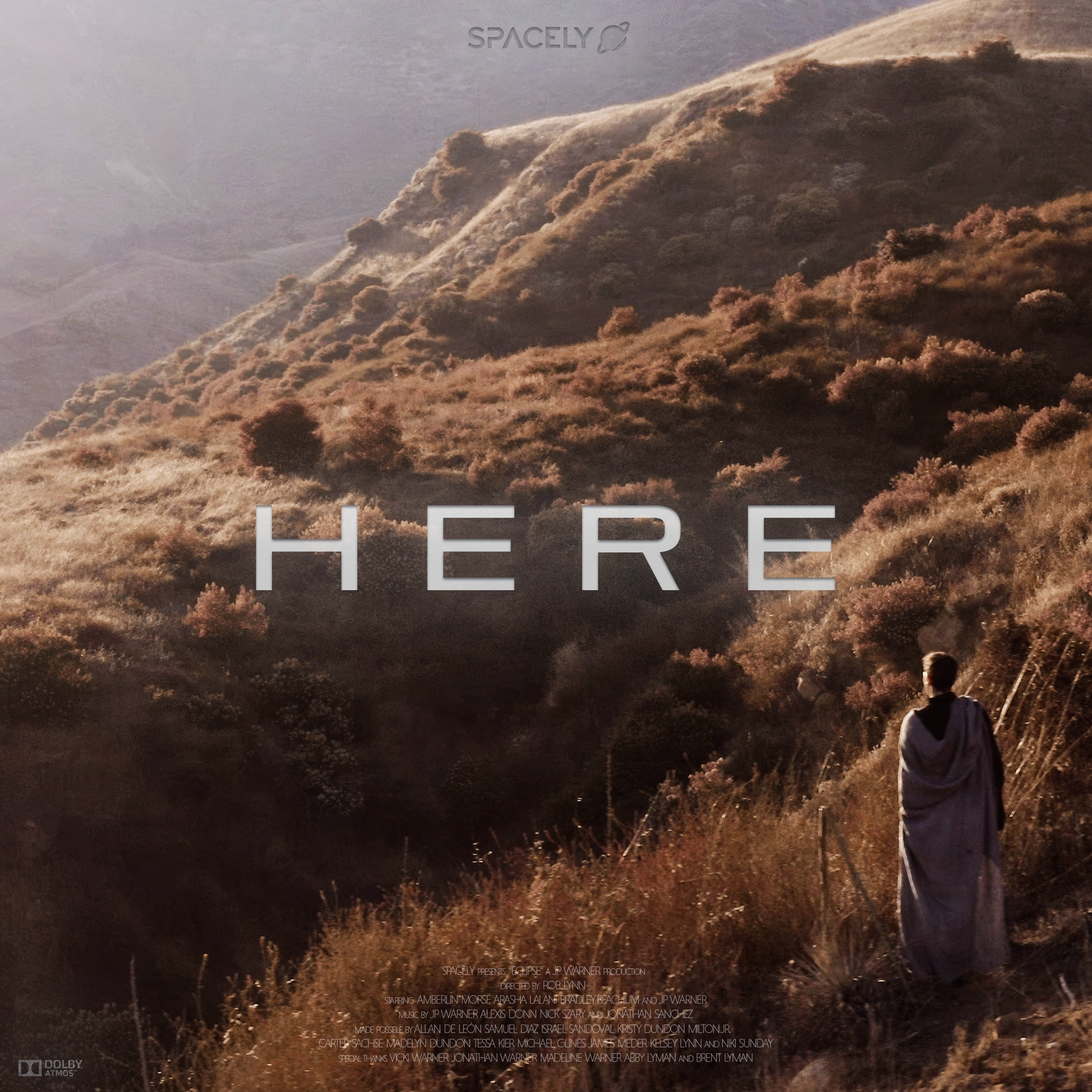
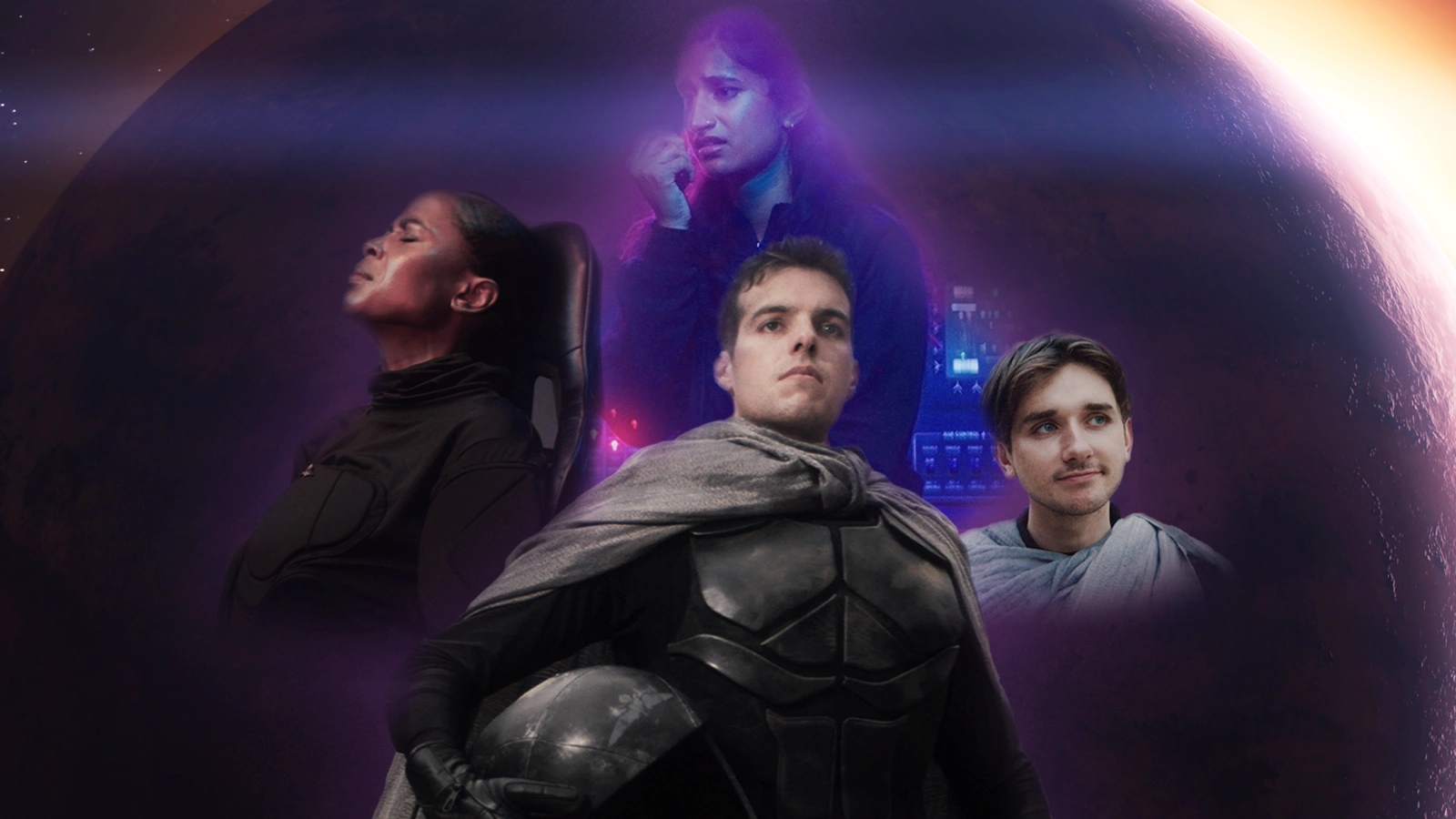
When JP Warner started writing as SPACELY, he made one decision that shaped everything after it. He would tell his own story through a character. That character is Captain Joseph Spacely, stranded with his crew on an uninhabited moon and facing their inner demons. Released on April 3, 2024, the SPACELY single Here then takes that idea somewhere direct, because it is alternative pop about staying fully present.

SPACELY and JP Warner have Here in the playlist below, so it is the first stop for anyone meeting the project today, and the rest of the coverage sits on his artist profile. Here came through PopHits.Co Music Charts, which verifies independent artists and places their releases across its network of music news sites. Play it first, then read on for why it matters now.


SPACELY and the Making of Here, JP Warner's Sci-Fi Single About Staying in the Moment
SPACELY and the Making of Here, JP Warner’s Sci-Fi Single About Staying in the Moment

Why the SPACELY Single Here Matters Now, as the Sci-Fi Saga Heads Toward Its Next Chapter

The timing is worth explaining. ECLIPSE, the album that holds Here, arrived a chapter at a time through 2024. Crash was billed as Chapter 3 that May. After that, Reforge followed as Chapter 9 of 11 by December, and the full record finally landed in 2025. Now SPACELY’s official page promises that the captain and crew will return in 2026. So the story sits between chapters, which makes this a natural moment to return to the song that states its purpose most plainly.

Here sits fourth on the finished album, after the overture, Destiny and a short interlude titled with a numeric code, 012.012.082. In total the album runs to 22 tracks and 43 minutes, and those coded interludes recur between the songs. Heard in that sequence, Here lands early, almost like the thesis of the whole record.

The SPACELY single also arrived with a head start. In the weeks after its April 2024 release, Here drew write-ups from Hailtunes, Mesmerized, Beach House Mag and Muse Chronicle. Brazil’s IndieOclock covered it too. In fact, most of them picked up on the same pairing of a large sound and a very personal subject.

The Chicago Producer Behind SPACELY and the Captain Joseph Spacely Story

The person behind it has spent years on the other side of the glass. JP Warner is a Chicago-based producer, artist and storyteller with more than a decade in the studio. First, he co-founded the DJ duo MiNDTRiX, and only then moved into pop production. His collaborators include TE/MO, Excision and Jorge Rivera-Herrans, the creator of EPIC: The Musical.

Alongside SPACELY, he also runs a jazz catalogue under his own name and NIGHTSWIM, a melodic house project. SPACELY is the one he describes as his vessel for processing what he has learned about managing his mental health and finding inner peace.

Musically, Here is built from layered synths and punchy percussion. On top, the vocal climbs from firm verses into a wide, soaring chorus. Muse Chronicle traced the influences to Hans Zimmer, Blink-182 and Porter Robinson. Meanwhile, Mesmerized heard the finished single as grand, sweeping alt-pop when it arrived.

The theme is simple, and deliberately so. Muse Chronicle described Here as a song about being fully immersed in the present moment. Similarly, Beach House Mag noted how deeply Warner’s own experience with mental health runs through the lyrics. Writing through a character is also what makes that honesty possible. SPACELY told Mesmerized that writing as Captain Joseph Spacely makes it easier to be vulnerable. In addition, the same interview credited sci-fi films as the fuel for building the world around the songs.

SPACELY and the Making of Here, JP Warner's Sci-Fi Single About Staying in the Moment
SPACELY and the Making of Here, JP Warner’s Sci-Fi Single About Staying in the Moment

What Here Offers Fans of K-Pop, Game Soundtracks and Film Scores

SPACELY’s music is pitched at a crossover crowd: fans of K-pop, Riot Games soundtracks, film scores and electronic music. The SPACELY single suits that listener well, because its hook is pop-sized while its scale borrows from the screen.

The clearest reference point is Porter Robinson, whose album Nurture turned a hard stretch of self-doubt into bright, big-hearted electronic pop. Hans Zimmer explains the other half of the sound, with its patient builds and the sense of a scene opening up. Blink-182 may look like the outlier. Still, that band’s gift for a plain-spoken chorus is exactly what keeps Here grounded.

So what does Here answer? For listeners who like their pop with a story attached, it is an easy way into a larger world. Meanwhile, for anyone facing their own version of the captain’s moon, it is a three-and-a-half-minute reminder to come back to where they are.

The NewMusic.News curator team: “Here works because JP Warner keeps the message small while the production goes big. The chorus opens out like a film cue, yet the idea at its centre is a single instruction to stay present, and that contrast is what gives the song its pull.”

Stream the SPACELY Single Here and Follow the Project Across Platforms

Start with the SPACELY single at the top of the page. After that, carry on through ECLIPSE, where Here sits among the chapters of the captain’s story.

Keep up with SPACELY and JP Warner here:


Return Trip on Film Scenes, Spanish Roots and the Making of ReScore

Return Trip on Film Scenes, Spanish Roots and the Making of ReScore

A Cádiz-Based Composer Writes New Music for Scenes From The Sheltering Sky and Cosmos Laundromat On 17 June 2023, musicians…

The Long Way to CRYING STARS: Alex Shkudun on a Year of Poems, Piano and Three Languages

The Long Way to CRYING STARS: Alex Shkudun on a Year of Poems, Piano and Three Languages

A Ukrainian Songwriter Looks Down on Fallen Empires, Floods and Towers From the Night Sky Before CRYING STARS existed, Alex…

Inside Ghosts: How Abby Power Built a London Rap Single About Staying Yourself with SamXVI

Inside Ghosts: How Abby Power Built a London Rap Single About Staying Yourself with SamXVI

Brett Miller on Self-Doubt, One Second of Hope and the Making of Heaven

Brett Miller on Self-Doubt, One Second of Hope and the Making of Heaven

Rachel Chinouriri Built Her Second Album Around One Night Out

Rachel Chinouriri Built Her Second Album Around One Night Out

The Long Way to Yours Faithfully, OneNamedPeter's Album Signed off Like a Letter

The Long Way to Yours Faithfully, OneNamedPeter’s Album Signed off Like a Letter

Inside Proceed 2: How Kennard Built a Baltimore R&B Album From Loss and Patience

Inside Proceed 2: How Kennard Built a Baltimore R&B Album From Loss and Patience

WIL.SON on One Guitar, a Stomp-Box and the Making of Blues Tourist: Vol. 1

WIL.SON on One Guitar, a Stomp-Box and the Making of Blues Tourist: Vol. 1

Johnny Marr Road-Tested The Age of Everything Before Recording It

Johnny Marr Road-Tested The Age of Everything Before Recording It

Ada Rovatti on Piloo, Her Late Father and the Making of Done Deal

Ada Rovatti on Piloo, Her Late Father and the Making of Done Deal

Inside Husk: How Scarecrowz Built a Self-Produced Hard Rock Album in Their 25th Year

Inside Husk: How Scarecrowz Built a Self-Produced Hard Rock Album in Their 25th Year

Inside Walking the Tightrope: How Stephanie Phillips Built a Folk Album Between Grief and Joy

Inside Walking the Tightrope: How Stephanie Phillips Built a Folk Album Between Grief and Joy

Inside Into The Night: How Seadog Built a Haunted Dream Pop Single in Brighton

Inside Into The Night: How Seadog Built a Haunted Dream Pop Single in Brighton

Inside On y va: How Hub30 Built a Feel-Good Song From Reggae, House and a Bordeaux Lake

Inside On y va: How Hub30 Built a Feel-Good Song From Reggae, House and a Bordeaux Lake

Nathav Sings in English on Moon River, Nine Years After Her Danish Debut

The Copenhagen Songwriter Came Back with Four Songs of Electronic Blues and Minimalist Synth-Pop

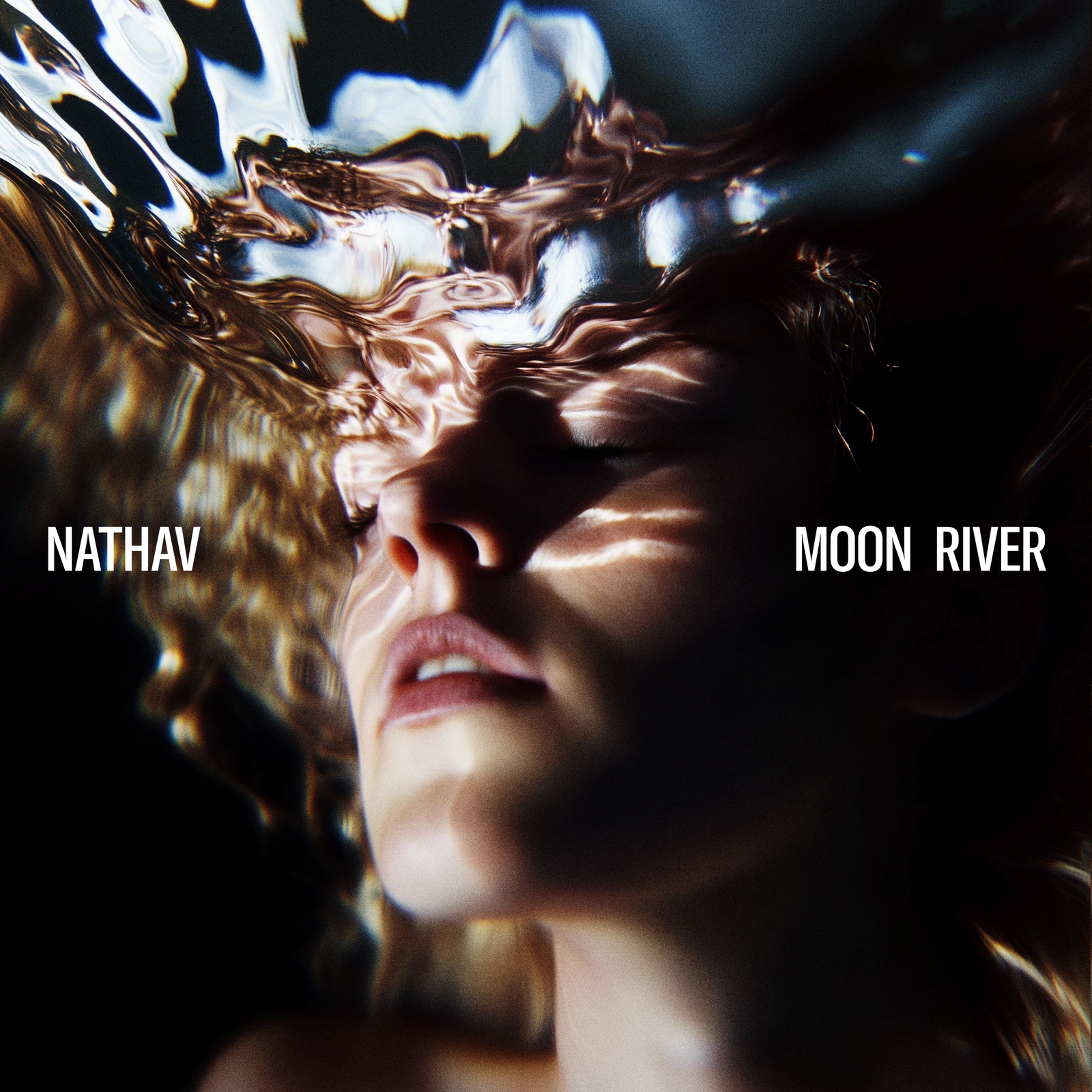
You Still Miss Her opens the Moon River EP by Nathav on a piano figure in an uneven 5/8 pattern. Halfway through, a bank of synthesisers rises underneath it. The song first came out as a single in May 2024. It was the first new Nathav song in almost nine years, and the first she sang in English.

Nathav’s title track sits in the playlist below, among our pop and art-pop picks, and this network’s coverage is filed on Nathav’s artist profile. Moon River came to this desk through PopHits.Co Music Charts, which verifies independent artists and places their releases across its network of music news desks. Press play on the EP, then read on for the nine years that led here.


Nathav Sings in English on Moon River, Nine Years After Her Danish Debut

The Long Pause Before Moon River, From a Danish Debut in 2015 to Nathav Singing in English

A Voice That Had Already Led Three Bands

Nathav is the solo name of Mathilde Lunderskov, and it joins the Danish words for night and sea. By the time she chose it, she had already spent years at the front of other line-ups. She sang lead in the Scandinavian indie-pop band Lovebites, which released three albums. After that band split, she founded the dream-pop and noir group Blake and toured Europe with it. Then, in 2010, she formed the synth-pop duo Umatic with her brother, Lukas Lunderskov, and released the album Ashes & Diamonds.

Her own biography notes that her voice and style are often compared to Kate Bush and Goldfrapp. Both comparisons point at something specific. Kate Bush made her name with a high, dramatic vocal set against piano. Her 1978 single The Man with the Child in His Eyes is one example. Similarly, Goldfrapp’s 2000 debut, Felt Mountain, put Alison Goldfrapp’s voice over electronics that borrowed from old film scores. Reviewers heard a similar pull towards old Hollywood on this EP.

Nine Years Away From the Nathav Name

Nathav began as a Danish-language project. The single Tiger came out in April 2015. The self-titled debut album followed on Target Records that August, with seven songs including Hedy Lamarr and Er Det Blod.

Then the project went quiet for a long time. According to Nordic Music Central, family matters and then the pandemic kept her out of circulation. In between, she appeared as one of the guests on Unify, a 2016 single by The Ball and The Wall. Otherwise, no new Nathav release came out until May 2024. When the songs did return, they were in English.

That is the moment Moon River belongs to. Lunderskov had three bands and a Danish album behind her. She restarted the project in a different language, with the same producer at her side. So what would a return like that sound like after so long away?

Watch the video and check the artist’s YouTube channel for more.

Nathav Sings in English on Moon River, Nine Years After Her Danish Debut

Four Songs of Electronic Blues on Moon River, and What the Return of Nathav Answered

The Four Songs, Track by Track

Moon River came out on 29 November 2024 on Horror Comfort, and it runs just under 15 minutes. Two of its songs arrived first as singles: You Still Miss Her in May and Boy Model in August. The producer is Noah Rosanes, who also produced the 2015 debut. The two go back a long way, since their parents sang together in the 1970s disco vocal group Flair.

The opener sets the terms. You Still Miss Her is electronic blues about standing in the shadow of a partner’s earlier love. Nordic Music Central’s David Bentley traced its piano to a 3+2 pattern in 5/8. He also noted how the synthesisers build to two separate peaks. Meanwhile, Extravafrench heard Vangelis and old James Bond soundtracks behind it.

Boy Model, heard here in its full version, moves towards downtempo electronica. It follows a young male model in New York who works through the night. The song is as much about loneliness and lost innocence as about the job.

The title track widens the frame. According to IGGY Magazine, Lunderskov wrote the lyrics of Moon River with Edie Kuhnle in the Hollywood Hills. In addition, Obscure Sound hears the song in two halves. Old-Hollywood balladry comes first, and then a warning about trusting a pretty face.

Finally, Look at Us Now closes the EP on a piano progression recorded live, as IGGY Magazine reports. It turns the famous gap on the London Underground into the image of a wound that will not close.

What Moon River Answered for Nathav

A return after nine years raises two fair questions. Would listeners still come, and would the voice carry over into a new language?

The streaming figures answer the first. On Spotify, the four Moon River songs are the four most-played recordings in the Nathav catalogue. You Still Miss Her leads with 10,111 plays, ahead of Look at Us Now on 8,561. Moon River follows on 7,467, and the full version of Boy Model on 5,785. By comparison, the most-played song from 2015, Tiger, sits on 4,793. Those figures were read on 17 September 2026.

The reviews answer the second. Obscure Sound heard a bluesy spirit in the vocal on the opener. Nordic Music Central singled out a soprano that cuts through the synthesisers at their peaks. Later, the same site put You Still Miss Her in its 2024 Songs of the Year, and its review of the next single records that choice. That coverage ran in English, French, Portuguese, Spanish and German. End Sessions wrote in Spanish, for example, and Music For All in Portuguese.

The project has also kept moving since. Nathav followed the EP with Don’t Quit Your Day Job in May 2025 and Over You that December. As a result, Moon River now reads as a restart rather than a one-off.

So this is an EP for listeners who like their pop slow, dark and led by a voice. It also suits anyone curious about what nine years away did to a songwriter with three bands behind her. Start with You Still Miss Her, then let the other three songs run in order.

NewMusic.News curator team: “Moon River earns its place on our features desk because the return kept its foundations. The Danish songs of 2015 were built on piano, synthesisers and Mathilde Lunderskov’s voice. The English songs of 2024 stand on exactly the same three things.”

Listen to You Still Miss Her on Spotify. Follow Nathav on Spotify, Apple Music, Deezer, Tidal, Bandcamp, SoundCloud, YouTube, Instagram and Facebook. Her official site lists new releases and concert dates.


Return Trip on Film Scenes, Spanish Roots and the Making of ReScore

Return Trip on Film Scenes, Spanish Roots and the Making of ReScore

A Cádiz-Based Composer Writes New Music for Scenes From The Sheltering Sky and Cosmos Laundromat On 17 June 2023, musicians…

The Long Way to CRYING STARS: Alex Shkudun on a Year of Poems, Piano and Three Languages

The Long Way to CRYING STARS: Alex Shkudun on a Year of Poems, Piano and Three Languages

A Ukrainian Songwriter Looks Down on Fallen Empires, Floods and Towers From the Night Sky Before CRYING STARS existed, Alex…

Inside Ghosts: How Abby Power Built a London Rap Single About Staying Yourself with SamXVI

Inside Ghosts: How Abby Power Built a London Rap Single About Staying Yourself with SamXVI

Brett Miller on Self-Doubt, One Second of Hope and the Making of Heaven

Brett Miller on Self-Doubt, One Second of Hope and the Making of Heaven

Rachel Chinouriri Built Her Second Album Around One Night Out

Rachel Chinouriri Built Her Second Album Around One Night Out

The Long Way to Yours Faithfully, OneNamedPeter's Album Signed off Like a Letter

The Long Way to Yours Faithfully, OneNamedPeter’s Album Signed off Like a Letter

Inside Proceed 2: How Kennard Built a Baltimore R&B Album From Loss and Patience

Inside Proceed 2: How Kennard Built a Baltimore R&B Album From Loss and Patience

WIL.SON on One Guitar, a Stomp-Box and the Making of Blues Tourist: Vol. 1

WIL.SON on One Guitar, a Stomp-Box and the Making of Blues Tourist: Vol. 1

Johnny Marr Road-Tested The Age of Everything Before Recording It

Johnny Marr Road-Tested The Age of Everything Before Recording It

Ada Rovatti on Piloo, Her Late Father and the Making of Done Deal

Ada Rovatti on Piloo, Her Late Father and the Making of Done Deal

Inside Husk: How Scarecrowz Built a Self-Produced Hard Rock Album in Their 25th Year

Inside Husk: How Scarecrowz Built a Self-Produced Hard Rock Album in Their 25th Year

Inside Walking the Tightrope: How Stephanie Phillips Built a Folk Album Between Grief and Joy

Inside Walking the Tightrope: How Stephanie Phillips Built a Folk Album Between Grief and Joy

Inside Into The Night: How Seadog Built a Haunted Dream Pop Single in Brighton

Inside Into The Night: How Seadog Built a Haunted Dream Pop Single in Brighton

Inside On y va: How Hub30 Built a Feel-Good Song From Reggae, House and a Bordeaux Lake

Inside On y va: How Hub30 Built a Feel-Good Song From Reggae, House and a Bordeaux Lake

Flixton: Te Quiero Aqui and the Case for A Five-Minute Dance Track

The Devon-Based Producer Comes From Manchester and Releases Across Six Drum and Bass Labels

Te Quiero Aqui runs five minutes and twelve seconds. That is a long time for a vocal dance record, and it is the first thing worth knowing about it, because everything else follows from the decision to leave it that length. Flixton released it on 24 November 2023, and a drum and bass producer writing a Spanish-titled, pop-leaning track was not the obvious next move for him.

Flixton’s music is in the playlist below, and this desk’s coverage of him is collected on the Flixton profile. Te Quiero Aqui reached NewMusic.News through PopHits.Co Music Charts, which verifies independent artists and places their releases across its network of music news titles. Start it playing, then read on.


Flixton: Te Quiero Aqui and the Case for A Five-Minute Dance Track

Where Flixton Comes From, And What Te Quiero Aqui Is

He is from Manchester and lives in Bideford, on the north Devon coast. That is a long way from any drum and bass scene worth the name, and the distance shapes the catalogue.

Producers who cannot walk to a club night tend to write for the record rather than for the room. It shows here: most of his output goes out through labels rather than through sets.

There is a lot of it. His own pages list releases on Lizplay, Mathematica Records, Liquid Brilliants, Nexxus Recordings, Ransom Recordings and UltraTech Liquid NRG. The Bandcamp catalogue reads like a working producer’s ledger: Spectrums, Through The Woods, Real Murda and Sniffer on Ransom, Afterlife and I Don’t Want on Ultratech, The Only Religion, Dark Skies and Broken Reality on Nexxus. Each carries a catalogue number.

Alongside them sit free bootlegs and dubs. That is what a producer does when a track works on a floor but cannot be cleared.

Why Five Minutes Twelve Is The Point

Against that background, Te Quiero Aqui is a departure. It has a sung lead and a Spanish title. Its structure gives the vocal room to arrive rather than dropping straight into the break.

It gets filed as commercial vocal dance, drum and bass, and electronic pop all at once. For once that triple tag is doing real work rather than hedging, because the track genuinely sits between the three.

Five minutes twelve is the tell. A pop record would have been cut to three. A club record would have kept the intro long and the vocal short. Flixton did neither on Te Quiero Aqui, which suggests he wrote it as a song and arranged it as a dance track, in that order.

Flixton: Te Quiero Aqui and the Case for A Five-Minute Dance Track

What Te Quiero Aqui Answers

The question a catalogue track poses is whether it found the audience it was built for. The coverage suggests it found a slightly different one.

Tape Ranger ran an artist spotlight in December 2023. They called it a catchy tune with a dynamic instrumental, and credited the songwriting and the production work separately, which is a distinction worth noticing. They then added it to their Indie POP! playlist. Inspot Music picked it up for a daily discovery round-up in the same period.

Neither of those is a drum and bass outlet. A producer with six DnB label affiliations made a track that indie-pop curators reached for. That is the most interesting thing that happened to this record, and it suggests the song survives being taken out of its genre context.

From the Curator Team: “We keep this one on file because of where it landed rather than where it came from. A drum and bass producer whose track gets picked up by a pop playlist has written something with a spine that holds up without the sub underneath it. That is the harder skill, and it is why the record is still worth putting in front of people two years on.”

Who It Is For, And Where To Hear Flixton

His wider catalogue backs the reading. Alongside the label output sit Breaking Up, Angel In My Bed, XTC, More Forgiving, Future Thoughts, In My Lair, Didn’t Wanna Lie, New Beginnings and Freedom, plus Realize with Platnum. Those are song titles, not track titles. He has been writing toward this for a while.

So this suits listeners who want dance music with an actual vocal performance in it. It suits people comfortable with a record that takes its time. You do not need to know the difference between liquid and jump-up to enjoy it.

Te Quiero Aqui is on Spotify, and the label catalogue is on Bandcamp.

Follow Flixton across platforms: Spotify artist page, Instagram, Facebook and X.


Return Trip on Film Scenes, Spanish Roots and the Making of ReScore

Return Trip on Film Scenes, Spanish Roots and the Making of ReScore

A Cádiz-Based Composer Writes New Music for Scenes From The Sheltering Sky and Cosmos Laundromat On 17 June 2023, musicians…

The Long Way to CRYING STARS: Alex Shkudun on a Year of Poems, Piano and Three Languages

The Long Way to CRYING STARS: Alex Shkudun on a Year of Poems, Piano and Three Languages

A Ukrainian Songwriter Looks Down on Fallen Empires, Floods and Towers From the Night Sky Before CRYING STARS existed, Alex…

Inside Ghosts: How Abby Power Built a London Rap Single About Staying Yourself with SamXVI

Inside Ghosts: How Abby Power Built a London Rap Single About Staying Yourself with SamXVI

Brett Miller on Self-Doubt, One Second of Hope and the Making of Heaven

Brett Miller on Self-Doubt, One Second of Hope and the Making of Heaven

Rachel Chinouriri Built Her Second Album Around One Night Out

Rachel Chinouriri Built Her Second Album Around One Night Out

The Long Way to Yours Faithfully, OneNamedPeter's Album Signed off Like a Letter

The Long Way to Yours Faithfully, OneNamedPeter’s Album Signed off Like a Letter

Inside Proceed 2: How Kennard Built a Baltimore R&B Album From Loss and Patience

Inside Proceed 2: How Kennard Built a Baltimore R&B Album From Loss and Patience

WIL.SON on One Guitar, a Stomp-Box and the Making of Blues Tourist: Vol. 1

WIL.SON on One Guitar, a Stomp-Box and the Making of Blues Tourist: Vol. 1

Johnny Marr Road-Tested The Age of Everything Before Recording It

Johnny Marr Road-Tested The Age of Everything Before Recording It

Ada Rovatti on Piloo, Her Late Father and the Making of Done Deal

Ada Rovatti on Piloo, Her Late Father and the Making of Done Deal

Inside Husk: How Scarecrowz Built a Self-Produced Hard Rock Album in Their 25th Year

Inside Husk: How Scarecrowz Built a Self-Produced Hard Rock Album in Their 25th Year

Inside Walking the Tightrope: How Stephanie Phillips Built a Folk Album Between Grief and Joy

Inside Walking the Tightrope: How Stephanie Phillips Built a Folk Album Between Grief and Joy

Inside Into The Night: How Seadog Built a Haunted Dream Pop Single in Brighton

Inside Into The Night: How Seadog Built a Haunted Dream Pop Single in Brighton

Inside On y va: How Hub30 Built a Feel-Good Song From Reggae, House and a Bordeaux Lake

Inside On y va: How Hub30 Built a Feel-Good Song From Reggae, House and a Bordeaux Lake

Nala Sinephro Scored an A24 Fight Film Without Once Sounding Like One

The safe way to score a film about a cage fighter is to make the music hit. Low brass, percussion that lands on the impact, a rising figure under the training montage. It works, everyone recognises it, and it tells the audience what to feel at the moment they are already feeling it.

Nala Sinephro did approximately none of that, and the result is the most interesting thing about a soundtrack that runs barely twenty-five minutes.

Her First Score, and She Did Every Job on It

The Smashing Machine soundtrack was released on 3 October 2025 through A24 Music and Warp Records, with a vinyl edition following on 23 January 2026. Eight tracks, 25:16.

It is her first film score, and the credits are unusual to the point of being the story. She composed it, arranged it, produced it, recorded it and mixed it. The per-track credits repeat the same line down the whole record: produced, composed and arranged by Nala Sinephro, mixed by Nala Sinephro. Heba Kadry mastered it; Isabel Gracefield, Jay Sylvian and Tom Coath engineered the sessions.

For a studio film that is close to anomalous. Scores at this level are normally a division of labour, with orchestrators, additional-music writers and a mixing team, precisely because the schedule does not permit one person to hold every stage. Retaining all of it means every decision is answerable to a single set of ears.

Why a Jazz Composer Got the Call

Benny Safdie, who wrote and directed the film, approached her after listening to Endlessness, her 2024 album for Warp. The film itself is a straight-faced biographical drama about the mixed martial artist Mark Kerr, with Dwayne Johnson in the lead and Emily Blunt alongside him.

The pairing looks like miscasting on paper. It is better understood as a director hiring for contrast rather than for fit. A composer whose existing work is patient, harmonically open and built on sustain is not going to produce fight-scene punctuation, and hiring her is therefore a decision about what the film is actually about — a body being used up, rather than a sequence of contests.

Twenty-Five Minutes Against a Fight Film

The critical response is unusually consistent on this point, which is worth noting because critics rarely agree on scores at all.

Pitchfork described it as “a disarmingly rich, romantic sweep of starlit strings and yearning synths”. IndieWire observed that it “works antithetically to the toughness of the images onscreen”. The Irish Times heard it humming “with quiet menace”. Rolling Stone, less admiringly, called it “a woozy jumble of alt-jazz”, and BrooklynVegan noted it carries “the same allure as Nala’s proper albums”.

Those are five different verdicts describing the same behaviour: the music is not doing what the picture is doing. Even the unimpressed review identifies the same quality, which is generally how you can tell a stylistic choice from an accident.

The running order supports the reading. The title track alone is 8:43, a third of the entire score, while five of the eight pieces come in under two minutes — “The High” at 1:15, “Dawn II” at 1:08. That is not the shape of a cue sheet tracking scene by scene. It is one long central piece with fragments around it.

The titles reinforce it. Two of the eight are returns rather than new pieces: “Dawn” opens the record at 2:15 and “Dawn II” closes it at 1:08, while “Mark” (1:44) is answered later by “Mark II” (1:30). Bookending a score with a shortened reprise of its first idea is a novelistic move rather than a cinematic one — it assumes the listener remembers the opening, which is only true if they are listening to the record rather than watching the film. Between those bookends sit “Grand Prix” at 4:02 and “KO” at 4:41, the two pieces with titles that promise action and, characteristically, do not deliver the expected kind.

What Was in the Room at Abbey Road

The score was recorded at Abbey Road Studios in London in 2025, and Sinephro’s own instrument list is synthesizers, harp, modular synths and harmonium — an unusual combination for a film about combat sport, and one that explains the texture. Harp and harmonium both sustain and decay slowly; modular synthesis is unpredictable by design. None of them is good at hitting a cut precisely, which is presumably the point.

She did not play it alone. James Mollison contributes saxophone, Nubya Garcia saxophone and flute, Morgan Simpson drums, Lyle Barton rhodes and synthesizers, Dwayne Kilvington synth bass, with strings from the Orchestrate ensemble.

Several of those names recur from her album work, which matters more than a credit list usually does. Bringing an existing band into a first film commission means the vocabulary is already established: nobody is learning how she works while the clock runs at studio rates.

The engineering credits are worth reading too. Isabel Gracefield, Jay Sylvian and Tom Coath share the recording work across the sessions, and Heba Kadry mastered the record. Mastering is the one stage Sinephro did not keep, which is the conventional choice even among artists who do everything else: a mastering engineer is valuable precisely because they have not heard the record five hundred times.

Endlessness Is the Record That Got Her the Job

Endlessness arrived on 6 September 2024 through Warp, ten tracks titled “Continuum 1” through “Continuum 10”, running 45:19. She composed, produced, arranged and engineered that one too, and also arranged and conducted its strings.

It was received as a significant record rather than a promising one: a Metacritic score of 83, 8.5 from Pitchfork, 9 out of 10 from both PopMatters and Clash, five stars from The Skinny. It reached number one on the UK jazz and blues albums chart and ten on the independent chart, placed fifth on Pitchfork’s albums of 2024 and tenth on Paste’s, and co-won Best Jazz Record at the 2025 Libera Awards.

The continuous-numbering conceit is the relevant detail for what followed. An album built as ten movements of one idea is already closer to score-writing than to song-writing, so the film commission is less a departure than an application of the same instinct to picture. Readers interested in that long-form instinct may find our piece on jazz and the long take a useful companion.

Her instrument list on that album was almost identical, and so was the band: James Mollison, Nubya Garcia, Morgan Simpson, Lyle Barton and Dwayne Kilvington all appear on both, with the Orchestrate ensemble on strings. The film commission did not require assembling anything new.

What Doing It All Yourself Actually Buys

The obvious cost of holding every role is time, and on a film that is the scarcest thing there is. The obvious risk is that nobody catches your blind spot.

What it buys is coherence under revision. Film music gets changed late and repeatedly, as edits shift and scenes move, and every handoff in that process is a chance for intent to leak. A composer who is also the mixer can respond to a re-cut without re-explaining the idea to anyone.

That is the likeliest reason a twenty-five-minute score by a first-time film composer holds together as an object you would listen to away from the film — which, on the evidence of the reviews, is exactly how people are treating it.

The Smashing Machine (Original Motion Picture Soundtrack) is out on A24 Music and Warp Records.

Ambiguous Desire Rebuilds Arlo Parks Around a New York Dancefloor

There is a particular kind of record an artist makes when the thing they were known for stops fitting. Arlo Parks built a career on proximity: songs that sounded like they were being said to one person, close enough to hear the breath. Ambiguous Desire, released on 3 April 2026 through Transgressive Records, is what happened when she stopped writing for a bedroom and started writing for a room with a soundsystem in it.

Twelve tracks, forty minutes and one second, and a set of credits that looks nothing like her first two albums. It is not a reinvention in the marketing sense, where an artist puts on a costume and calls it a chapter. It is more specific and more interesting than that: a songwriter working out what happens to her actual technique when the tempo doubles and the room gets louder.

What Changed Between My Soft Machine and This Record

My Soft Machine arrived in 2023 and stayed close to the template that made Collapsed in Sunbeams work. The vocal sat forward, the arrangements deferred to it, and the emotional register was confessional in the literal sense: someone telling you a thing they had not told many people.

Ambiguous Desire keeps the writing and moves everything underneath it. The first two singles set the terms early. Ticketmaster’s tour announcement noted that “Heaven” and “2SIDED” both lean into house music and UK garage, sounds Parks reached for after immersing herself in club culture. That is a real structural change, not a texture. House and garage put the vocal in a different relationship to the track: it stops being the thing everything else supports and becomes one element inside a groove that would keep going without it.

You can hear the consequence across the record. Phrases get shorter. Lines repeat where they would previously have developed. The writing has to survive being looped, which is a different discipline from writing something that only has to land once.

The Break-Up That Sent Her to the Club

The turn was personal before it was musical, and Parks has been unusually direct about the sequence. “I danced more than ever as I made this record, I made more friends than ever too, found myself in the weird underbelly of New York juke nights,” she said in the tour announcement.

That detail matters more than it looks. Dance records made by non-dance artists often fail because the writer treats the club as an aesthetic rather than a place they have actually stood in at three in the morning. Parks describes going repeatedly, socially, over a period long enough for it to change what she found interesting. The record reads as reportage from somewhere she had been, rather than a genre exercise assembled from references.

She has framed the album’s organising idea in the same plain terms: “This record has desire at its center. Desire is a life force, it’s a wanting, a yearning, a momentum.” Momentum is the operative word. It is a description of a feeling and a description of a rhythm section, and on this album those are the same claim.

Eight Producers, and Why That Is Not a Warning Sign

The credits list eight producers: Parks herself, alongside Paul Epworth, Rob Bisel, Andrew Sarlo, Buddy Ross, Romil Hemnani, Baird and Dylan Neustadter. On paper that is the shape of a record made by committee, the kind of album where a label throws names at a problem until something sticks.

It does not play that way, and the reason is in the rest of the credits. David Wrench mixed the album, and a single mixer across twelve tracks is what stops a multi-producer record from sounding like a compilation. Wrench is the continuity: whatever came in from whichever room, it leaves through one set of decisions about space and low end.

Epworth also appears as a musician rather than only a producer, credited with guitar, synthesiser, drums and bass, which suggests sessions where things were played rather than assembled. Simon Martinez plays guitar, Ryan Raines drums, and Brad Oberhofer piano. That is a band’s worth of human performance sitting underneath music that could easily have been programmed end to end.

How the Singles Mapped the Turn

The rollout was unusually long and unusually deliberate. “2Sided” came first on 13 January 2026, followed by “Heaven” on 2 February, “Get Go” on 10 March and “Beams” on 31 March, three days before the album. “Senses”, the Sampha collaboration, followed on 22 May, and a “Floette” remix with John Glacier arrived on 4 August.

Read in order, that sequence is an argument. The two most club-facing tracks went first, which is the opposite of the cautious approach, where an artist leads with the song closest to what audiences already expect. Parks led with the change. By the time the album arrived, anyone who had been paying attention had already decided how they felt about the new tempo.

The Sampha feature landing seven weeks after release is the other tell. A guest of that profile is normally spent on launch week. Holding it back suggests confidence that the record could open on its own terms.

What the Reviews Actually Split On

Critical response was warm without being unanimous, which is usually what an interesting record produces. Metacritic settled at 77 from a spread that ran from Hot Press at 9/10 and DIY at four and a half stars down to Paste at B-. Pitchfork landed at 7.1, Clash and Exclaim! both at 8/10, and The Independent and Rolling Stone UK at four stars.

The commercial picture was similarly split by category rather than by quality. The album reached number 13 on the UK albums chart, which is respectable rather than dominant, and number one on the UK independent albums chart, which is the number that actually describes its position. It also charted in Scotland at four, Germany at 43 and Switzerland at 50.

A number 13 peak alongside an independent number one is the signature of a record with a committed audience rather than a passive one, and that is the audience a tour of this length is built for.

The Desire Tour Puts the Record in the Room It Came From

The North American leg opens on 29 August at The Howard Theatre in Washington, D.C., then runs through Philadelphia, Boston, Montreal, Toronto, Detroit, Dallas, Austin, San Diego, Los Angeles, San Francisco, Seattle, Vancouver, Portland, Salt Lake City, Denver and Chicago, closing at Knockdown Center in Queens on 1 October. The UK and Ireland follow, with O2 Academy Brixton on 20 October, and Europe carries it to Stockholm on 2 December.

The venues are the point. These are mid-size rooms with proper soundsystems rather than seated theatres, and a record built on low end and repetition needs the former. Parks’ own framing of the tour was characteristically unfussy: “Let’s laugh, cry and move our bodies.”

What will be worth watching is the older material. A catalogue written for close listening has to survive a set built around a four-to-the-floor spine, and the usual solution is rearrangement rather than omission. It is the same problem, viewed from the other end, as the one this album set itself: how a voice trained for intimacy holds its shape at volume. Readers curious about how that voice gets constructed in the first place may find our piece on how a pop vocal actually gets built a useful companion.

Ambiguous Desire is out now on Transgressive Records. The Desire Tour runs from 29 August to 2 December.

Ela Minus Drummed in a Hardcore Band Before She Built Synthesizers

Before she made records on analogue synthesizers, Gabriela Jimeno assembled them. Not as a hobby, and not as an art project — as employment, on a production line at the instrument maker Critter and Guitari.

It is the least likely line on a CV that already contains a teenage hardcore band and a Berklee degree, and it explains more about how Ela Minus records than any of the usual influence-spotting does.

From a Bogotá Hardcore Band to a Berklee Double Major

Jimeno was born in Bogotá in 1990, and her first instrument was the drum kit. From the age of eleven until she was eighteen she played for Ratón Perez, a local hardcore band that toured Colombia, and the run was long enough to earn her a real profile in the country’s independent scene before she had finished school.

At nineteen she left for the United States and Berklee College of Music in Boston. What redirected her was not the curriculum but the city’s clubs, and rather than abandoning one discipline for the other she took both: a double major in jazz drumming and music synthesis.

That pairing is the whole architecture of her music in a single decision. Jazz drumming teaches timing as something elastic and reactive; synthesis teaches sound as something you build from nothing. Most electronic producers arrive with one of those and acquire the other slowly, if ever.

The hardcore years matter too, and not as trivia. A hardcore drummer plays loud, fast, and for a room that is physically responding to her — which is closer to what a club producer needs to understand than a conservatoire education would suggest.

The Day Job That Shaped the Records

After graduating she went to work at Critter and Guitari, building and designing synthesizers. Her own records are made mostly on analogue synths and drum machines, and she has named Kraftwerk and early Daft Punk as touchstones while listing improvisational jazz and techno as the influences underneath.

Knowing an instrument from the inside changes the relationship with it. A producer who has soldered a synth together understands what it will do at its limits, which parts of its behaviour are design decisions and which are accidents, and how far it can be pushed before it stops being useful. That is a different kind of knowledge from having read the manual.

It also tends to produce restraint rather than excess. Her catalogue is compact and unhurried — three self-released EPs, First Words in 2015, Grow in 2016 and Adapt in 2017, then Acts of Rebellion for Domino in 2020, and Día in January 2025, which was met with broad critical praise.

The Domino relationship began in 2020 with a single pointedly titled “they told us it was hard, but they were wrong”, followed that year by “megapunk”, “el cielo no es de nadie” and “dominique”. The run since has kept the same unhurried pace — “Combat”, “Broken” and “Upwards” through 2024, then “QQQQ” and “Ghost Orchid” around Día.

She sings in English and Spanish, which is less a marketing position than a straightforward consequence of who she is and where she has lived. She is now based in Brooklyn.

Nick León Came From the Other Direction

Her collaborator reached similar territory by an entirely different road. Nick León is a Miami-born producer and DJ whose early credits were in rap and pop — work with Denzel Curry, The Underachievers and Rosalía — before the single “Xtasis” brought him international attention and a place in the Latin club movement.

His own description of the work puts it at the intersection of electronic music, hip-hop and global club culture, built from textural experimentation, buried melodies and the sounds of everyday life. His most recent project, A Tropical Entropy, came out through the Medellín label TraTraTrax and takes the contradictions of Miami as its subject.

He has kept both careers running rather than trading one for the other, still taking commercial production work in pop and hip-hop while operating as a figure in the underground, and his sets have moved from Miami dance floors to festivals across Europe and South America. The Fader and XLR8R have both backed the work.

So one half of this partnership learned club music by building the machines, and the other learned it by making rap records and then following the rhythms outward. Neither started in the place they ended up.

What the EP Is, and What It Is Not

Clash reported the details in June: qué les pasó a mis amigos? — “what happened to my friends?” — arrived digitally on 7 August through Smugglers Way, an imprint operating under Domino.

It is an EP rather than an album, which is worth stating plainly because collaborative records between two established producers are often oversold as something larger. The lead track, “espiral”, works club energy without either voice swallowing the other.

A physical edition follows on 20 November: a 12-inch carrying remixes by Loidis, Guedra Guedra and Brenda. Holding the vinyl back three months from the digital release is a deliberate sequencing choice rather than a delay, letting the remixes function as a second release instead of a bonus nobody notices.

The pair are also billed for the first Smuggler’s Way showcase, at London’s ICA on 3 September, alongside Alexis Taylor and Mike Simonetti, and Guedra Guedra — who appears on the remix package as well.

A Second Collaboration, Not a First

This is not new behaviour for her. In 2022 she released “Kiss U” with DJ Python, another producer working in the same broad space between club music and something more interior.

Two collaborative EPs in four years, both with club producers, both outside the main album sequence, suggests a settled way of working: the albums carry the songwriting, and the collaborations are where the rhythm ideas go. That is a healthier division than trying to force both into one record.

Her live history supports the same reading. She has played Coachella twice, in 2022 and 2023, along with Primavera Sound, Pitchfork Music Festival, III Points, Portola and Cruel World, and toured North America with Caribou. That is a festival CV built on performance rather than on a hit.

Why Two Hardware Producers Meet in the Middle

What makes the pairing work on paper is that both of them treat sound as something physical. She learned it at a workbench; he built a body of work out of field texture and the noise of a particular city. Neither approach starts from a preset.

That shared instinct is why a Bogotá-raised, Brooklyn-based synth builder and a Miami rap producer do not sound like a compromise together. They are solving the same problem — how to make electronic music that feels like it was made by hands in a room — from opposite ends of it. Our piece on why guitar bands went back to tracking live covers the same instinct arriving in a very different genre.

For a producer who spent her teens playing hardcore in Colombian venues and her early twenties assembling other people’s instruments, an EP made with a Miami club producer is not a departure. It is the most consistent thing she could have done.

Qué les pasó a mis amigos? is out now on Smugglers Way, with a 12-inch edition on 20 November.

Overmono Oven-Baked a Cymbal to Get the Sound of Pure Devotion

Most producers chasing an unusual texture reach for a plugin. Overmono put a cymbal in an oven.

It had been coated first, in coffee grounds, crisps and vinegar. That is one of several things the Welsh duo did to their equipment while making Pure Devotion, and it is the clearest statement of what the record was for.

Damage as a Working Method

Announcing the album in May, Tom and Ed Russell said they wanted it to carry the physicality of the studio itself rather than the smoothness of software. “We ran tape over magnets, blew up some speakers, and finally utilized that dirt-cheap, overclocked FX unit we snaffled years ago in Bromley,” the pair said. “We even oven-baked a cymbal covered in coffee grounds, crisps, and vinegar.”

What sounds like a novelty is a reasonable answer to a real problem. Software instruments are consistent by design, which is exactly what makes them hard to make strange. A ruined speaker distorts in a way nobody has modelled, and a cymbal that has been baked in vinegar rings differently from every other cymbal on earth, because there is only one of it.

The Bromley FX unit is the detail that gives the method away. Keeping a cheap, unreliable box for years and finally building a record around it is not gear fetishism; it is the opposite. The value is in the unpredictability, and unpredictability is the one thing an expensive, well-behaved instrument cannot supply.

Two Producers Who Started at Opposite Ends

The brothers did not arrive here from the same direction. Before Overmono, Tom produced hard techno as Truss and Ed made drum and bass and rave records as Tessela, including 2013’s “Hackney Parrot”. They played together briefly in 2012 as TR/ER, then began producing as a duo in 2015, and released their first EP, Arla, through XL Recordings in 2016.

Those two starting points are further apart than they look. Hard techno is built on repetition and pressure; drum and bass on rhythmic complexity and speed. Overmono’s records keep both instincts in play, which is why they can move between a locked four-to-the-floor pulse and broken breakbeat without either sounding like a guest appearance.

The separate careers were substantial in their own right rather than warm-ups. Tessela’s “Hackney Parrot” became one of the more widely played British club records of its year, and Truss had built a reputation in a techno scene that rewards severity over melody. Merging those two catalogues into a single project meant giving up two established names, which is a genuine cost and not one most producers accept.

They also run their own label. Ed founded Poly Kicks in 2013, and it has put out music by Joy Orbison and Special Request alongside the duo’s remix of For Those I Love’s “I Have a Love”. The name Overmono comes from Overmonnow, the part of Monmouth they grew up in, which is a fairly literal way of signalling that the project is a family concern first.

What Is Actually on the Record

Pure Devotion runs to eleven tracks and came out on 7 August through XL, three years after their debut Good Lies. Four guests appear across it: John Joseph Holt on “Knight in Shining Prada”, Kindora on “Even Angels Ghost” and again on “Ballad” alongside Rock Floyd, and Ruthven on “Gem Lingo (ovr now)”.

The rest — “Slowmotion”, “Barum”, “Mialon”, “Laxbrook”, “Adre”, “After the Rain” — carries no feature at all. For a duo whose profile has been rising through collaboration, that is a notably self-contained tracklist, and it fits an album whose selling point is the sound of its own making.

The lead single, “Lockup”, works from an unexpected source. It reshapes “What a Waste” by the Birmingham post-punk group Fast Relief into a driving four-on-the-floor club track — a post-punk record turned into dance music rather than the more familiar traffic in the other direction.

That choice of source says something about where the duo look for material. Fast Relief are not a canonical sample, and rebuilding a guitar band’s song as a club track requires stripping out most of what made it work in the first place. The gamble is that the remaining fragment carries enough character to survive being put on a four-to-the-floor grid.

The guest list is unusual for a similar reason. Ruthven, Kindora, Rock Floyd and John Joseph Holt are not names chosen to move an album up a chart, and four features across eleven tracks is restrained by the standards of a duo who have recently shared singles with Fred Again.. and Lil Yachty. Overmono have also released through AD 93 alongside XL, and the record keeps the smaller-label instincts of that side of their catalogue.

Three Years Spent Getting Louder

The gap since Good Lies was not idle. Overmono spent it sharpening the live act: a world tour, a Boiler Room set recorded in Manchester, and a Glastonbury performance. They had already been named UK’s Best Live Act at DJ Mag’s Best of British awards in 2021, before the debut album existed.

They stayed visible on record, too. In 2024 they remixed the Streets’ “Turn the Page” and worked with Fred Again.. and Lil Yachty on the single “Stayinit”. Pitchfork placed “Good Lies” at number 80 on its 100 best songs of 2023.

That is a lot of momentum to carry into a second album, and it usually pushes an act toward the safer, bigger-sounding record. Choosing instead to build one around broken equipment is a deliberate turn away from that pressure.

Why Ruined Gear Sounds Like Something

There is a long precedent for this in dance music, even if the cymbal is a new variation. The genre’s defining sounds have almost all come from equipment being used incorrectly: the Roland TB-303 was built to imitate a bass guitar and failed, and acid house came out of the failure.

What the Russells are doing is that principle applied by hand. Rather than misusing a machine’s controls, they are altering the machine physically — heat, magnetism, overload — so the thing producing the sound is materially different from the one the manufacturer shipped.

The trade-off is that none of it is repeatable. Bake a second cymbal and it will not match the first, which means the record cannot be reproduced exactly even by the people who made it. For an album about physicality, that is arguably the point rather than a flaw. Our piece on how the loudness war quietly ended covers the opposite instinct, an industry spending two decades making records behave.

A Second Album That Refuses the Obvious Route

The conventional second album after a well-received debut consolidates: bigger features, cleaner production, a song built to be played at the largest possible stage. Pure Devotion has four guests, most of them from outside the obvious pool, and a sound palette assembled from things the duo damaged themselves.

It is a bet that the audience Overmono built through touring came for the texture rather than the polish. Given that the live show is what earned them the award before they had an album at all, that looks like a reasonable read of their own crowd.

Pure Devotion is out now on XL Recordings.