
Queer Music & LGBTQA+

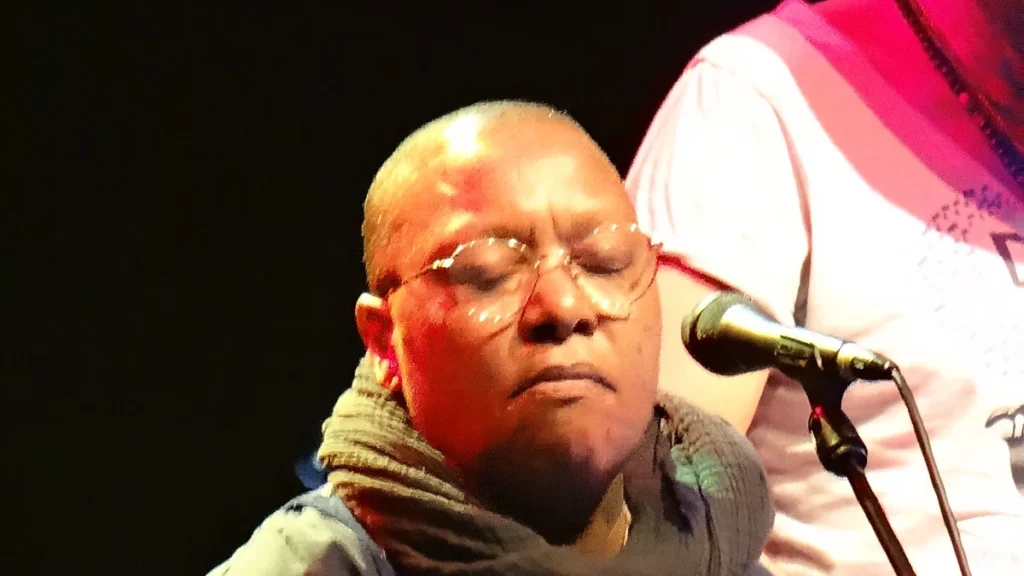
Meshell Ndegeocello Recast Fifteen Duets as Same-Gender Pairs

Islands in the Stream was written by the Bee Gees and recorded by Kenny Rogers and Dolly Parton. On Synonym it is sung by Meshell Ndegeocello and Chaka Khan. I Got You Babe belonged to Sonny and Cher; here it goes to Ndegeocello and ANOHNI. Golden Ring, a George Jones and Tammy Wynette record about a wedding ring passing between owners, is handled with Brandi Carlile.

The rule holds across all fifteen tracks. Every duet on the album is performed by two people who identify as the same gender, and the songs were chosen from a canon that almost entirely assumes otherwise. Ndegeocello’s third Blue Note album arrives on 2 October 2026, and that single constraint is the whole design.

Why the Album Is Called Synonym

She has been direct about what the title means. “This project is an expression of queer liberation as a synonym for liberation of all kinds,” she has said, and the record is built to demonstrate the point rather than argue it.

A duet is one of the few song forms with gender written into its architecture. The call and response, the harmony parts, the narrative of who is asking and who is answering were all arranged around an assumption. Removing the assumption and changing nothing else is a cleaner experiment than writing new songs would have been, because the listener already knows what these records are supposed to sound like.

Fifteen Songs From Four Decades

The source material runs from the 1960s to the early 2000s and refuses to sit in one genre. I Knew You Were Waiting (For Me), the George Michael and Aretha Franklin record, opens the album with Cynthia Erivo. Don’t You Want Me, the Human League’s, goes to Cat Power. It Ain’t Me Babe, Bob Dylan’s, is taken with Madison Cunningham, and With God On Our Side, also Dylan, closes the album with Bill Callahan and Chris Thile.

Elsewhere the list reaches into R&B and hip-hop: Don’t Stop The Music with Nick Hakim and Robert Glasper, Always on Time with Laura Lee of Khruangbin, Don’t Look Any Further with Lianne La Havas, The Closer I Get To You with Destin Conrad and Moses Sumney. Be Real Black For Me, the Roberta Flack and Donny Hathaway song, is sung with Emily King and Lizz Wright. Hunger Strike, the Temple of the Dog track, goes to WILLOW.

Nineteen guests is a large number for a record with any coherence, and the spread of idioms is deliberate. Ndegeocello has described the songs as diverse in tone and representative of various genres, and the effect is to show that the constraint is not a genre trick. It works the same way on a country weeper as on a synth-pop single.

The Producer Who Made Her First Two Records

David Gamson co-produces alongside Ndegeocello and Abe Rounds. Gamson produced Plantation Lullabies in 1993 and Peace Beyond Passion in 1996, which makes this a working relationship resumed after roughly thirty years.

That is a pointed choice given the subject. Plantation Lullabies was noted at the time for presenting a distinctly androgynous persona, and it was one of the first releases on Maverick Records. Returning to the producer of that record to make an album about who is allowed to sing to whom closes a loop that has been open most of her career.

Players Rather Than Features

The instrumental credits explain why this reads as a Blue Note album rather than a covers project. Abe Rounds and Deantoni Parks share the drums. Chris Bruce plays guitar. Jake Sherman, Jebin Bruni and Larry Goldings handle keyboards. Josh Johnson and Levon Henry play saxophone, Elena Pinderhughes plays flute, and Bela Fleck plays banjo.

Goldings, Johnson and Pinderhughes are serious jazz musicians, and Fleck’s banjo on a record containing Dolly Parton and George Jones songs is a straight-faced instrumentation decision rather than a joke. The band is fixed and rotating rather than assembled per guest, which keeps fifteen different vocal pairings sounding like one album.

Ndegeocello has framed her own role in production terms, saying she wanted to do more collective music and to show what she can do as a producer. For an artist whose reputation was built on bass playing and songwriting, that is a real repositioning.

Two Grammys in Two Years

She has thirteen Grammy nominations and three wins. The first came for Best R&B Song, for Better Than I Imagined. The other two are consecutive awards for Best Alternative Jazz Album, for The Omnichord Real Book and then No More Water: The Gospel of James Baldwin, which were her first two Blue Note releases.

Those were also the first Grammys to honour her own albums across a recording career of more than thirty years, which is a strange fact about an artist widely credited with helping to spark neo-soul. Winning the same category twice running, immediately after signing to a jazz label in her mid-fifties, describes a late-career surge rather than a legacy lap.

Go-Go Bands in Washington

She was born Michelle Lynn Johnson in Berlin in 1968 and learned to play in Washington, D.C. in the late 1980s, working with go-go bands including Prophecy, Little Benny and the Masters, and Rare Essence. The surname she adopted means free like a bird in Swahili.

Go-go is relevant to what she does now. It is a live, percussive, call-and-response idiom built on continuous grooves and audience exchange, and the habit of treating a song as something two parties do to each other rather than a fixed text runs directly into an album made of duets.

The label history since then reads like a map of an artist nobody could file: Maverick and Reprise, then Shanachie, EmArcy, Decca, Mercer Street, Naïve, and finally Blue Note in 2023. Seven labels across three decades usually indicates a commercial problem. In this case it tracks a musician who moved between R&B, rock, spoken word, covers projects and jazz faster than any single roster could follow, and the Blue Note run is the first time the catalogue and the label have been pointed the same way.

The Argument Underneath

Her other stated position on the project is disarmingly plain: whatever the differences between people, what they want underneath is much the same, and she has named healthy food and a safe place as the example. That is a modest claim to hang a fifteen-track album on, and the modesty is the point.

She has also said she is not defining anything, because the absence of definition is where she feels most free. A record that reassigns famous duets without rewriting a word is exactly that principle applied to material rather than to identity. Nothing is explained; the pairings simply happen and the songs turn out to work.

What Follows

She plays the Blue Note Jazz Club in New York on 18, 19 and 20 September 2026 in a trio configuration with Chris Dave and Eric Gales, ahead of the album’s arrival at the start of October.

A run of small-room dates before a guest-heavy studio release is the right sequencing for what this is, because the album’s argument is finally about performance rather than production. It sits alongside Immanuel Wilkins recording three albums across two nights at the Village Vanguard as evidence of what Blue Note is currently doing, which is signing musicians with a formal idea and then letting them execute it at length.
Ezra Furman Made an Orchestral Emo Record About Losing Control

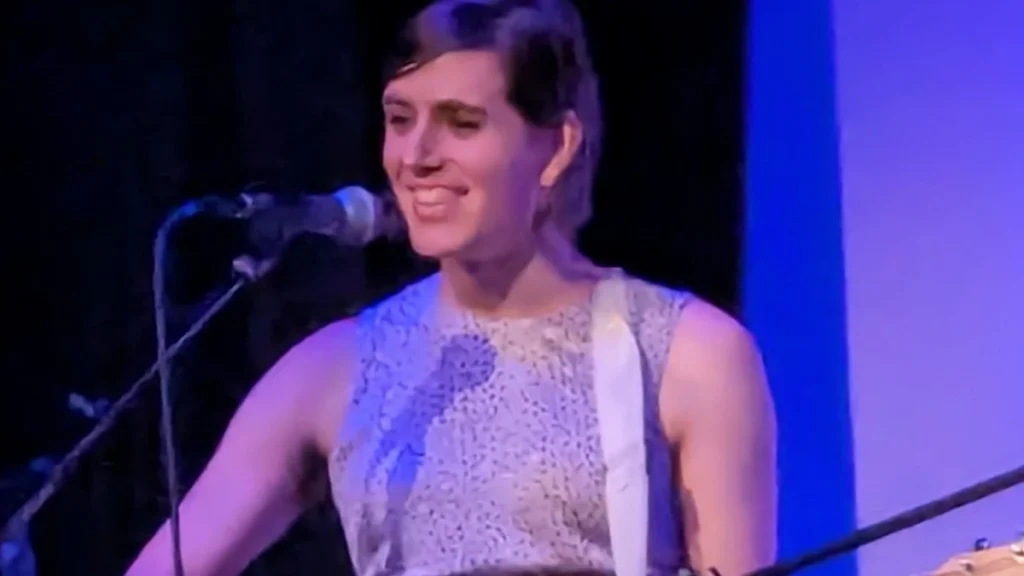
The first sound on Goodbye Small Head is a string section, and the second is a synth humming somewhere underneath it. Then a breakbeat arrives, skittering and slightly wrong-footed, and a voice starts asking to be let out of a moving car. Ezra Furman has a phrase for the combination: an orchestral emo prog-rock record sprinkled with samples. It is an unwieldy description, and it is accurate.

The album came out on Bella Union on 16 May 2025, produced by Brian Deck and recorded in Chicago, where Furman is from. Twelve songs run forty-two minutes. It reached number three on the UK Independent Albums chart, and in January she takes it across Europe and Britain for fourteen nights, opening at Arena Wien in Vienna on the 19th.

Where the Songs Came From

Furman has been open about the circumstances. The material arrived in a rush after a period of illness in early 2023, and she has described the writing as happening inside the experience rather than after it: “This poetry, my poetry, arrived in the midst of the storm. It was written as I teetered toward the edge.”

She is precise about what that does and does not mean for the songs. “They’re not about someone going off the rails,” she has said, “they are inside that person’s heart.” That distinction matters to how the record works. It is not a set of case notes written in retrospect, and it does not resolve, because it was not made from a position where resolution was available.

The Sound of Losing Control

The production carries the argument. Sweeping strings sit against low synths and chopped-up voice samples, and the rhythm section keeps declining to settle. Furman has said the twelve songs delineate a loss of control through means both conventional and not, listing weakness, heartbreak, mysticism, drugs, and living in society with your eyes open.

Set against that lyrical content, the arrangements are unexpectedly lush. Mojo called it her calmest record, flecked with ballads and strings, which is a fair reading of the surface and slightly misses what is underneath. The calm is the frame, not the subject. Putting an unravelling into an orchestral setting is a compositional decision that makes the unravelling more legible, not less.

Four Songs That Show the Method

Jump Out opens on buoyant strings and that low hum, with Furman wailing at a driver who has no intention of stopping. Grand Mal is the most developed of the openers in her catalogue, lush and swaying, and, as The Line of Best Fit observed, oddly lullabying for a song about a seizure.

You Mustn’t Show Weakness sets brooding breakbeats under a mantra Furman directs at herself, an instruction not to fold. A World of Love and Care is the album’s most affecting stretch, built on questions about what a society actually guarantees anyone. The record closes on I Need the Angel, the one song here Furman did not write, an electric reading of an Alex Walton composition delivered with heartland rock riffage.

The rest of the running order keeps widening the palette rather than settling it. Sudden Storm and Power of the Moon sit early, the latter the longest thing on the first half at four and a half minutes. Submission, Veil Song and Slow Burn run consecutively through the middle, and You Hurt Me, I Hate You is the bluntest title on a record otherwise inclined toward metaphor. Strange Girl follows it. The bossa nova influence that reviewers kept noting surfaces in the rhythmic feel of these central tracks rather than in any single arrangement, which is why the album can move between genres without ever sounding like a compilation of styles.

What the Reviews Landed On

The reception was strong and unusually consistent about why. DIY gave it four and a half out of five and called the lyrics some of her finest, unafraid of the darkest corners. Hot Press scored it eight out of ten and identified the theme precisely: the songs are explicitly about the act, and the art, of losing control.

The Line of Best Fit’s Dom Lepore gave it seven out of ten and framed it as a novel and necessary display of fervour in a hypervigilant era. MusicOMH went four out of five, describing Furman as one of the most exciting songwriters working. Nobody found it an easy listen, and nobody suggested it should have been.

The commercial pattern matched that critical one. Number three on the UK Independent Albums chart is a genuine result for a record on a label the size of Bella Union, and it sits alongside 23 on UK Album Downloads and 38 in Scotland. Those are the numbers of an artist with a committed audience rather than a broad one, which is the position Furman has occupied for most of a career now spanning more than a decade and a half, first with bands and latterly under her own name.

Fourteen Nights in Winter

The touring plan is dense. January runs Vienna, then Graz’s Dom Im Berg, Linz’s Posthof and Munich’s Strom on consecutive nights, followed by Prague, Berlin’s Columbia Theater, Hamburg’s Molotow, Amsterdam’s Paradiso Tolhuistuin, Antwerp’s Trix Club and Le Cabaret Sauvage in Paris. February brings Glasgow’s Art School, New Century Hall in Manchester, Bristol’s Electric, and the O2 Forum Kentish Town in London on the 4th.

Those are club and mid-size rooms rather than arenas, which suits material this intimate, and the routing is the compact European circuit an independent-label artist plays when the record has done well without crossing over. North American dates ran through the second half of 2025, so the UK and European leg is the album’s long tail rather than its launch.

Winter routing of that density also tells you something about how the show is built. Ten European dates inside eleven nights leaves no room for elaborate staging or a large touring party, which points to a set carried by the songs and a small band rather than by production. For a record this dependent on strings and samples, reproducing it live is the interesting problem, and the venues suggest the answer is rearrangement rather than replication.

Why It Reads as Queer Music

Furman is a trans woman and has written about faith, gender and belonging across her catalogue, but the reason this record belongs in that conversation is structural rather than topical. Very little of it is about identity in a declarative way. It is about being unable to trust your own footing, and about the gap between how you are managing and how you are required to appear.

That is a queer record in the sense that matters: it treats the pressure to present as composed as the actual subject, rather than as background. You Mustn’t Show Weakness is the clearest statement of it, an instruction delivered to oneself in a voice that plainly does not believe it.

An Artist Who Kept the Framing

What comes through across the album, the interviews and the reviews is how firmly Furman has held onto her own account of the record. She named the genre, defined the subject and drew the line between writing from inside an experience and reporting on it afterwards. Critics have largely adopted her terms, which does not always happen.

It puts her among a set of artists currently insisting on authorship over the frame as well as the music, in the way Leon Thomas spent two decades producing for other people before making the record with his own name on it. Furman’s version is quieter and harder to sell, and the fourteen January dates suggest an audience that turned up for exactly that.

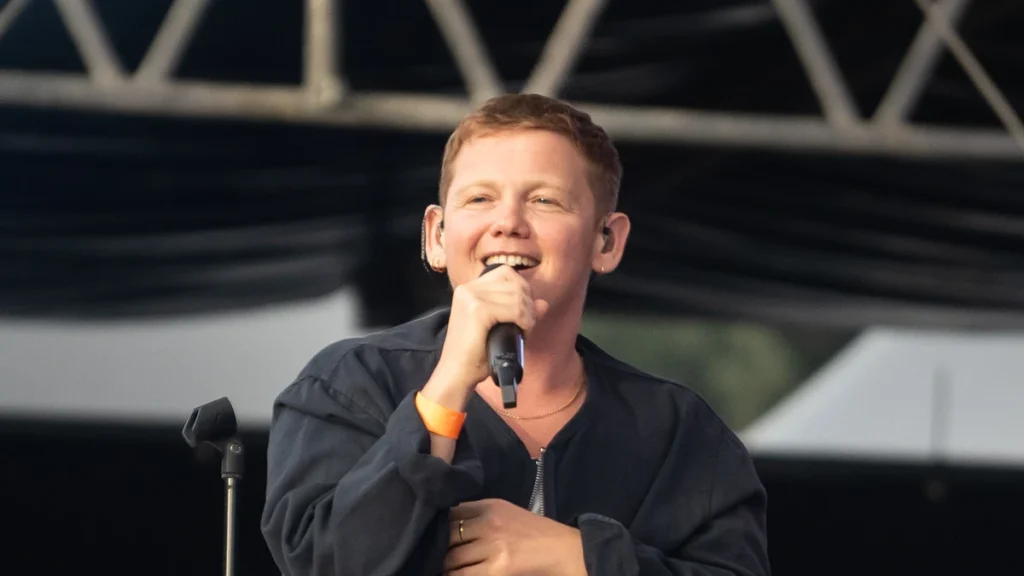
Kae Tempest Sampled His Own Old Lyrics to Argue With Them

Sampling is normally an act of borrowing: you take someone else’s record and put it somewhere new. Kae Tempest does something odder on his fifth album. He samples himself, and not to quote a hook — to disagree.

Self Titled was released on 4 July 2025 through Island Records: twelve tracks, forty minutes and twenty-six seconds, produced by Fraser T. Smith with Tempest. The self-sampling is the structural idea the rest of the record is built around.

A Writer in Conversation With His Own Archive

On “Know Yourself”, old Tempest lyrics reappear inside the new song. The effect is not nostalgia and it is not a victory lap. Placing a line you wrote years ago next to what you would write today makes both of them arguable, and the listener hears the gap rather than being told about it.

Very few writers can attempt this, because it requires a back catalogue with enough definition that a fragment is recognisable out of context. Tempest has one: a career built on spoken word before it was built on records, where the words were always the fixed element and the music arrived around them.

It is also a risky device. Quoting your younger self invites the comparison you might lose. The record survives that because it is not claiming the older lines were wrong — only that they were written by someone with less information.

Tempest makes the relationship explicit in the lyric itself. Hot Press, which scored the album 9 out of 10, picks out the couplet on that track: “Now I sit among crates of rhyme books / And I thank the little me that put the work in.” That is gratitude rather than correction, and it reframes the whole device. The archive is not being interrogated; it is being credited.

The same track celebrates Wu-Tang’s influence on the teenage Tempest, which locates the self-sampling in a tradition rather than presenting it as a novelty. Hip-hop has always treated the crate as a working tool. Turning that instinct on your own back catalogue is a small extension of an old idea.

The rollout backs that reading. Island led with “Statue in the Square” on 19 March 2025, premiered on Nick Grimshaw’s BBC Radio 6 Music show, but it was “Know Yourself” — the self-sampling track — that arrived on 30 April alongside the album announcement itself. “Diagnoses” followed on 23 June as the third and final single. Choosing the track that argues with the archive to introduce the record says something about what the album is for. A label playing safe leads with the loudest song and keeps the conceptual one deep in the sequence.

The Question He Set Himself

The NME review, which gave the album four out of five, quotes the brief Tempest set himself in an interview earlier that year: “What is it only I can say, that no other lyricist in the UK can say?”

That is a harder question than it sounds, and most writers quietly avoid it, because the honest answer is often “nothing yet”. Asking it out loud commits you to a record that cannot be assembled from craft alone.

What the album answers it with is specificity: an account of identity and medical transition told from inside rather than explained outward. The reviewer described the result as “a beefy, self-assured celebration of newfound identity”, which is a notably unburdened phrase for a subject usually handled as difficulty.

What Changed in the Voice Itself

There is a technical dimension here that has no real precedent in British rap. Tempest’s vocal tone has altered as a result of hormone treatment, which means the instrument delivering the words is physically not the one that delivered the earlier records.

That turns the self-sampling from a clever conceit into something closer to documentary. When an older line plays against a new one, the difference is audible in the timbre before it is audible in the argument. A device that could have been merely literary is doing acoustic work.

It also reframes what a “self-titled” album means five records into a career. The convention is that artists self-title a debut, or a reset. Doing it fifth, on a record about becoming legible to yourself, makes the title a statement rather than a default.

Fraser T. Smith and the Case for a Producer Who Pushes

Smith co-produced the album with Tempest, and the NME’s account has him pushing Tempest creatively rather than simply framing the vocal.

The evidence is in the range. “Statue in the Square” runs on trapped hi-hats, sirens and a menacing piano figure — the reviewer reached for NWA as a comparison — while “I Stand on the Line” opens the record closer to film score than to rap. “Hyperdistillation” turns to wealth inequality and social isolation. These are not adjacent settings, and holding them on one forty-minute record is a production problem before it is a writing one.

Tom Rowlands co-wrote “Know Yourself” and “Diagnoses”, the two tracks where the electronic architecture is most load-bearing.

Length discipline is part of the same work. Twelve tracks across forty minutes and twenty-six seconds averages under three and a half minutes each, and the record is willing to go shorter still: “Everything All Together” runs 1:52, “Forever” 2:28, and “Know Yourself” itself only 2:40. For a writer whose reputation was built on long-form spoken word, that is a real constraint, and it keeps the album moving between registers instead of settling into any one of them.

Hot Press also credits Smith with encouraging two specific things: Tempest taking an active hand in the production, and writing in the first person. The second matters more than it sounds. A writer known for character work and third-person social observation moving to “I” is a structural change, and it is what makes the self-sampling legible — you cannot argue with your younger self from behind a persona.

A Guest List Chosen for Contrast

The features are unusually well spread. Young Fathers appear on “Breathe”, the album’s longest track at 5:53. Connie Constance sings on “Hyperdistillation”, Tawiah on “Bless the Bold Future”, and — least predictably — Neil Tennant of the Pet Shop Boys adds vocals to “Sunshine on Catford”.

Tennant is the interesting one. A south London street name in the title and a voice from forty years of British synth-pop in the mix is a deliberate collision of registers, and it signals that the record’s idea of its own lineage is broader than rap.

They are credited as writers, too, not as decoration. The album is written by Tempest and Smith throughout, with named additions per track: Tawiah on “Bless the Bold Future”, Connie Constance — credited under her own name, Constance Power — on “Hyperdistillation”, and all three of Young Fathers’ Kayus Bankole, Graham Hastings and Alloysious Massaquoi on “Breathe”. A guest who writes is shaping the song rather than visiting it, which is a different relationship from the one a feature credit usually describes.

None of the four is a streaming-numbers feature. That is consistent with an album whose organising question was about singularity rather than reach. Our piece on how features became a career strategy covers the more common approach, which this record conspicuously declines.

The writing is quotable in a way that survives being lifted out. “Statue in the Square” carries “We’ve been there from the start and we ain’t going anywhere”; of “Bless the Bold Future” Tempest has said it “takes a maverick to stand in the crosshairs and say I won’t have it”. “Diagnoses” opens on a klaxon. None of these are subtle, and the record is not trying to be.

The Chart Split Says Who It Reached

The reception was broad and warm: a Metacritic score of 85, 7.9 at AnyDecentMusic?, four stars from AllMusic, The Guardian, The Independent and NME, 8 out of 10 from Clash and Uncut, four and a half from musicOMH and DIY, and 9 out of 10 from Hot Press. Uncut called it “often raw, venerable, painful stuff” with “moments of joy”, which is a fair description of a record that refuses to pick one mode.

Commercially it reached 25 on the UK albums chart and three in Scotland, while going to number one on the UK R&B albums chart. Abroad it was a smaller story — 41 in Switzerland, 50 in Flanders. As with a lot of records made without a crossover strategy, the genre chart is the one describing what actually happened: a committed audience arriving deliberately.

Five albums in, that is the outcome a writer who asks what only he can say should expect, and probably the one he was asking for.

Self Titled is out now on Island Records.

Ambiguous Desire Rebuilds Arlo Parks Around a New York Dancefloor

There is a particular kind of record an artist makes when the thing they were known for stops fitting. Arlo Parks built a career on proximity: songs that sounded like they were being said to one person, close enough to hear the breath. Ambiguous Desire, released on 3 April 2026 through Transgressive Records, is what happened when she stopped writing for a bedroom and started writing for a room with a soundsystem in it.

Twelve tracks, forty minutes and one second, and a set of credits that looks nothing like her first two albums. It is not a reinvention in the marketing sense, where an artist puts on a costume and calls it a chapter. It is more specific and more interesting than that: a songwriter working out what happens to her actual technique when the tempo doubles and the room gets louder.

What Changed Between My Soft Machine and This Record

My Soft Machine arrived in 2023 and stayed close to the template that made Collapsed in Sunbeams work. The vocal sat forward, the arrangements deferred to it, and the emotional register was confessional in the literal sense: someone telling you a thing they had not told many people.

Ambiguous Desire keeps the writing and moves everything underneath it. The first two singles set the terms early. Ticketmaster’s tour announcement noted that “Heaven” and “2SIDED” both lean into house music and UK garage, sounds Parks reached for after immersing herself in club culture. That is a real structural change, not a texture. House and garage put the vocal in a different relationship to the track: it stops being the thing everything else supports and becomes one element inside a groove that would keep going without it.

You can hear the consequence across the record. Phrases get shorter. Lines repeat where they would previously have developed. The writing has to survive being looped, which is a different discipline from writing something that only has to land once.

The Break-Up That Sent Her to the Club

The turn was personal before it was musical, and Parks has been unusually direct about the sequence. “I danced more than ever as I made this record, I made more friends than ever too, found myself in the weird underbelly of New York juke nights,” she said in the tour announcement.

That detail matters more than it looks. Dance records made by non-dance artists often fail because the writer treats the club as an aesthetic rather than a place they have actually stood in at three in the morning. Parks describes going repeatedly, socially, over a period long enough for it to change what she found interesting. The record reads as reportage from somewhere she had been, rather than a genre exercise assembled from references.

She has framed the album’s organising idea in the same plain terms: “This record has desire at its center. Desire is a life force, it’s a wanting, a yearning, a momentum.” Momentum is the operative word. It is a description of a feeling and a description of a rhythm section, and on this album those are the same claim.

Eight Producers, and Why That Is Not a Warning Sign

The credits list eight producers: Parks herself, alongside Paul Epworth, Rob Bisel, Andrew Sarlo, Buddy Ross, Romil Hemnani, Baird and Dylan Neustadter. On paper that is the shape of a record made by committee, the kind of album where a label throws names at a problem until something sticks.

It does not play that way, and the reason is in the rest of the credits. David Wrench mixed the album, and a single mixer across twelve tracks is what stops a multi-producer record from sounding like a compilation. Wrench is the continuity: whatever came in from whichever room, it leaves through one set of decisions about space and low end.

Epworth also appears as a musician rather than only a producer, credited with guitar, synthesiser, drums and bass, which suggests sessions where things were played rather than assembled. Simon Martinez plays guitar, Ryan Raines drums, and Brad Oberhofer piano. That is a band’s worth of human performance sitting underneath music that could easily have been programmed end to end.

How the Singles Mapped the Turn

The rollout was unusually long and unusually deliberate. “2Sided” came first on 13 January 2026, followed by “Heaven” on 2 February, “Get Go” on 10 March and “Beams” on 31 March, three days before the album. “Senses”, the Sampha collaboration, followed on 22 May, and a “Floette” remix with John Glacier arrived on 4 August.

Read in order, that sequence is an argument. The two most club-facing tracks went first, which is the opposite of the cautious approach, where an artist leads with the song closest to what audiences already expect. Parks led with the change. By the time the album arrived, anyone who had been paying attention had already decided how they felt about the new tempo.

The Sampha feature landing seven weeks after release is the other tell. A guest of that profile is normally spent on launch week. Holding it back suggests confidence that the record could open on its own terms.

What the Reviews Actually Split On

Critical response was warm without being unanimous, which is usually what an interesting record produces. Metacritic settled at 77 from a spread that ran from Hot Press at 9/10 and DIY at four and a half stars down to Paste at B-. Pitchfork landed at 7.1, Clash and Exclaim! both at 8/10, and The Independent and Rolling Stone UK at four stars.

The commercial picture was similarly split by category rather than by quality. The album reached number 13 on the UK albums chart, which is respectable rather than dominant, and number one on the UK independent albums chart, which is the number that actually describes its position. It also charted in Scotland at four, Germany at 43 and Switzerland at 50.

A number 13 peak alongside an independent number one is the signature of a record with a committed audience rather than a passive one, and that is the audience a tour of this length is built for.

The Desire Tour Puts the Record in the Room It Came From

The North American leg opens on 29 August at The Howard Theatre in Washington, D.C., then runs through Philadelphia, Boston, Montreal, Toronto, Detroit, Dallas, Austin, San Diego, Los Angeles, San Francisco, Seattle, Vancouver, Portland, Salt Lake City, Denver and Chicago, closing at Knockdown Center in Queens on 1 October. The UK and Ireland follow, with O2 Academy Brixton on 20 October, and Europe carries it to Stockholm on 2 December.

The venues are the point. These are mid-size rooms with proper soundsystems rather than seated theatres, and a record built on low end and repetition needs the former. Parks’ own framing of the tour was characteristically unfussy: “Let’s laugh, cry and move our bodies.”

What will be worth watching is the older material. A catalogue written for close listening has to survive a set built around a four-to-the-floor spine, and the usual solution is rearrangement rather than omission. It is the same problem, viewed from the other end, as the one this album set itself: how a voice trained for intimacy holds its shape at volume. Readers curious about how that voice gets constructed in the first place may find our piece on how a pop vocal actually gets built a useful companion.

Ambiguous Desire is out now on Transgressive Records. The Desire Tour runs from 29 August to 2 December.