Country

Brooke Washor on Two Chords, Spanish Guitar and the Making of Cowboy

A Panama City Beach Singer Builds a Country-Pop Singalong for Car Rides and Club Nights

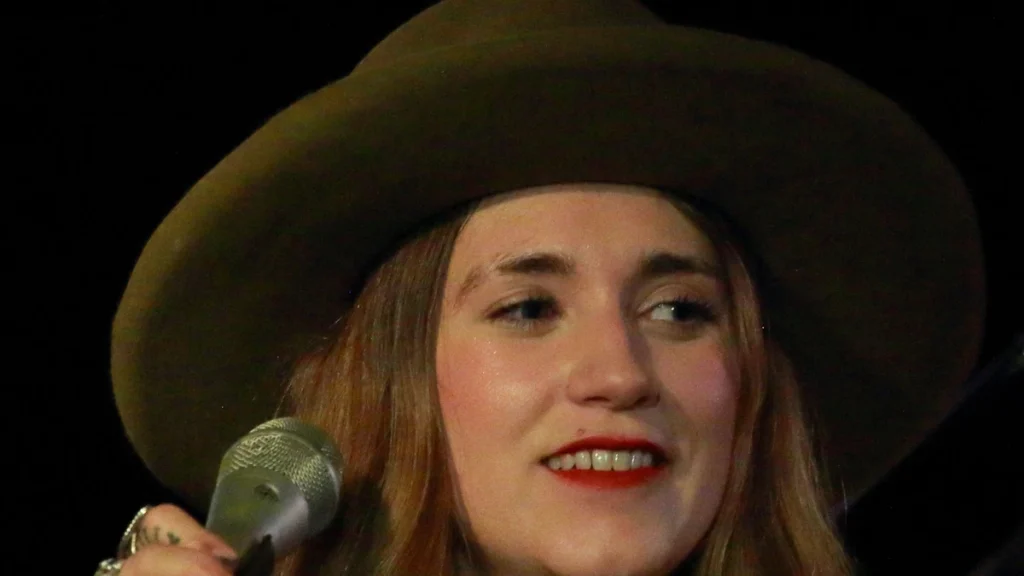
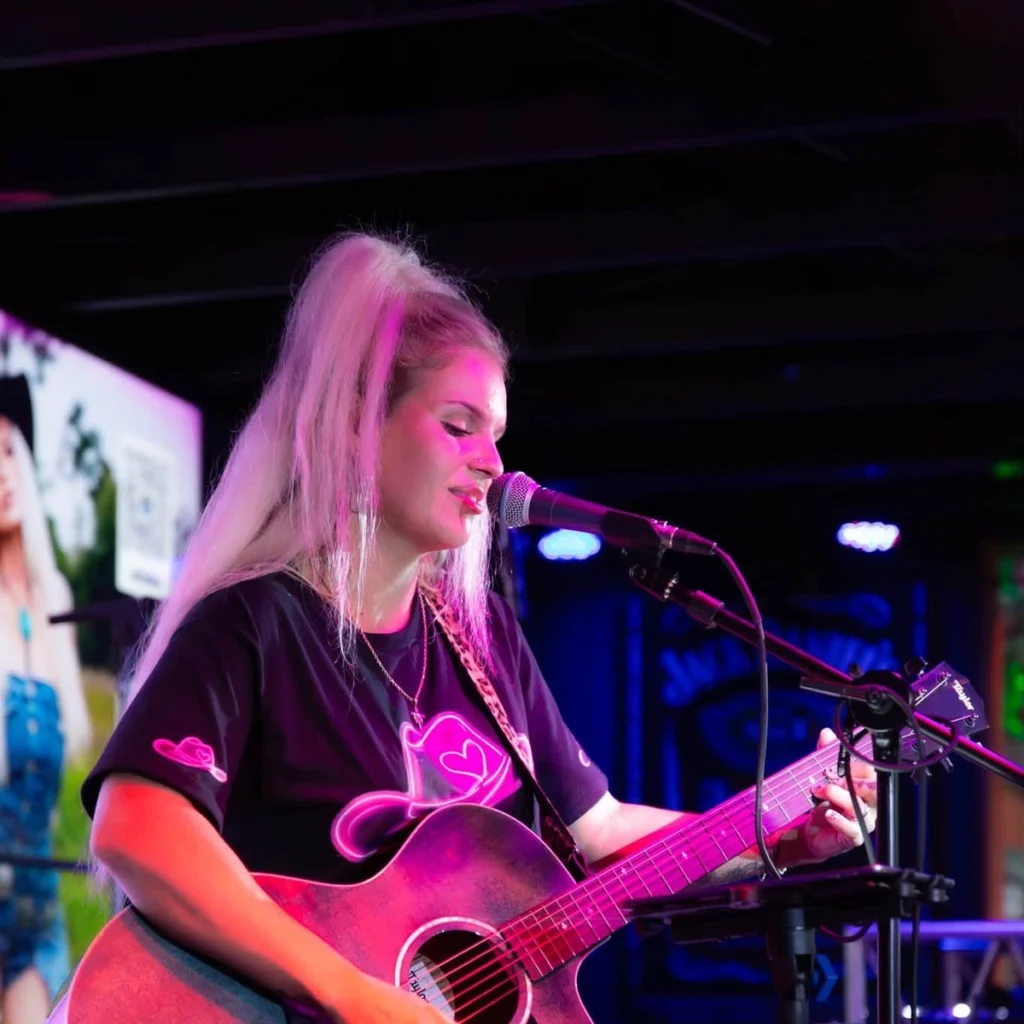
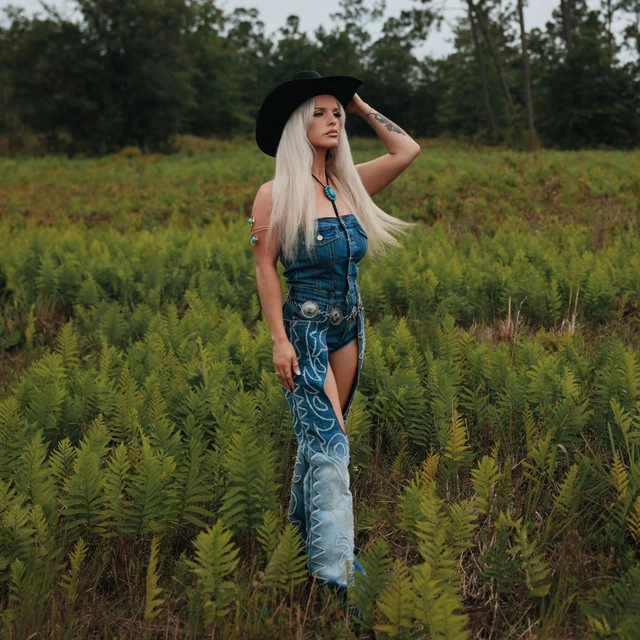
Brooke Washor started Cowboy with a single decision: the melody would sit on two guitar chords. Everything else was built on top. She released the single with Big Trip on 3 July 2026, as a country-pop song aimed at one moment: the second time it comes round, when you already know the words. That might be in the car, in the shower, at the club or while getting ready to go out.

Brooke Washor’s music is in the playlist below, and her full coverage history sits on her artist profile. Cowboy reached this desk through PopHits.Co Music Charts, which verifies independent artists and places their releases across its network of music news sites. Listen to the single first, then read on for how two chords became a singalong.

Brooke Washor on Two Chords, Spanish Guitar and the Making of Cowboy

The Instant Replay Moment Brooke Washor Wrote Cowboy For, From the Car to the Club

Most singles hope to be remembered. This one sets out to be repeated. In her own description of the song, Washor talks about the urge to hit replay. She also mentions catching yourself singing it for the rest of the day. That is a modest aim on paper, but it shapes every choice on the record.

The moments she names are ordinary ones. A drive, a shower, a night out, half an hour in front of the mirror. None of them asks the listener to sit still and concentrate. Instead, the song has to work in the background first and then pull you in. That is a harder trick than it sounds.

It helps that Washor writes from the stage. She plays a local residency in Panama City Beach, Florida, and that road-tested energy carries into the studio. A song that has to hold a room on a busy night learns quickly which parts people sing back.

Brooke Washor and Big Trip Dress a Two-Chord Cowboy Melody in Spanish Guitar, Banjo and Heavy Drums

The record itself starts from almost nothing. The two-chord melody came first. Then she asked her producer for everything else: Spanish guitars, banjos and heavy drums, all at once.

That contrast is the song’s engine. The chords stay simple enough to learn on one listen. Meanwhile, the arrangement keeps adding colour, from the bright Spanish guitar to the twang of the banjo and the weight of the drums. As a result, the track sounds bigger than its two chords, without ever losing the hook.

Big Trip shares the credit. The billing reads Cowboy featuring Big Trip. He arrives with his own busy run of 2026 singles, including Breathe, Say Your Name and Highly Favored. The track runs three minutes and 33 seconds. The music and lyrics sit with her own company, Brooke Washor Music LLC.

From the NewMusic.News Curator Team: “Keeping the melody to two chords is the bravest decision on Cowboy. It means every instrument on top has to earn its place, and the song still sounds like something a whole bar could learn before last orders.”

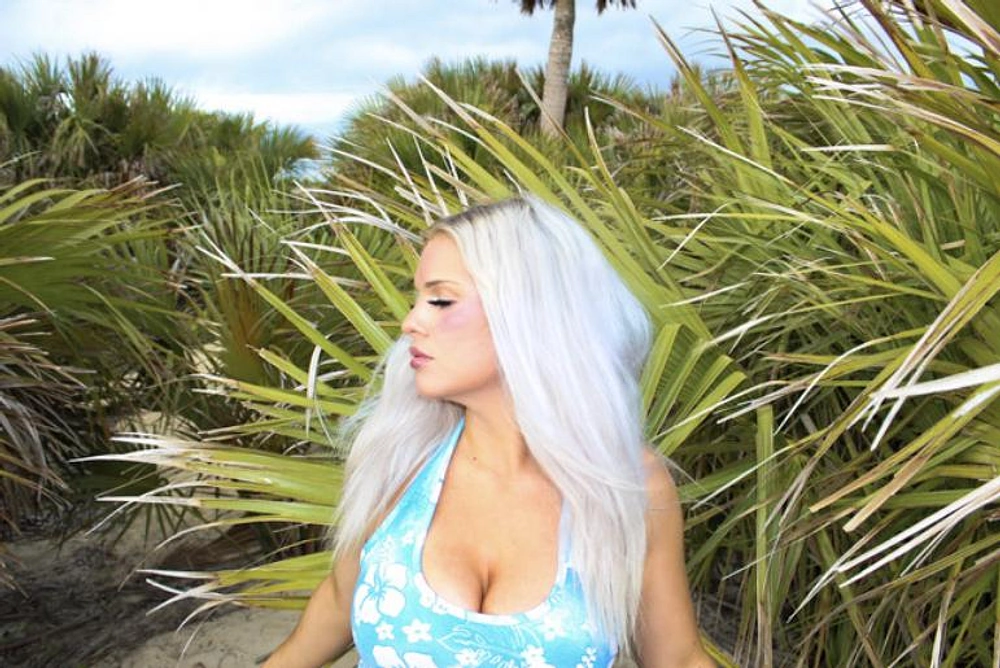
Brooke Washor on Two Chords, Spanish Guitar and the Making of Cowboy

What Cowboy Answers About a Decade of Live Sets and a Songbook Built on Covers

Cowboy answers a simple question: what does a working live singer sound like when she finally gets the full studio treatment? Washor has spent around ten years playing live music professionally. Her YouTube channel shows the songbook she has drawn on along the way.

Over the years she has posted covers of Tim McGraw’s Red Ragtop and Morgan Wallen’s Livin’ The Dream. There are also three songs by Kelsea Ballerini, including the other girl, her duet with Halsey. Ballerini, a five-time Grammy nominee, is a useful reference point here. Her records sit squarely where country storytelling meets pop production, and that is exactly where Cowboy aims. In November 2023, Washor also posted her online video submission for The Voice.

Her own list of influences explains the pop side of the equation. She names Britney Spears and Halsey, alongside the songwriter and producer Max Martin. His name sits on some of the most replayed pop choruses of the last three decades.

So the answer is clear enough. Cowboy takes the instincts of a live set, above all the need for a chorus people can shout back. Then it gives them a studio arrangement to match. Start here, then go back to R.I.P. from 2023 to hear an earlier step.

Cowboy is also on Apple Music. Follow Brooke Washor across platforms: Spotify, Apple Music, Deezer, YouTube, Instagram, TikTok, Facebook and X.

Kacey Musgraves Opened an Arena Tour on Her Birthday

Kacey Musgraves turned the opening night of an arena tour into her own birthday party. The Middle of Nowhere Tour began at the United Center in Chicago on 21 August 2026, the day she was born, and runs for thirty-six dates ending at the OVO Arena Wembley on 26 February.

Between those two points sit two nights at Madison Square Garden, the Bridgestone Arena in Nashville, the Moody Center in Austin, Crypto.com Arena in Los Angeles and Climate Pledge Arena in Seattle, plus an Australian run at the Longhaul Festival in January and British dates in Glasgow and Manchester.

Eight Opening Acts

The support is unusually broad: Midland, Flatland Cavalry, Carter Faith, Charles Wesley Godwin, Estevie, William Beckmann, Gabriella Rose and The Brudi Brothers, rotating across the run.

Eight openers on a thirty-six date tour means the bill changes region by region, which is a deliberate way of using an arena headline slot. A single support act across a whole tour is cheaper and simpler; rotating eight of them turns the tour into a platform, and several of those names are considerably earlier in their careers than a Crypto.com Arena stage would normally allow.

The Album Takes in Zydeco

Middle of Nowhere, her seventh, arrived on 1 May 2026 through Lost Highway Records, a label relaunched the previous year. The stated range is country, pop, bluegrass, Zydeco and Norteño, which is wider than any of her previous records attempted.

The guest list follows the same logic. Willie Nelson and Miranda Lambert are country institutions from either side of her own generation. Billy Strings is the most technically formidable bluegrass player currently working. Gregory Alan Isakov comes from the quiet, folk end of Americana. Nobody on that list was chosen for streaming reach.

Zydeco and Norteño are the genuinely unusual inclusions. Both are regional American traditions with deep audiences and almost no presence on country radio, and reaching for them on an album that will be played in arenas is a choice that could easily have gone wrong.

The label matters as well. Lost Highway was the imprint that housed a particular strand of serious American roots music in the 2000s before being folded away, and relaunching it in 2025 was a statement about what kind of records it intended to release. Putting a seventh album by an artist of Musgraves’s commercial standing on a revived catalogue label, rather than on a major country division, tells you which audience the record was aimed at.

It also explains the album’s second single sharing the album’s title, a move that reads as confidence in the whole rather than in any individual track. An artist chasing radio picks the most obviously playable song; naming the single after the record signals that the album is the unit.

A Single About Being Bored

Dry Spell led the campaign on 11 March, produced by Musgraves with Daniel Tashian, Ian Fitchuk and Luke Laird. It is a comic song about romantic frustration built on a run of agricultural double meanings, with a chorus that gets to nobody’s tool up in my shed and nobody’s boots under my bed.

She trailed it by posting a question about whether it is possible to die of horniness, asking for a friend, which sets the register accurately. Consequence called the result boldly hilarious and self-aware; American Songwriter said it was full of the witty wordplay that made her famous; Pitchfork called it a playful confession of boredom; Billboard settled for humorous and twangy.

It reached fifty-five on the Hot 100, fifteen on Hot Country Songs and thirty-four on Country Airplay, and charted in Canada, the United Kingdom, New Zealand, Japan and across Europe. The video, co-directed with Hannah Lux Davis, sets her in a grocery store surrounded by visual innuendo.

Why the Radio Number Matters

The gap between fifteen on Hot Country Songs and thirty-four on Country Airplay is the whole story of her career in one comparison. The first chart counts streaming and sales; the second counts what programmers choose to play.

Musgraves has never been a country radio artist in the way her sales suggest she should be, and a comic single about not having sex was never going to change that. What she has instead is an audience that buys tickets, which is why the tour is in arenas regardless of the airplay position.

How the Route Is Built

The North American leg is paced unusually carefully for an arena run. Chicago on 21 August is followed by Toronto on the 24th, Boston at the end of the month and two nights at Madison Square Garden across 31 August and 1 September, then Philadelphia and Baltimore.

A gap follows before Minneapolis and Kansas City on 22 and 23 September, then Nashville and Atlanta at the end of that month, Austin and Dallas in the second week of October, Phoenix and Los Angeles the following week, and Oakland and Seattle to close on 26 and 27 October.

That is roughly two shows a week rather than the four or five a hard-touring act would attempt, with clear rest blocks built in. Spacing an arena tour that generously costs money in crew and venue holds, and it is the sort of schedule an artist sets when the priority is finishing the run in the same condition it started.

The overseas dates are separated by months rather than tacked on. Australia comes in late January, three Longhaul Festival appearances at the Melbourne, Sydney and Brisbane showgrounds on consecutive days, and the British leg follows a month later: Glasgow on 22 February, Manchester on the 24th and London on the 26th.

Three Shows Came Off the Calendar

On 26 July three dates were cancelled without explanation: Chicago on 20 August, Boston on 29 August and the Barclays Center in New York on 2 September. The Chicago cancellation is the interesting one, because it removed the night before the opener rather than a date buried in the run.

Dropping a Barclays Center show while keeping two nights at Madison Square Garden also suggests a routing adjustment rather than a demand problem, particularly since additional dates were added on 8 May because of demand after the tour was announced in April.

Where This Sits

Before August, the only thing on her calendar was three nights at Gruene Hall in New Braunfels, Texas, in early May. Gruene Hall is the oldest continuously operating dance hall in Texas and holds a few hundred people.

Playing three nights there and then opening an arena tour four months later is the same instinct behind Sierra Ferrell playing the State Fair of West Virginia between festival dates: an artist at arena scale deliberately keeping one foot in rooms that cannot possibly pay. Both will be at Bridgestone Arena in Nashville this autumn, from opposite ends of the bill.

What the two have in common beyond the venues is a refusal to let country radio define the ceiling. Neither is a mainstream airplay artist, both fill large rooms, and both did it by building an audience through records and live performance rather than through format. That is now a viable route to an arena, which it was not fifteen years ago, and the thirty-six dates on this tour are the clearest available proof of it.

Molly Tuttle’s Pop Record Topped the Bluegrass Chart

The album has a rock producer, an all-woman band with a drum kit in it, and a cover of Icona Pop’s I Love It. AllMusic called it an acoustic musician’s big pop move. It went to number one on the US Bluegrass Albums chart.

That is the funniest and most revealing fact about So Long Little Miss Sunshine, which Nonesuch released on 15 August 2025. Molly Tuttle made a deliberate move out of a genre, and the genre’s chart claimed her anyway.

Made With a Rock Producer

Jay Joyce produced it across October and November 2024 at Neon Cross Studio in Nashville, with mastering at Georgetown Masters. Joyce’s catalogue runs through country and rock rather than bluegrass, and Tuttle has been explicit that this was the attraction.

She has explained the choice in practical terms, saying she looked at his discography and found he had worked with a lot of her heroes while also having an eclectic career, and adding that she liked that he is a guitar player. That last point matters more than it sounds. A producer who plays the instrument the artist is famous for will make different arrangement decisions than one who does not.

The personnel confirm the direction. Tuttle sings and plays guitar and banjo. Joyce plays multiple instruments alongside producing. Byron House plays bass, Ketch Secor adds fiddle, banjo and vocals, and there are two drummers across the record in Fred Eltringham and Jay Bellerose. Bluegrass does not have a drummer.

Twelve Tracks and One Cover

The record runs twelve songs in forty-five minutes. That’s Gonna Leave a Mark arrived first on 3 June 2025, The Highway Knows followed on 10 July, and Old Me (New Wig) closed the run-up on 31 July. Elsewhere the titles are Everything Burns, Golden State of Mind, Summer of Love, Oasis, No Regrets and Story of My So-Called Life, alongside Rosalee, the one track that still sits plainly in bluegrass.

The Icona Pop cover is the clearest signal of intent. I Love It is a 2012 electro-pop single with almost nothing in it that an acoustic band can play, which makes covering it a statement rather than a homage. Keeping Rosalee on the same record stops the album reading as a repudiation: the bluegrass is still there, it is simply no longer the organising principle.

The Band That Stopped

Golden Highway went on hiatus in May 2025. Formed in 2021 with Shelby Means on bass, Kyle Tuttle on banjo, Bronwyn Keith-Hynes on fiddle and Dominick Leslie on mandolin, it made Crooked Tree and City of Gold, and both won the Grammy for Best Bluegrass Album.

Stopping a band that has just won two Grammys in consecutive cycles is not an obvious commercial decision. Tuttle replaced it with an all-woman touring band including drums, which is a structural change rather than a personnel one: a bluegrass band’s rhythm comes from the mandolin chop and the bass, and adding a kit removes the need for that arrangement entirely.

Old Me, New Wig

The third single was called Old Me (New Wig), released on 31 July 2025. Tuttle was diagnosed with alopecia areata at the age of three, which progressed to alopecia universalis, and she has spoken about it publicly for years.

Putting it in a song title rather than an interview is a different act. An interview answer is a response to a question somebody else asked; a single is something you choose to name and then have to say out loud every night on tour. On a record about self-acceptance and transformation, it is the track that makes the theme literal.

She Has Done This Before

The switch is not out of character. Her 2019 debut When You’re Ready was an acoustic pop and singer-songwriter record from a musician everybody expected to make bluegrass. But I’d Rather Be With You followed in 2020. Only then did she turn to Golden Highway and the two bluegrass albums, encouraged in that direction by Ketch Secor, now her fiancé.

So the pattern runs pop, then bluegrass, then pop again, which suggests the genre question was never really open. She has also said that bluegrass as a genre has opened up to all sorts of different audiences in recent years, which is a generous way of describing an artist who has spent a decade declining to stay inside it.

The Credentials Underneath

The moves land differently because of what she can do. Tuttle was born in Santa Clara in 1993 and raised in Palo Alto, the daughter of the bluegrass multi-instrumentalist and teacher Jack Tuttle. She started guitar at eight, was performing with her father at eleven, and played in a family band with her siblings.

She went to Berklee on merit scholarships and received the Foundation for Bluegrass Music’s first Hazel Dickens Memorial Scholarship. In 2017 she became the first woman to win IBMA Guitar Player of the Year, and won it again in 2018. The Americana Music Association named her Instrumentalist of the Year the same year.

Nobody can claim she left bluegrass because she could not play it. That is precisely why the bluegrass chart kept her.

It is worth being specific about what those guitar awards represent, because they are not a popularity vote. IBMA Guitar Player of the Year is decided by a professional membership of people who play the instrument for a living, in a tradition where flatpicking technique is measured against a lineage running back through Tony Rice and Doc Watson. Winning it twice, as the first woman to do so, is a technical verdict from the strictest available jury. An artist carrying that can spend the rest of her career doing whatever she likes, and the genre will keep counting her as one of its own.

How It Was Received

AllMusic gave four stars and called it a pop move that fully succeeds. PopMatters scored it eight out of ten, describing it as excellently written, impeccably performed and highly entertaining. The Financial Times gave four out of five and made the most useful observation, which is that it never feels like a forced detour.

Commercially it did what a genre departure usually does, which is trade breadth for depth. Number one on the bluegrass chart, forty-five on US Top Album Sales, thirty-two in Scotland and eleven on the UK Americana chart. The Grammy nominations that followed were for Best Americana Album and Best Americana Performance, for That’s Gonna Leave a Mark, at the ceremony on 1 February 2026.

Moving from the bluegrass categories to the Americana ones is the institutional version of the same story. The academy reclassified her; the chart did not.

Guitars on Fire

She opened 2026 co-headlining the Guitars on Fire Tour with Marty Stuart, and opened for the Tedeschi Trucks Band in Dallas and Fort Worth in April. A Cayamo cruise follows in early 2027.

Pairing with Marty Stuart is a shrewd bit of positioning: he is a country institution who has spent his own career refusing to sit still, and a co-headline bill with him reads as continuity rather than defection. It puts her in the same position as Sierra Ferrell taking a string band to Rock Werchter, which is that the audience for American roots music has moved and both are following it rather than waiting.

Sierra Ferrell Named Her Forty-Date Tour Heavy Petal

Her last album was called Trail of Flowers. The tour supporting whatever comes next is called Heavy Petal. The joke is doing a fair amount of work, because it signals that an artist who has just won four Grammys for a record of alternative country and bluegrass has no intention of behaving solemnly about it.

The run covers more than forty dates between May and October 2026, opening at McMenamins Edgefield in Portland on 30 May and finishing with two nights at Bridgestone Arena in Nashville in late October. In between it takes in most of the American festival circuit and a full European leg.

The Route

The American dates favour outdoor rooms and fairgrounds: the Salt Shed Outdoors in Chicago, the Santa Barbara Bowl, the State Fair of West Virginia, the Minnesota State Fair Grandstand, Artpark in Lewiston, Thompson’s Point in Portland, Maine. Festival appearances include Buckeye Superfest, Grand Targhee Bluegrass and the Bristol Rhythm and Roots Reunion.

Europe runs tighter and mostly indoors. Manchester Academy on 24 June, the Barrowland Ballroom in Glasgow the following night, then Le Trianon in Paris, Paradiso in Amsterdam and Gruenspan in Hamburg, closing at the O2 Forum Kentish Town on 7 July. The festival dates around them are large: Roskilde, Down The Rabbit Hole and Rock Werchter across three consecutive days.

Playing Roskilde and Rock Werchter is a specific kind of statement for an American roots act. Those are not Americana festivals; they are general European rock and pop bills where a fiddle and an upright bass are the exception. Booking them suggests the audience has outgrown the genre circuit.

One American date carries more weight than its billing suggests. On 16 August she plays the State Fair of West Virginia in Lewisburg, in the state where she was born and raised. State fairs are not prestige bookings and nobody takes one to advance a career. Playing the fair in your home state after a Grammy sweep is a different kind of decision, and it sits oddly and deliberately among the Santa Barbara Bowl and the European festival run.

A Dollar From Every Ticket

The tour runs a partnership with PLUS1 under which a dollar from every ticket sold goes to charity. North American proceeds are directed to the National Immigration Law Center.

Naming the recipient is the part worth noting. Tour charity tie-ins are common and usually vague, pointed at a general fund or left unnamed in the announcement. Specifying an organisation is a decision that will be read as a position, and it was made anyway.

Freight Trains, Not Bedrooms

Sierra Elizabeth Ferrell was born in Charleston, West Virginia in 1988 and grew up in a trailer with her mother. She was singing Shania Twain covers in bars at seven. The records she actually absorbed were nineties cassettes, 10,000 Maniacs and Tracy Chapman, rather than the bluegrass her home state is known for.

School brought clarinet and choir, then guitar. As a teenager she sang in a band called 600 lbs of Sin!. In her early twenties she left, hitchhiking and freighthopping and busking between Seattle and New Orleans, and that period is the one everything else is measured against. The New Yorker put it plainly, observing that she built her act not from the comfort of a bedroom but in freight-train boxcars.

That is not a marketing biography. It explains a specific thing about how she performs, which is that the material was tested on people who had not chosen to listen. Busking selects for songs that stop a stranger walking past, and it produces a vocal delivery built to carry without amplification.

Four Albums, Two of Them Self-Released

Pretty Magic Spell came out in 2018 and Washington by the Sea in 2019, both self-released. Rounder Records then issued Long Time Coming in 2021, which reached fifteen on the Billboard Americana and folk chart, and Trail of Flowers in March 2024.

The genre list attached to her is unusually long even by Americana standards: alternative country, bluegrass, folk, gypsy jazz, tango and calypso all appear in it. That is what a repertoire assembled on the street looks like, because a busker learns whatever holds a crowd rather than whatever fits a format.

The two self-released records matter to how the rest reads. They were made before any label was involved and before there was a version of her career worth protecting, which means the eclecticism was never a positioning exercise. By the time Rounder signed her the repertoire already existed in that shape, and the label’s contribution was distribution rather than direction. Very few artists arrive at a roots label with their strangeness already intact.

What the Grammys Did

At the 67th ceremony she won four awards in one night. Trail of Flowers took Best Americana Album. American Dreaming won both Best Americana Performance and Best American Roots Song. Lighthouse took Best American Roots Performance. She had already been named Artist of the Year and taken Album of the Year at the 2024 Americana Music Honors and Awards.

Sweeping a category set like that changes the booking conversation rather than the music, and the Heavy Petal routing is what the change looks like in practice. Three years ago she was playing clubs; the 2026 run includes state fair grandstands and two arena nights.

The Arena Nights Are Support Slots

The Bridgestone Arena dates on 22 and 23 October are opening for the Red Clay Strays, in her adopted home city. Taking a support slot for two arena shows after winning four Grammys is a deliberately unhurried move.

It is the same calculation Sturgill Simpson made by warming up for an arena tour in a bar with a two-hundred capacity. Both are artists who understand that the room teaches the set, and that arriving at an arena without having earned the arrangement in front of people is how a roots act loses what made it work.

No Album Yet

Nothing has been announced. Unreleased songs have appeared in recent sets, which is the usual signal, but Rounder has confirmed no record and no single. Announcing a forty-date tour before an album is a reversal of the standard order, where the release sets the schedule and the tour follows it.

The last twelve months suggest why she can afford to wait. In 2024 she recorded Never Love You Again with Post Malone and covered Someone Like You with Lukas Nelson, and in February 2026 she performed with Mumford and Sons on Saturday Night Live. That is a profile maintained without a new record, which removes the pressure to rush one.

The Sentimental Gentlemen

She tours with a band called the Sentimental Gentlemen, and no lineup change has been announced for 2026. Continuity matters more than usual here, because the arrangements depend on acoustic instruments played live rather than on a production that can be reproduced by any competent hired players.

That is ultimately what the Heavy Petal name is signalling. An artist who came up busking, who won four Grammys for a record named after flowers, and who is now taking a string band to Rock Werchter, is not going to pretend the situation is serious. The routing says the ambition is.

Sturgill Simpson Warmed Up for an Arena Tour in a 200-Capacity Bar

The announcement went out about two hours before the doors opened. Twenty-five dollars, cash at the door, at The Cobra in Nashville, a room that holds two hundred people. Sturgill Simpson and his band then played for close to three hours. Nine days later he opens a twenty-nine-date arena tour.

That contrast is the whole story of where Simpson currently sits. Mutiny After Midnight, released in March under the Johnny Blue Skies name, went to number three on the Billboard 200 and topped both the Americana and rock album charts. The Mutiny for the Masses tour begins on 4 September at the Moody Center in Austin and finishes on 30 October at Rupp Arena in Lexington, Kentucky, with no opening act on any night.

Three Hours, Two Hundred People

The set on 26 August was his first full show since September 2025, which explains the length. According to JamBands, it opened with A Good Look from Sound & Fury, moved into the new album’s opening track, then returned to A Good Look, which is the kind of structural joke a band plays when nobody is watching from a distance.

What followed was less a rehearsal than an unusually long night out. The covers ran from Prince’s Purple Rain to Bad Company’s Feel Like Makin’ Love, played live for the first time, to Eddie Murphy’s Party All the Time and William Bell’s You Don’t Miss Your Water. The show closed on the band’s first ever performance of Talking Heads’ Life During Wartime.

The Band Behind the Alias

The Dark Clouds are Miles Miller on drums, Laur Joamets on guitar, Kevin Black on bass and Robbie Crowell on keyboards and saxophone, each credited on the record under a nickname: Easy Luvin, Little Joe, Black Daddy, Raw B. Simpson himself is credited as Johnny Blue Skies, plays rhythm and lead guitar and produced the album.

The nicknames are not entirely a joke. Presenting the group as a named band rather than a solo artist with sidemen matches how the record was made and how it plays live: a saxophone in a country band is not a guest appearance, it is a structural choice, and the material leans on it.

It is also the third distinct project name Simpson has operated under. He spent a decade building a reputation as a country traditionalist who kept refusing the label, then made a loud rock record in Sound & Fury, then a pair of bluegrass reworkings of his own catalogue, then adopted Johnny Blue Skies for 2024’s Passage du Desir and again here. Retiring your own name at the point of greatest recognition is a strange career move, and it has been consistent enough across two albums now to read as a working method rather than a stunt.

An Album Released on Purpose Awkwardly

Mutiny After Midnight came out on 13 March 2026 through High Top Mountain and Atlantic Outpost, and it arrived as a physical-only release, no streaming at launch. Nine tracks run forty-five minutes, recorded at Easy Eye Sound in Nashville, mixed and engineered by M. Alan Parker with Howie Weinberg mastering.

Physical-only is an unusual decision in 2026, and it did not entirely hold: the album leaked to YouTube on 1 March, twelve days ahead of release. It still opened at number three. Charting that high with a release strategy that actively removes the largest distribution channel is a fairly precise measurement of how committed the audience is.

Disco, Funk and a Country Chart

The music is not what the Americana chart position implies. The record moves through funk rock, disco and country rock, and Simpson has described it as a protest against oppression and suppression, with what he called unfiltered and relentless disco-hedonism as the antidote. The opening track is a profane inversion of a political slogan, and it sets the register for everything after it.

Reviewers responded to the swerve rather than resisting it. Pitchfork’s Stephen M. Deusner heard disco and country rock working together; Paste called the album uncensored, depraved and totally batshit; Rolling Stone read it as joyous. Consequence framed it as Simpson dancing on America’s grave, which is a review headline but also a reasonable summary of the tone.

Songs Built for a Long Night

The track lengths explain why a warm-up set ran to three hours. Ain’t That a Bitch is six minutes forty-two, Venus six minutes three, Situation five forty-four, Viridescent five fourteen. Only Excited Delirium, at two minutes and two seconds, is short. This is a record designed to be stretched on stage rather than reproduced.

The Cobra setlist bore that out, running through Stay On That, Everyone Is Welcome, Excited Delirium, Venus, Ain’t That a Bitch, Viridescent, Don’t Let Go and Situation, which is very nearly the whole album, alongside older material like Welcome to Earth (Pollywog). A band that plays eight of its nine new songs at a bar gig is not testing which ones work.

The chart spread underlines how awkwardly the record sits in any single lane. Number one on the US Americana and Folk chart and number one on Top Rock and Alternative, simultaneously, for an album whose dominant mode is disco. Internationally it reached seventeen in Scotland, eleven on the UK Americana chart and seven on the Croatian international chart. Those are the numbers of a record that different territories filed under different genres because none of the available boxes fits.

Twenty-Nine Arenas, No Support

The tour routing is substantial: from Austin through New Mexico, Arizona, California, Washington, British Columbia, Oregon, Colorado, Missouri, Minnesota and Illinois in September, then Nashville on 2 October and on through Indianapolis, St. Louis, Columbus, Pittsburgh, Detroit, Boston, Philadelphia, Brooklyn, Washington, Raleigh, Charleston, Atlanta and New Orleans before Lexington.

Booking arenas with no opening act is a statement about how the evening is meant to work. It also puts the full weight of a three-hour show on one band every night, which is presumably why the warm-up happened in a room where nothing was at stake.

The choice of closing venue is not incidental either. Rupp Arena is in Lexington, and Simpson grew up in Kentucky; ending a national arena run there rather than in a larger market is the sort of routing decision made for reasons that have nothing to do with ticket sales. The same instinct runs through the September leg, which crosses into British Columbia and works through secondary markets in the mountain west before turning east.

Tickets at Face Value

The detail most likely to outlast the tour is the ticketing. Simpson routed resale through Ticketmaster’s Face Value Exchange and AXS Resale, so fans reselling tickets can only do so at the original price. That removes the secondary-market margin entirely rather than capping it.

Artists complain about scalping constantly and rarely give up the revenue that flows from tolerating it. Doing that across twenty-nine arena dates, having already released the album on physical media only, describes an operating philosophy that is consistent even where it is commercially inconvenient. The two-hundred-capacity bar show a week before the first arena fits the same pattern, and so does Zoh Amba’s decision to set aside the instrument that made their name. Neither is the move that maximises anything except the work.