Esther Winslow

Esther Winslow writes the features desk at NewMusic.News, covering the artists behind the releases through long-form profiles and interviews. Their work favours the story of how a record came together over where it landed on a chart.

Two Minutes, No Intro: Tragedy602 Live It Up

The Phoenix Rapper Cut the Intro Entirely and Started the Song at Full Speed

The first thing to know about Tragedy602 Live It Up is how long it is. Two minutes and nine seconds. In a genre that regularly runs past four, that is close to a statement of intent on its own. The second thing is what Tragedy602 did with the opening: there is no build. Reviewing the track, TJPL News put it plainly, noting that the progression is non-existent and that it goes straight in.

Tragedy602’s music is in the playlist below, and his coverage here is tracked on the Tragedy602 artist profile. Live It Up reached this desk through PopHits.Co Music Charts, which verifies independent artists and places their releases across its network of music news titles. Hit play first, then keep reading.


Two Minutes, No Intro: Tragedy602 Live It Up

What Happens When Tragedy602 Live It Up Deletes the Intro

That is the moment the record is built around, and everything else follows from it.

A rap single normally opens with something to walk you in. Four bars of the beat, a producer tag, a hook previewed at half volume. Those bars exist for a practical reason: they give a listener deciding whether to skip something to decide with.

Live It Up skips that step and starts where a normal track’s first verse would. The choice buys a specific effect, and it costs something specific too. What it buys is a song with no slow section. At two minutes it registers as a complete idea rather than an excerpt. What it costs is the warm-up. The writing has to be strong enough on the first bar to survive that.

The production supports the decision. TJPL News described being dragged into a retro games console with an edgy speaker blowing 808. That is an unusually precise way of putting it, and a fair one. The low end is doing rhythmic work rather than sitting under the track, and the samples are placed rather than layered. Tragedy602 works across autotune, emo rap and gangsta rap. The writing here leans on the melodic side of that range, while the drums stay firmly on the other.

Dulaxi, covering the release, landed on the same compression from a different angle. It described electronic rhythms and crisp rap flows, with vocals it called emotionally charged. Two outlets independently reaching for the word energy about a track this short is worth noting.

Two Minutes, No Intro: Tragedy602 Live It Up

What the Song Is Actually About, and Why the Length Serves It

Underneath the pace, the subject is not a party record. Tragedy602’s writing has consistently returned to adversity, resilience and self-discovery, and Live It Up frames celebration as something earned rather than assumed. Dulaxi quoted the line that carries it: “I came from the bottom Imma live it up, I was born with the source I can’t give it up.”

A celebration record and a record about having earned one are different things. The distinction shows up in the writing rather than in the beat. The beat could carry either. The verses could not.

Read that against the runtime and the structure makes sense. A song about refusing to slow down is a strange thing to open with a slow introduction. The form matches the argument. That alignment usually takes an artist several records to arrive at.

It is also why the track has kept its audience since its release rather than passing with its release week. Coverage came from Earmilk, TJPL News, 1111CR3W, Dulaxi and INDIEOCLOCK, a wide spread for an independent single. The reason is legible in the record itself: it is short, it is finished, and it does not ask for patience before it earns attention.

The NewMusic.News curator team: “Two minutes nine, no intro, and it still has a hook and an argument. Most artists who cut a track this short are trimming for playlists. This reads like the opposite, a song that is exactly as long as its idea and stops the moment the idea is done.”

Where to Hear Tragedy602 Live It Up and the Rest of the Catalogue

For a first listen, play it twice. At this length the second pass costs almost nothing, and the writing rewards it more than the beat does.

The listener it suits is the one who has grown tired of tracks that take forty seconds to start. A whole strand of independent hip-hop works this way now, trimming everything that is not the song. This is a clean example of what that discipline sounds like when the writing can support it.

Live It Up is on Spotify, alongside the rest of the catalogue on the Spotify artist page. Tragedy602 posts on Instagram, X and Facebook, the videos are on the YouTube channel, and he streams on Twitch.


Flixton: Te Quiero Aqui and the Case for A Five-Minute Dance Track

The Devon-Based Producer Comes From Manchester and Releases Across Six Drum and Bass Labels

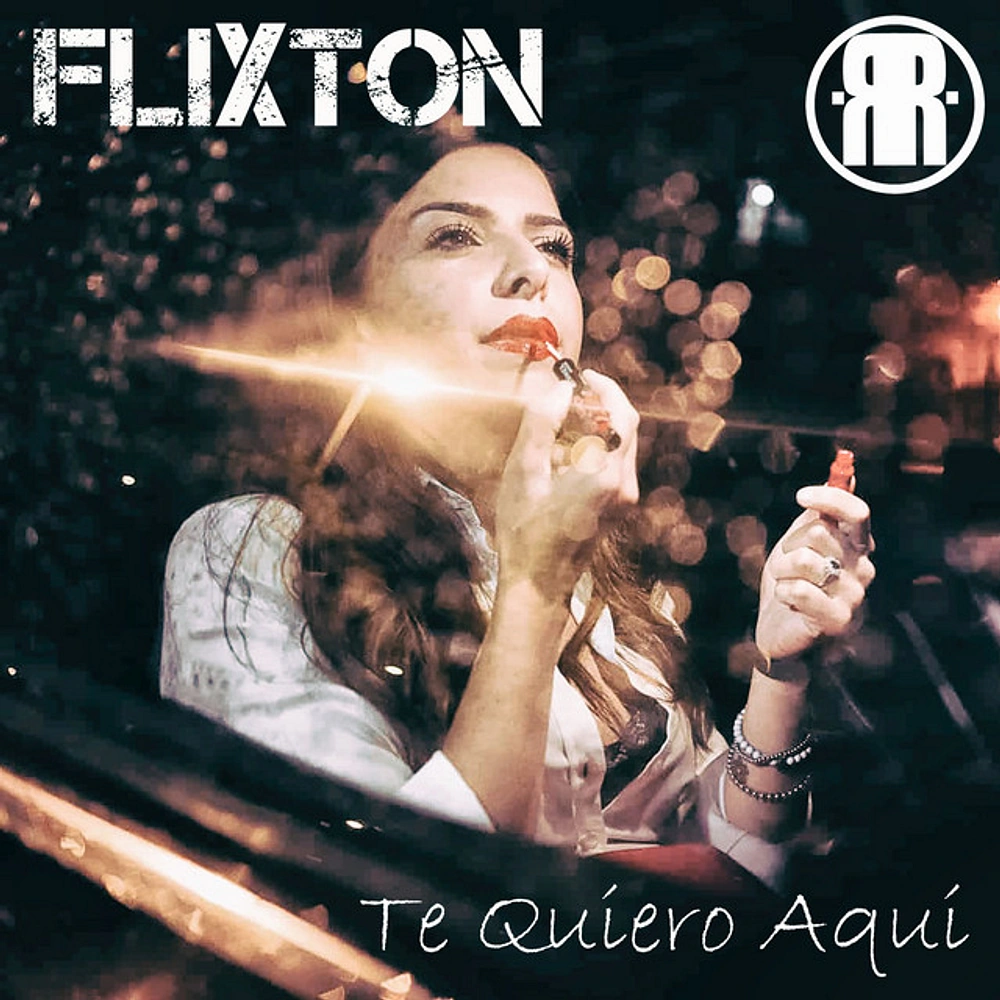
Te Quiero Aqui runs five minutes and twelve seconds. That is a long time for a vocal dance record, and it is the first thing worth knowing about it, because everything else follows from the decision to leave it that length. Flixton released it on 24 November 2023, and a drum and bass producer writing a Spanish-titled, pop-leaning track was not the obvious next move for him.

Flixton’s music is in the playlist below, and this desk’s coverage of him is collected on the Flixton profile. Te Quiero Aqui reached NewMusic.News through PopHits.Co Music Charts, which verifies independent artists and places their releases across its network of music news titles. Start it playing, then read on.


Flixton: Te Quiero Aqui and the Case for A Five-Minute Dance Track

Where Flixton Comes From, And What Te Quiero Aqui Is

He is from Manchester and lives in Bideford, on the north Devon coast. That is a long way from any drum and bass scene worth the name, and the distance shapes the catalogue.

Producers who cannot walk to a club night tend to write for the record rather than for the room. It shows here: most of his output goes out through labels rather than through sets.

There is a lot of it. His own pages list releases on Lizplay, Mathematica Records, Liquid Brilliants, Nexxus Recordings, Ransom Recordings and UltraTech Liquid NRG. The Bandcamp catalogue reads like a working producer’s ledger: Spectrums, Through The Woods, Real Murda and Sniffer on Ransom, Afterlife and I Don’t Want on Ultratech, The Only Religion, Dark Skies and Broken Reality on Nexxus. Each carries a catalogue number.

Alongside them sit free bootlegs and dubs. That is what a producer does when a track works on a floor but cannot be cleared.

Why Five Minutes Twelve Is The Point

Against that background, Te Quiero Aqui is a departure. It has a sung lead and a Spanish title. Its structure gives the vocal room to arrive rather than dropping straight into the break.

It gets filed as commercial vocal dance, drum and bass, and electronic pop all at once. For once that triple tag is doing real work rather than hedging, because the track genuinely sits between the three.

Five minutes twelve is the tell. A pop record would have been cut to three. A club record would have kept the intro long and the vocal short. Flixton did neither on Te Quiero Aqui, which suggests he wrote it as a song and arranged it as a dance track, in that order.

Flixton: Te Quiero Aqui and the Case for A Five-Minute Dance Track

What Te Quiero Aqui Answers

The question a catalogue track poses is whether it found the audience it was built for. The coverage suggests it found a slightly different one.

Tape Ranger ran an artist spotlight in December 2023. They called it a catchy tune with a dynamic instrumental, and credited the songwriting and the production work separately, which is a distinction worth noticing. They then added it to their Indie POP! playlist. Inspot Music picked it up for a daily discovery round-up in the same period.

Neither of those is a drum and bass outlet. A producer with six DnB label affiliations made a track that indie-pop curators reached for. That is the most interesting thing that happened to this record, and it suggests the song survives being taken out of its genre context.

From the Curator Team: “We keep this one on file because of where it landed rather than where it came from. A drum and bass producer whose track gets picked up by a pop playlist has written something with a spine that holds up without the sub underneath it. That is the harder skill, and it is why the record is still worth putting in front of people two years on.”

Who It Is For, And Where To Hear Flixton

His wider catalogue backs the reading. Alongside the label output sit Breaking Up, Angel In My Bed, XTC, More Forgiving, Future Thoughts, In My Lair, Didn’t Wanna Lie, New Beginnings and Freedom, plus Realize with Platnum. Those are song titles, not track titles. He has been writing toward this for a while.

So this suits listeners who want dance music with an actual vocal performance in it. It suits people comfortable with a record that takes its time. You do not need to know the difference between liquid and jump-up to enjoy it.

Te Quiero Aqui is on Spotify, and the label catalogue is on Bandcamp.

Follow Flixton across platforms: Spotify artist page, Instagram, Facebook and X.


Markus Nokio the Orphan and the Violin That Answers the Piano

A Self-Taught Finnish Composer and the String Line That Opens up a Solo Piece

Markus Nokio built The Orphan around a single decision, and two reviewers found it independently. Writing five days apart, in different countries and different languages, both stopped at the same place. Not the opening piano figure, which circles quietly under everything. They stopped at the moment a violin enters over it. That kind of agreement between strangers usually points at a decision rather than an accident.

Markus Nokio’s music is in the playlist below, and his full coverage history sits on his artist profile. The Orphan reached this desk through PopHits.Co Music Charts, which verifies independent artists and places their releases across its network of music news desks. Press play, then read on.


Markus Nokio the Orphan and the Violin That Answers the Piano

The Moment Markus Nokio Built The Orphan Around

Nokio taught himself to compose, works out of Finland, and describes what he does in plainly commercial terms: music for media, television, film and games. That detail explains a good deal about The Orphan. Writing to picture teaches a particular discipline. You learn to hold one line steady while something else moves against it. You also learn that a second voice entering is an event, and that a listener feels it whether or not they can name it.

The Orphan runs on exactly that principle. The piano underneath holds a continuous melody, which Good Music Radar described as flowing at the base like a river. On purpose, it does not do very much. It is a bed. The violin, when it arrives, does not compete with the piano so much as reply to it, and the piece opens outward from there. Nokio keeps faint vocal echoes behind the strings, far enough back that they read as colour rather than as singing.

The Year That Produced The Orphan

The Orphan did not arrive out of nowhere, and for its composer it was not a rare event. It went up on 9 October 2024 as his fifth release of that year. Earlier singles included Love, Rage and Misery and After It’s Too Late. Five pieces in ten months is a working pace rather than a careful one, and that changes how you hear this one. Markus Nokio writes steadily and puts the results out. So The Orphan reads less as a statement than as an entry in a run, and the run is where the craft accumulated.

People use the self-taught label loosely, so it is worth being precise about what it buys and what it costs. Nokio writes, by his own account, about his experiences in life, and the titles match. A conservatory would have handed him a vocabulary for the thing he does anyway. Its absence left him incurious about the rules governing what a contemporary classical piece ought to withhold. The Orphan is unembarrassed about its feeling. It states a mood early, then deepens it rather than complicating it, which is a choice a more schooled writer might have talked themselves out of.

Markus Nokio the Orphan and the Violin That Answers the Piano

Where The Orphan Sits, and What Markus Nokio Answers With It

Contemporary classical is a wide and slightly awkward label. It covers severe modernism at one end and piano music written for headphones at the other. The Orphan belongs firmly to the second group, and its neighbours are easy to name. Listeners who have spent time with Ludovico Einaudi will recognise the method: hold a simple figure, and let repetition do the work that harmonic surprise does elsewhere. Anyone who follows Ólafur Arnalds knows the particular pleasure of a string line entering over a piano that has already established the room. And Max Richter has spent a career showing that a piece built to be usable in film still works with nothing on the screen.

That last point is the one The Orphan answers most clearly. Critics often dismiss music by composers who score to picture as merely functional, as though supporting a scene were evidence of thinness. Both reviews argued the opposite. Both reached for stories rather than for other records to do it. Good Music Radar heard Oliver Twist and Annie. INDIEOCLOCK, writing in Brazil, described walking through empty woods, and found something medieval in the harmony between the violin and the keys. Nobody prompted either reading. That both writers went looking for a narrative suggests the piece supplies one.

NewMusic.News’s curator team: “The interesting thing about The Orphan is how little it spends. One piano figure, one violin answering it, and some vocal colour kept well back. A composer with more training might have added a development section and lost the whole effect. Markus Nokio trusted the entrance to carry it, and it does.”

Where to Hear The Orphan and Follow Markus Nokio

The Orphan is on Spotify, and the wider catalogue sits on the Spotify artist page, on Apple Music, on YouTube Music and on SoundCloud.

For the working side of things, which for a composer who writes to commission is most of it, Markus Nokio posts to YouTube, Instagram, Facebook, TikTok and Threads.


Perpetual Violence Machine: How Hydra Vein Turned One Last Show Into A Third Act

A Brighton Thrash Band Reformed for One Night in 2020 and Never Actually Stopped

On 29 February 2020, Hydra Vein walked onto a stage at Newcastle University for the first time in more than thirty years. The show was not a comeback. It was meant to be a goodbye, and the band said so plainly at the time. Five years later there is a new EP. Perpetual Violence Machine runs five thrash tracks and roughly twenty-three minutes, out on Iron Shield Records.

Five tracks by Hydra Vein sit on the playlist below, and the band’s artist profile records what these titles have published on the thrash group. Perpetual Violence Machine was logged with this network by PopHits.Co Music Charts, the vetting scheme that verifies independent artists and places their releases across its network of music news desks. Play it straight through, then read what changed.


Perpetual Violence Machine: How Hydra Vein Turned One Last Show Into A Third Act

Before Perpetual Violence Machine, Hydra Vein Reformed To Say Goodbye

Hydra Vein formed in Brighton in 1987 around bassist Damon Maddison and his brother Nathan on drums. Two records followed, in 1988 and 1989, and then the band stopped. Most British thrash groups of that decade stopped around the same time. They had never found the label support their American and German contemporaries enjoyed.

What brought them back was not a label offer. It was a pub conversation with Stu Bartlett, who promotes Brofest. That Newcastle festival is built around veterans of the new wave of British heavy metal, plus the younger bands who returned to that material. The Maddisons had been going for years as paying customers.

The reunion also had a specific purpose, and it was not commercial. Guitarist Jon Balfour, who played on the second album, died in 1992. The band’s original singer, Mike Keen, died in 2003. The Brofest set became a tribute to both, and the line-up reflected that. The Maddison brothers played alongside guitarists Stephen Davis and Dan Ranger from the first record, Paul Bate from the second, and singer James Manley-Bird. It read less like a booking than a gathering of everyone still around to play the songs.

Nathan Maddison explained the thinking to RushOnRock in the days before the show.

“For me personally, it is to put a line under Hydra Vein, to properly sign off with those old tunes and a celebration of the memory of Mike and Jon.”

He was blunter later in the same conversation: “We thought it would be fun to bring the curtain down properly and to pay tribute to the guys who are no longer with us. Closure, I suppose.” The piece recorded, plainly, that there were no plans for a follow-up performance.

That sentence is worth sitting with, because everything after it happened anyway.

Perpetual Violence Machine: How Hydra Vein Turned One Last Show Into A Third Act

What Perpetual Violence Machine Answers About A Band That Meant To Stop

The EP arrived in October 2025 on Iron Shield Records. The band recorded and mixed it at IJland Studios in Amsterdam, across March and May of that year. Five tracks: Perpetual Violence Machine, Iron Men, Black Slammer, Strive For Life and A Thousand Forms of Fear.

The line-up is not the one that stood on the Brofest stage either. Damon Maddison is the constant. Around him now sit Ross Curry on vocals, Henry Pol on guitar and John den Buitelaar on drums. That makes this less a legacy act touring its own back catalogue, and more a working band carrying an old name.

So the EP quietly answers the question the 2020 show left open. A reunion staged as closure could easily have settled into an annual heritage booking. Instead the band wrote new material and recorded it in another country with a different singer. They also kept it short enough that nobody could mistake it for a victory lap.

The reference points here are domestic rather than American. Listeners who follow Onslaught or Xentrix will recognise what Hydra Vein are doing. Those are the other British thrash bands of that generation who came back and then kept working. It is a scene that never got its own Bay Area moment and has spent the last decade quietly assembling one anyway.

Where To Hear Perpetual Violence Machine And Follow Hydra Vein

NewMusic.News’s curator team on why it earned a slot:

“Most reunions are about an audience. This one began as a farewell for two friends who had died, and turned into new material almost by accident, which is a stranger and far more interesting reason for a band to still exist.”

You can hear the EP on Spotify and Bandcamp, or across Apple Music, Deezer and Amazon Music. The full EP is also streaming on YouTube.

Keep up with the band on Facebook and Instagram.