
Hip-Hop

Czarface’s Mystery Rapper Has Never Confirmed He Is Tom Hardy

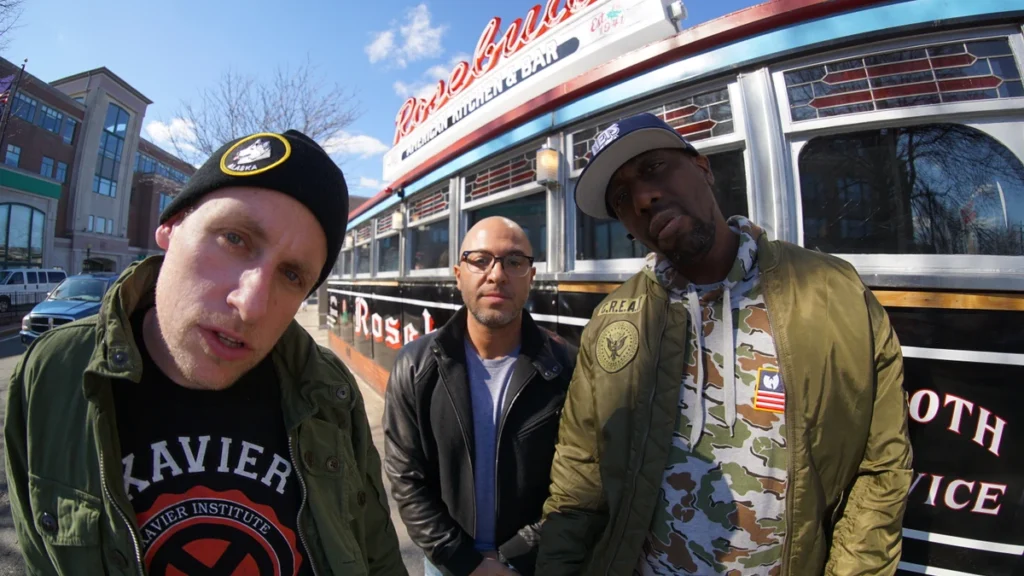
The most-discussed rapper on a record released this week has not given an interview about it, has not appeared in a photograph for it, and has never said who he is.

Czarface Meets Frankie Pulitzer arrived on 28 August 2026. Frankie Pulitzer, the name sharing the title, has been turning up on Czarface records since 2021 without ever stepping out from behind it.

Five Years of Verses Before an Album

The persona is not new, which is the part most of the coverage skips past. Czarface began working with the anonymous rapper in 2021, when Pulitzer appeared on their Good Guys, Bad Guys EP. Several of those tracks were used in Venom: Let There Be Carnage that same year.

More followed. Rolling Stone counts a run of appearances since, including a track called “Knull & Void” on which Pulitzer rapped alongside Method Man. Method Man returns on the new album, as do Busta Rhymes and El-P.

That sequence matters because it inverts the usual shape of a celebrity rap project. The normal version is an album first, announced loudly, with the famous name doing the announcing. This one ran the other way round: five years of guest verses on somebody else’s records, then a co-headline credit. Whoever Pulitzer is, he served an apprenticeship before he got a cover.

What the Reporting Actually Says

Billboard named the actor Tom Hardy outright when it covered the album announcement in June, describing Hardy as “stepping in the booth and turning on his rap persona Frankie Pulitzer, aka ‘Face Puller'”. Rolling Stone reported it the same way, calling the record Hardy’s debut rap album.

Wikipedia’s account of the group is more careful, and worth quoting exactly: the identification of Pulitzer as Hardy “has been widely speculated”, it notes, “although Hardy has never publicly confirmed this”.

Both things are true at once. Two major music publications have reported the identity as settled; the person concerned has said nothing. That is a distinction worth preserving rather than collapsing, and it is also, plainly, part of the appeal. An anonymous rapper whose anonymity everybody claims to have solved is a better character than either a confirmed celebrity or a genuine unknown.

A Rap Backstory That Predates the Persona

What makes the reporting credible is that it does not rest only on a voice. Rolling Stone points to a mixtape, Falling on Your Arse in 1999, which surfaced online in 2018: lo-fi tracks with Hardy rapping under the name Tommy No 1, over beats made by the British writer-director Edward Tracy. It was the first time anyone outside that circle had heard him attempt it, and it was received better than a curiosity of that kind usually is.

There is also a documented starting point for the Czarface connection. Billboard recalls Busta Rhymes visiting Hardy on a film set years ago and posting a photograph of the two of them with a caption hinting at work to come.

None of that confirms anything. It does establish that the rapping is not a sudden idea, and it explains why the group treated the collaboration as ongoing rather than as a one-off stunt.

The Group Was Built for This Kind of Thing

Czarface has always been a costume. The supergroup formed in 2013 from the underground duo 7L and Esoteric plus Wu-Tang Clan’s Inspectah Deck, and released its self-titled debut that February. Every Hero Needs a Villain followed in 2015 and A Fistful of Peril in 2016, both well received, and across those releases the group moved between Brick Records, Silver Age and latterly Virgin Music Group without the comic-book conceit ever wearing thin enough to drop.

Even the formation followed the pattern Pulitzer is now repeating. Inspectah Deck had appeared on two 7L and Esoteric records long before Czarface existed: “Speaking Real Words” on 2001’s The Soul Purpose, then “12th Chamber” on 1212 in 2010. Twelve years of occasional guest work came before anyone decided the partnership deserved a name. Set against that, five years of features before a co-headline credit is not an oddity. It is house style.

Esoteric has described the project’s origin as fun between friends that turned into a character standing in for all three of them. Inspectah Deck told Vice the name was chosen to echo Scarface, wanting their shared persona to earn the kind of devotion that film’s lead attracts. Deck’s account of the debut’s ambition, given to HipHopDX in 2013, was that it had no goal beyond making “something worth listening to”.

A group already operating behind a collective alter ego, with comic-book artwork and a villain mythology, is the natural home for a rapper who will not give his name. Pulitzer is not an anomaly inside Czarface’s world. He is the logical extension of it.

The Single Suggests He Can Hold the Room

“Brothers Grimm”, released with the announcement in June, is the evidence available. It runs on a Nineties East Coast beat, and the running order is instructive: Inspectah Deck and Esoteric take their verses first, and Pulitzer follows them.

The company on the rest of the album makes the same point. Busta Rhymes, Method Man and El-P have each spent decades being the most conspicuous voice on other people’s records, and placing an unidentified rapper among them invites precisely the comparison a vanity project would be built to avoid.

Following a Wu-Tang member is not a courtesy slot. Rolling Stone’s verdict on the result was blunt enough — the song, it wrote, “goes pretty hard”. Billboard printed the opening of Pulitzer’s verse in full: “I ride a pale horse with a face like Kaws / It’s the Source / Not the latest news / I’m divorced on the truth”.

Kaws is a contemporary artist, The Source a rap magazine of long standing, and the pale horse is Revelation. Whatever else is unresolved, the writing is doing work, and it is pitched at listeners who will catch all three references without help.

Why the Anonymity Holds

The commercial logic of a famous actor rapping usually points one way: use the name, take the coverage, accept that the music will be judged as a sideline. Withholding confirmation gives up that traffic on purpose.

What it buys instead is that the verses get assessed as verses. A listener who cannot be certain who is speaking has to judge the bars, and five years of features means there is a body of them to judge. Our piece on how features became a career strategy covers the more usual reason artists take that route; this is close to the opposite use of the same mechanism.

There is a practical wrinkle in it, too. A screen actor’s voice is his working instrument, and it is recognisable in a way a producer’s is not, so an anonymity that survives five years of released verses is either an open secret a lot of people have agreed to keep, or an identification less certain than the headlines make it sound. The coverage has settled firmly on the first reading. What is carrying that consensus, though, is the absence of a denial — and an absence is not a statement.

Czarface, for their part, have never treated the question as theirs to answer, and the album title poses it without resolving it. Five years in, that still looks like the point.

Czarface Meets Frankie Pulitzer is out now.
Kenny Segal Makes One Album per Rapper, and Doomed! Gathers Three

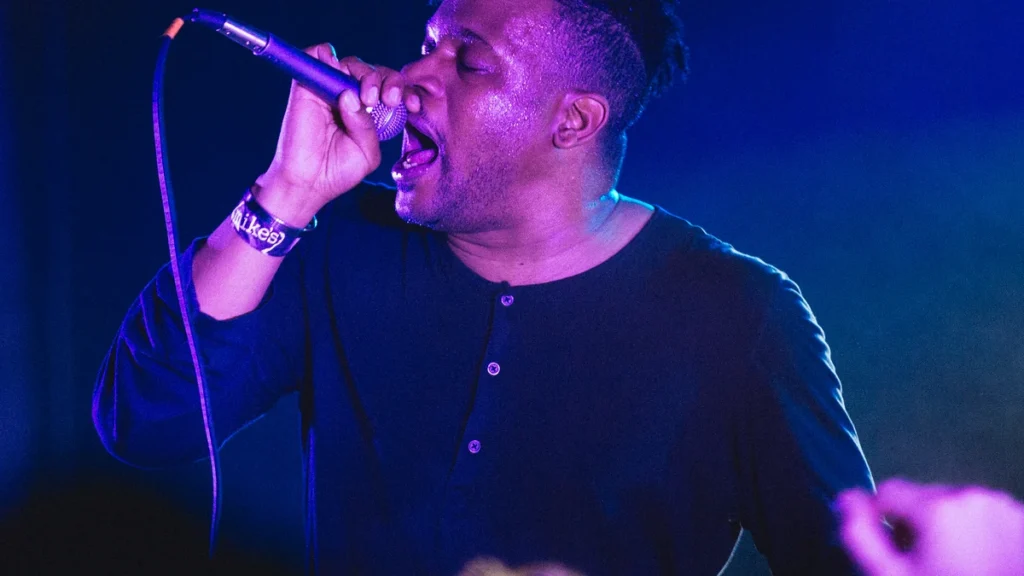
Somewhere in the last third of Doomed! an unnamed woman appears in an interlude and says the quiet part out loud: “Break ups are… tough.” It is the smallest possible thesis for a record that spends forty-one minutes taking one apart.

What is easy to miss, underneath the wreckage, is that the man who built the room it happens in has done this before. Repeatedly. With almost everyone in it.

A Producer Who Works One Rapper at a Time

Doomed! — issued in full as DOOMED!: Rap Songs About a Relationship That Ends in Every Possible Universe — arrived on 14 August 2026 through Backwoodz Studioz. Fifteen tracks, forty-one minutes and thirty-two seconds, and a single producer credit: Kenny Segal, who also recorded and mixed it.

That credit is the pattern of his whole career rather than a one-off. Segal does not scatter beats across other people’s albums so much as sit with one rapper and make an entire record. The list runs long: So the Flies Don’t Come with Milo in 2015, Hiding Places with Billy Woods in 2019, Back at the House with Hemlock Ernst the same year, Purple Moonlight Pages with R.A.P. Ferreira and the Jefferson Park Boys in 2020, Ajai with Serengeti that year too, and Maps with Billy Woods again.

It is an unfashionable way to work. The economics of production reward volume and placement — a beat here, a co-sign there, a credit on something that charts. Committing months to one voice is the opposite bet, and it only pays if the record is good enough that people remember who made it.

Segal came to it sideways. He was raised in Rockville, Maryland, played cello in school orchestras, and went to the University of Southern California on a computer engineering scholarship before switching his major to audio recording. He started out playing drum and bass at the Konkrete Jungle party in the 1990s, met rappers from the Project Blowed collective there, and moved toward hip-hop from that direction. He was among the first musicians to perform at Low End Theory. By 2018, Mixmag was calling him “one of the best hip-hop producers in the city”.

The Guest List Is His Own Back Catalogue

Doomed! carries three guests: Billy Woods, Gothic Tropic and Hemlock Ernst. Two of those three have already made an entire album with the man producing this one.

Billy Woods made Hiding Places with Segal in 2019 and Maps after it, and runs Backwoodz Studioz, the label releasing Doomed!. Hemlock Ernst — Samuel T. Herring of Future Islands, under his rap name — made Back at the House with Segal, also in 2019. Woods turns up on “She Swear I’m Colorblind”; Ernst on “Unfinished Concrete Initials”.

A features list is usually assembled for reach: who brings an audience, who is having a moment, whose name changes the algorithm’s mind. This one reads instead like a producer’s address book, and it says something specific about how these records get made. The people Segal calls are the people he has already spent a full album with.

It is also the reverse of the approach a debut usually takes. Our piece on the debut that arrived with no guests at all covers an artist who declined every relationship he had; Doomed! spends the ones its producer built.

What Segal Actually Put Under the Words

The production leans warmer and heavier than the records Open Mike Eagle has made lately. Pitchfork’s Dash Lewis, scoring it 7.8, describes a palette of childlike synth melodies and classic funk grooves “slathered in the faded-memory haze of tape-hiss saturation”, and notes that even at their dreamiest the beats push harder than the cassette-loop psychedelia of Eagle’s recent work.

The reason that matters is structural rather than decorative. “Segal makes sure to keep the low frequencies hefty and the drums chunky,” Lewis writes, “offering Eagle solid ground to stand on at a time when he’s most at risk of floating away.” On a record where the writer is coming apart, the producer’s job description is ballast.

There are real players on it, too, which is part of why it does not sound like a laptop. Aaron Shaw plays saxophone on two tracks and flute on one, Jordan Katz adds french horn and trombone to the opener, Ryan Crosby and Mekala Session bring guitar, bass and drums to the early run, Diego Gaeta plays Rhodes, and Daddy Kev mastered it.

A Breakup Told in Comic Books and Cancelled Plans

Eagle, raised in Chicago and based in Los Angeles, wrote the album out of a five-year relationship that had recently ended, and he mostly refuses to be solemn about it. On the title track he lists everything he has ever bailed on — his therapist, his family, a run of anime shows — before landing on the indignity underneath: “This breakup shit is ass. I saw Superman by myself, I saw the Fantastic Four movie by myself.”

The jokes are the delivery mechanism, not the point. “The Many Hustles of My Lonely Time Traveling Uncle” piles up absurd rackets until the hook arrives — “I used to make a lot of money” — and reframes the whole thing as someone talking too much at a dinner party that is going badly. “The Irredeemable Magic Man” is blunter: “I know what I did, ’cause I did it so many times.”

Lewis notes that Eagle strips away much of the multisyllabic rhyming he is known for in favour of plainer sentences, and delivers a lot of the record close to a whisper. The album closes on “Watching a Movie Called Freedom by Myself”, nearly six minutes long, with a line that refuses the comfort the rest of the record has been circling: “Ain’t no post-credits scene / We can all just leave.”

The Critics Split on the Same Quality

Doomed! holds a Metacritic score of 83 from nine reviews and 7.8 at Any Decent Music from eight. Slant gave it four and a half stars, AllMusic four, Anthony Fantano 8 out of 10, Paste a B, and Pitchfork 7.8.

The interesting part is that the outlier disagrees about the same thing everyone else praises. Jon Negroni at Slant admired how “the music remains restrained, allowing Eagle’s bombastic thoughts to simmer”, crediting Segal with dusty loops and worn-down samples that make each track “feel lived-in rather than merely produced”. AllMusic’s Paul Simpson called it “easily Open Mike Eagle’s most relatable work” for anyone who has been through a hard breakup.

The Guardian was cooler, at three stars, summarising the album as a pair who “muster a breakup record with glistening beats and lovelorn lyrics that mull over grievances without resolve”. Even Pitchfork, broadly admiring, concedes that the hushed delivery can make the record hard to sit with.

Restraint is the quality being argued over in every one of those verdicts. Whether it reads as control or as withholding depends on what a listener wants from a breakup album, and the record declines to settle it.

Why the Partnership Model Keeps Producing

What the Segal method buys is consistency of intent. An album assembled from eight producers has eight ideas about what the rapper is; an album with one has a single argument, and the argument can be revised over months rather than negotiated over email.

It also builds something the industry does not otherwise generate much of: a small group of people who have each been through the entire process together and can be called back years later. That is what the Doomed! guest list actually is — not a reach play, but three rappers who have all made a record with the same man, in a room, at length.

For a producer six months removed from his own Antinomian Pandemonium, and a rapper a year on from Neighborhood Gods Unlimited, that turns out to be a workable way to keep making things.

Doomed! is out now on Backwoodz Studioz.