Pop

Nathav Sings in English on Moon River, Nine Years After Her Danish Debut

The Copenhagen Songwriter Came Back with Four Songs of Electronic Blues and Minimalist Synth-Pop

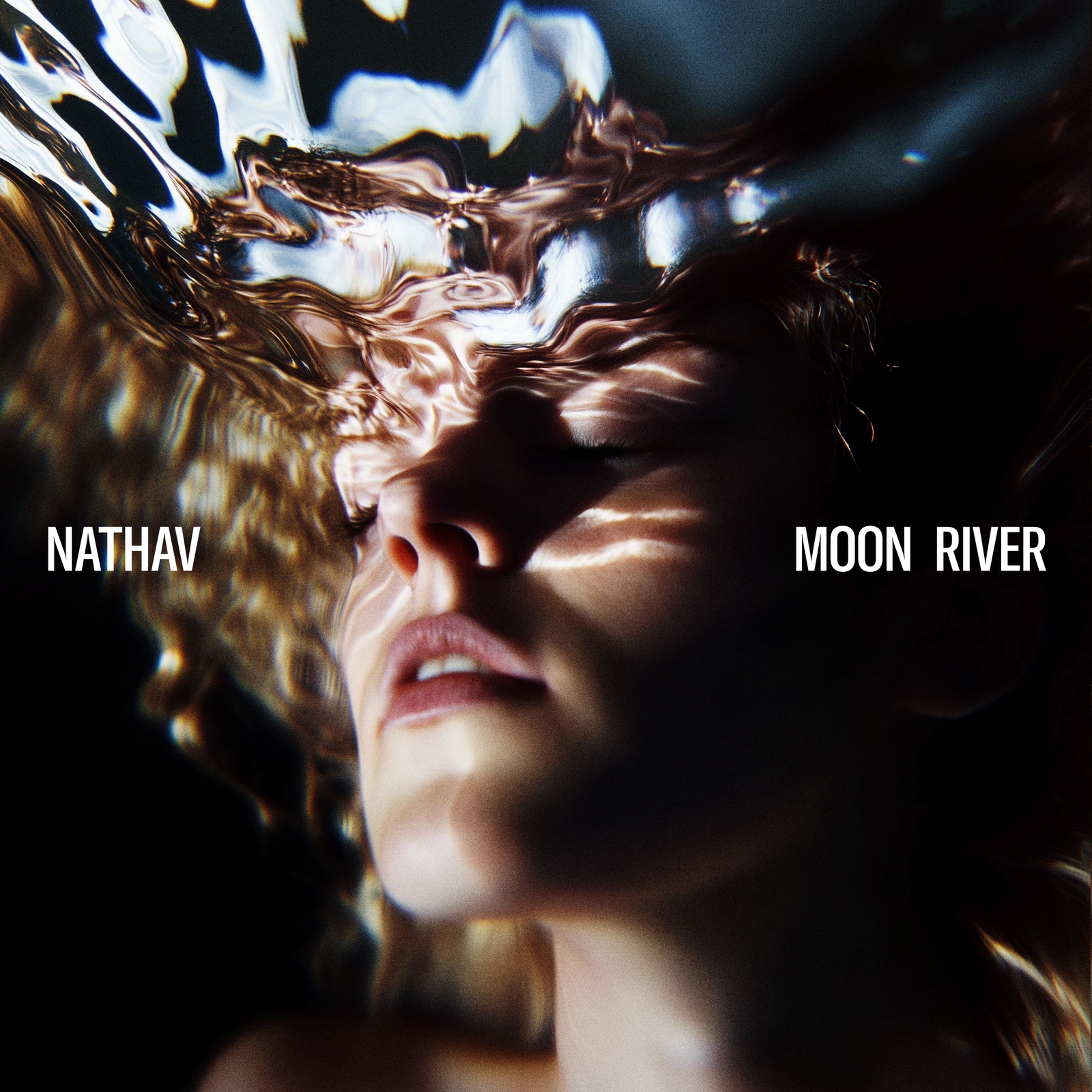
You Still Miss Her opens the Moon River EP by Nathav on a piano figure in an uneven 5/8 pattern. Halfway through, a bank of synthesisers rises underneath it. The song first came out as a single in May 2024. It was the first new Nathav song in almost nine years, and the first she sang in English.

Nathav’s title track sits in the playlist below, among our pop and art-pop picks, and this network’s coverage is filed on Nathav’s artist profile. Moon River came to this desk through PopHits.Co Music Charts, which verifies independent artists and places their releases across its network of music news desks. Press play on the EP, then read on for the nine years that led here.

Nathav Sings in English on Moon River, Nine Years After Her Danish Debut

The Long Pause Before Moon River, From a Danish Debut in 2015 to Nathav Singing in English

A Voice That Had Already Led Three Bands

Nathav is the solo name of Mathilde Lunderskov, and it joins the Danish words for night and sea. By the time she chose it, she had already spent years at the front of other line-ups. She sang lead in the Scandinavian indie-pop band Lovebites, which released three albums. After that band split, she founded the dream-pop and noir group Blake and toured Europe with it. Then, in 2010, she formed the synth-pop duo Umatic with her brother, Lukas Lunderskov, and released the album Ashes & Diamonds.

Her own biography notes that her voice and style are often compared to Kate Bush and Goldfrapp. Both comparisons point at something specific. Kate Bush made her name with a high, dramatic vocal set against piano. Her 1978 single The Man with the Child in His Eyes is one example. Similarly, Goldfrapp’s 2000 debut, Felt Mountain, put Alison Goldfrapp’s voice over electronics that borrowed from old film scores. Reviewers heard a similar pull towards old Hollywood on this EP.

Nine Years Away From the Nathav Name

Nathav began as a Danish-language project. The single Tiger came out in April 2015. The self-titled debut album followed on Target Records that August, with seven songs including Hedy Lamarr and Er Det Blod.

Then the project went quiet for a long time. According to Nordic Music Central, family matters and then the pandemic kept her out of circulation. In between, she appeared as one of the guests on Unify, a 2016 single by The Ball and The Wall. Otherwise, no new Nathav release came out until May 2024. When the songs did return, they were in English.

That is the moment Moon River belongs to. Lunderskov had three bands and a Danish album behind her. She restarted the project in a different language, with the same producer at her side. So what would a return like that sound like after so long away?

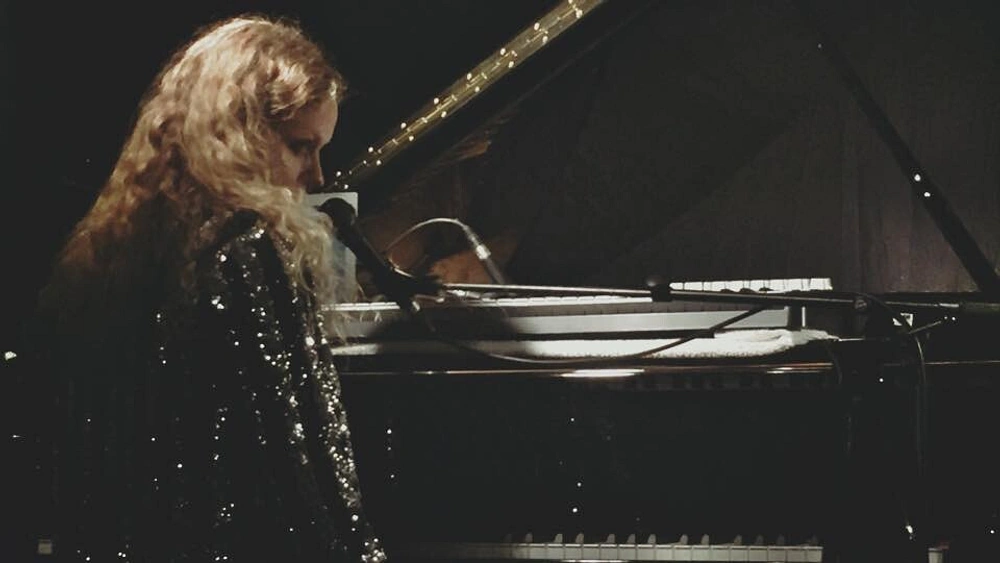
Watch the video and check the artist’s YouTube channel for more.

Nathav Sings in English on Moon River, Nine Years After Her Danish Debut

Four Songs of Electronic Blues on Moon River, and What the Return of Nathav Answered

The Four Songs, Track by Track

Moon River came out on 29 November 2024 on Horror Comfort, and it runs just under 15 minutes. Two of its songs arrived first as singles: You Still Miss Her in May and Boy Model in August. The producer is Noah Rosanes, who also produced the 2015 debut. The two go back a long way, since their parents sang together in the 1970s disco vocal group Flair.

The opener sets the terms. You Still Miss Her is electronic blues about standing in the shadow of a partner’s earlier love. Nordic Music Central’s David Bentley traced its piano to a 3+2 pattern in 5/8. He also noted how the synthesisers build to two separate peaks. Meanwhile, Extravafrench heard Vangelis and old James Bond soundtracks behind it.

Boy Model, heard here in its full version, moves towards downtempo electronica. It follows a young male model in New York who works through the night. The song is as much about loneliness and lost innocence as about the job.

The title track widens the frame. According to IGGY Magazine, Lunderskov wrote the lyrics of Moon River with Edie Kuhnle in the Hollywood Hills. In addition, Obscure Sound hears the song in two halves. Old-Hollywood balladry comes first, and then a warning about trusting a pretty face.

Finally, Look at Us Now closes the EP on a piano progression recorded live, as IGGY Magazine reports. It turns the famous gap on the London Underground into the image of a wound that will not close.

What Moon River Answered for Nathav

A return after nine years raises two fair questions. Would listeners still come, and would the voice carry over into a new language?

The streaming figures answer the first. On Spotify, the four Moon River songs are the four most-played recordings in the Nathav catalogue. You Still Miss Her leads with 10,111 plays, ahead of Look at Us Now on 8,561. Moon River follows on 7,467, and the full version of Boy Model on 5,785. By comparison, the most-played song from 2015, Tiger, sits on 4,793. Those figures were read on 17 September 2026.

The reviews answer the second. Obscure Sound heard a bluesy spirit in the vocal on the opener. Nordic Music Central singled out a soprano that cuts through the synthesisers at their peaks. Later, the same site put You Still Miss Her in its 2024 Songs of the Year, and its review of the next single records that choice. That coverage ran in English, French, Portuguese, Spanish and German. End Sessions wrote in Spanish, for example, and Music For All in Portuguese.

The project has also kept moving since. Nathav followed the EP with Don’t Quit Your Day Job in May 2025 and Over You that December. As a result, Moon River now reads as a restart rather than a one-off.

So this is an EP for listeners who like their pop slow, dark and led by a voice. It also suits anyone curious about what nine years away did to a songwriter with three bands behind her. Start with You Still Miss Her, then let the other three songs run in order.

NewMusic.News curator team: “Moon River earns its place on our features desk because the return kept its foundations. The Danish songs of 2015 were built on piano, synthesisers and Mathilde Lunderskov’s voice. The English songs of 2024 stand on exactly the same three things.”

Listen to You Still Miss Her on Spotify. Follow Nathav on Spotify, Apple Music, Deezer, Tidal, Bandcamp, SoundCloud, YouTube, Instagram and Facebook. Her official site lists new releases and concert dates.


Inside 唇友谊: Moon Chew, a Singapore Music Producer, Makes Room for a Rapper

Moon Chew Built Her Singapore Catalogue Beside One Collaborator, and 唇友谊 Adds a Third Voice

Most of the records Moon Chew works on in Singapore are not hers. She is a music producer who also works as a mixing engineer, and for most of the last decade her job has been simple enough to state. Take other people’s songs and make them sound like themselves. On 唇友谊, out on 8 May 2026, she did something she had not done on one of her own tracks. She gave part of it to somebody else.

Moon Chew’s music is in the playlist below, and the coverage history sits on the Moon Chew profile. 唇友谊 reached this desk through PopHits.Co Music Charts, which verifies independent artists and places their releases across its network of music news titles. Listen before you read the rest.


Inside 唇友谊: Moon Chew, a Singapore Music Producer, Makes Room for a Rapper

How Moon Chew Got From the Singapore Mixing Desk to the Front of the Song

The order of her career is worth knowing, because it is the reverse of the usual one.

Moon Chew has worked in music production since 2010, and she still takes client work as a mixing engineer. Her SoundBetter profile describes her plainly as a Singapore-based mixing engineer and vocalist. It lists mixing at around three hundred dollars a song and carries seventy-four reviews. She works in Logic Pro X through an Audient interface, on PreSonus monitors, into a Neumann TLM 103. During the pandemic, when nobody could share a room, she mixed virtual classical orchestra and choir projects. That job teaches you how to assemble a performance out of parts that never met.

She is also clear about what she thinks the work is for. On that same profile she puts musicality and emotion ahead of sounding technically good. Her job, as she describes it, is bringing those out of somebody else’s mix.

The Covers Came Before the Songs

The singing arrived in public later, and it arrived through other people’s material.

From 2017 she began posting covers on her YouTube channel. Two of them, 畢竟深愛過 and 紙短情長, say so in their own titles. That grounding still shows in what listeners reach for. Several of her most-played recordings share their titles with well-known Mandopop songs, among them 體面, 烏梅子醬 and 讓我留在你身邊. Hear65, the Singaporean music platform run by Bandwagon, lists fifteen of her releases. It files them across pop, Mandopop, alternative, acoustic and electronic.

Covers are a reasonable way for a producer to become a singer. You learn the front of the song without also having to defend the writing. If you are already the person mixing it, you can hear exactly what your own voice needs. Her own stated reference points sit in that lineage. She names LaLa Hsu, Rainie Yang and G.E.M. as the singers her work sounds like. The originals came after that, and she produced, arranged and mixed those herself.

What 唇友谊 Changes for Moon Chew in Singapore

She has made most of her originals on her own, and many of the recent ones with a single collaborator, which is the part the release itself makes visible.

Spotify credits GHAZT on 唇友谊. GHAZT also appears on at least five more of her originals: 餘光一角, 躲猫猫物语, Mobius Strip (莫比乌斯环), 换季关系 and 血吻. 换季关系 got an official music video in November 2024. Read across the catalogue, GHAZT is not a guest on a track. GHAZT is the other half of how these songs get written.

That is what makes the new name interesting. The credits name Edward Chan as the rapper and the song’s lyricist, and his Spotify artist page currently lists this one track. The collaboration is at its start, then, rather than somewhere inside an established run. A settled two-person partnership with six songs behind it has a shape, and shapes are hard to open. Handing a section to a third person means agreeing in advance to leave room you would otherwise have filled.

From the NewMusic.News curator team: “The story on 唇友谊 is not that an independent singer booked a feature. It is that a working music producer decided her own song would be better with somebody else in it. She has spent years making other people’s records sit right. That is a harder call than it sounds when you are also the one balancing the result.”

Inside 唇友谊: Moon Chew, a Singapore Music Producer, Makes Room for a Rapper

What the Track Answers

Three minutes is not long to introduce a third voice, and the track does not try to stage a summit.

What it does is test the Moon Chew and GHAZT arrangement. Can it carry a register it has not carried before? The catalogue around it leans on sung Mandopop melody, some of it acoustic, some of it electronic. A rap verse is a different rhythmic logic. It either sits inside the arrangement or it sits on top of it. Anyone who has mixed for a living knows which of those they are aiming for, and Moon Chew mixed this one with GHAZT.

The opposite decision is just as deliberate, and this desk has written about a debut built with no guests at all. Neither route is the safe one. They just fail in different directions.

Whether this is a new direction or a single experiment stays open. Her releases have arrived steadily enough that an answer should not be far off. The useful thing about following a producer who fronts her own records is simple. You hear the decision-making rather than guess at it.

Where to Hear 唇友谊 by Moon Chew

唇友谊 is on Spotify, and her back catalogue sits on her YouTube channel.

Follow Moon Chew on Instagram, TikTok and Facebook.


Flixton: Te Quiero Aqui and the Case for A Five-Minute Dance Track

The Devon-Based Producer Comes From Manchester and Releases Across Six Drum and Bass Labels

Te Quiero Aqui runs five minutes and twelve seconds. That is a long time for a vocal dance record, and it is the first thing worth knowing about it, because everything else follows from the decision to leave it that length. Flixton released it on 24 November 2023, and a drum and bass producer writing a Spanish-titled, pop-leaning track was not the obvious next move for him.

Flixton’s music is in the playlist below, and this desk’s coverage of him is collected on the Flixton profile. Te Quiero Aqui reached NewMusic.News through PopHits.Co Music Charts, which verifies independent artists and places their releases across its network of music news titles. Start it playing, then read on.


Flixton: Te Quiero Aqui and the Case for A Five-Minute Dance Track

Where Flixton Comes From, And What Te Quiero Aqui Is

He is from Manchester and lives in Bideford, on the north Devon coast. That is a long way from any drum and bass scene worth the name, and the distance shapes the catalogue.

Producers who cannot walk to a club night tend to write for the record rather than for the room. It shows here: most of his output goes out through labels rather than through sets.

There is a lot of it. His own pages list releases on Lizplay, Mathematica Records, Liquid Brilliants, Nexxus Recordings, Ransom Recordings and UltraTech Liquid NRG. The Bandcamp catalogue reads like a working producer’s ledger: Spectrums, Through The Woods, Real Murda and Sniffer on Ransom, Afterlife and I Don’t Want on Ultratech, The Only Religion, Dark Skies and Broken Reality on Nexxus. Each carries a catalogue number.

Alongside them sit free bootlegs and dubs. That is what a producer does when a track works on a floor but cannot be cleared.

Why Five Minutes Twelve Is The Point

Against that background, Te Quiero Aqui is a departure. It has a sung lead and a Spanish title. Its structure gives the vocal room to arrive rather than dropping straight into the break.

It gets filed as commercial vocal dance, drum and bass, and electronic pop all at once. For once that triple tag is doing real work rather than hedging, because the track genuinely sits between the three.

Five minutes twelve is the tell. A pop record would have been cut to three. A club record would have kept the intro long and the vocal short. Flixton did neither on Te Quiero Aqui, which suggests he wrote it as a song and arranged it as a dance track, in that order.

Flixton: Te Quiero Aqui and the Case for A Five-Minute Dance Track

What Te Quiero Aqui Answers

The question a catalogue track poses is whether it found the audience it was built for. The coverage suggests it found a slightly different one.

Tape Ranger ran an artist spotlight in December 2023. They called it a catchy tune with a dynamic instrumental, and credited the songwriting and the production work separately, which is a distinction worth noticing. They then added it to their Indie POP! playlist. Inspot Music picked it up for a daily discovery round-up in the same period.

Neither of those is a drum and bass outlet. A producer with six DnB label affiliations made a track that indie-pop curators reached for. That is the most interesting thing that happened to this record, and it suggests the song survives being taken out of its genre context.

From the Curator Team: “We keep this one on file because of where it landed rather than where it came from. A drum and bass producer whose track gets picked up by a pop playlist has written something with a spine that holds up without the sub underneath it. That is the harder skill, and it is why the record is still worth putting in front of people two years on.”

Who It Is For, And Where To Hear Flixton

His wider catalogue backs the reading. Alongside the label output sit Breaking Up, Angel In My Bed, XTC, More Forgiving, Future Thoughts, In My Lair, Didn’t Wanna Lie, New Beginnings and Freedom, plus Realize with Platnum. Those are song titles, not track titles. He has been writing toward this for a while.

So this suits listeners who want dance music with an actual vocal performance in it. It suits people comfortable with a record that takes its time. You do not need to know the difference between liquid and jump-up to enjoy it.

Te Quiero Aqui is on Spotify, and the label catalogue is on Bandcamp.

Follow Flixton across platforms: Spotify artist page, Instagram, Facebook and X.


Mk.gee Made a 33-Minute Debut With No Guests and No Clear Vocals

Almost every instinct in modern record-making pushes the vocal forward. Streaming rewards an identifiable hook early, playlists reward clarity, and a singer buried in the mix is normally a sign that something went wrong in mastering.

Michael Gordon, who records as Mk.gee, did the opposite deliberately, and it produced one of the most decorated debuts of its year.

Twelve Tracks, Thirty-Three Minutes, Nobody Else

Two Star & the Dream Police was released on 9 February 2024 through R&R. Twelve tracks, thirty-three minutes and eighteen seconds — an average of two minutes forty-six per song, with “New Low” at 2:06 and “DNM” at 1:58.

The release schedule showed the same refusal to run the normal sequence. Five singles preceded the album, and the first two — “Candy” and “How Many Miles” — arrived together as a double A-side on 11 August 2023, attached to no announced album at all. A second double, “Are You Looking Up” and “You Got It”, followed on 20 October. Only with “Dream Police” on 19 January 2024 did the record acquire a title and a date. Half a year of music went out before Gordon conceded there was an album behind it.

The more unusual number is zero. The album carries no guest features at all, which in contemporary alternative R&B is close to a statement. Debuts in this lane are normally where an artist spends their relationships.

Gordon had those relationships to spend. He played guitar on Dijon’s Absolutely, worked on Omar Apollo’s Apolonio, has a writing credit with The Kid Laroi, and was sampled on “Fair Trade” from Drake’s Certified Lover Boy. He used none of it. Dijon Duenas appears, but as co-producer on two tracks rather than as a voice.

The Vocal Is Under the Groove on Purpose

The signature is a mix decision. The Line of Best Fit, scoring the record 8 out of 10, describes vocals “layered under the minimalist groove” and intentionally mixed low, with “I Want” noted as “one of the few moments his vocals come through clearly”.

Burying the lead is only viable if something else is carrying the melodic argument, and here it is the guitar. The review characterises his tone as “warm but sharp” and used “as lyrically as his words” — which is the whole design in one phrase. The guitar is not accompanying the vocal; the two are sharing the job, and sometimes the guitar wins.

The rest of the palette is described as “dripping in reverb and sonically barebones”, with pounding toms, distant horns and twinkling synths, and a drum sound the reviewer places somewhere between Prince’s M1 and Meg White’s Ludwig snare. Reverb plus sparseness is a difficult combination: reverb usually fills a mix, and using it while keeping the arrangement bare means the space itself becomes an instrument.

The track listing itself points at the process. One song is called “Alesis”, after the audio-hardware maker whose drum machines and mixers furnished a generation of home studios. Naming a track for a piece of gear rather than a person or a feeling is a small tell about where the writing starts on this record.

He treats it as more than an in-joke. In February 2024 Gordon played the Jil Sander Fall/Winter show in Milan alongside Benji B, and the three songs he performed were “Dream Police”, “How Many Miles” and “Alesis” — a non-single named after a drum-machine manufacturer, given equal billing with the lead singles in front of a fashion-house audience.

Why Mixing It Himself Mattered

A buried vocal is exactly the decision an outside mixer talks an artist out of, and it is worth noting who held the fader. Gordon mixed the album himself.

That is the mechanism behind the whole aesthetic. A mix engineer’s professional instinct — and often their explicit brief — is intelligibility, so a deliberately obscured lead would be corrected somewhere between the first pass and the label playback. Keeping the mix in-house is what let a choice this counterintuitive survive to release.

Mastering was split, unusually, between two engineers: Heba Kadry took “How Many Miles” and “Candy”, Simon Lancelot the other ten. Splitting a short record between masters risks inconsistency, and doing it anyway suggests those two tracks needed something the rest did not.

It is also a deliberate break from his own past. The Line of Best Fit frames the album as a sonic departure from the lo-fi aesthetic of his earlier A Museum of Contradiction — so the reverb-soaked spareness here is a constructed decision, not a limitation carried over from making records cheaply.

Short Songs Are a Structural Choice, Not a Shortcut

Nine of the twelve tracks run under three minutes. That reads as brevity for the streaming era, but the record is not built like playlist bait — the songs are loosely structured and drift rather than resolving into choruses.

Short and unresolved is a harder combination than short and catchy. Without a hook to return to, a two-minute song has to justify itself on texture and feel alone, and it has to stop before the listener starts waiting for a payoff that is not coming. Ending early is how the record avoids reading as unfinished.

Only “Breakthespell” passes four minutes, at 4:27. It is the one place the album lets an idea run.

The writing is almost entirely his as well. Only two tracks carry co-writes — John Keuch and Sam Wilkes on “You Got It”, Keuch again on the closing “Dream Police” — so the same person is responsible for the song, the guitar part, the arrangement and the mix on ten of the twelve. That concentration is what makes a decision as unusual as the buried vocal internally consistent rather than eccentric: there is no seam where someone else would have argued for clarity.

The Critics Reached for the Same Word

Reception was strong and, more tellingly, consistent in what it identified. The album took a Metacritic score of 83. Pitchfork scored it 7.8, called it a “magnificent debut album” and noted that “nothing in contemporary music sounds quite like it”. The Guardian gave five stars, Rolling Stone four, Clash and The Line of Best Fit both 8 out of 10 — the latter praising “an artistry so well studied and expertly executed”.

Clash also described “an immersive quality” and a “nocturnal wash of acoustics”, which is a fair account of what a buried vocal and a wet, sparse mix do to a listener: you lean in, and leaning in is the point.

Year-end recognition went further than the review scores suggest. It was named album of the year by Clash, by Dazed, and by Jon Caramanica at The New York Times, and Pitchfork later included it among the best albums of the first half of the 2020s.

What the Charts Did and Did Not Say

Commercially it stayed in specialist territory: number eight on the UK independent albums chart, twelve in Scotland, ninety-one on the French rock and metal chart. There is no mainstream chart placing to report.

The audience arrived by other routes. “Are You Looking Up” placed twelfth in Dazed’s twenty best tracks of 2023 and “You Got It” twenty-sixth in The Fader’s hundred best songs of that year, both before the album existed. Gordon made his live television debut on Jimmy Kimmel Live! in April 2024, and that June “Are You Looking Up” surfaced in the ninth episode of the third season of The Bear. Then he toured it properly — North America from April to May 2024, followed by a world tour through North America, Europe and Australia running from September to December.

None of that is chart activity, and all of it is distribution.

That gap between critical position and chart position is the honest outcome of the decisions above. A record with no features, no clear vocal hook and no song built to be excerpted has almost nothing for the mechanisms that produce chart placings to grab hold of.

What it has instead is a sound that critics repeatedly described as unlike anything else, which is the rarer currency and the one that survives a year-end list. For a writer curious about the opposite approach, our piece on how features became a career strategy covers what Gordon declined to do.

Two Star & the Dream Police is out on R&R.

Michael Kiwanuka Made Small Changes by Not Trying to Prove Anything

There is a particular problem that arrives after an album wins something. The next record has to answer it, and the usual answer is more: more production, more ideas, more evidence that the win was deserved.

Michael Kiwanuka went the other way, and was unusually explicit about why. “I wonder what an album will sound like when we’re not trying to be cool or anything, you know, we’re not trying to prove anything,” he told The Current. Small Changes is the record that came out of taking that question seriously.

What He Was Reacting Against Was His Own Record

Small Changes arrived on 22 November 2024 through Polydor and Interscope: eleven tracks, forty minutes and eighteen seconds, filed as psychedelic soul.

The album it is answering is Kiwanuka, which won the Mercury Prize, and his diagnosis of it is candid. “The production became, especially on Kiwanuka, like really, really relayed with so many ideas and so many sounds,” he said. He put both that record and 2016’s Love & Hate in the same category: “I definitely was in a different space of trying to prove a lot of things as an artist.”

Artists rarely say this about work that succeeded. Describing a prize-winning album as over-furnished is a real risk, and it only makes sense if the follow-up genuinely commits to the opposite. “I sort of went back to that, which was like, for me the right time,” he said. “Strip everything away and find out what it actually is.”

It is worth being precise about the record he is measuring himself against, because the modesty could read as false. Kiwanuka won the Mercury Prize. Following that with a quieter album is not the safe option dressed up as bravery — it is the option that forfeits the obvious way to capitalise on a win, which is to give the audience a larger version of what it just rewarded.

The Same Producers, a Different Instruction

The interesting decision is that he did not change the team. Danger Mouse and Inflo co-produced Small Changes, as they had Kiwanuka, and as Danger Mouse had Love & Hate before that — a third consecutive collaboration.

Changing your sound by keeping your producers is harder than changing your producers. It means the difference has to come from instruction rather than from personnel, and there is nobody new to blame if it does not land.

Kiwanuka’s account of what he learned is about restraint on his own side as much as theirs. “I’ve learned quite a few things that makes the process even a bit easier,” he said. “Just do what you do, which actually is easier for everyone.” On Danger Mouse specifically: “You can just ask any question, and you know you’re gonna get, like, a really interesting answer, or something you’ve never really considered.”

The writing credits show how deep the partnership runs. Every track is credited to Kiwanuka with Brian Burton and Dean Josiah Cover — Danger Mouse and Inflo’s given names — except the closer, “Four Long Years”, written by Kiwanuka and Burton alone.

What Understated Actually Means Here

His description of the goal is specific: “a lot more understated” than Kiwanuka, and “more about the voice, more about my voice, and more about the lyrics”.

That is a mixing brief as much as a writing one. Putting a voice forward is not a matter of turning it up; it requires everything else to stop competing for the same frequencies and the same attention. The eleven tracks are correspondingly compact — “Live For Your Love” at 2:29, “Lowdown (Part II)” at 2:40 — with only “Four Long Years” and “One and Only” pushing past four and a half minutes.

The two-part “Lowdown” is the tell. Splitting an idea into Part I and Part II rather than developing it across one longer track is a decision to let a thing be what it is and then stop, which is precisely the discipline he says he was after.

The rollout matched the thesis. “Floating Parade” appeared on 10 July 2024, the two-part “Lowdown” on 12 September, and “The Rest of Me” on 3 October — three months of singles that arrive and stop, rather than a campaign building toward a reveal. Nothing about the sequence asks the listener to wait for a bigger moment.

Jimmy Jam Is Playing the Organ, and That Is Not a Cameo

The personnel list contains a detail that is easy to skim past. Jimmy Jam — half of Jam & Lewis, one of the most decorated producers in American pop — appears on this record as a session organist.

Kiwanuka is blunt about the scale of it: “All the Hammond you hear, other than maybe one song, is Jimmy Jam. He’s on essentially a lot of the record.”

Engaging a producer of that stature to play rather than to produce is an unusual inversion, and it fits the record’s logic. A Hammond part is a texture decision, and having one player make all of them is how an album gets a consistent character without layering.

He is not the only heavyweight in a supporting role. Pino Palladino plays bass, James Gadson drums, James Payne slide guitar; Rosie Danvers arranged the strings with Pete Anthony conducting, and six named backing vocalists appear. Kiwanuka himself plays acoustic, electric and bass guitar, drums, piano and Wurlitzer, with Inflo on drums, piano, keyboards, Rhodes and synthesiser.

Kiwanuka also plays a great deal of the record himself, which is the other half of the same idea. When the person who wrote the song is the one playing the Wurlitzer part, the arrangement decisions and the writing decisions stop being separate stages that need reconciling.

The Reception Was Warmer Than the Modesty Suggests

Stripping back is usually the move that costs an artist their reviews. It did not here.

The album took a Metacritic score of 83. The Observer gave it five stars and called it “an exquisite return”; DIY and Uncut both went to four and a half; The Independent, Mojo and NME to four; Clash and The Line of Best Fit to 8 out of 10, the latter calling it “a beautifully crafted return”. Pitchfork was the coolest of the majors at 7.0, and AllMusic sat at three and a half.

Commercially it reached number two in the UK and number one in Scotland, with number two in the Netherlands, five in Flanders, six in Switzerland, eleven in Germany and fifteen in Austria. Those are not the numbers of a retreat.

Why the Experiment Worked

The reason a record made with “nothing to prove” did not simply sound smaller is that the restraint was applied to the arrangement and not to the ambition.

Everything expensive is still present — a legendary rhythm section, real strings, a full choir of backing vocals. What changed is that those elements take turns instead of stacking. That is a harder record to make than a dense one, because every part left in has to justify itself against the silence it is displacing.

It is the same instinct as a stable studio partnership: fewer new variables, more attention to each one. Our piece on why guitar bands went back to tracking live covers a related move, from a different direction.

Small Changes is out now.

Every Nilüfer Yanya Record Runs Through the Same Second Person

Most guitar-led songwriters accumulate collaborators the way they accumulate gear. A producer for the big single, someone else for the ballad, a mixer with a name, a co-write brought in when a chorus will not resolve. It is the default because it de-risks the record, and it is also why so many albums sound like several albums stapled together.

Nilüfer Yanya has spent three records doing the opposite. The credits keep returning to one other person, and the consequences are audible not in what the songs do but in what they decline to do.

The Second Person on Every Record

My Method Actor arrived on 13 September 2024 through Ninja Tune, eleven tracks, forty-four minutes, produced by Will Archer. Archer also records under the name Wilma Archer, which is why the same partnership appears under two names depending on where you read the credits, and it has been the constant across Yanya’s catalogue.

Her own description of the process is unusually blunt about its cost. She called it the most intense record she had made “in that respect. Because it’s only been us two.”

That is not a boast about purity. Two people in a room for a whole album means there is nobody to break a deadlock, no third opinion to defer to, and no way to attribute a bad decision elsewhere. It also means nobody arrives at track eight with a fresh idea about what the record should be. Both of those follow from the same choice.

The partnership predates this record. Yanya released Miss Universe in 2019 and Painless in 2022 before it, and the through-line across all three is less a sound than a way of deciding. Each album is recognisably by the same person without any of them repeating the last, which is the specific thing a stable collaboration buys: continuity of judgement rather than continuity of style.

What My Method Actor Cost Them

The album is about, in her framing, “entering a transition between one part of life into another”. That is a subject with an obvious trap: transition records tend to sprawl, because the writer is not yet sure which side they are writing from.

It does not sprawl. Eleven tracks, and the longest is five and a half minutes. “Keep on Dancing” opens at just over two minutes, and “Wingspan” closes at under two and a half. An album about not knowing where you are is not usually this disciplined about length, and the discipline is the tell: someone was in the room saying no.

Critics responded to it as a step up rather than a continuation. The album took a Metacritic score of 85 with an 8.1 at AnyDecentMusic?, Pitchfork gave it 8.5, and Under the Radar went to 9 out of 10 and later placed it second on its albums of the year. Pitchfork put it at 13, Exclaim! at 14.

What is notable is the breadth rather than the height of that response. The Line of Best Fit, Exclaim! and Clash all landed on 8 out of 10, while NME, AllMusic and MusicOMH each gave four stars. Publications with quite different tastes arrived at nearly the same verdict, which tends to happen when a record is doing one thing deliberately rather than several things hopefully. Uncut placed it 55th in its albums of the year.

The Independent Chart Tells the Truer Story

The commercial numbers are worth separating, because read carelessly they say the opposite of what happened. My Method Actor peaked at 53 on the UK albums chart. On the UK independent albums chart it went to number one.

Those two facts describe one audience. A record that tops the independent chart while sitting mid-table overall is being bought deliberately, by people who went looking for it, rather than picked up in passing. It also charted 11 in Scotland and 109 in Flanders.

For an artist working with one collaborator and no radio-shaped compromise, that is the outcome the method is designed to produce. It is not the outcome a label hoping for a crossover would have chosen, which is rather the point.

Dancing Shoes Is Where the Album’s Offcuts Went

The Dancing Shoes EP followed on 2 July 2025, again on Ninja Tune: four tracks, “Kneel”, “Where To Look”, “Cold Heart” and “Treason”.

Its origin is the interesting part. The EP was written alongside the album’s material and then set aside, and Yanya returned to it with Archer after touring My Method Actor. These are not B-sides in the old sense of weaker songs cleared out of a drawer. They are songs that did not fit a specific record and were given a second hearing by the same two people who rejected them the first time.

She has been direct about why one of them stalled. Of “Where To Look” she said: “We started writing this song for the album, but it was tricky to get it off the ground at that time.”

“At that time” is doing the work in that sentence. The song was not bad; the room was pointed elsewhere. A two-person partnership that persists across years can afford to shelve something and come back, because the people who understood the original intention are both still there. A rotating cast of collaborators cannot do that — the context leaves when they do.

The four tracks are short and none outstays its idea. That is consistent with the album it came from, where the longest song runs five and a half minutes and several stop well before three.

Why a Two-Person Room Sounds Different

The audible consequence is restraint, and restraint is the hardest thing to hear because it presents as absence.

Arrangements on both releases tend to withhold. Parts enter late or not at all. A song will sit on a figure rather than build the expected lift. That is very difficult to achieve with a large team, not because larger teams lack taste but because each new contributor arrives with something to add, and adding is how a contribution becomes visible. Nobody is thanked for the part they did not play.

Touring cuts the same way. Returning from the road with the songs still in muscle memory, and going back to the same collaborator, means the revision is informed by how the material actually behaved in front of people. That is a rare feedback loop; most records are finished before anyone has played them live. It is a close cousin of the argument for tracking a band together in one room rather than in isolation — see our piece on why guitar bands went back to tracking live.

What a Partnership Protects Against

The obvious risk of working this way is insularity: two people can talk each other into anything, and there is no outside ear to say a song has stopped working.

What it protects against is more valuable at this scale. An artist three albums in, with an independent-chart number one and no mainstream crossover, is exactly who gets advised to bring in a name producer and reach for a wider audience. That advice is easier to refuse when the alternative is not an empty room but a working method that has already produced a record placed second on a serious critics’ list.

The songs left off My Method Actor becoming Dancing Shoes a year later is the clearest evidence of the method’s value. Nothing was wasted, because nothing was handed to someone who did not know what it was for.

My Method Actor and the Dancing Shoes EP are both out on Ninja Tune.

Rachel Chinouriri’s Second Album Is One Night Out, Five Years Long

Rachel Chinouriri, photographed for the announcement of her second album I think I spoke too soon

Three place names sit on the credits of Rachel Chinouriri’s second album, and one of them does not belong with the others. London and Los Angeles are where British pop records get written. Hereford is not, and part of I think I spoke too soon was made there anyway.

That is the kind of detail that only reads as a decision in hindsight. The record arrives on 16 October through Parlophone and Atlas Artists, and its architecture is stranger than a release note makes it sound. Chinouriri did not write a set of songs about her twenties. She wrote one night out, and put five years inside it.

A Night Out That Took Five Years to Write

The governing idea of the album, as Chinouriri has described it, is that the whole thing lasts one evening. Her formative years are compressed into a single night, with every version of herself from that stretch sharing the same floor at the same time. The span she documents runs from twenty-two to twenty-seven, which in her case takes in the writing and release of a debut album and everything that followed it.

It is a structural choice before it is a thematic one, and it does a job that a chronological record cannot. A night out has a shape: the arrival, the stretch where everything is working, the hour where the room tips, the decision about when to leave. Threading half a decade through that shape gives a writer somewhere to put material that would otherwise sit as separate songs about separate years, each one arriving with its own explanation. Here the explanation is the setting.

Chinouriri has said the record takes in her sobriety, the transformation of her inner and outer worlds, femininity and relationships, and that the idea underneath all of it works as a kind of permission slip: that a person can change who they are at any moment, and forgive themselves at any moment. Forgiveness, in her framing, is the step that comes first. Everything else follows from it.

Why the Same Four Names Kept Coming Back

Four of the people on the credits are described as longtime collaborators: APOB, Mary Weitz, Glen Roberts and Daniel Hylton-Nuamah. On a major-label second album, that much continuity is worth noticing. The usual pressure after a debut that performs is to widen the room: to bring in writers with recent hits attached, to book sessions with people whose names do useful work on a credit sheet.

Keeping a settled writing room does something different. It removes the first two days of every session, the part where everybody establishes what the artist will and will not do, and it means a bad idea can be called a bad idea without anyone losing face. Records made this way tend to sound less negotiated. Whether that is what happened here is something the album will answer in October, but the personnel decision was made long before the release date was.

The Two New Voices in the Room

Two names are credited as new: Lucy Dacus and Eli Teplin. Adding a small number of outside writers to an established group is a narrower move than reopening the room entirely, and it is a common way to keep a second album from repeating the first without dismantling what made the first work.

It also changes the arithmetic of a session. A settled team knows the artist’s instincts well enough to protect them; a new writer has no reason to protect anything and will suggest the thing nobody in the room would have said out loud. Two of those against four people who know the catalogue is a deliberate ratio, not an accident of scheduling.

Three Cities on One Set of Credits

The writing and recording happened in London, Hereford and Los Angeles. Two of those are obvious. London is home and the industry’s centre of gravity; Los Angeles is where a British artist with an American touring calendar ends up spending session time whether or not that was the plan.

Hereford is the one that has to be chosen. Nobody drifts into recording there between other commitments, which makes it the closest thing on the credits to a stated intention: a stretch of work done somewhere with no industry to walk into afterwards and nobody dropping by. For an album built around the small hours and what a person admits to themselves in them, a location with nothing else going on is not a neutral detail. Read across all three, the geography of Rachel Chinouriri’s second album looks less like a schedule and more like a sequence of deliberate rooms.

The Single That Sits on the Edge of Leaving

The first song released from the album is “One song away from crying,” a synth-pop track with a video directed by Dora Paphides. It sets its scene on a dancefloor at the exact point where a good night stops being one.

“‘One song away from crying’ is about the precipice of a night out where you know you need to leave and have to make a decision,” Chinouriri said in the announcement. She has added that underneath the scene sits a deeper conflict with self-worth that has not yet been looked at directly.

As a lead single it is doing double duty. It works on its own terms, and it also explains the structure of the album in advance: this is a record that lives at the hour when the room is still full and one person in it has already decided to go home.

What Changed Since the Debut

Chinouriri’s first album, What a Devastating Turn of Events, came out in 2024 on Parlophone and reached the top twenty of the UK Official Charts. It brought two BRIT Award nominations, for Artist of the Year and Best New Artist, and it followed a run of releases that had already earned her an Ivor Novello nomination: the 2021 project Four° in Winter and the 2022 EP Better Off Without. An EP, Little House, came after the album.

That sequence matters to how the second record reads. This is not a debut written in private and released into silence, and it is not a rushed follow-up either. It is the album made by someone who has now watched her own songs travel, played them to rooms of people who already knew them, and had to decide what to do with the version of herself that existed before any of that happened. Putting that person on the same dancefloor as the current one is a fairly direct answer.

The Road to 16 October

The touring run around the record opened at the El Rey in Los Angeles on 26 August, with September dates in Dublin, London, Brussels, Paris, Amsterdam and Berlin before the album itself lands. Playing an album’s worth of unreleased material to rooms that have not heard it is its own kind of edit, and it happens here in the weeks directly before release rather than after it. Songs written for a specific hour of the night get tested in rooms the writer will only ever see once, which is a problem this desk has looked at before.

I think I spoke too soon is released on 16 October via Parlophone and Atlas Artists. Until then, the only evidence of what Rachel Chinouriri’s second album actually sounds like is one single, a set of credits and three cities that do not obviously belong on the same page.

This article was AI-assisted and edited for accuracy.

Flo Moved Their Album for Vocal Cord Surgery and Still Debuted at Five

On 30 June, six weeks after announcing their second album, Flo told their audience it would not arrive when they had said. The reason was not a mix, a sample clearance or a label calendar. One of the three singers needed surgery on her vocal cords.

Jorja Douglas’s operation moved Therapy at the Club from 24 July to 7 August. The record still opened at number five in the UK.

A Delay Announced Rather Than Disguised

Two weeks is a small move in absolute terms and a significant one in practice. An album release is a chain of bookings — press, radio, television, retail, playlists — and shifting the centre of it forces every link to be renegotiated.

What Flo did with the gap is the interesting part. Rather than let the original date pass in silence, they released their third single, “Remedied”, on 24 July, keeping the campaign alive through the fortnight the album was not there. The delay also bought the promotional run more room, which the group said openly was part of the reasoning.

Stating a medical reason publicly is not the default. The safer move is a vague note about wanting more time, because a singer’s voice is her livelihood and any suggestion of damage to it invites speculation about the future. Naming the surgery closed that speculation down instead of feeding it.

The Chart Result Made It a Footnote

The album entered the UK chart at number five. That placed Flo as the first British R&B girl group to debut both of their first two studio albums inside the top five, following Access All Areas, which reached the top three in November 2024 and also gave the group their first entry on the Billboard 200.

That debut had already brought a Grammy nomination, for Best Progressive R&B Album at the 68th Annual Grammy Awards, which went to Durand Bernarr. An “unlocked” edition of the record followed, adding “Recently Deleted”, “Do Too Much”, “Say Less” and “Conceited”.

A second album debuting close to the first is a harder result than it sounds. The audience that arrives for a debut is partly curiosity, and holding it through a second cycle is what separates a group with a career from a group with a moment.

The Album Started on a Twitch Stream

Flo formed in 2019 and built their audience through two EPs, The Lead in 2022 and 3 of Us in 2023, before the debut album. Writing for the second began soon after the 2025 Access All Areas Tour, which Douglas told Elle was deliberate: the group had come off a long cycle feeling out of practice, and starting early kept the pressure low.

The first public sign of it came on 4 February 2026, when the group appeared on a Twitch stream with the rapper and streamer PlaqueBoyMax. They cut live vocals for “Pose” in his studio, Juicy J turned up on the same stream, and they previewed “Leak It” there, confirming a March release. An NPR Tiny Desk appearance followed, where they aired the title track and “Haterbooth” before either existed as a release.

Debuting album material on a rapper’s livestream and a public radio session, rather than through a magazine exclusive, is a distinctly current way to run a rollout, and it puts the songs in front of listeners in unfinished form.

The Producer Roster Changed Shape

The most telling credit on Therapy at the Club is an absence. MNEK, the collaborator who shaped much of Flo’s earlier sound, produced exactly one track here, “Call Me”. The rest is spread across an unusually wide roster, including Amy Allen, Julian Bunetta, Oak Felder, Pop Wansel and Tommy Brown, with writing from Amma and Sevyn Streeter among others.

Handing a signature sound to twenty-odd producers is a risk, and it is the standard route by which a distinctive group becomes a generic one. The counterweight, according to the group’s Billboard interview, was that they took more creative control themselves: Renée Downer framed the record as a reflection of who Flo are as artists and as women, with speaking up in the studio central to how it came together.

That is the trade being made. More rooms, more collaborators, but a firmer hand from the three people whose names are on the cover.

The move was deliberate and the references were specific. Speaking to Elle, the group named Ariana Grande, Beyoncé and Christina Aguilera as touchstones, with Douglas and Downer pointing to Grande’s Yours Truly and Dangerous Woman as models for moving into pop-R&B. Downer’s reasoning was practical: working with more pop collaborators, they wanted examples of artists who were genuinely good at R&B and still made popular music.

Stella Quaresma described the process to the BBC in similar terms, enjoying the chance to blend genres and make bigger songs. The influence shows in the comparisons critics reached for: “Remedied” was measured against Aguilera’s “Ain’t No Other Man” and Raye’s “Where Is My Husband!”, both records that use live horns to do the lifting.

What the Title Actually Means

The album is pop and contemporary R&B, keeping the 2000s frame of the debut while pushing into jazz, acoustic, dance and synth-pop. It was recorded between July 2025 and January 2026 and runs to forty-six minutes.

The title came from the song rather than the other way round. Amma, who co-wrote for the debut, wrote the title track — a slow piano ballad closer to 1960s girl groups than to anything a club would play — and the group took the phrase from there.

Speaking to Zane Lowe, Douglas explained that “club” points at feeling rather than genre. “You don’t necessarily hear the riffs and runs in the club,” she said. “It’s more just about the emotions that we feel in the club.” Read that way, the record is a breakup album that happens to be set on a night out.

The Songs Range Wider Than the Concept Suggests

The sequencing bears that out. “Side Effects” opens with melodic rap over an R&B base, using drug side effects as a figure for the consequences of love. “Small Doses” turns synth-pop, drawing comparisons to “Unholy”. “Cry Ugly” is a 2000s R&B ballad with a syncopated groove that runs straight into the lead single.

“Leak It” is the clearest departure — an uptempo 2000s pop record that critics measured against Girls Aloud, the Pussycat Dolls and Sugababes rather than any R&B reference. Elsewhere “Pose”, featuring Juicy J, interpolates Technotronic’s “Pump Up the Jam”; “I Can’t Be High Around You Anymore” samples Bone Thugs-n-Harmony’s “1st of tha Month”; and Kwn appears on “Sex in Peace”.

It closes on “Haterbooth”, a doo-wop-inflected pop song that Clash called a Motown-inspired reverie, and which Downer has named as her favourite for being the strangest thing on the record.

Why This Campaign Is Worth Noting

Groups delay albums constantly, and the reasons given are usually unfalsifiable. What makes this one worth recording is the sequence: a specific medical cause, named; a substitute release on the original date so the audience got something; and a chart result that suggests none of it cost them.

It also sits against a wider pattern, where the pressure on a second album is to consolidate quickly and the temptation is to hide anything that looks like a setback. Flo did the opposite, and the top-five debut is the strongest available argument that being straightforward about it carried no penalty. Our piece on what release day means now looks at how much that date still governs a campaign.

Therapy at the Club is out now on EMI.