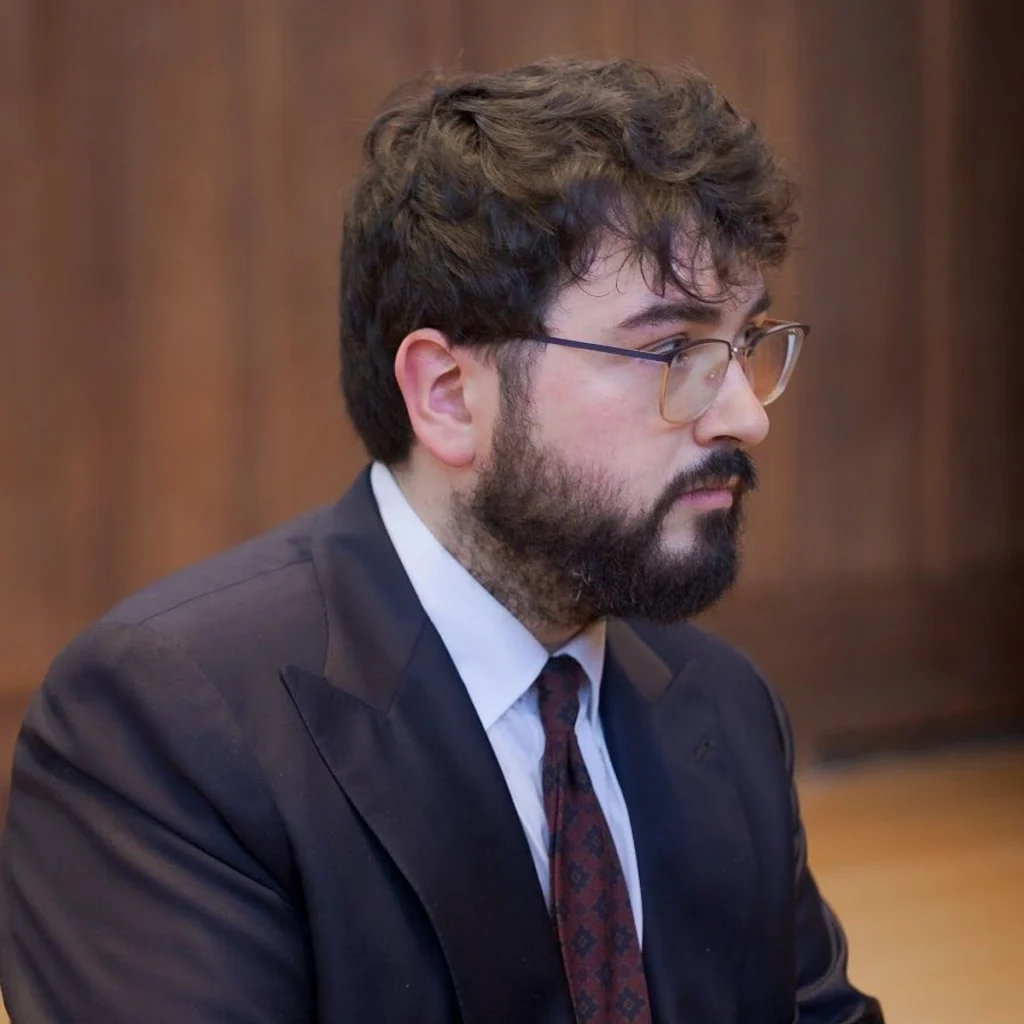
Stockhausen’s Wishes, Passed Through Ellen Corver, Shape Pedro G. A. Aguinagalderomalde’s Klavierstück IX
A Netherlands-Based Pianist Films Stockhausen’s 1961 Piano Piece with a Line to the Composer
At the centre of Karlheinz Stockhausen‘s Klavierstück IX sits a single four-note chord, struck at the piano again and again until its notes drift out of balance. Pedro G. A. Aguinagalderomalde learned the piece with Ellen Corver, the pianist who recorded the Klavierstücke for the Stockhausen Complete Edition. The performance went up on YouTube on 20 September 2026.
Pedro G. A. Aguinagalderomalde’s performance of Klavierstück IX is on this page in full, and the pianist’s coverage is gathered on the Pedro G. A. Aguinagalderomalde profile. The performance reached this desk through PopHits.Co Music Charts. The programme verifies independent artists and places their releases across its network of music news titles. Press play, then read on for how the piece reached the pianist.
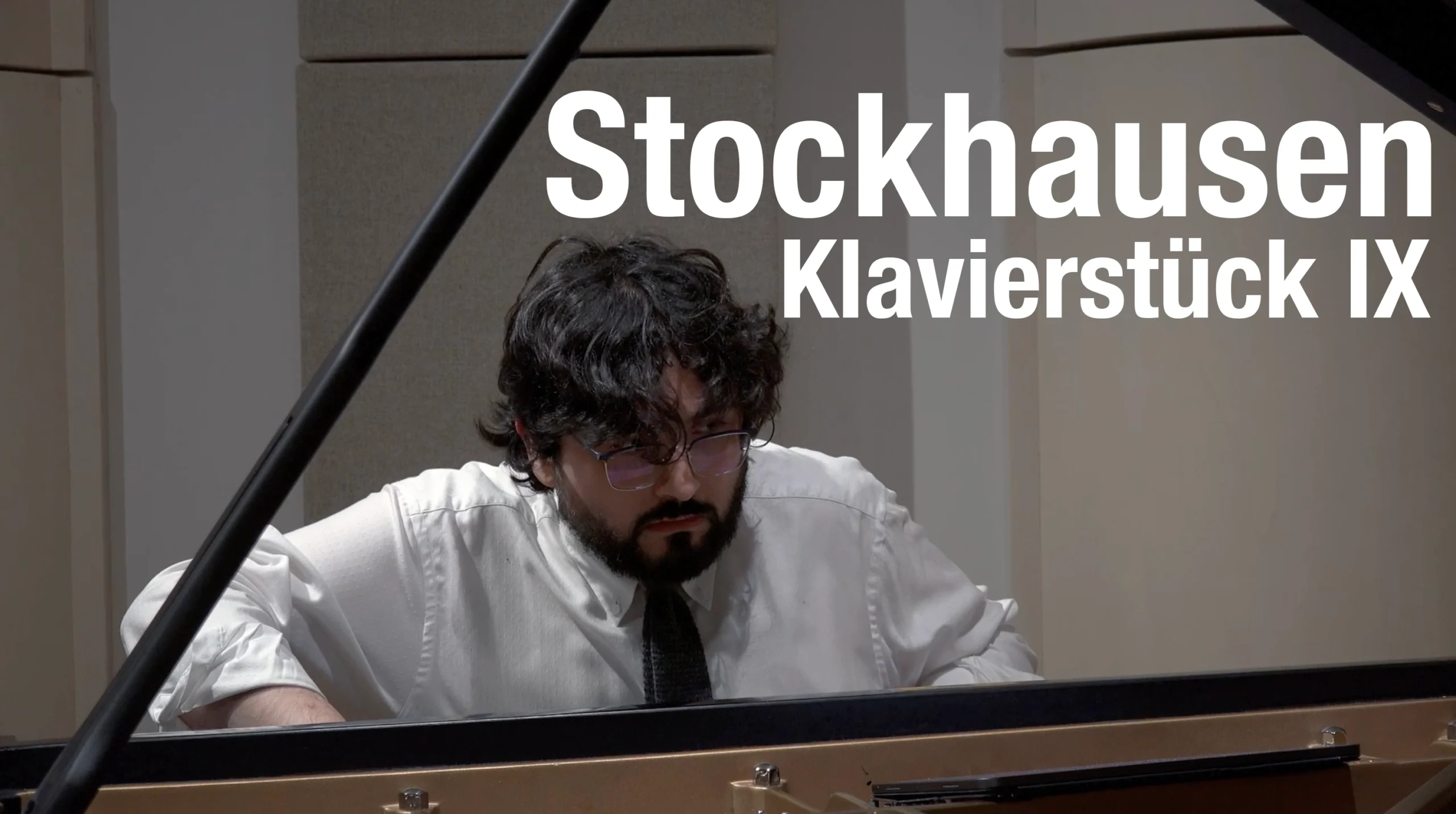
The video runs 11 minutes and 11 seconds, and the notes beneath it make an unusual claim for a YouTube upload. The pianist presents it as a historical source. In other words, it is a performance shaped by Corver’s first-hand account of what Stockhausen wanted and what he liked, gathered over Corver’s years playing his music. That decision, to learn a famous avant-garde score from someone who worked with its composer, is the heart of the release.
The piece has always travelled that way. Stockhausen planned it in the 1950s but finished it only in 1961. Aloys Kontarsky then gave the premiere on 21 May 1962 at the WDR studios in Cologne. The composer found Kontarsky’s touch so even that he asked him to help the chord’s imbalance along, to “dissect” it. Later, Corver recorded Klavierstücke I to XIV for the Complete Edition in 1997 and 1998. The 2026 video adds the next link.

Pedro G. A. Aguinagalderomalde Plays Klavierstück IX as a Study of Resonance, Learned With Ellen Corver
The score gives the performer two ideas to hold apart. One is the repeated chord, played at a moderately fast speed in steady rhythms. The other is a slowly rising chromatic scale in which every note has a different length. The two take turns and collide. Finally, the piece settles into fast, irregular groups high on the piano. Even the timing follows a plan, because the rhythmic proportions come from the Fibonacci series.
The repeated chord has a domestic origin. It grew out of an improvisation by Mary Bauermeister at the piano in the Stockhausen apartment in Cologne-Braunsfeld. She repeated one chord, changing the pressure of each finger slightly so that a small melody seemed to move inside it. Because no player can sound four notes with exactly the same weight every time, the tones keep trading prominence. The variation is written into the piece.
The Pianist’s Own Reading of Klavierstück IX
Aguinagalderomalde’s own notes explain how they hear it. They describe Stockhausen as a composer who built music the way an architect builds a house, from single notes up to large masses of sound. They also point to the novel that made him a composer, Hermann Hesse’s The Glass Bead Game, in which rational monks invent a game of associations that grows into an art. The pianist hears that game in Stockhausen, dreamlike even when the rules are strict. In Klavierstück IX, they write, the music develops less in the notes themselves than in the connections between them and in the way their resonances meet.
The credits are short and personal. Aguinagalderomalde plays, Reina Dreyhaupt engineered the sound, and the notes thank both Dreyhaupt and Corver for their part in the performance.
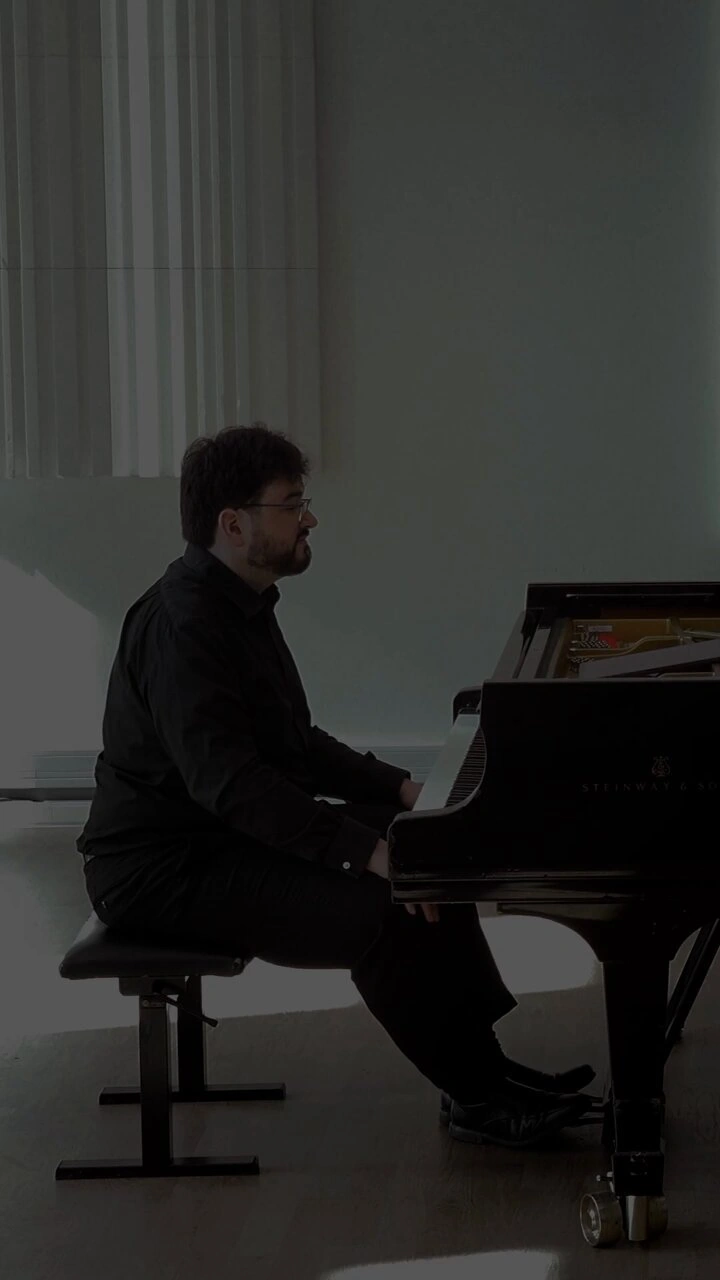
The Question Pedro G. A. Aguinagalderomalde’s Klavierstück IX Answers About Playing Stockhausen in 2026
Stockhausen died in 2007, so every new performance of his piano music raises the same question: whose version of his wishes do you trust? This release answers it in two parts, Corver’s account of the composer’s wishes and the pianist’s own interest in resonance.
The rest of Aguinagalderomalde’s channel shows the same habit of placing old and new side by side. Brahms’s late pieces from Op. 119, Mussorgsky’s Pictures at an Exhibition and Tchaikovsky’s First Piano Concerto sit next to Messiaen and selected pieces from Kurtág’s Játékok. Helmut Lachenmann’s 5 Variations on a Theme of Schubert and Memento by Jesús Torres are there too. Meanwhile, the latest upload pairs Mompou’s Canción y Danza no. 6 with a piece by Eggert written to be played straight after it. There are concerts as well, from the Conservatorio Jesús Guridi in May 2022 to a concert for JM Bilbao.
The pianist now lives in the Netherlands, according to their Instagram, and plays in Duo Arrosa and Ensemble Místico. Their X handle has a story of its own: a review once called them “el sutil Aguinagalde”, the subtle Aguinagalde, which became the handle.
Two reference points help place the video. Aloys Kontarsky’s 1965 set of Klavierstücke I to XI, made under the composer’s supervision, is the classic recording of this music. Pierre-Laurent Aimard gave the premiere of Stockhausen’s Klavierstück XIII at a birthday concert for Pierre Boulez in Baden-Baden on 31 March 1985. For many listeners, that is the name they know from the later pieces in the cycle. Anyone who knows either will find this an approachable way into the earlier writing.
Watch the performance with the score’s two ideas in mind, the chord and the climbing scale, and notice how often they interrupt each other. Then go back to the start and follow only the chord.
From the NewMusic.News Curator Team: “A 26-year-old pianist on a la Caixa Foundation fellowship choosing an eleven-minute Stockhausen piece for a YouTube release is a bet on patient listeners. It is a bet we are happy to back.”
Follow Pedro G. A. Aguinagalderomalde across platforms: YouTube channel, Instagram, TikTok, and X.