
Year: 2026

Stem Separation Changed What a Remix Is

Pulling a clean vocal out of a finished mix used to be impossible. Now it takes seconds, and the consequences are still being worked out.

For most of recorded history, a finished mix was final. The individual parts were welded together and could not be recovered. Machine-learning separation has undone that, and the implications reach a long way past remixing.

You can listen to our full playlist which contains the artist’s music, and know more about the artist’s work by scrolling down the page.

PLAYLIST


Separation tools take a stereo mix and output approximate stems – vocals, drums, bass, other. The quality is now good enough for practical use, and where it fails it fails in characteristic ways: reverb tails smear, and sounds that overlap heavily in frequency bleed into each other. It is a reconstruction rather than a recovery, but for a great many purposes it is sufficient.

The obvious beneficiaries are remixers and DJs. Previously a remix required official stems, which meant a relationship with a label. Now anyone can extract a usable vocal from a released track, which has collapsed the barrier between official and unofficial remixing and produced an enormous amount of work that exists entirely outside the licensing system.

The less obvious use is restoration and reissue. Catalogue recordings whose multitracks were lost or destroyed can be separated and remixed, which has already produced credible new mixes of records that were previously stuck with whatever the original engineer committed to. For archival work this is genuinely transformative.

It also creates problems nobody has settled. A separated vocal is a derivative of a copyrighted recording, and extracting it is trivially easy and effectively undetectable. The same tool that enables a legitimate reissue enables an unlicensed acappella to circulate within hours of release. Rights frameworks were written on the assumption that a mix was a sealed object, and that assumption no longer holds.

For artists the practical implication is worth internalising. Anything released can be taken apart. That is not a reason to release less, but it does mean the finished mix is no longer the last decision – it is one version of an arrangement that other people can now open.


R&B

The Return of the Arrangement in R&B

After years of sparse, loop-led production, a lot of R&B is being written with parts again.

For most of the last decade the dominant R&B production style was subtraction: a loop, a sparse drum pattern, a great deal of space. A noticeable amount of current R&B is doing the opposite, and writing arrangements again.

You can listen to our full playlist which contains the artist’s music, and know more about the artist’s work by scrolling down the page.

PLAYLIST


Sparse production was a genuine artistic position, not laziness. Removing everything unnecessary puts the voice and the lyric in the foreground, and it suits intimate, conversational singing. It also suits headphone listening, where small details are audible and a dense mix becomes fatiguing. The style earned its dominance.

What it gives up is development. A loop repeats; an arrangement moves. In arranged music the second verse can carry a countermelody the first did not, the bridge can change the harmonic ground under the singer, and the last chorus can arrive with parts that have been accumulating since the beginning. Those devices create a sense of travel that repetition cannot.

The current turn brings back specific tools: horn and string sections written as parts rather than pads, bass lines with independent melodic logic, backing vocals arranged as a section rather than stacked doubles, and drum programming that varies across the song. The reference points are the deeply arranged soul records of the sixties and seventies, and the debt is usually explicit.

It carries a cost that explains why it faded. Arrangement takes time, often costs players, and requires someone who can write for them. A loop can be finished in an afternoon; a horn chart cannot. The economics of a market that rewards volume push against it, which is what makes its return a deliberate choice.

The most interesting records are not choosing sides. They keep the intimacy and space that sparse production established, then introduce arranged elements as events rather than as a constant bed. The restraint learned in the sparse years is what makes the arrival of a string line land.


The Click Track Problem in Orchestral Recording

Playing to a metronome is standard for film scores and rare for concert recordings. The difference explains a lot.

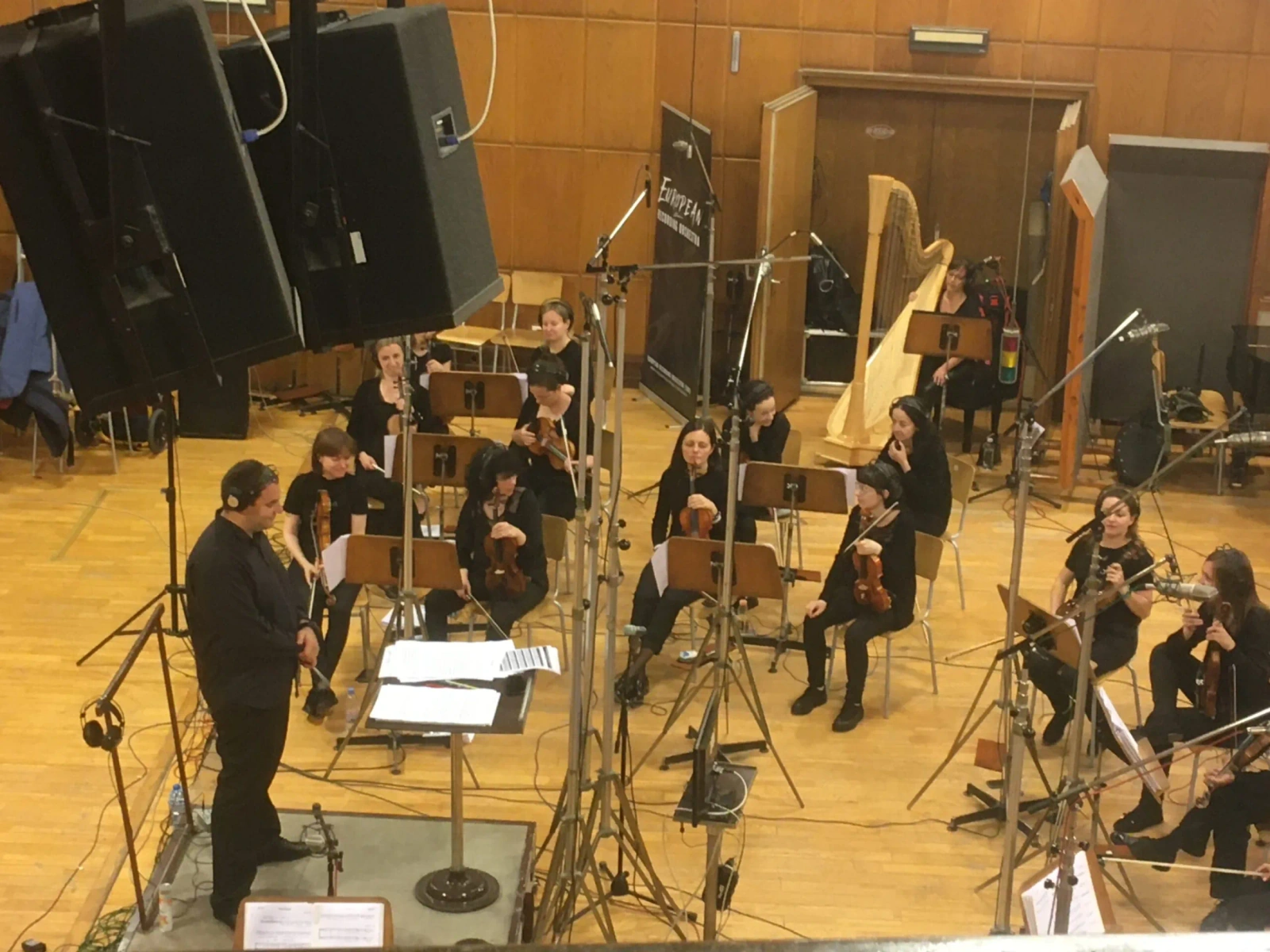
Ask an orchestra to play to a click and you get precision. You also get something subtly different from what the same orchestra does without one, and both facts matter depending on what the recording is for.

You can listen to our full playlist which contains the artist’s music, and know more about the artist’s work by scrolling down the page.

PLAYLIST


Film scoring generally requires the click, because the music must align to picture at specific frames. Cues have to hit an edit exactly, and a conductor working to a stopwatch cannot reliably deliver that. The click makes an orchestra editable and synchronisable, which is a technical requirement rather than an aesthetic preference.

What it constrains is rubato – the small pushes and pulls of tempo that carry phrasing in the concert tradition. Orchestral playing conventionally breathes: a phrase leans forward into its peak and relaxes out of it, and the whole ensemble follows the conductor doing it. A fixed grid removes the mechanism by which that expression is coordinated.

Skilled players work around it, and film music has evolved to suit the constraint. Composers write in ways that do not depend on rubato, using orchestration and harmonic rhythm to create movement instead. Some sessions use a variable click that encodes intended tempo changes, which restores part of the flexibility at the cost of preparation time.

Concert recordings mostly avoid it. Without picture to sync to there is no reason to accept the constraint, and the tradition’s whole expressive vocabulary assumes tempo is a living parameter. Editing between takes is still routine, but it happens at musical joins chosen by ear rather than on a grid.

The distinction is useful for listeners who find some orchestral recordings emotionally flat despite obvious technical excellence. Very often what is missing is not commitment but permission – a performance delivered inside a constraint that was there for reasons having nothing to do with the music.


What Release Day Means When Nothing Is Released

The record does not ship, arrive or sell out. Release day survives because the industry needs a coordination point.

Nothing physically happens on release day. A file that was already sitting on a server becomes visible. The date persists anyway, and it does real work.

You can listen to our full playlist which contains the artist’s music, and know more about the artist’s work by scrolling down the page.

PLAYLIST


Release day used to describe a logistical fact: records reached shops, and the week’s sales were counted. Every other part of the machine – press, radio, adverts, in-store placement – was scheduled around that arrival. Remove the physical distribution and the coordinating function remains, because everything else still needs a date to point at.

Chart accounting keeps the date sharp. Concentrating listening into a defined window produces a higher first-week position than the same listening spread over a month, so there is a direct incentive to make one day matter. That is a rule about measurement rather than a fact about music, but it has shaped release strategy for a decade.

The pre-save has quietly become the load-bearing part. Saves accumulated before release convert into day-one listening, which is exactly the signal recommendation systems weight most heavily. Much of a release’s trajectory is therefore determined before anyone has heard it, which is an odd thing to say about a piece of music and is nonetheless how it works.

Some artists have abandoned the convention entirely. Surprise releases trade the marketing build-up for the event of the surprise itself. Rolling single strategies drip material out for months, treating the album as a destination rather than a launch. Both are coherent, and both are only available to artists who already have an audience paying attention.

For everyone else the date remains useful for the reason it always was: it is the moment when every part of a campaign can be pointed at the same thing. The retail logic is gone. The coordination logic never depended on it.


Jazz and the Long Take

Editing an improvised solo is possible and mostly avoided. The reason is structural, not sentimental.

Jazz records could be assembled the way pop records are, from the best fragments of many passes. They largely are not, and the reason has less to do with purism than with what a solo actually is.

You can listen to our full playlist which contains the artist’s music, and know more about the artist’s work by scrolling down the page.

PLAYLIST


An improvised solo is an argument that develops. A phrase proposes an idea, the next answers it, and the shape of the whole depends on the order things were discovered in. Splice the best eight bars of one take into another and the internal logic breaks, even when every individual bar is stronger. The listener may not identify what is wrong, but the sense of a thought being followed disappears.

The interaction compounds it. A rhythm section responds to what the soloist just played, so their parts are downstream of decisions in that specific take. Replacing the solo orphans the response – the drummer is now reacting to something the listener never heard. This is why jazz recording still tends to mean the band in a room together, accepting whatever the take gives.

The cost is visible on the records. Great jazz albums contain small errors that a pop production would remove without discussion: a cracked note, a slightly late entry, a moment where someone plays over someone else. Those survive because removing them would cost more than they cost.

It also shapes what a jazz album is for. If the performance is the document, then a studio record is closer to a live recording without an audience than to a constructed object. Multiple takes of the same tune released together are not outtakes in the pop sense; they are alternative arguments, and issuing them is coherent rather than indulgent.

None of this makes jazz production simple. Microphone placement, room choice and balance carry enormous weight precisely because they cannot be fixed later. The engineering is front-loaded, and the decisions are permanent – which is a harder discipline than the one that can be corrected afterwards.


Why Folk Keeps Recording the Same Songs

In most genres a cover is a tribute. In folk it is the normal way the repertoire stays alive.

Hand a folk singer a song that has been recorded four hundred times and they will record it again, and nobody in the tradition finds this odd. The assumption that a song belongs to whoever released it first is a recent, commercial idea.

You can listen to our full playlist which contains the artist’s music, and know more about the artist’s work by scrolling down the page.

PLAYLIST


Traditional repertoire predates recording, and it survived by being passed on and altered. Verses were forgotten, added, swapped between songs; melodies drifted regionally. A song was less a fixed object than a set of materials, and every performance was a version rather than a copy. Recording froze particular versions, but it did not change the underlying assumption.

What a new recording contributes, then, is interpretation. Tempo, key, instrumentation, which verses are kept, whether a murder ballad is sung with horror or with a shrug – these are the argument. Two recordings of the same song can hold genuinely opposed views of what happens in it, and the tradition treats that disagreement as the point.

Arrangement carries most of the weight. A ballad sung unaccompanied puts the listener alone with the words. The same ballad with a full band becomes something closer to a story told at a distance. Neither is more authentic; they answer different questions, and choosing between them is the interpretive act.

There is a real tension with copyright, which assumes a single identifiable author. Traditional songs frequently have none, and the arranger is what the paperwork can recognise. That has produced a long history of arrangements being registered in ways the tradition itself would find strange, and it is a live argument rather than a settled one.

For a listener the practical advice is to stop treating the earliest recording as definitive. It is simply the first one that happened to be captured. The song existed before it and has continued past it, and the recordings are snapshots of a thing still moving.


The Verse Economy: How Features Became a Career Strategy

A guest verse places an artist inside someone else’s audience and someone else’s numbers. That is a distribution decision.

The guest verse is usually discussed as a creative gesture. In hip-hop it has also become one of the most efficient distribution mechanisms an artist has.

You can listen to our full playlist which contains the artist’s music, and know more about the artist’s work by scrolling down the page.

PLAYLIST


A feature places an artist inside a release they did not have to fund, promote or schedule, in front of an audience that is not theirs. For a developing act, that is reach that would otherwise cost a marketing budget. For an established one, it is presence without the commitment of a release cycle. Both parties are trading access to their audiences, and the trade is usually explicit.

The accounting compounds it. Streams accrue to the release, and an artist appearing on many releases accumulates visible activity without putting out a project of their own. A busy year of features can look, in the numbers, like a productive year of releases, which affects everything downstream from booking fees to playlist consideration.

The craft constraint is unusual and underrated. A guest has sixteen bars, no context, no build, and an audience who came for someone else. Everything has to arrive immediately – the voice, the perspective, a reason to rewind. It is closer to a short story than a chapter, and the artists who are repeatedly asked back are the ones who treat it as its own discipline rather than an offcut.

It can also be overdone in a way that is difficult to reverse. An artist who appears everywhere becomes ambient, and ubiquity without a defining project of their own is a weak position when the features slow down. The strongest catalogues tend to use features to point back at something.

Genres where collaboration is rarer simply do not have this channel. A rock act cannot accumulate presence this way, which is part of why hip-hop’s chart activity looks structurally different. The difference is habit and format as much as popularity.


The 4am Problem: Writing for Rooms You Will Never See

Club records are built for a physical space and a specific hour. Most listening happens in neither.

A club track is designed for a large room, a loud system and a moment late in the night. Most of the people who hear it will be on headphones on a train, and the gap between those two contexts shapes everything about how the music is built.

You can listen to our full playlist which contains the artist’s music, and know more about the artist’s work by scrolling down the page.

PLAYLIST


Sound systems in clubs reproduce low frequencies that domestic speakers and earbuds simply cannot. A sub-bass line that is the entire foundation of a track in a room can be almost inaudible on a laptop. Producers know this, which is why many club records carry a mid-range element that carries the same idea – a harmonic ghost of the bassline that survives on small speakers.

Structure is built around a job rather than a listener. Long intros and outros exist so a DJ can mix in and out; the drops are placed where a set needs them. Judged as a piece of home listening, a functional club track can seem to take an eternity to arrive. Judged as a component in a two-hour set, that patience is the whole design.

This creates a genuine tension with streaming, where skip behaviour in the first thirty seconds shapes how widely a track is shown. A record engineered to build slowly for a room is structurally penalised by systems measuring impatience. Some producers now release two versions, and the existence of a radio edit for a club track is a small confession about which context pays.

The compensations are real. Music built for shared physical space carries information that solo listening does not reward – repetition that becomes hypnotic rather than boring, small variations that only matter across ten minutes, textures that need volume to exist at all. It is a genre that assumes bodies in a room.

The honest conclusion is that a lot of dance music is not really finished until it is played somewhere loud. Everything before that is a plan for an event, which is an unusual thing for recorded music to be, and it explains why the genre’s economics run through the door rather than the stream.


What a Festival Booking Really Buys an Artist

The fee is rarely the point. Position on the poster is a durable asset, and it compounds.

For a developing artist, the money from a festival slot is often close to irrelevant. The booking is still one of the most valuable things they can get, for reasons that have little to do with the fee.

You can listen to our full playlist which contains the artist’s music, and know more about the artist’s work by scrolling down the page.

PLAYLIST


Position on a poster is a public statement about where an act sits, and the industry reads it as such. Agents, promoters and other festivals use last season’s billing to decide this season’s offers. Moving up two lines is not a cosmetic change; it resets the negotiation for every subsequent booking, and it is one of the few career signals visible to everyone at once.

Audience composition is the second asset. A festival crowd contains large numbers of people who did not come for you, which is exactly what makes it valuable. Headline shows preach to the converted. A mid-afternoon festival slot is one of the last remaining places where a substantial number of people encounter an artist by accident, and accidental discovery converts unusually well.

The economics are frequently negative before they turn positive. Fees for lower billings are modest, and out of them come crew, transport, backline and accommodation. Many acts play festivals at a loss, treating the season as marketing spend rather than income. That is a defensible decision, but it needs to be a decision rather than a surprise.

The risks are concentrated in things nobody controls. A weather delay compresses a schedule, and the cost falls almost entirely on lower-billed acts whose sets get shortened or cut while headliners are protected. An artist can lose the slot they built a season around, and the compensation terms for that are often thin.

Which is why the strongest position is to treat the booking as one input rather than the plan. The acts who get most from a festival season have something to convert attention into – a release timed to it, a mailing list, a tour that follows. Attention that arrives with nowhere to go dissipates within a week.


What an A&R Actually Does Now

The job used to be finding people in rooms. Most of the finding is done by the time an A&R arrives.

The popular image of A&R is someone in a back room at a small venue, discovering a band nobody has heard. That version of the job has been quietly obsolete for years.

You can listen to our full playlist which contains the artist’s music, and know more about the artist’s work by scrolling down the page.

PLAYLIST


Discovery is now largely a data problem, and the data is public. Streaming growth curves, playlist adds, short-form video velocity and regional listening patterns are all visible before anyone signs anything. By the time an artist is a serious signing candidate, several labels are usually looking at the same numbers. The scouting advantage that once came from being in the right room has mostly evaporated.

What replaced it is a competitive pitch. If three labels want the same artist, the differentiator is not who spotted them but what each can credibly offer: marketing spend, radio and playlist relationships, sync opportunities, international infrastructure, and increasingly what share of rights the artist keeps. A&R now spends a great deal of time arguing why their company is the right partner for someone who already has options.

The second half of the job is development, and it is the part most likely to be underfunded. Deciding which songs make a record, which producer suits an artist, when a release is ready and when it needs another six months – these are editorial judgements, and they are what separates a label from a distributor. An artist can get distribution anywhere; considered development is scarcer.

The economics push against patience. If a catalogue’s value is concentrated in a few winners, the rational move is to sign more artists and let performance sort them, rather than invest deeply in each. That maths is why many artists describe being signed and then hearing very little, and it is a structural outcome rather than individual neglect.

The consequence for artists is straightforward. Arriving with an audience is now the strong position, because it converts the conversation from whether to invest into on what terms. The leverage sits with whoever needs the other party less, and it moved.