Year: 2026

Ezra Furman Made an Orchestral Emo Record About Losing Control

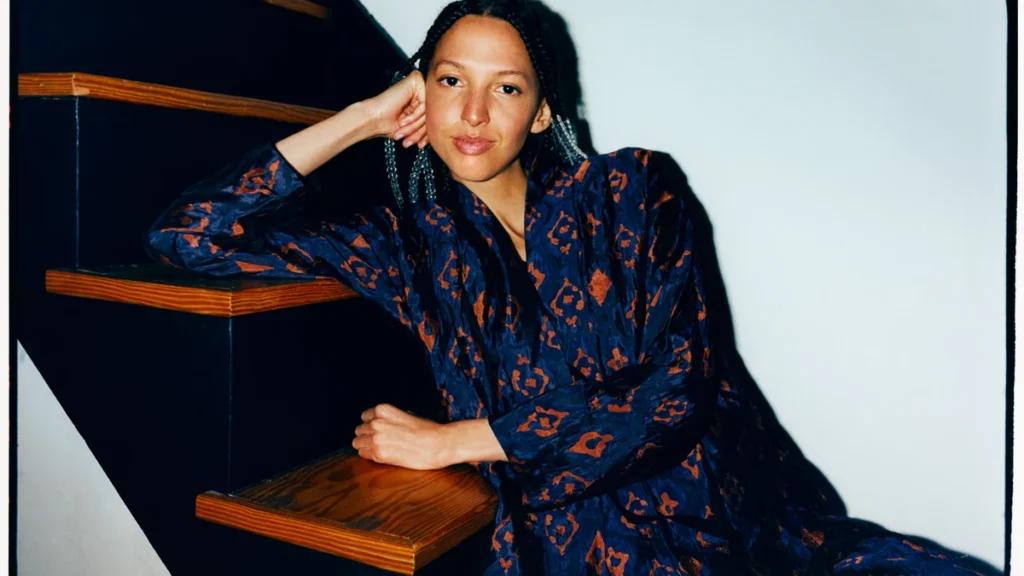
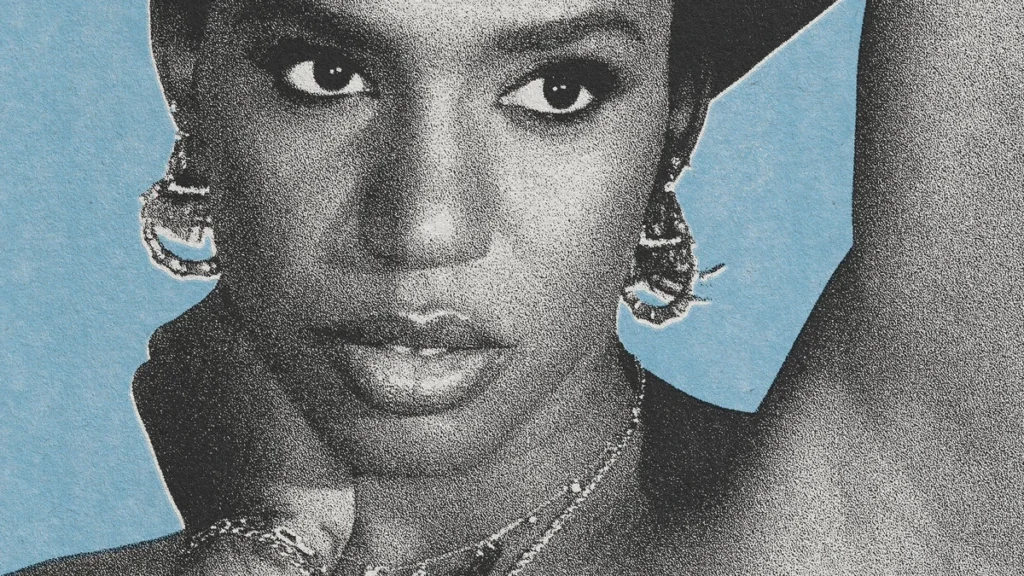
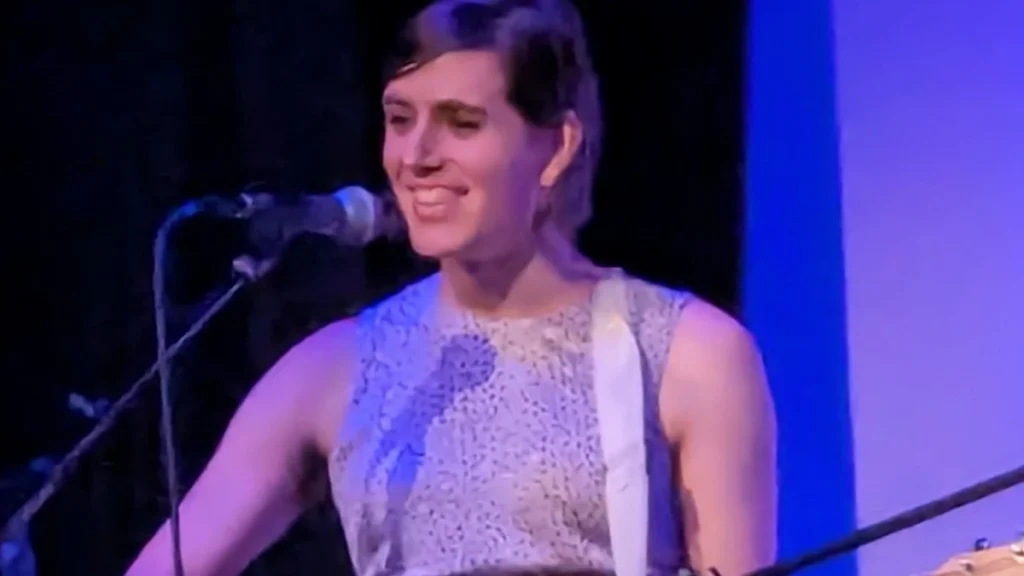
The first sound on Goodbye Small Head is a string section, and the second is a synth humming somewhere underneath it. Then a breakbeat arrives, skittering and slightly wrong-footed, and a voice starts asking to be let out of a moving car. Ezra Furman has a phrase for the combination: an orchestral emo prog-rock record sprinkled with samples. It is an unwieldy description, and it is accurate.

The album came out on Bella Union on 16 May 2025, produced by Brian Deck and recorded in Chicago, where Furman is from. Twelve songs run forty-two minutes. It reached number three on the UK Independent Albums chart, and in January she takes it across Europe and Britain for fourteen nights, opening at Arena Wien in Vienna on the 19th.

Where the Songs Came From

Furman has been open about the circumstances. The material arrived in a rush after a period of illness in early 2023, and she has described the writing as happening inside the experience rather than after it: “This poetry, my poetry, arrived in the midst of the storm. It was written as I teetered toward the edge.”

She is precise about what that does and does not mean for the songs. “They’re not about someone going off the rails,” she has said, “they are inside that person’s heart.” That distinction matters to how the record works. It is not a set of case notes written in retrospect, and it does not resolve, because it was not made from a position where resolution was available.

The Sound of Losing Control

The production carries the argument. Sweeping strings sit against low synths and chopped-up voice samples, and the rhythm section keeps declining to settle. Furman has said the twelve songs delineate a loss of control through means both conventional and not, listing weakness, heartbreak, mysticism, drugs, and living in society with your eyes open.

Set against that lyrical content, the arrangements are unexpectedly lush. Mojo called it her calmest record, flecked with ballads and strings, which is a fair reading of the surface and slightly misses what is underneath. The calm is the frame, not the subject. Putting an unravelling into an orchestral setting is a compositional decision that makes the unravelling more legible, not less.

Four Songs That Show the Method

Jump Out opens on buoyant strings and that low hum, with Furman wailing at a driver who has no intention of stopping. Grand Mal is the most developed of the openers in her catalogue, lush and swaying, and, as The Line of Best Fit observed, oddly lullabying for a song about a seizure.

You Mustn’t Show Weakness sets brooding breakbeats under a mantra Furman directs at herself, an instruction not to fold. A World of Love and Care is the album’s most affecting stretch, built on questions about what a society actually guarantees anyone. The record closes on I Need the Angel, the one song here Furman did not write, an electric reading of an Alex Walton composition delivered with heartland rock riffage.

The rest of the running order keeps widening the palette rather than settling it. Sudden Storm and Power of the Moon sit early, the latter the longest thing on the first half at four and a half minutes. Submission, Veil Song and Slow Burn run consecutively through the middle, and You Hurt Me, I Hate You is the bluntest title on a record otherwise inclined toward metaphor. Strange Girl follows it. The bossa nova influence that reviewers kept noting surfaces in the rhythmic feel of these central tracks rather than in any single arrangement, which is why the album can move between genres without ever sounding like a compilation of styles.

What the Reviews Landed On

The reception was strong and unusually consistent about why. DIY gave it four and a half out of five and called the lyrics some of her finest, unafraid of the darkest corners. Hot Press scored it eight out of ten and identified the theme precisely: the songs are explicitly about the act, and the art, of losing control.

The Line of Best Fit’s Dom Lepore gave it seven out of ten and framed it as a novel and necessary display of fervour in a hypervigilant era. MusicOMH went four out of five, describing Furman as one of the most exciting songwriters working. Nobody found it an easy listen, and nobody suggested it should have been.

The commercial pattern matched that critical one. Number three on the UK Independent Albums chart is a genuine result for a record on a label the size of Bella Union, and it sits alongside 23 on UK Album Downloads and 38 in Scotland. Those are the numbers of an artist with a committed audience rather than a broad one, which is the position Furman has occupied for most of a career now spanning more than a decade and a half, first with bands and latterly under her own name.

Fourteen Nights in Winter

The touring plan is dense. January runs Vienna, then Graz’s Dom Im Berg, Linz’s Posthof and Munich’s Strom on consecutive nights, followed by Prague, Berlin’s Columbia Theater, Hamburg’s Molotow, Amsterdam’s Paradiso Tolhuistuin, Antwerp’s Trix Club and Le Cabaret Sauvage in Paris. February brings Glasgow’s Art School, New Century Hall in Manchester, Bristol’s Electric, and the O2 Forum Kentish Town in London on the 4th.

Those are club and mid-size rooms rather than arenas, which suits material this intimate, and the routing is the compact European circuit an independent-label artist plays when the record has done well without crossing over. North American dates ran through the second half of 2025, so the UK and European leg is the album’s long tail rather than its launch.

Winter routing of that density also tells you something about how the show is built. Ten European dates inside eleven nights leaves no room for elaborate staging or a large touring party, which points to a set carried by the songs and a small band rather than by production. For a record this dependent on strings and samples, reproducing it live is the interesting problem, and the venues suggest the answer is rearrangement rather than replication.

Why It Reads as Queer Music

Furman is a trans woman and has written about faith, gender and belonging across her catalogue, but the reason this record belongs in that conversation is structural rather than topical. Very little of it is about identity in a declarative way. It is about being unable to trust your own footing, and about the gap between how you are managing and how you are required to appear.

That is a queer record in the sense that matters: it treats the pressure to present as composed as the actual subject, rather than as background. You Mustn’t Show Weakness is the clearest statement of it, an instruction delivered to oneself in a voice that plainly does not believe it.

An Artist Who Kept the Framing

What comes through across the album, the interviews and the reviews is how firmly Furman has held onto her own account of the record. She named the genre, defined the subject and drew the line between writing from inside an experience and reporting on it afterwards. Critics have largely adopted her terms, which does not always happen.

It puts her among a set of artists currently insisting on authorship over the frame as well as the music, in the way Leon Thomas spent two decades producing for other people before making the record with his own name on it. Furman’s version is quieter and harder to sell, and the fourteen January dates suggest an audience that turned up for exactly that.
Leon Thomas Won Best R&B Album With a Record He Produced Himself

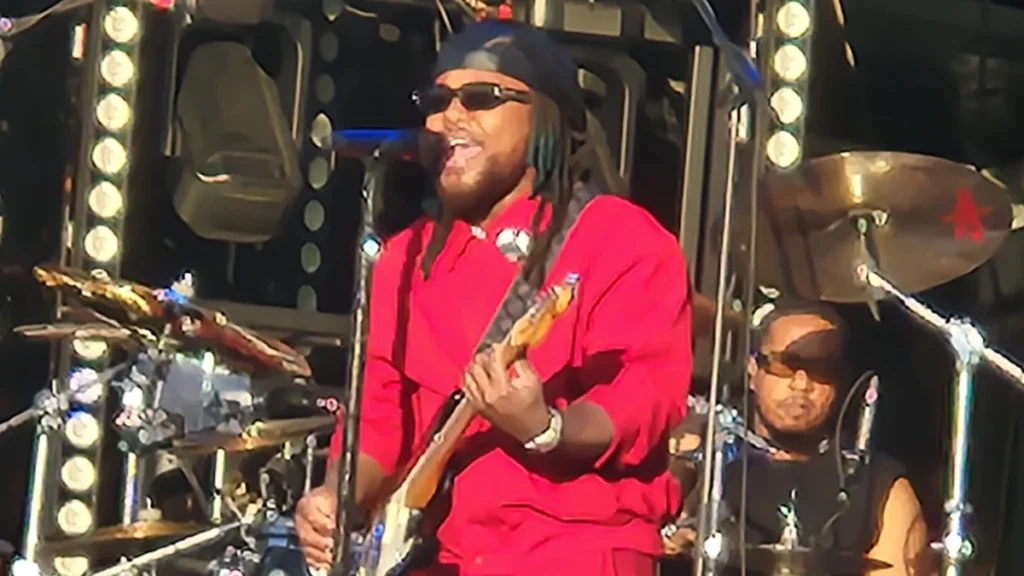
There is a moment in most producers’ careers where they stop giving the good idea away. Leon Thomas reached it late. He had spent two decades in the industry, much of it writing and producing for other people, and in 2024 he won a Grammy for production work on a single that carried somebody else’s name. Two years later he won Best R&B Album for Mutt, a record he made largely for himself.

The 68th Grammy Awards also nominated Mutt for Album of the Year, which is a different order of recognition. Best R&B Album is a genre prize; Album of the Year is a claim about the whole field. For a record released in September 2024 on EZMNY and Motown, arriving without a marketing campaign of the size those nominations usually imply, that is an unusual trajectory.

The Long Approach

Thomas was born in Brooklyn in 1993 and has been working since 2003. He started as a child actor on Broadway, appeared in The Lion King, then moved into television. The music came alongside, and for years it came mostly on other people’s records. He signed to EZMNY in 2022 and released his own debut, Electric Dusk, the following year, with Victoria Monet, Benny the Butcher and Ty Dolla $ign among its guests.

The acting was not a footnote either. He appeared on Nickelodeon’s Victorious and later on HBO’s Insecure, and his label history runs through Columbia and Rostrum before EZMNY and Motown. He is also a member of the group The Rascals. A career that scattered is usually a sign of someone searching for the right format; the interesting thing about Mutt is how settled it sounds by comparison, as though the searching finished somewhere before the recording started.

That is a twenty-year run-up to a breakthrough, and it shows in the record. Mutt does not sound like a first attempt at anything. The arrangements sit low and unhurried, the vocal is mixed close, and the writing assumes a listener who will stay for a whole album rather than a playlist placement. Those are choices made by someone who has watched a lot of records get built.

What the Album Actually Sounds Like

The palette is neo-soul with harder edges. Across fourteen tracks the record moves between the hushed and the abrasive, with hip-hop drum programming underneath and psychedelic textures at the corners. The Recording Academy’s own write-up reached for D’Angelo, Musiq Soulchild and Maxwell as reference points, which locates the vocal lineage accurately without quite capturing how much rock guitar is in it.

The guest list is used sparingly for a modern R&B album: Masego on Lucid Dreams, Wale on Feelings on Silent, Ty Dolla $ign on Far Fetched, Baby Rose on I Used To. Nine of the fourteen tracks have no feature at all. AllMusic gave it four stars out of five. The production credits run long, including James Fauntleroy, Conductor Williams, Aaron Paris and Khristopher Riddick-Tynes, with Thomas himself among them throughout.

The Title Track Did the Work

Mutt arrived as a single on 8 August 2024, seven weeks before the album, and it became the thing that carried the record. It reached number one on Billboard’s Hot R&B Songs chart, number one on Adult R&B Airplay and on the UK R&B singles chart, and climbed to 13 on the Hot 100. It is certified platinum in the United States.

The record also closes with a remix of the title track featuring Freddie Gibbs, which is a deliberate move: putting a rapper on the last version of the song that broke the album lets the project end by pointing outward rather than resolving inward. The album’s own chart performance was more modest: 35 on the Billboard 200, 8 on Top R&B/Hip-Hop Albums, 30 on the UK R&B albums chart, with a gold certification. That gap between a platinum single and a gold album is the ordinary shape of contemporary success, and it makes the Album of the Year nomination more striking rather than less. The voters were not following the sales.

A Deluxe That Changed the Argument

On 30 May 2025 he released Mutt Deluxe: Heel, adding nine tracks. Deluxe editions are usually a streaming-era manoeuvre, a way of restarting a release cycle with offcuts. This one behaved differently, bringing in Kehlani, Big Sean, Halle and Chris Brown and pushing further into rock textures than the original had.

It also extended the record’s life through the awards window, which matters. Two more singles came off the project long after release, Rather Be Alone in April 2025 and Yes It Is that September, a full year after the album. Sustaining a campaign across eighteen months is how a record that opened at 35 ends up nominated for Album of the Year.

The Producer Who Kept the Song

The 2024 production Grammy is the detail that reframes everything else. Winning as a producer establishes that the industry already trusted his ear; the people making the biggest R&B records were hiring him. What it did not establish was whether he could carry a record as the voice on it.

Plenty of successful producers never manage that transition, and the failure mode is predictable: an album that sounds expensively made and emotionally vacant, because the person assembling it is more comfortable solving problems than exposing anything. Mutt avoids that by being unusually direct about wanting things, being unsure, and behaving badly. The title is not flattering, and it is not meant to be.

The Tour That Sold Out

The Mutts Don’t Heel world tour sold out across the United States, and the live setting suits the material. This is a record built on musicians rather than sequencing, so the songs survive being played by a band without the arrangements thinning out. He has also worked the television circuit hard, from late-night appearances to a Tiny Desk session that became one of the most-watched entries in that series.

The rollout around it was relentless in a way that album campaigns rarely are two years after release: a Billboard Hip-Hop and R&B Power Players cover, MTV PUSH Artist of the Month in March 2025, a late-night debut, and performances of the deluxe material on network television. Recognition arrived in a run: Billboard’s Breakthrough Artist of the Year, Best New Artist at the 2025 BET Awards, then the Grammys. Best New Artist is a strange category to win at thirty-one after twenty-two years of work, and it says more about when an industry decides to notice someone than about when they started.

What It Signals for the Genre

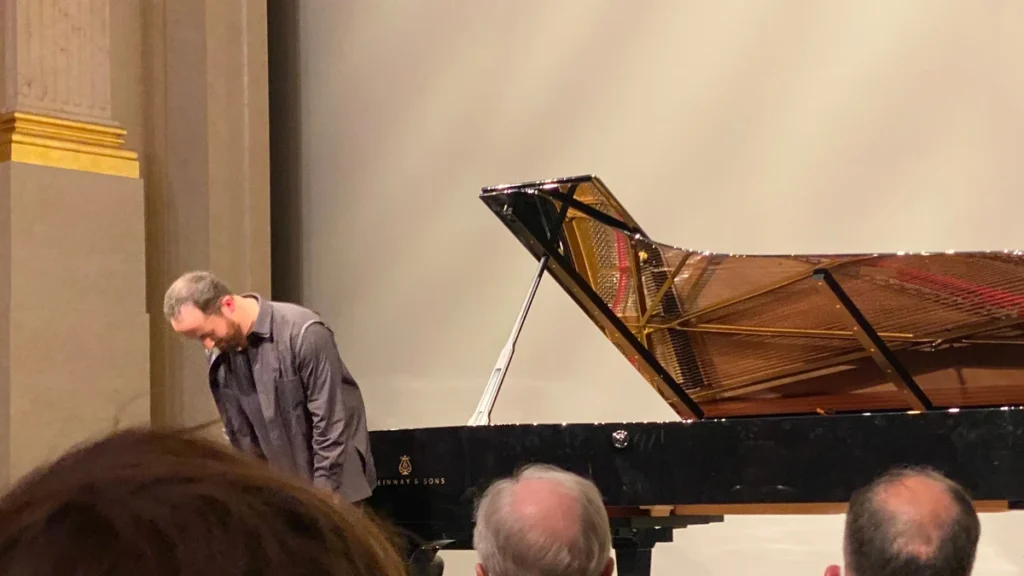
Best R&B Album going to a self-produced record made cheaply, on a small imprint inside a major, is a useful marker. It sits alongside a broader pattern of artists taking ownership of the apparatus around their music rather than only the music, in the same way Igor Levit has just launched his own label from inside a major classical company.

What makes Thomas’s version interesting is that he had the production credentials first and the platform second, which is the reverse of the usual order. Most artists reach for control after success. He had the skills the whole time and spent twenty years applying them to other people’s records before making the one with his name on it.

Igor Levit Named His New Label After a Concert He Gave in Berlin

Somebody had to decide how many copies to press. The answer, for Igor Levit’s recording of Erik Satie’s Vexations, is 840, and it is not an arbitrary number. Satie’s manuscript carries a note suggesting the short motif be repeated 840 times, which is why complete performances run past twelve hours. The edition size is the piece’s own instruction, turned into a manufacturing decision.

That album is one of the first three releases on No Silence, the label Levit has founded in partnership with Sony Classical. All three arrive on 23 October, trailed since 19 June by a single: Satie’s Gymnopedie No. 1. For a pianist who has recorded exclusively for Sony since 2013, starting a label inside the same company is less a departure than a change of authorship over what gets made.

Where the Name Came From

No Silence takes its name from a concert. After the attacks in Israel on 7 October 2023, Levit performed at the Berliner Ensemble in an event titled Against Silence, Against Anti-Semitism. The label carries that title forward, and Levit has been direct about the implication: “NO SILENCE is not simply a label. NO SILENCE is a stance.”

Naming a record label after a protest concert is unusual, and it sets an expectation the catalogue will have to meet. Levit has spent much of the last decade placing his playing inside public argument rather than beside it, from streamed house concerts during lockdown to programming that pairs canonical repertoire with pieces written in response to catastrophe. The label formalises a position he already occupied.

The Eroica, but for One Pianist

The second of the three releases is the most technically curious. Levit plays Liszt’s piano transcription of Beethoven’s Third Symphony, the Eroica, a piece Liszt reduced from a full orchestra to two hands without simplifying it. Transcriptions of that kind are a strange genre: the pianist has to imply an orchestra rather than imitate one, and the writing frequently asks for more notes than a player has fingers.

It is paired with Schoenberg’s Ode to Napoleon Buonaparte, performed with the conductor Antonello Manacorda, the Kammerakademie Potsdam and the actress Dorte Lyssewski. Schoenberg wrote the Ode in 1942 as a setting of Byron, and its subject is a tyrant’s fall. Programming it against Beethoven’s Eroica, a symphony whose dedication to Napoleon Beethoven famously withdrew, makes the pairing an argument rather than a coupling.

The forces involved also explain why this is not simply a solo record. Schoenberg scored the Ode for a speaker, piano and string quartet, with the text delivered in Sprechstimme, the half-spoken, half-sung delivery that sits between recitation and melody. Casting an actress rather than a singer in that role is the orthodox choice and the more demanding one, because the part has to carry Byron’s contempt while staying tied to written pitches. Placing it after forty-five minutes of solo Beethoven transcription gives the album an abrupt change of texture at exactly the point a listener might have settled.

The Label’s First Signing

The third album belongs to someone else entirely. Lukas Sternath, a winner of the ARD Music Competition and a BBC New Generation Artist, makes his debut with a programme of Liszt and Schubert. That choice says as much about the label’s intent as Levit’s own releases do: a new imprint led by an established soloist could easily have been a vehicle for his catalogue alone.

Sony’s executives have framed the partnership in the language labels use, with Per Hauber, who runs Sony Classical, describing it as the next milestone in a long relationship. The more informative signal is structural. Levit is not leaving a major to go independent; he is being given an imprint inside one, which is a different arrangement and a rarer one in classical music.

What Levit Already Built

The catalogue behind this is substantial. Levit signed to Sony at twenty-five and made his debut on the label in 2013 with Beethoven’s late sonatas. His complete Beethoven sonata recording, released in September 2019, went straight to number one in the official classical charts. Along the way he has collected four Opus Klassik awards, Gramophone’s Artist of the Year in 2020, Musical America’s Recording Artist of the Year the same year, and both the Recording of the Year and Instrumental awards from BBC Music Magazine.

He has also built institutional roles rather than only touring. Since the 2022-23 season he has been co-artistic director of the Heidelberger Fruhling festival, and a year later he initiated the Piano Fest with the Lucerne Festival. Those are administrative jobs as much as artistic ones, and they suggest someone comfortable running things, which is the temperament a label demands.

His repertoire choices have pointed this way for years as well. On DSCH, released on Sony in 2021, paired Shostakovich’s 24 Preludes and Fugues, a cycle running about two and a half hours across every major and minor key, with Ronald Stevenson’s rarely played Passacaglia on DSCH, itself built from more than three hundred variations on Shostakovich’s musical monogram. Issuing two such demanding cycles together is the kind of decision a label normally resists and an artist-run imprint exists to make. The pattern repeats across his catalogue: Life in 2018 ran from Busoni and Bach to Bill Evans, and Tristan in 2022 set Henze against Wagner and Mahler.

Satie, Twice Over

Vexations is not new territory for him. In spring 2025 Levit performed the piece for thirteen hours at London’s Southbank Centre with the performance artist Marina Abramovic, a decade after the two collaborated on Bach’s Goldberg Variations at the Park Avenue Armory in New York. A recording of a work built on endurance is a paradox: the thing that makes a live Vexations extraordinary is the duration a listener shares with the player.

The physical edition acknowledges that. The 840 copies carry an NFC chip and signed sheet music, which turns the release into an object rather than a document. Whether that translates the experience or simply commemorates it is a fair question, and it is the same one facing any recording of music designed to happen in a room, including the three volumes Immanuel Wilkins cut at the Village Vanguard.

What Vexations Actually Asks For

It helps to know how little music is involved. Vexations is a single page: a bass line, then two harmonisations of it, built from intervals that refuse to settle into a key. Played once it lasts somewhere between one and two minutes depending on the tempo taken, and taken alone it would be a curiosity rather than a landmark. The instruction to repeat it 840 times is what converts it into an ordeal, and Satie left no explanation for the number.

The piece went largely unperformed for decades, and its modern life began when John Cage organised a relay performance in New York in 1963 using a rotating team of pianists. Most complete accounts since have worked the same way, which makes a solo traversal the harder proposition and the reason Levit’s Southbank performance drew attention. Recording it raises a further question that a concert does not: a listener can stop a recording, and the composer’s instruction assumes they cannot.

The Season That Follows

The label arrives at the start of a heavy stretch. From October 2026 through June 2028, Levit returns to his complete Beethoven sonata cycle, presented as eight-recital sets in New York, London, Vienna, Berlin, Munich, Hamburg and North Rhine-Westphalia, timed towards the Beethoven anniversary in 2027. Further Beethoven recitals in the 2026-27 season take him to Amsterdam, Frankfurt, Leipzig, Lisbon, Milan, Paris, Prague, Rome, Warsaw and Zurich, alongside a North American tour.

In December he plays the Nobel Prize Concert in Stockholm with Sir Antonio Pappano and the Royal Stockholm Philharmonic. Set against that schedule, launching an imprint looks less like a side project than a consolidation: the recitals, the festivals he directs and now the recordings all run through decisions he makes himself. His own website describes him in three words, in this order: citizen, European, pianist.

Immanuel Wilkins Made Three Albums in Two Nights at the Vanguard

On the evening of 15 May 2025, four musicians carried their instruments down the stairs into a basement room on Seventh Avenue South that holds about 130 people. They played there that night and again the next. Between the two evenings they recorded thirteen pieces of music, and rather than choose among them, Blue Note put out all thirteen across three separate volumes.

That decision is the story here. A live album is normally an act of compression: you play a run of nights, you take the best version of each tune, and you assemble a single record that sounds like one great evening. Immanuel Wilkins Quartet: Live at the Village Vanguard refuses that. Vol. 1 arrived on 20 March on vinyl, CD and digital, Vol. 2 on 17 April and Vol. 3 on 15 May, the last two digital only. Almost nothing was left out.

Two Nights, Thirteen Tracks

The maths explains part of it. These performances stretch. One piece on the first volume runs eighteen minutes, and it is not an outlier so much as a statement of how the group works. Four tracks fill Vol. 1, five fill Vol. 2 and four fill Vol. 3. Compress that into a single seventy-minute record and you would be cutting roughly two thirds of what happened in the room.

The sequencing across the volumes is deliberate rather than chronological tidying. Vol. 1 opens with Warriors, moves through Composition II and the Alice Coltrane cover Charanam, and closes on Eternal. Vol. 2 gathers The Big Country, Waiting Pt. 1, Citrine, Grace and Mercy and Go ‘Head Get Down. Vol. 3 holds Ring Shout, Composition IX, Dolla$ and Put 100 on the Blue Chain. Each set has its own arc.

The titles carry their own logic across the three records. Ring Shout, which opens Vol. 3, names a ritual form that predates jazz entirely, a circle dance from the Black American church built on shuffling feet and call-and-response. Grace and Mercy and Go ‘Head Get Down point the same way. Set against those are Composition II and Composition IX, deliberately plain labels for the most formally constructed pieces here. The pairing of devotional language with numbered exercises is not accidental, and it maps closely onto how the music actually behaves.

The Room Is Part of the Instrument

The Village Vanguard has been recorded so many times that its sound is itself a reference point, a slightly boxy warmth with the audience close enough to hear. Sonny Rollins, John Coltrane and Bill Evans all made records there that people still study. Playing a first live album in that room is a decision about lineage as much as acoustics.

Tina M. Campt, who wrote the liner notes, framed the project as an attempt to summon the room’s own recorded history and make it audible again. That is a fair description of what these performances do. The quartet is not imitating anyone who played there before, but the room keeps supplying the context, and the group plays into it rather than around it.

There is a practical dimension too. The Vanguard is small and its stage is shallow, so a quartet stands close enough to hear each other without monitoring. Groups that play there often describe it as the easiest room in New York to listen in, which matters enormously for music built on reacting rather than executing. Much of what sounds telepathic on these recordings is really just four people who can hear every detail of what the others are doing.

What Wilkins Means by Practice

Wilkins has described these sessions as practice, and he defines the word in a specific way: “working things out without a certain set of key variables; a refusal of the conditions expected of your production.” That is a working method, not modesty. It explains why passages are allowed to run past the point where a studio take would be cut, and why the group is comfortable letting an idea fail in public.

It also explains the three-volume structure better than the running times do. If the sessions are practice, then editing them into a highlights record would misrepresent what happened. Releasing everything keeps the searching in, including the parts that do not resolve.

The Alice Coltrane Cover at the Centre

Charanam is the only piece on Vol. 1 that Wilkins did not write. It comes from Alice Coltrane’s Turiya Sings, and its roots are in kirtan, the devotional practice built on call-and-response chanting. That structure survives the translation to a jazz quartet: the music moves in circles, with rhythmic repetitions gathering around Kweku Sumbry’s beat and Micah Thomas’s wide chords.

Over that, Glide Magazine noted Wilkins using a fluttering technique more commonly heard from trumpet players than saxophonists, alongside the spiralling solo lines that have become his signature. Choosing Alice Coltrane rather than a standard says something too. It places the record in a devotional tradition rather than a repertory one.

Where the Length Becomes the Argument

Not everything lands, and the reviews have been honest about it. Eternal builds on an eleven-note phrase that recurs for thirteen of its eighteen minutes, descending in volume over a two-chord bed. Glide found it ponderous, and suggested that what works as hypnosis in a room does not necessarily survive the trip to a recording.

That is a real limitation of documenting practice rather than editing it. But the same approach produces Composition II, modelled on Bach’s Well-Tempered Clavier and played with deliberate restraint: Ryoma Takenaga’s bass handled gently, Wilkins in a clear and unhurried tone, Thomas accompanying rather than filling. The record asks for attention and rewards it unevenly, which is what a real night in a club is like.

The Quartet Doing the Work

Micah Thomas has his own trio and three solo piano albums, and his playing here moves between wide harmonic support and near-silence depending on what the piece needs. Sumbry’s drumming is the engine on the faster material, kinetic without crowding. Takenaga anchors the quieter passages, which on this record is the harder job.

Wilkins came to the instrument through a community church in Upper Darby, Pennsylvania, then the Clef Club of Jazz and Performing Arts in Philadelphia, then Juilliard, where he studied with Bruce Williams, Steve Wilson and Joe Temperley. He is not yet thirty. This is his sixth album for Blue Note, after Omega in 2020, The 7th Hand in 2022 and Blues Blood, which earned him a Grammy nomination for Best Alternative Jazz Album.

He has also spent a substantial part of his twenties as a sideman, and the list is a good map of where contemporary jazz has been concentrated: four albums with the vibraphonist Joel Ross, two with the drummer Johnathan Blake, sessions with Kenny Barron, James Francies and Orrin Evans. That volume of collaborative work is audible in how he leads. He does not play like a soloist with a rhythm section behind him, which is the default shape for a saxophone-led quartet, and the long pieces here only function because the other three are given room to determine where things go.

Why the Label Backed the Long Version

Don Was, who runs Blue Note, has said that like Coltrane, people will be listening to Immanuel Wilkins sixty years from now. Labels say things about their artists, but the release strategy is the more reliable signal: issuing three volumes of long-form live improvisation, two of them digital only, is not a commercial play. It is an archival one.

It also fits where instrumental music has been heading. The most interesting records in this space keep refusing the shapes that streaming rewards, in the same way Nala Sinephro built a film score that declines to behave like one. Wilkins had two nights in a small basement room and thirteen pieces of music. Rather than decide which four mattered most, he let all of them stand.

Michael Kiwanuka Made Small Changes by Not Trying to Prove Anything

There is a particular problem that arrives after an album wins something. The next record has to answer it, and the usual answer is more: more production, more ideas, more evidence that the win was deserved.

Michael Kiwanuka went the other way, and was unusually explicit about why. “I wonder what an album will sound like when we’re not trying to be cool or anything, you know, we’re not trying to prove anything,” he told The Current. Small Changes is the record that came out of taking that question seriously.

What He Was Reacting Against Was His Own Record

Small Changes arrived on 22 November 2024 through Polydor and Interscope: eleven tracks, forty minutes and eighteen seconds, filed as psychedelic soul.

The album it is answering is Kiwanuka, which won the Mercury Prize, and his diagnosis of it is candid. “The production became, especially on Kiwanuka, like really, really relayed with so many ideas and so many sounds,” he said. He put both that record and 2016’s Love & Hate in the same category: “I definitely was in a different space of trying to prove a lot of things as an artist.”

Artists rarely say this about work that succeeded. Describing a prize-winning album as over-furnished is a real risk, and it only makes sense if the follow-up genuinely commits to the opposite. “I sort of went back to that, which was like, for me the right time,” he said. “Strip everything away and find out what it actually is.”

It is worth being precise about the record he is measuring himself against, because the modesty could read as false. Kiwanuka won the Mercury Prize. Following that with a quieter album is not the safe option dressed up as bravery — it is the option that forfeits the obvious way to capitalise on a win, which is to give the audience a larger version of what it just rewarded.

The Same Producers, a Different Instruction

The interesting decision is that he did not change the team. Danger Mouse and Inflo co-produced Small Changes, as they had Kiwanuka, and as Danger Mouse had Love & Hate before that — a third consecutive collaboration.

Changing your sound by keeping your producers is harder than changing your producers. It means the difference has to come from instruction rather than from personnel, and there is nobody new to blame if it does not land.

Kiwanuka’s account of what he learned is about restraint on his own side as much as theirs. “I’ve learned quite a few things that makes the process even a bit easier,” he said. “Just do what you do, which actually is easier for everyone.” On Danger Mouse specifically: “You can just ask any question, and you know you’re gonna get, like, a really interesting answer, or something you’ve never really considered.”

The writing credits show how deep the partnership runs. Every track is credited to Kiwanuka with Brian Burton and Dean Josiah Cover — Danger Mouse and Inflo’s given names — except the closer, “Four Long Years”, written by Kiwanuka and Burton alone.

What Understated Actually Means Here

His description of the goal is specific: “a lot more understated” than Kiwanuka, and “more about the voice, more about my voice, and more about the lyrics”.

That is a mixing brief as much as a writing one. Putting a voice forward is not a matter of turning it up; it requires everything else to stop competing for the same frequencies and the same attention. The eleven tracks are correspondingly compact — “Live For Your Love” at 2:29, “Lowdown (Part II)” at 2:40 — with only “Four Long Years” and “One and Only” pushing past four and a half minutes.

The two-part “Lowdown” is the tell. Splitting an idea into Part I and Part II rather than developing it across one longer track is a decision to let a thing be what it is and then stop, which is precisely the discipline he says he was after.

The rollout matched the thesis. “Floating Parade” appeared on 10 July 2024, the two-part “Lowdown” on 12 September, and “The Rest of Me” on 3 October — three months of singles that arrive and stop, rather than a campaign building toward a reveal. Nothing about the sequence asks the listener to wait for a bigger moment.

Jimmy Jam Is Playing the Organ, and That Is Not a Cameo

The personnel list contains a detail that is easy to skim past. Jimmy Jam — half of Jam & Lewis, one of the most decorated producers in American pop — appears on this record as a session organist.

Kiwanuka is blunt about the scale of it: “All the Hammond you hear, other than maybe one song, is Jimmy Jam. He’s on essentially a lot of the record.”

Engaging a producer of that stature to play rather than to produce is an unusual inversion, and it fits the record’s logic. A Hammond part is a texture decision, and having one player make all of them is how an album gets a consistent character without layering.

He is not the only heavyweight in a supporting role. Pino Palladino plays bass, James Gadson drums, James Payne slide guitar; Rosie Danvers arranged the strings with Pete Anthony conducting, and six named backing vocalists appear. Kiwanuka himself plays acoustic, electric and bass guitar, drums, piano and Wurlitzer, with Inflo on drums, piano, keyboards, Rhodes and synthesiser.

Kiwanuka also plays a great deal of the record himself, which is the other half of the same idea. When the person who wrote the song is the one playing the Wurlitzer part, the arrangement decisions and the writing decisions stop being separate stages that need reconciling.

The Reception Was Warmer Than the Modesty Suggests

Stripping back is usually the move that costs an artist their reviews. It did not here.

The album took a Metacritic score of 83. The Observer gave it five stars and called it “an exquisite return”; DIY and Uncut both went to four and a half; The Independent, Mojo and NME to four; Clash and The Line of Best Fit to 8 out of 10, the latter calling it “a beautifully crafted return”. Pitchfork was the coolest of the majors at 7.0, and AllMusic sat at three and a half.

Commercially it reached number two in the UK and number one in Scotland, with number two in the Netherlands, five in Flanders, six in Switzerland, eleven in Germany and fifteen in Austria. Those are not the numbers of a retreat.

Why the Experiment Worked

The reason a record made with “nothing to prove” did not simply sound smaller is that the restraint was applied to the arrangement and not to the ambition.

Everything expensive is still present — a legendary rhythm section, real strings, a full choir of backing vocals. What changed is that those elements take turns instead of stacking. That is a harder record to make than a dense one, because every part left in has to justify itself against the silence it is displacing.

It is the same instinct as a stable studio partnership: fewer new variables, more attention to each one. Our piece on why guitar bands went back to tracking live covers a related move, from a different direction.

Small Changes is out now.

Kae Tempest Sampled His Own Old Lyrics to Argue With Them

Sampling is normally an act of borrowing: you take someone else’s record and put it somewhere new. Kae Tempest does something odder on his fifth album. He samples himself, and not to quote a hook — to disagree.

Self Titled was released on 4 July 2025 through Island Records: twelve tracks, forty minutes and twenty-six seconds, produced by Fraser T. Smith with Tempest. The self-sampling is the structural idea the rest of the record is built around.

A Writer in Conversation With His Own Archive

On “Know Yourself”, old Tempest lyrics reappear inside the new song. The effect is not nostalgia and it is not a victory lap. Placing a line you wrote years ago next to what you would write today makes both of them arguable, and the listener hears the gap rather than being told about it.

Very few writers can attempt this, because it requires a back catalogue with enough definition that a fragment is recognisable out of context. Tempest has one: a career built on spoken word before it was built on records, where the words were always the fixed element and the music arrived around them.

It is also a risky device. Quoting your younger self invites the comparison you might lose. The record survives that because it is not claiming the older lines were wrong — only that they were written by someone with less information.

Tempest makes the relationship explicit in the lyric itself. Hot Press, which scored the album 9 out of 10, picks out the couplet on that track: “Now I sit among crates of rhyme books / And I thank the little me that put the work in.” That is gratitude rather than correction, and it reframes the whole device. The archive is not being interrogated; it is being credited.

The same track celebrates Wu-Tang’s influence on the teenage Tempest, which locates the self-sampling in a tradition rather than presenting it as a novelty. Hip-hop has always treated the crate as a working tool. Turning that instinct on your own back catalogue is a small extension of an old idea.

The rollout backs that reading. Island led with “Statue in the Square” on 19 March 2025, premiered on Nick Grimshaw’s BBC Radio 6 Music show, but it was “Know Yourself” — the self-sampling track — that arrived on 30 April alongside the album announcement itself. “Diagnoses” followed on 23 June as the third and final single. Choosing the track that argues with the archive to introduce the record says something about what the album is for. A label playing safe leads with the loudest song and keeps the conceptual one deep in the sequence.

The Question He Set Himself

The NME review, which gave the album four out of five, quotes the brief Tempest set himself in an interview earlier that year: “What is it only I can say, that no other lyricist in the UK can say?”

That is a harder question than it sounds, and most writers quietly avoid it, because the honest answer is often “nothing yet”. Asking it out loud commits you to a record that cannot be assembled from craft alone.

What the album answers it with is specificity: an account of identity and medical transition told from inside rather than explained outward. The reviewer described the result as “a beefy, self-assured celebration of newfound identity”, which is a notably unburdened phrase for a subject usually handled as difficulty.

What Changed in the Voice Itself

There is a technical dimension here that has no real precedent in British rap. Tempest’s vocal tone has altered as a result of hormone treatment, which means the instrument delivering the words is physically not the one that delivered the earlier records.

That turns the self-sampling from a clever conceit into something closer to documentary. When an older line plays against a new one, the difference is audible in the timbre before it is audible in the argument. A device that could have been merely literary is doing acoustic work.

It also reframes what a “self-titled” album means five records into a career. The convention is that artists self-title a debut, or a reset. Doing it fifth, on a record about becoming legible to yourself, makes the title a statement rather than a default.

Fraser T. Smith and the Case for a Producer Who Pushes

Smith co-produced the album with Tempest, and the NME’s account has him pushing Tempest creatively rather than simply framing the vocal.

The evidence is in the range. “Statue in the Square” runs on trapped hi-hats, sirens and a menacing piano figure — the reviewer reached for NWA as a comparison — while “I Stand on the Line” opens the record closer to film score than to rap. “Hyperdistillation” turns to wealth inequality and social isolation. These are not adjacent settings, and holding them on one forty-minute record is a production problem before it is a writing one.

Tom Rowlands co-wrote “Know Yourself” and “Diagnoses”, the two tracks where the electronic architecture is most load-bearing.

Length discipline is part of the same work. Twelve tracks across forty minutes and twenty-six seconds averages under three and a half minutes each, and the record is willing to go shorter still: “Everything All Together” runs 1:52, “Forever” 2:28, and “Know Yourself” itself only 2:40. For a writer whose reputation was built on long-form spoken word, that is a real constraint, and it keeps the album moving between registers instead of settling into any one of them.

Hot Press also credits Smith with encouraging two specific things: Tempest taking an active hand in the production, and writing in the first person. The second matters more than it sounds. A writer known for character work and third-person social observation moving to “I” is a structural change, and it is what makes the self-sampling legible — you cannot argue with your younger self from behind a persona.

A Guest List Chosen for Contrast

The features are unusually well spread. Young Fathers appear on “Breathe”, the album’s longest track at 5:53. Connie Constance sings on “Hyperdistillation”, Tawiah on “Bless the Bold Future”, and — least predictably — Neil Tennant of the Pet Shop Boys adds vocals to “Sunshine on Catford”.

Tennant is the interesting one. A south London street name in the title and a voice from forty years of British synth-pop in the mix is a deliberate collision of registers, and it signals that the record’s idea of its own lineage is broader than rap.

They are credited as writers, too, not as decoration. The album is written by Tempest and Smith throughout, with named additions per track: Tawiah on “Bless the Bold Future”, Connie Constance — credited under her own name, Constance Power — on “Hyperdistillation”, and all three of Young Fathers’ Kayus Bankole, Graham Hastings and Alloysious Massaquoi on “Breathe”. A guest who writes is shaping the song rather than visiting it, which is a different relationship from the one a feature credit usually describes.

None of the four is a streaming-numbers feature. That is consistent with an album whose organising question was about singularity rather than reach. Our piece on how features became a career strategy covers the more common approach, which this record conspicuously declines.

The writing is quotable in a way that survives being lifted out. “Statue in the Square” carries “We’ve been there from the start and we ain’t going anywhere”; of “Bless the Bold Future” Tempest has said it “takes a maverick to stand in the crosshairs and say I won’t have it”. “Diagnoses” opens on a klaxon. None of these are subtle, and the record is not trying to be.

The Chart Split Says Who It Reached

The reception was broad and warm: a Metacritic score of 85, 7.9 at AnyDecentMusic?, four stars from AllMusic, The Guardian, The Independent and NME, 8 out of 10 from Clash and Uncut, four and a half from musicOMH and DIY, and 9 out of 10 from Hot Press. Uncut called it “often raw, venerable, painful stuff” with “moments of joy”, which is a fair description of a record that refuses to pick one mode.

Commercially it reached 25 on the UK albums chart and three in Scotland, while going to number one on the UK R&B albums chart. Abroad it was a smaller story — 41 in Switzerland, 50 in Flanders. As with a lot of records made without a crossover strategy, the genre chart is the one describing what actually happened: a committed audience arriving deliberately.

Five albums in, that is the outcome a writer who asks what only he can say should expect, and probably the one he was asking for.

Self Titled is out now on Island Records.

Every Nilüfer Yanya Record Runs Through the Same Second Person

Most guitar-led songwriters accumulate collaborators the way they accumulate gear. A producer for the big single, someone else for the ballad, a mixer with a name, a co-write brought in when a chorus will not resolve. It is the default because it de-risks the record, and it is also why so many albums sound like several albums stapled together.

Nilüfer Yanya has spent three records doing the opposite. The credits keep returning to one other person, and the consequences are audible not in what the songs do but in what they decline to do.

The Second Person on Every Record

My Method Actor arrived on 13 September 2024 through Ninja Tune, eleven tracks, forty-four minutes, produced by Will Archer. Archer also records under the name Wilma Archer, which is why the same partnership appears under two names depending on where you read the credits, and it has been the constant across Yanya’s catalogue.

Her own description of the process is unusually blunt about its cost. She called it the most intense record she had made “in that respect. Because it’s only been us two.”

That is not a boast about purity. Two people in a room for a whole album means there is nobody to break a deadlock, no third opinion to defer to, and no way to attribute a bad decision elsewhere. It also means nobody arrives at track eight with a fresh idea about what the record should be. Both of those follow from the same choice.

The partnership predates this record. Yanya released Miss Universe in 2019 and Painless in 2022 before it, and the through-line across all three is less a sound than a way of deciding. Each album is recognisably by the same person without any of them repeating the last, which is the specific thing a stable collaboration buys: continuity of judgement rather than continuity of style.

What My Method Actor Cost Them

The album is about, in her framing, “entering a transition between one part of life into another”. That is a subject with an obvious trap: transition records tend to sprawl, because the writer is not yet sure which side they are writing from.

It does not sprawl. Eleven tracks, and the longest is five and a half minutes. “Keep on Dancing” opens at just over two minutes, and “Wingspan” closes at under two and a half. An album about not knowing where you are is not usually this disciplined about length, and the discipline is the tell: someone was in the room saying no.

Critics responded to it as a step up rather than a continuation. The album took a Metacritic score of 85 with an 8.1 at AnyDecentMusic?, Pitchfork gave it 8.5, and Under the Radar went to 9 out of 10 and later placed it second on its albums of the year. Pitchfork put it at 13, Exclaim! at 14.

What is notable is the breadth rather than the height of that response. The Line of Best Fit, Exclaim! and Clash all landed on 8 out of 10, while NME, AllMusic and MusicOMH each gave four stars. Publications with quite different tastes arrived at nearly the same verdict, which tends to happen when a record is doing one thing deliberately rather than several things hopefully. Uncut placed it 55th in its albums of the year.

The Independent Chart Tells the Truer Story

The commercial numbers are worth separating, because read carelessly they say the opposite of what happened. My Method Actor peaked at 53 on the UK albums chart. On the UK independent albums chart it went to number one.

Those two facts describe one audience. A record that tops the independent chart while sitting mid-table overall is being bought deliberately, by people who went looking for it, rather than picked up in passing. It also charted 11 in Scotland and 109 in Flanders.

For an artist working with one collaborator and no radio-shaped compromise, that is the outcome the method is designed to produce. It is not the outcome a label hoping for a crossover would have chosen, which is rather the point.

Dancing Shoes Is Where the Album’s Offcuts Went

The Dancing Shoes EP followed on 2 July 2025, again on Ninja Tune: four tracks, “Kneel”, “Where To Look”, “Cold Heart” and “Treason”.

Its origin is the interesting part. The EP was written alongside the album’s material and then set aside, and Yanya returned to it with Archer after touring My Method Actor. These are not B-sides in the old sense of weaker songs cleared out of a drawer. They are songs that did not fit a specific record and were given a second hearing by the same two people who rejected them the first time.

She has been direct about why one of them stalled. Of “Where To Look” she said: “We started writing this song for the album, but it was tricky to get it off the ground at that time.”

“At that time” is doing the work in that sentence. The song was not bad; the room was pointed elsewhere. A two-person partnership that persists across years can afford to shelve something and come back, because the people who understood the original intention are both still there. A rotating cast of collaborators cannot do that — the context leaves when they do.

The four tracks are short and none outstays its idea. That is consistent with the album it came from, where the longest song runs five and a half minutes and several stop well before three.

Why a Two-Person Room Sounds Different

The audible consequence is restraint, and restraint is the hardest thing to hear because it presents as absence.

Arrangements on both releases tend to withhold. Parts enter late or not at all. A song will sit on a figure rather than build the expected lift. That is very difficult to achieve with a large team, not because larger teams lack taste but because each new contributor arrives with something to add, and adding is how a contribution becomes visible. Nobody is thanked for the part they did not play.

Touring cuts the same way. Returning from the road with the songs still in muscle memory, and going back to the same collaborator, means the revision is informed by how the material actually behaved in front of people. That is a rare feedback loop; most records are finished before anyone has played them live. It is a close cousin of the argument for tracking a band together in one room rather than in isolation — see our piece on why guitar bands went back to tracking live.

What a Partnership Protects Against

The obvious risk of working this way is insularity: two people can talk each other into anything, and there is no outside ear to say a song has stopped working.

What it protects against is more valuable at this scale. An artist three albums in, with an independent-chart number one and no mainstream crossover, is exactly who gets advised to bring in a name producer and reach for a wider audience. That advice is easier to refuse when the alternative is not an empty room but a working method that has already produced a record placed second on a serious critics’ list.

The songs left off My Method Actor becoming Dancing Shoes a year later is the clearest evidence of the method’s value. Nothing was wasted, because nothing was handed to someone who did not know what it was for.

My Method Actor and the Dancing Shoes EP are both out on Ninja Tune.

Nala Sinephro Scored an A24 Fight Film Without Once Sounding Like One

The safe way to score a film about a cage fighter is to make the music hit. Low brass, percussion that lands on the impact, a rising figure under the training montage. It works, everyone recognises it, and it tells the audience what to feel at the moment they are already feeling it.

Nala Sinephro did approximately none of that, and the result is the most interesting thing about a soundtrack that runs barely twenty-five minutes.

Her First Score, and She Did Every Job on It

The Smashing Machine soundtrack was released on 3 October 2025 through A24 Music and Warp Records, with a vinyl edition following on 23 January 2026. Eight tracks, 25:16.

It is her first film score, and the credits are unusual to the point of being the story. She composed it, arranged it, produced it, recorded it and mixed it. The per-track credits repeat the same line down the whole record: produced, composed and arranged by Nala Sinephro, mixed by Nala Sinephro. Heba Kadry mastered it; Isabel Gracefield, Jay Sylvian and Tom Coath engineered the sessions.

For a studio film that is close to anomalous. Scores at this level are normally a division of labour, with orchestrators, additional-music writers and a mixing team, precisely because the schedule does not permit one person to hold every stage. Retaining all of it means every decision is answerable to a single set of ears.

Why a Jazz Composer Got the Call

Benny Safdie, who wrote and directed the film, approached her after listening to Endlessness, her 2024 album for Warp. The film itself is a straight-faced biographical drama about the mixed martial artist Mark Kerr, with Dwayne Johnson in the lead and Emily Blunt alongside him.

The pairing looks like miscasting on paper. It is better understood as a director hiring for contrast rather than for fit. A composer whose existing work is patient, harmonically open and built on sustain is not going to produce fight-scene punctuation, and hiring her is therefore a decision about what the film is actually about — a body being used up, rather than a sequence of contests.

Twenty-Five Minutes Against a Fight Film

The critical response is unusually consistent on this point, which is worth noting because critics rarely agree on scores at all.

Pitchfork described it as “a disarmingly rich, romantic sweep of starlit strings and yearning synths”. IndieWire observed that it “works antithetically to the toughness of the images onscreen”. The Irish Times heard it humming “with quiet menace”. Rolling Stone, less admiringly, called it “a woozy jumble of alt-jazz”, and BrooklynVegan noted it carries “the same allure as Nala’s proper albums”.

Those are five different verdicts describing the same behaviour: the music is not doing what the picture is doing. Even the unimpressed review identifies the same quality, which is generally how you can tell a stylistic choice from an accident.

The running order supports the reading. The title track alone is 8:43, a third of the entire score, while five of the eight pieces come in under two minutes — “The High” at 1:15, “Dawn II” at 1:08. That is not the shape of a cue sheet tracking scene by scene. It is one long central piece with fragments around it.

The titles reinforce it. Two of the eight are returns rather than new pieces: “Dawn” opens the record at 2:15 and “Dawn II” closes it at 1:08, while “Mark” (1:44) is answered later by “Mark II” (1:30). Bookending a score with a shortened reprise of its first idea is a novelistic move rather than a cinematic one — it assumes the listener remembers the opening, which is only true if they are listening to the record rather than watching the film. Between those bookends sit “Grand Prix” at 4:02 and “KO” at 4:41, the two pieces with titles that promise action and, characteristically, do not deliver the expected kind.

What Was in the Room at Abbey Road

The score was recorded at Abbey Road Studios in London in 2025, and Sinephro’s own instrument list is synthesizers, harp, modular synths and harmonium — an unusual combination for a film about combat sport, and one that explains the texture. Harp and harmonium both sustain and decay slowly; modular synthesis is unpredictable by design. None of them is good at hitting a cut precisely, which is presumably the point.

She did not play it alone. James Mollison contributes saxophone, Nubya Garcia saxophone and flute, Morgan Simpson drums, Lyle Barton rhodes and synthesizers, Dwayne Kilvington synth bass, with strings from the Orchestrate ensemble.

Several of those names recur from her album work, which matters more than a credit list usually does. Bringing an existing band into a first film commission means the vocabulary is already established: nobody is learning how she works while the clock runs at studio rates.

The engineering credits are worth reading too. Isabel Gracefield, Jay Sylvian and Tom Coath share the recording work across the sessions, and Heba Kadry mastered the record. Mastering is the one stage Sinephro did not keep, which is the conventional choice even among artists who do everything else: a mastering engineer is valuable precisely because they have not heard the record five hundred times.

Endlessness Is the Record That Got Her the Job

Endlessness arrived on 6 September 2024 through Warp, ten tracks titled “Continuum 1” through “Continuum 10”, running 45:19. She composed, produced, arranged and engineered that one too, and also arranged and conducted its strings.

It was received as a significant record rather than a promising one: a Metacritic score of 83, 8.5 from Pitchfork, 9 out of 10 from both PopMatters and Clash, five stars from The Skinny. It reached number one on the UK jazz and blues albums chart and ten on the independent chart, placed fifth on Pitchfork’s albums of 2024 and tenth on Paste’s, and co-won Best Jazz Record at the 2025 Libera Awards.

The continuous-numbering conceit is the relevant detail for what followed. An album built as ten movements of one idea is already closer to score-writing than to song-writing, so the film commission is less a departure than an application of the same instinct to picture. Readers interested in that long-form instinct may find our piece on jazz and the long take a useful companion.

Her instrument list on that album was almost identical, and so was the band: James Mollison, Nubya Garcia, Morgan Simpson, Lyle Barton and Dwayne Kilvington all appear on both, with the Orchestrate ensemble on strings. The film commission did not require assembling anything new.

What Doing It All Yourself Actually Buys

The obvious cost of holding every role is time, and on a film that is the scarcest thing there is. The obvious risk is that nobody catches your blind spot.

What it buys is coherence under revision. Film music gets changed late and repeatedly, as edits shift and scenes move, and every handoff in that process is a chance for intent to leak. A composer who is also the mixer can respond to a re-cut without re-explaining the idea to anyone.

That is the likeliest reason a twenty-five-minute score by a first-time film composer holds together as an object you would listen to away from the film — which, on the evidence of the reviews, is exactly how people are treating it.

The Smashing Machine (Original Motion Picture Soundtrack) is out on A24 Music and Warp Records.

Ambiguous Desire Rebuilds Arlo Parks Around a New York Dancefloor

There is a particular kind of record an artist makes when the thing they were known for stops fitting. Arlo Parks built a career on proximity: songs that sounded like they were being said to one person, close enough to hear the breath. Ambiguous Desire, released on 3 April 2026 through Transgressive Records, is what happened when she stopped writing for a bedroom and started writing for a room with a soundsystem in it.

Twelve tracks, forty minutes and one second, and a set of credits that looks nothing like her first two albums. It is not a reinvention in the marketing sense, where an artist puts on a costume and calls it a chapter. It is more specific and more interesting than that: a songwriter working out what happens to her actual technique when the tempo doubles and the room gets louder.

What Changed Between My Soft Machine and This Record

My Soft Machine arrived in 2023 and stayed close to the template that made Collapsed in Sunbeams work. The vocal sat forward, the arrangements deferred to it, and the emotional register was confessional in the literal sense: someone telling you a thing they had not told many people.

Ambiguous Desire keeps the writing and moves everything underneath it. The first two singles set the terms early. Ticketmaster’s tour announcement noted that “Heaven” and “2SIDED” both lean into house music and UK garage, sounds Parks reached for after immersing herself in club culture. That is a real structural change, not a texture. House and garage put the vocal in a different relationship to the track: it stops being the thing everything else supports and becomes one element inside a groove that would keep going without it.

You can hear the consequence across the record. Phrases get shorter. Lines repeat where they would previously have developed. The writing has to survive being looped, which is a different discipline from writing something that only has to land once.

The Break-Up That Sent Her to the Club

The turn was personal before it was musical, and Parks has been unusually direct about the sequence. “I danced more than ever as I made this record, I made more friends than ever too, found myself in the weird underbelly of New York juke nights,” she said in the tour announcement.

That detail matters more than it looks. Dance records made by non-dance artists often fail because the writer treats the club as an aesthetic rather than a place they have actually stood in at three in the morning. Parks describes going repeatedly, socially, over a period long enough for it to change what she found interesting. The record reads as reportage from somewhere she had been, rather than a genre exercise assembled from references.

She has framed the album’s organising idea in the same plain terms: “This record has desire at its center. Desire is a life force, it’s a wanting, a yearning, a momentum.” Momentum is the operative word. It is a description of a feeling and a description of a rhythm section, and on this album those are the same claim.

Eight Producers, and Why That Is Not a Warning Sign

The credits list eight producers: Parks herself, alongside Paul Epworth, Rob Bisel, Andrew Sarlo, Buddy Ross, Romil Hemnani, Baird and Dylan Neustadter. On paper that is the shape of a record made by committee, the kind of album where a label throws names at a problem until something sticks.

It does not play that way, and the reason is in the rest of the credits. David Wrench mixed the album, and a single mixer across twelve tracks is what stops a multi-producer record from sounding like a compilation. Wrench is the continuity: whatever came in from whichever room, it leaves through one set of decisions about space and low end.

Epworth also appears as a musician rather than only a producer, credited with guitar, synthesiser, drums and bass, which suggests sessions where things were played rather than assembled. Simon Martinez plays guitar, Ryan Raines drums, and Brad Oberhofer piano. That is a band’s worth of human performance sitting underneath music that could easily have been programmed end to end.

How the Singles Mapped the Turn

The rollout was unusually long and unusually deliberate. “2Sided” came first on 13 January 2026, followed by “Heaven” on 2 February, “Get Go” on 10 March and “Beams” on 31 March, three days before the album. “Senses”, the Sampha collaboration, followed on 22 May, and a “Floette” remix with John Glacier arrived on 4 August.

Read in order, that sequence is an argument. The two most club-facing tracks went first, which is the opposite of the cautious approach, where an artist leads with the song closest to what audiences already expect. Parks led with the change. By the time the album arrived, anyone who had been paying attention had already decided how they felt about the new tempo.

The Sampha feature landing seven weeks after release is the other tell. A guest of that profile is normally spent on launch week. Holding it back suggests confidence that the record could open on its own terms.

What the Reviews Actually Split On

Critical response was warm without being unanimous, which is usually what an interesting record produces. Metacritic settled at 77 from a spread that ran from Hot Press at 9/10 and DIY at four and a half stars down to Paste at B-. Pitchfork landed at 7.1, Clash and Exclaim! both at 8/10, and The Independent and Rolling Stone UK at four stars.

The commercial picture was similarly split by category rather than by quality. The album reached number 13 on the UK albums chart, which is respectable rather than dominant, and number one on the UK independent albums chart, which is the number that actually describes its position. It also charted in Scotland at four, Germany at 43 and Switzerland at 50.

A number 13 peak alongside an independent number one is the signature of a record with a committed audience rather than a passive one, and that is the audience a tour of this length is built for.

The Desire Tour Puts the Record in the Room It Came From

The North American leg opens on 29 August at The Howard Theatre in Washington, D.C., then runs through Philadelphia, Boston, Montreal, Toronto, Detroit, Dallas, Austin, San Diego, Los Angeles, San Francisco, Seattle, Vancouver, Portland, Salt Lake City, Denver and Chicago, closing at Knockdown Center in Queens on 1 October. The UK and Ireland follow, with O2 Academy Brixton on 20 October, and Europe carries it to Stockholm on 2 December.

The venues are the point. These are mid-size rooms with proper soundsystems rather than seated theatres, and a record built on low end and repetition needs the former. Parks’ own framing of the tour was characteristically unfussy: “Let’s laugh, cry and move our bodies.”

What will be worth watching is the older material. A catalogue written for close listening has to survive a set built around a four-to-the-floor spine, and the usual solution is rearrangement rather than omission. It is the same problem, viewed from the other end, as the one this album set itself: how a voice trained for intimacy holds its shape at volume. Readers curious about how that voice gets constructed in the first place may find our piece on how a pop vocal actually gets built a useful companion.

Ambiguous Desire is out now on Transgressive Records. The Desire Tour runs from 29 August to 2 December.

Yaya Bey Built Fidelity Around Three Deaths and One Miami Hotel Room

Most records that get described as personal are personal in a vague way: a mood, a break-up, a season the writer will not name. Fidelity is personal in the way a witness statement is personal. Yaya Bey can tell you the room it started in.

The album arrived on 17 April 2026 through Drink Sum Wtr, sixteen tracks, and it exists because of what happened the week her previous one came out. In the album’s own notes, the Queens songwriter describes being on the road in a Miami hotel room, crying uncontrollably, while do it afraid collected the reviews she had wanted.

The Hotel Room Where the Record Started

What she identified in that room was not exhaustion, though she was exhausted. It was a structural problem with being a grieving person whose job is to be looked at.

“There was no place for that grief to exist that would not become a spectacle,” she has said of the moment. “I had been holding it in. Maybe, to protect myself. Maybe to prove the onlookers wrong. Whatever the case, it was spilling over now.”

That is a more specific complaint than burnout. An artist who writes about loss and is then received entirely through loss ends up in a loop: the more honestly the work lands, the more firmly the audience fixes them in the worst year of their life. do it afraid had been an attempt to move past grief as a subject. It was read as grief anyway.

The question she says followed was sharper than self-pity: “what part of that ache is specifically Black?” She went back into the studio after the summer, and Fidelity is what came out.

Three Deaths, and Why She Named Them

The record is organised around a framework Bey states outright rather than leaving for critics to infer. She calls them the Three Deaths: the personal, the communal, and the loss of innocence.

Naming your own structure is a risk. It invites the reader to check the work against the schema and find it wanting, and it forfeits the ambiguity most songwriters protect. It also does something useful: it stops the album being flattened into “sad record about her dad”, which is exactly the reduction that sent her to the studio.

The communal death is the one that will surprise anyone expecting a straightforward bereavement album. Bey uses it to chart the displacement of native New Yorkers and the fracture of the Black diaspora, from the gentrification of her native Queens and Brooklyn’s Bed-Stuy to what she calls the “diaspora wars” online. She is critical of the rise of Black capitalism, of an “individualism and tribalism” she sees replacing community solidarity.

The third, the death of innocence, is generational: a crash back to reality for people raised on the promises of the 1990s and Y2K, landing instead in pandemics, state violence and an industry she describes as exploiting and disposing of Black artists it once held in high esteem.

What Grand Daddy I.U. Left Her

The personal death is her father. Bey is the daughter of Grand Daddy I.U., the Juice Crew MC, who died in 2022.

That lineage matters to how this record sounds and not only to what it is about. She grew up adjacent to a canonical hip-hop institution, and the album’s willingness to move between rapping and singing reads less like genre tourism than like someone using both of the languages she was raised in. AllMusic files it as alternative rap alongside alternative and contemporary R&B, which is an unusually honest set of tags for a record that genuinely sits between them.

Bey turns the private loss into a question about the industry that surrounded him. She asks why the life expectancy of Black musicians is so short, why consequential artists receive their flowers too late, and why so many are left at the mid-career mark by a system that prefers the “shiny and new”. Her formulation is the sharpest line in the album’s notes: “Why are we more interesting as ghosts?”

Blue Is a Song She Wrote at Rock Bottom

“Blue” was the lead single and, she says, the first song written for the album. Her account of it is unusually specific about craft.

“I wrote it when I was rock bottom coming off the heels of do it afraid,” she has said. “When I realized I had to make a big shift mentally and emotionally or I was gonna drown. The production is really reminiscent of early 2000’s Pop/R&B like something red-haired Kelly Rowland would sing over on one of her solo projects. The nostalgia drew me to it. Almost like I’m coaching my younger self through something. Which I guess ultimately I am.”

That is a producer’s explanation as much as a songwriter’s. The choice of an early-2000s pop-R&B palette is not decoration; it is chosen because of who it addresses. The track sounds like the era she was young in, so the comfort is structural. It is a technique worth noting: using a period reference not for nostalgia’s own sake but as a way of speaking to a former self.

Forty Days, and the Arithmetic of Grieving

“Forty Days” carries the heaviest idea on the record and does it over disco-funk, which is the sort of pairing that fails far more often than it works.

Bey explains the title plainly. “There’s a belief that after a loved one dies you give them 40 days to pass over into the ancestral realm and that got me thinking about what is the time frame for the grieving to transition into a new life that is absent of the lost one’s physical presence. How do both acclimate to new conditions of the relationship?”

The song treats mourning as a process with a duration rather than a permanent condition, which is why the buoyancy is not a contradiction. Grief with an end date can be danced to.

The album’s features work the same way, arriving as encounters rather than as strategy. Fellow Queens native NESTA appears on “Egyptian Musk” after what Bey describes as a chance meeting: “I ran into NESTA at an event the night before and invited him to a session. We had this really dreamy reggae track that sounds like something old with a fresh spin. I named it Egyptian Musk ’cause it reminds me of the scent. Rich, sweet and comforting.” Deem Spencer, Exaktly, Samantha G. and Anastasia Antoinette also appear, a guest list assembled from proximity rather than from reach, which is the opposite of how features usually get used. Readers interested in that shift may want our piece on how features became a career strategy.

Fidelity as a Skill Rather Than a Feeling

The title is doing more work than it looks. Bey defines fidelity not as faithfulness to a person but as what she calls the ultimate Black skill: the ability to fall down and get back up, to be “religiously joyful” while the world is on fire.

Framed that way, the album is a deliberate turn away from mainstream accessibility and toward what she describes as a radical faithfulness to self and community. That is a commercially inconvenient position to take in public, and taking it in the album notes rather than in an interview means it cannot be walked back.

It also resolves the problem she started with. A record about grief that is organised as a set of arguments, with named structures and stated politics, is much harder to reduce to a sob story. She has made the spectacle difficult to perform. On the evidence of Fidelity, that was the point.

Fidelity is out now on Drink Sum Wtr.