

Alpha Hypnotica Map Seven Stages of Absorption in Seven Keys on Samadhi
A Married Couple Builds a Seven-Track Meditation From Field Recordings, Live Instruments and Analog Synths
Seven compositions, seven keys, and every one of them tuned to 432 Hz. That was the frame Alpha Hypnotica set before a note of Samadhi reached the listener. The album, a joint release with the collective Cosmicleaf, builds toward one moment: the point where the one watching, the act of watching and the thing watched become the same.
Alpha Hypnotica’s Samadhi opens the playlist below with Laya, beside the electronic, ambient and experimental music we keep in rotation. The album reached NewMusic.News through PopHits.Co Music Charts, which verifies independent artists and places their releases across its network of music news titles. Press play, then keep reading for the seven stages it maps and the moment it aims at.

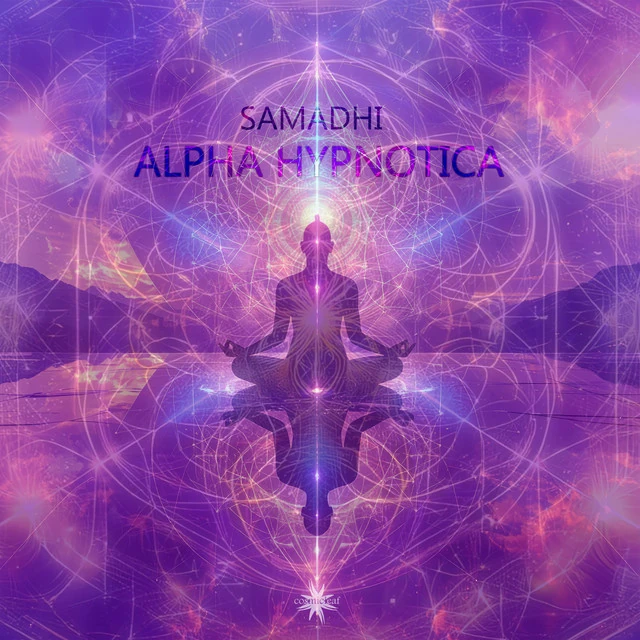
Back to that moment, because it has a name in yoga philosophy, and the album borrows it. Samādhi means absorption, a state in which the sense of a separate self falls away. Samadhi came out on 19 February 2026 on Cosmicleaf Records. So it treats that moment as a destination and lays out the road toward it in stages.
The structure runs on sevens. There are seven stages of absorption, seven chakras, seven levels of consciousness and seven pieces. Each piece sits in a different key, and in the duo’s own framing all of them rise from the same sense of oneness. Still, it is an unusually precise plan for music meant to help a listener let go of plans altogether.

Alpha Hypnotica Walk Samadhi From Laya to Nirvikalpa in Seven Long Pieces
So how does the album move? It starts with Laya, gentle soundscapes that ask for inward attention. It ends with Nirvikalpa, the stage of non-duality, where individual awareness merges with the whole. Between them, Bhava turns devotion into a slow rhythmic unfolding. Then Vitarka brings in tribal rhythms, winding acid lines and high overtones. Vicara is the most charged and ritual piece on the record. After it, Ananda, Asmita and the closing track grow quieter and longer.
The pieces take their time. The shortest, Vitarka, runs just under six minutes. The last two stretch to eight minutes and fifty seconds each, so the album runs close to an hour. Bhava and Vitarka appear as 2026 remasters, older pieces brought back to sit inside the new arc. Asmita has travelled furthest since: Arcane Trickster remixed it as a single, Asmita (Arcane Trickster Remix), in October 2026.
The sound, meanwhile, comes from three sources the album names itself: natural sound recordings, live instruments and analog synthesizers. Tomin, credited as Tomin Tomovic, mastered the album. The cover is a joint work with Cosmicleaf, the group of artists behind the label that released it.
Shpongle set the template for this kind of record. Simon Posford and Raja Ram formed the project in 1996. It became one of the first acts in psybient, a style that joins world music, psychedelic trance and ambient. Their debut album, Are You Shpongled?, came out in 1998. Samadhi sits in that lineage, with the acid lines and tribal rhythms of psychedelic music slowed down and turned inward.


What Samadhi Answers for Alpha Hypnotica and Listeners Looking for Stillness
Then there is the question the album answers: what music is for when the aim is stillness rather than motion. Alpha Hypnotica is the sonic union of soulmates Tomin and Emerencia, a married couple. Their own description of the project starts with own-recorded vocals, acoustic instruments and sounds from nature. It adds electronic, orchestral and cinematic elements, and lyrics with a spiritual undertone. Samadhi is the most structured expression of that plan so far.
Samadhi as a Map for Meditation
So its answer is that music can be a map. Each title names a stage from the classical yoga texts, so the album doubles as a sequence for meditation. Listeners can follow it from the first track to the last, the way a practice moves from attention to absorption. The idea for the project itself came to them at Ozora Festival in 2016. Since then they have played its stages. In November 2026 the album came back as Samadhi Instrumentals, with five of its pieces in instrumental mixes.
Deva Premal showed how far devotional music can travel. She is known for her performances of Sanskrit mantras. Her album Deva was nominated for Best New Age Album at the 62nd Grammy Awards. Alpha Hypnotica work in a related space, with Sanskrit in the titles and a spiritual purpose in every piece. So Samadhi carries that purpose to listeners of electronic music.
From the NewMusic.News curator team: “Few albums this calm are planned this carefully. Seven keys for seven stages gives Samadhi a quiet logic. You feel it even before you know it is there.”
This is for listeners who meditate with music and for fans of psybient and downtempo. It also suits anyone curious about electronic music made with a spiritual purpose. Then play it from start to finish, in order, and give it the hour it asks for.
The album is named for a moment when the watcher disappears into what is watched. Samadhi asks for the same kind of attention, one stage at a time.
Listen on Apple Music, Deezer and SoundCloud, and follow Alpha Hypnotica on Spotify, Instagram and Facebook.