
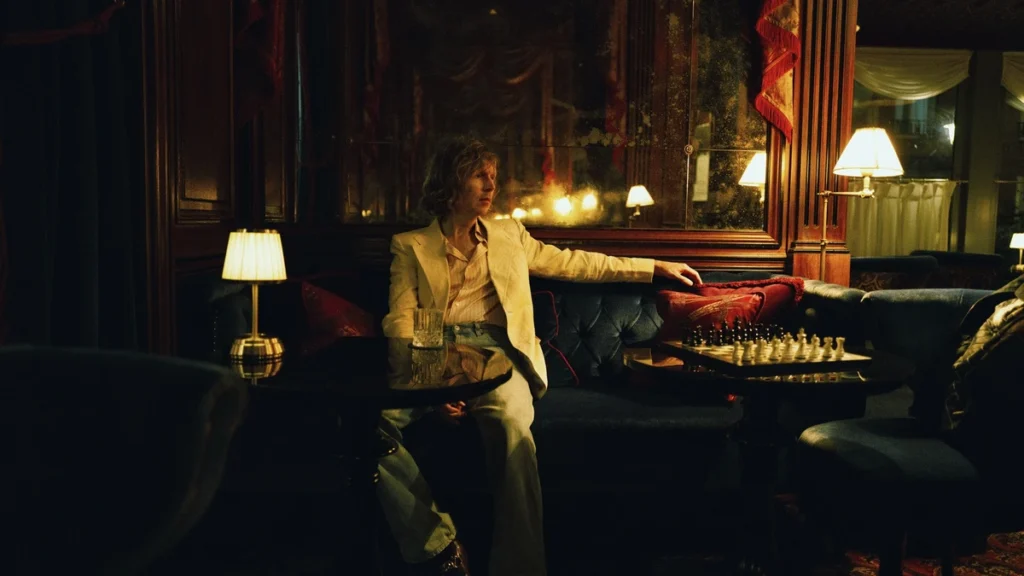
Beck’s Ride Lonesome Brings Back the Sea Change Players
Most of Ride Lonesome was made the old-fashioned way, with a handful of musicians in one room playing together in real time. Beck told NME that the bulk of the songs were recorded live, five people at a time, without patching the performances afterwards, so that what you hear is simply how the band sounds together in real time. The room was Room B at United Studios in Hollywood, and the people in it were the musicians who played on three of his most loved records.
Ride Lonesome is released on Friday 18 September through Capitol. It is Beck’s 15th studio album and his first collection of new songs since Hyperspace in 2019, according to Rolling Stone, and it arrives with a long North American tour already under way.
The Band That Made Sea Change Returns
The personnel is the first thing Beck’s longtime listeners will notice. According to the label’s announcement, Smokey Hormel, Joey Waronker, Justin Meldal-Johnsen, Roger Joseph Manning Jr. and Jason Falkner reunited with him for the sessions. All of them had recorded with Beck on Mutations, Sea Change or Morning Phase, and the last two in particular sit at the quieter, more acoustic end of a catalogue better known for genre collisions.
Beck described the group to NME as his own version of the Wrecking Crew, the loose circle of session players behind so many records of the 1960s, and said their musical chemistry had grown deeper and more nuanced over decades of working together. In a statement reported by Rolling Stone, he noted that a decade had passed since they last went into the studio to record Morning Phase, and that this time the playing and the chemistry felt as if they had evolved.
The band members have busy lives of their own. NME’s interviewer noted that Waronker joined Beck at the Royal Albert Hall last year during a break from touring with Oasis. Manning, the Jellyfish and Imperial Drag co-founder, releases his own album, Hopium, on the same Friday as Ride Lonesome, according to the Pause and Play release listings, which describe it as his first album in eight years.
A Record That Waited on a Shelf
Ride Lonesome could have come out much sooner. Beck told NME that he initially planned to finish the album and release it in 2023, but ended up shelving it for two years. He was not sure the songs were strong enough, he said, and was not in the right frame of mind for what a record like this demands once it is out in the world. In another era, he suggested, it would probably have been released a year and a half ago.
He was candid about why this kind of album takes time. Music this exposed cannot be knocked out quickly, he told NME: the singing and playing have to land on exactly the right emotion, and some days that simply does not happen. He said he had to sit with the material for a long while to understand how to sing it, how to play it and how to make it fly.
The songs themselves go back to the pandemic. Beck said many of them were written when he was stuck at home on his own for a couple of weeks. Rolling Stone, citing an earlier interview with NPR, reported that he had to wait a couple of years after Covid before he could get back to work, built his own recording studio, and spent much of the past four years in and out of the studio with his band, making several albums’ worth of music that he expects most people will never hear.
Beck in the Producer’s Chair, Godrich on the Mix
Beck produced Ride Lonesome himself. Nigel Godrich, who produced Sea Change and worked on Mutations, returned to mix the album, according to the label. That division of labour is visible in the singles. The label describes Disappearing Act, the third track released ahead of the album, as a song built on acoustic guitar and orchestration, produced by Beck and mixed by Godrich.
The orchestral colour has a clear origin. NME’s review recalls that Beck played two orchestral concerts at the Royal Albert Hall in London last spring, leaning heavily on Sea Change and performing it with an 85-strong team of musicians. At the time he said the shows had inspired him to work in the studio with an orchestra, while describing the work only as an undisclosed, unnamed project.
His interest runs deeper than one concert series. Beck told NME he has been drawn to orchestras for the past decade and, for a couple of years, went to hear one almost every week. He described the experience of dozens of musicians playing a piece together as beautifully counterintuitive in a world that keeps optimising and streamlining everything, and said he simply prefers music that comes from human effort.
Twelve Songs About Loss and Getting Through It
The album runs to 12 tracks: Ride Lonesome, Run Away, In the Night, Failed Words, Bleed, Disappearing Act, For Your Love, Slow Canyon, It Ends Right Here, Falling Through My Hands, If You Don’t Know What Love Is and Beyond the Light.
Beck was direct about the subject matter. He called it a heartbreak record, one about reckoning with loss and letting things go, covering romantic loss, the death of a good friend and the feeling of one era of life giving way to another. He told NME the record feels closer to Morning Phase than to Sea Change, and described its sound as slow-motion, twilight and acoustic.
He also explained why it took so long to write this plainly. The musical climate he came up in during the early 1990s was hostile to quiet, sincere songs, he said, and performers who strummed elegiac songs in bars and clubs could expect to be heckled. He recalled worrying for friends such as Elliott Smith and Lou Barlow, who were writing introspective music when it was deeply unfashionable, and said it took him a long time to find the courage to be this direct and emotional on record.
How the Songs Have Arrived So Far
The rollout began with the title track in April. The album was formally announced in July alongside In the Night, whose video was directed by Mikai Karl and stars the French actor Denis Lavant, according to Rolling Stone. Disappearing Act followed in August as the third preview.
Early reviews have been warm. The label notes a five-star lead review in MOJO. NME’s review describes the album as a meditation on heartache and solitude and places it squarely in the lineage of Sea Change and its 2014 successor Morning Phase. RIFF Magazine scored it eight out of ten, singling out Failed Words as a highlight and calling If You Don’t Know What Love Is some of his best work in decades.
From Vancouver to Nashville on Stage
The Ride Lonesome tour opened at the Queen Elizabeth Theatre in Vancouver on 16 September and runs until 31 October, when it ends at The Truth in Nashville. Along the way it visits the Santa Barbara Bowl and the Greek Theatre in Los Angeles, plays two nights each at The Masonic in San Francisco, Massey Hall in Toronto and the Brooklyn Paramount, and includes a date in Colorado on 1 October, according to the label’s itinerary. Several dates are already sold out.
Beck told NME the shows will be unlike any tour he has done before: slow and dark, with a sense of otherness and distance, closer to a theatre production than a rock concert. That fits a record so bound up with the spaces it was made in. NewMusic.News has looked at how a room shapes a record before, most recently when Olivia Dean found a house where no music had been made. For Ride Lonesome, the room was a familiar studio and the most important instrument was the band’s shared history, built over more than 25 years of playing together.