
NINJ on Time, Loss and the Making of No Replays
Two Decades in, a Denver Rapper Decides the Good Old Days Cannot Be Rerun
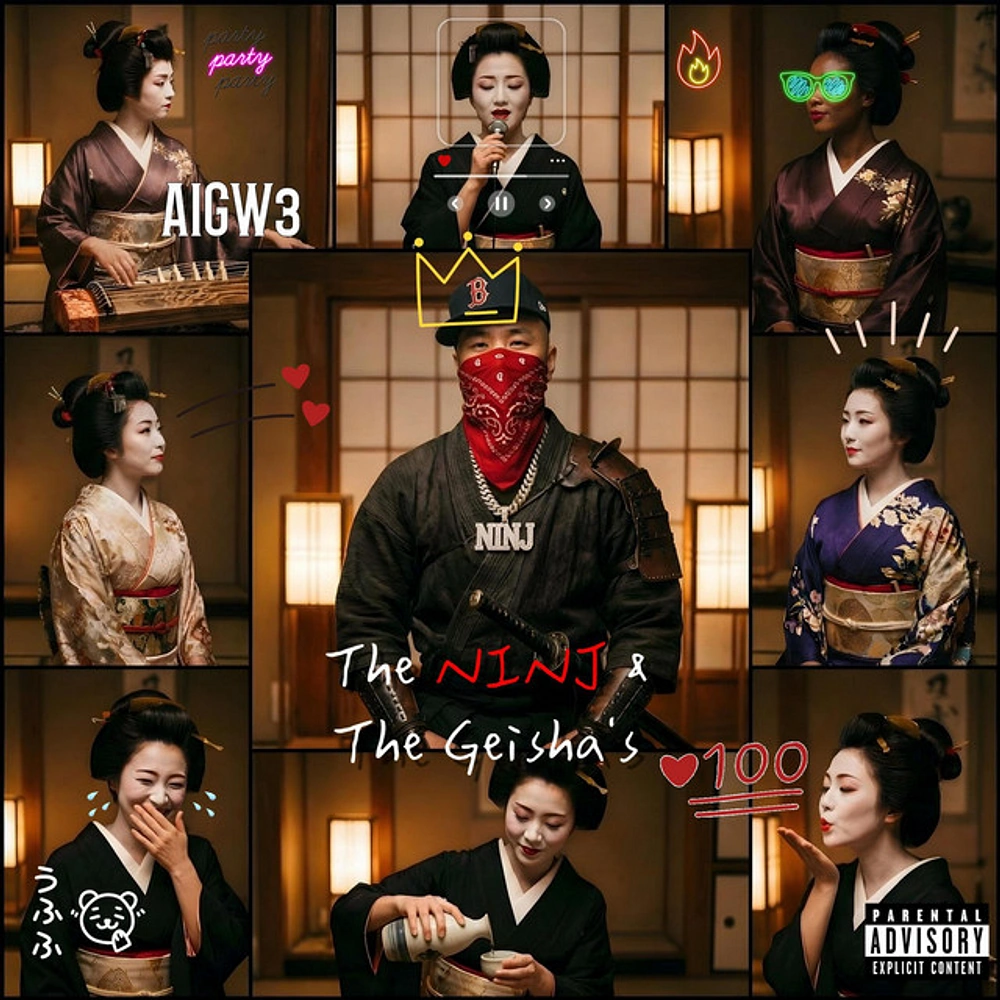
NINJ started out freestyling at house parties in Denver, trading verses with friends as a teenager. On No Replays, NINJ looks straight back at that era. The track sits sixth on The NINJ & The Geisha’s, the album NINJ released on 13 February 2026. Its central line says those days played out like a movie that cannot be rewound, so the hip-hop song reads as a decision to stop looking back.
NINJ is in the playlist below, so the Denver rapper’s reflective side is a single click away. The rapper’s full coverage history is collected on NINJ’s artist profile. No Replays came to this desk through PopHits.Co Music Charts, which verifies independent artists and places their releases across its network of music news titles. Listen to it first, then keep reading for the story behind the refrain.

Twenty Years of Writing Arrived All at Once When NINJ Released No Replays in February 2026
The artist’s own website tells the story plainly. NINJ’s bio introduces a songwriter, rapper, beat maker and producer from Denver, Colorado. There are more than 20 years of making music behind them. The early chapters are hard ones. Alongside those house-party freestyles came poetry written in juvenile detention, and homelessness at 14. By the artist’s own account, music was the one thing that made sense. Over the years it became a craft: producing records, shaping a sound and building songs from the ground up.
What changed recently is the pace. The first releases on Spotify arrived in September 2025, with the single GANGSTA and the 14-track album AIGW. AIGW 2 followed in December. Then came the singles No Pressure and Vibes in January 2026, and The NINJ & The Geisha’s on 13 February. Since then the run has barely paused. Operation Heavy Rotation landed in April, the 26-track Denver’s Finest in June and the 27-track Fresh Air in August. In December 2025, HipHopEargasm covered the single 12 True Colors. It reported that the song dated back more than two decades and had only now reached its finished form. That detail explains the speed. A long archive is finally coming out.
Listeners who value that kind of patience will find familiar company here. J. Cole built much of his reputation on producing his own beats and writing reflective verses about where he came from. NINJ works the same way, building the instrumental and the lyric together. Fans of Nipsey Hussle will also recognise the theme of persistence. His long-running The Marathon series turned keeping going into a creed. No Replays shares that conviction, delivered as melodic rap.

No Replays Looks Back at the Parties, Then Pulls Away
The most careful reading of the song so far came from the Spanish-language Revista Soundloop, on 22 February 2026. Its writer heard melodic rap, a sharp lyric and solid production. The review also traced how the verses move. The first half is full of remembered motion: parties, reckless youth, friendship, fast money and excess. Images of a rollercoaster, Mardi Gras, winter and turning wheels keep it moving.
Then the song interrupts itself. A recurring phrase, “But it’s time”, cuts across the nostalgia each time it starts to settle. The review read it as the point where memory gives way to maturity. Later, mentions of friends who are gone turn the look back toward grief. Even so, the vehicle in the lyric keeps rolling forward. That is why the title line lands the way it does: “these movies ain’t got no replays”.


Why NINJ Built No Replays Around a Refrain That Cuts the Nostalgia Short
That refrain also answers the question the catalogue raises: why is all this music arriving now? Revista Soundloop summed the song up as the moment someone understands that youth does not return. The only workable response, it argued, is to persist. In other words, the title is the thesis. Life offers no rehearsal, only the performance. So a writer sitting on two decades of songs has every reason to release them.
NINJ’s own description of the style fits the track closely. The artist talks about blending melodic rap with sharp lyricism and real emotion. The subjects are struggle, growth, discipline, identity and resilience. Some songs hit hard, and some are reflective. No Replays sits firmly on the reflective side, with a trap-leaning hip-hop sound under the melody. It stays warm in tone even when the subject turns to loss.
It has found listeners who share that taste. Hot New Songs Blog picked the track up on 23 February 2026 and filed it under hip-hop and rap. Meanwhile, the coverage around the album keeps returning to one theme: memory turned into motivation.
Where No Replays Sits on The NINJ and The Geisha’s
On the album, the song follows the opener Change The Song (Intro), then Vibes, Ghost Coastin’, No Pressure and Ever Present. After it come Man Up, Matador and Geisha Face. Vibes makes a useful companion. In February 2026, Blaze Muse and Kindline Magazine both heard it as a reflective record about memory and the people it honours. Together, the two tracks show the same writer looking at the past from two angles: one fond, one firm.
NewMusic.News’s curator team: “No Replays is a nostalgic hip-hop record with a deadline built into it. Every time the memories start to pull, the refrain pulls the song forward again, and that tension is what makes it worth a second listen.”
Start with No Replays and listen for the moments the refrain breaks the flashback. Then go back to Vibes on the same album. Finally, play Denver’s Finest to hear where the writing has gone since.
Stream NINJ on Spotify, Apple Music, Deezer and SoundCloud. Watch the official videos on YouTube, and find every release on the YouTube channel. Read more on the official site. Then follow along on Instagram, TikTok, Facebook and X.