Will Lisil

Founder of MW3.biz, building technology that empowers creators and democratising access to digital tools.

Meshell Ndegeocello Recast Fifteen Duets as Same-Gender Pairs

Islands in the Stream was written by the Bee Gees and recorded by Kenny Rogers and Dolly Parton. On Synonym it is sung by Meshell Ndegeocello and Chaka Khan. I Got You Babe belonged to Sonny and Cher; here it goes to Ndegeocello and ANOHNI. Golden Ring, a George Jones and Tammy Wynette record about a wedding ring passing between owners, is handled with Brandi Carlile.

The rule holds across all fifteen tracks. Every duet on the album is performed by two people who identify as the same gender, and the songs were chosen from a canon that almost entirely assumes otherwise. Ndegeocello’s third Blue Note album arrives on 2 October 2026, and that single constraint is the whole design.

Why the Album Is Called Synonym

She has been direct about what the title means. “This project is an expression of queer liberation as a synonym for liberation of all kinds,” she has said, and the record is built to demonstrate the point rather than argue it.

A duet is one of the few song forms with gender written into its architecture. The call and response, the harmony parts, the narrative of who is asking and who is answering were all arranged around an assumption. Removing the assumption and changing nothing else is a cleaner experiment than writing new songs would have been, because the listener already knows what these records are supposed to sound like.

Fifteen Songs From Four Decades

The source material runs from the 1960s to the early 2000s and refuses to sit in one genre. I Knew You Were Waiting (For Me), the George Michael and Aretha Franklin record, opens the album with Cynthia Erivo. Don’t You Want Me, the Human League’s, goes to Cat Power. It Ain’t Me Babe, Bob Dylan’s, is taken with Madison Cunningham, and With God On Our Side, also Dylan, closes the album with Bill Callahan and Chris Thile.

Elsewhere the list reaches into R&B and hip-hop: Don’t Stop The Music with Nick Hakim and Robert Glasper, Always on Time with Laura Lee of Khruangbin, Don’t Look Any Further with Lianne La Havas, The Closer I Get To You with Destin Conrad and Moses Sumney. Be Real Black For Me, the Roberta Flack and Donny Hathaway song, is sung with Emily King and Lizz Wright. Hunger Strike, the Temple of the Dog track, goes to WILLOW.

Nineteen guests is a large number for a record with any coherence, and the spread of idioms is deliberate. Ndegeocello has described the songs as diverse in tone and representative of various genres, and the effect is to show that the constraint is not a genre trick. It works the same way on a country weeper as on a synth-pop single.

The Producer Who Made Her First Two Records

David Gamson co-produces alongside Ndegeocello and Abe Rounds. Gamson produced Plantation Lullabies in 1993 and Peace Beyond Passion in 1996, which makes this a working relationship resumed after roughly thirty years.

That is a pointed choice given the subject. Plantation Lullabies was noted at the time for presenting a distinctly androgynous persona, and it was one of the first releases on Maverick Records. Returning to the producer of that record to make an album about who is allowed to sing to whom closes a loop that has been open most of her career.

Players Rather Than Features

The instrumental credits explain why this reads as a Blue Note album rather than a covers project. Abe Rounds and Deantoni Parks share the drums. Chris Bruce plays guitar. Jake Sherman, Jebin Bruni and Larry Goldings handle keyboards. Josh Johnson and Levon Henry play saxophone, Elena Pinderhughes plays flute, and Bela Fleck plays banjo.

Goldings, Johnson and Pinderhughes are serious jazz musicians, and Fleck’s banjo on a record containing Dolly Parton and George Jones songs is a straight-faced instrumentation decision rather than a joke. The band is fixed and rotating rather than assembled per guest, which keeps fifteen different vocal pairings sounding like one album.

Ndegeocello has framed her own role in production terms, saying she wanted to do more collective music and to show what she can do as a producer. For an artist whose reputation was built on bass playing and songwriting, that is a real repositioning.

Two Grammys in Two Years

She has thirteen Grammy nominations and three wins. The first came for Best R&B Song, for Better Than I Imagined. The other two are consecutive awards for Best Alternative Jazz Album, for The Omnichord Real Book and then No More Water: The Gospel of James Baldwin, which were her first two Blue Note releases.

Those were also the first Grammys to honour her own albums across a recording career of more than thirty years, which is a strange fact about an artist widely credited with helping to spark neo-soul. Winning the same category twice running, immediately after signing to a jazz label in her mid-fifties, describes a late-career surge rather than a legacy lap.

Go-Go Bands in Washington

She was born Michelle Lynn Johnson in Berlin in 1968 and learned to play in Washington, D.C. in the late 1980s, working with go-go bands including Prophecy, Little Benny and the Masters, and Rare Essence. The surname she adopted means free like a bird in Swahili.

Go-go is relevant to what she does now. It is a live, percussive, call-and-response idiom built on continuous grooves and audience exchange, and the habit of treating a song as something two parties do to each other rather than a fixed text runs directly into an album made of duets.

The label history since then reads like a map of an artist nobody could file: Maverick and Reprise, then Shanachie, EmArcy, Decca, Mercer Street, Naïve, and finally Blue Note in 2023. Seven labels across three decades usually indicates a commercial problem. In this case it tracks a musician who moved between R&B, rock, spoken word, covers projects and jazz faster than any single roster could follow, and the Blue Note run is the first time the catalogue and the label have been pointed the same way.

The Argument Underneath

Her other stated position on the project is disarmingly plain: whatever the differences between people, what they want underneath is much the same, and she has named healthy food and a safe place as the example. That is a modest claim to hang a fifteen-track album on, and the modesty is the point.

She has also said she is not defining anything, because the absence of definition is where she feels most free. A record that reassigns famous duets without rewriting a word is exactly that principle applied to material rather than to identity. Nothing is explained; the pairings simply happen and the songs turn out to work.

What Follows

She plays the Blue Note Jazz Club in New York on 18, 19 and 20 September 2026 in a trio configuration with Chris Dave and Eric Gales, ahead of the album’s arrival at the start of October.

A run of small-room dates before a guest-heavy studio release is the right sequencing for what this is, because the album’s argument is finally about performance rather than production. It sits alongside Immanuel Wilkins recording three albums across two nights at the Village Vanguard as evidence of what Blue Note is currently doing, which is signing musicians with a formal idea and then letting them execute it at length.
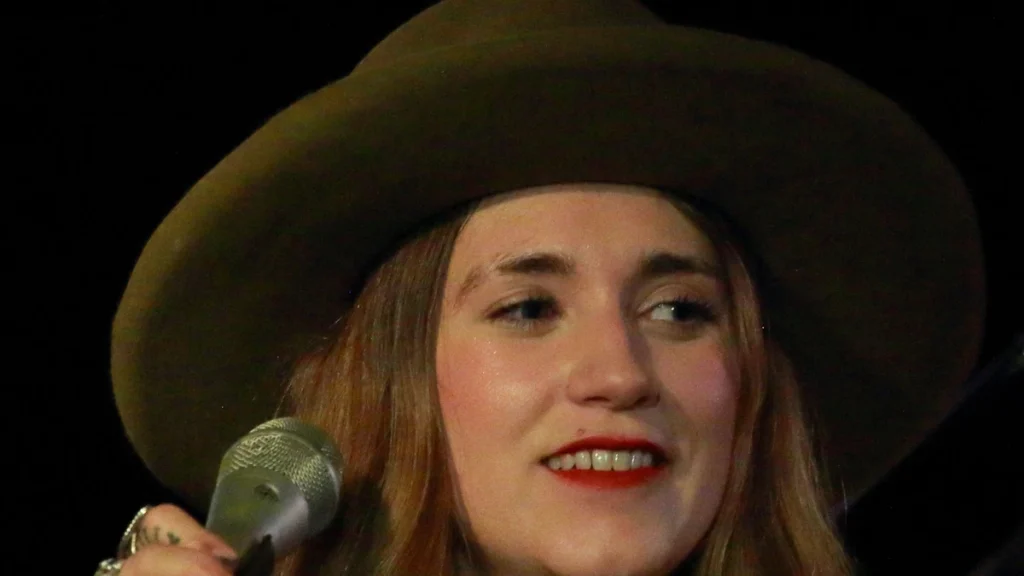

Sierra Ferrell Named Her Forty-Date Tour Heavy Petal

Her last album was called Trail of Flowers. The tour supporting whatever comes next is called Heavy Petal. The joke is doing a fair amount of work, because it signals that an artist who has just won four Grammys for a record of alternative country and bluegrass has no intention of behaving solemnly about it.

The run covers more than forty dates between May and October 2026, opening at McMenamins Edgefield in Portland on 30 May and finishing with two nights at Bridgestone Arena in Nashville in late October. In between it takes in most of the American festival circuit and a full European leg.

The Route

The American dates favour outdoor rooms and fairgrounds: the Salt Shed Outdoors in Chicago, the Santa Barbara Bowl, the State Fair of West Virginia, the Minnesota State Fair Grandstand, Artpark in Lewiston, Thompson’s Point in Portland, Maine. Festival appearances include Buckeye Superfest, Grand Targhee Bluegrass and the Bristol Rhythm and Roots Reunion.

Europe runs tighter and mostly indoors. Manchester Academy on 24 June, the Barrowland Ballroom in Glasgow the following night, then Le Trianon in Paris, Paradiso in Amsterdam and Gruenspan in Hamburg, closing at the O2 Forum Kentish Town on 7 July. The festival dates around them are large: Roskilde, Down The Rabbit Hole and Rock Werchter across three consecutive days.

Playing Roskilde and Rock Werchter is a specific kind of statement for an American roots act. Those are not Americana festivals; they are general European rock and pop bills where a fiddle and an upright bass are the exception. Booking them suggests the audience has outgrown the genre circuit.

One American date carries more weight than its billing suggests. On 16 August she plays the State Fair of West Virginia in Lewisburg, in the state where she was born and raised. State fairs are not prestige bookings and nobody takes one to advance a career. Playing the fair in your home state after a Grammy sweep is a different kind of decision, and it sits oddly and deliberately among the Santa Barbara Bowl and the European festival run.

A Dollar From Every Ticket

The tour runs a partnership with PLUS1 under which a dollar from every ticket sold goes to charity. North American proceeds are directed to the National Immigration Law Center.

Naming the recipient is the part worth noting. Tour charity tie-ins are common and usually vague, pointed at a general fund or left unnamed in the announcement. Specifying an organisation is a decision that will be read as a position, and it was made anyway.

Freight Trains, Not Bedrooms

Sierra Elizabeth Ferrell was born in Charleston, West Virginia in 1988 and grew up in a trailer with her mother. She was singing Shania Twain covers in bars at seven. The records she actually absorbed were nineties cassettes, 10,000 Maniacs and Tracy Chapman, rather than the bluegrass her home state is known for.

School brought clarinet and choir, then guitar. As a teenager she sang in a band called 600 lbs of Sin!. In her early twenties she left, hitchhiking and freighthopping and busking between Seattle and New Orleans, and that period is the one everything else is measured against. The New Yorker put it plainly, observing that she built her act not from the comfort of a bedroom but in freight-train boxcars.

That is not a marketing biography. It explains a specific thing about how she performs, which is that the material was tested on people who had not chosen to listen. Busking selects for songs that stop a stranger walking past, and it produces a vocal delivery built to carry without amplification.

Four Albums, Two of Them Self-Released

Pretty Magic Spell came out in 2018 and Washington by the Sea in 2019, both self-released. Rounder Records then issued Long Time Coming in 2021, which reached fifteen on the Billboard Americana and folk chart, and Trail of Flowers in March 2024.

The genre list attached to her is unusually long even by Americana standards: alternative country, bluegrass, folk, gypsy jazz, tango and calypso all appear in it. That is what a repertoire assembled on the street looks like, because a busker learns whatever holds a crowd rather than whatever fits a format.

The two self-released records matter to how the rest reads. They were made before any label was involved and before there was a version of her career worth protecting, which means the eclecticism was never a positioning exercise. By the time Rounder signed her the repertoire already existed in that shape, and the label’s contribution was distribution rather than direction. Very few artists arrive at a roots label with their strangeness already intact.

What the Grammys Did

At the 67th ceremony she won four awards in one night. Trail of Flowers took Best Americana Album. American Dreaming won both Best Americana Performance and Best American Roots Song. Lighthouse took Best American Roots Performance. She had already been named Artist of the Year and taken Album of the Year at the 2024 Americana Music Honors and Awards.

Sweeping a category set like that changes the booking conversation rather than the music, and the Heavy Petal routing is what the change looks like in practice. Three years ago she was playing clubs; the 2026 run includes state fair grandstands and two arena nights.

The Arena Nights Are Support Slots

The Bridgestone Arena dates on 22 and 23 October are opening for the Red Clay Strays, in her adopted home city. Taking a support slot for two arena shows after winning four Grammys is a deliberately unhurried move.

It is the same calculation Sturgill Simpson made by warming up for an arena tour in a bar with a two-hundred capacity. Both are artists who understand that the room teaches the set, and that arriving at an arena without having earned the arrangement in front of people is how a roots act loses what made it work.

No Album Yet

Nothing has been announced. Unreleased songs have appeared in recent sets, which is the usual signal, but Rounder has confirmed no record and no single. Announcing a forty-date tour before an album is a reversal of the standard order, where the release sets the schedule and the tour follows it.

The last twelve months suggest why she can afford to wait. In 2024 she recorded Never Love You Again with Post Malone and covered Someone Like You with Lukas Nelson, and in February 2026 she performed with Mumford and Sons on Saturday Night Live. That is a profile maintained without a new record, which removes the pressure to rush one.

The Sentimental Gentlemen

She tours with a band called the Sentimental Gentlemen, and no lineup change has been announced for 2026. Continuity matters more than usual here, because the arrangements depend on acoustic instruments played live rather than on a production that can be reproduced by any competent hired players.

That is ultimately what the Heavy Petal name is signalling. An artist who came up busking, who won four Grammys for a record named after flowers, and who is now taking a string band to Rock Werchter, is not going to pretend the situation is serious. The routing says the ambition is.

Pentatonix Booked Twenty-Eight Arenas for Six Weeks of Christmas

The first date is 5 November at the Tacoma Dome. The last is 22 December at the Kia Forum in Los Angeles. Between them Pentatonix play twenty-six other arenas, which works out to roughly one show every other night for seven weeks, all of it Christmas music. Tickets went on general sale on 14 August.

Six days before the tour opens, on 30 October, a deluxe edition of Christmas in the City arrives, adding ten songs to the sixteen on the original. That album came out on 24 October 2025 through Republic Records and is the group’s eighth Christmas record. The sequencing of album, then deluxe, then tour is the machinery of a seasonal business that Pentatonix have been building since 2012.

The Route

November runs west to east and back again: Tacoma, then Vancouver’s Rogers Arena, Bozeman, Casper, Lincoln, Milwaukee, Grand Rapids, Louisville, Buffalo, Cleveland, Pittsburgh, Hamilton, Charlottesville and Albany. December opens in Baltimore and works south through Columbia, Greenville, Raleigh, Nashville and Atlanta before turning west via North Little Rock, Bossier City, Austin, Fort Worth, Lubbock, Glendale and San Diego.

Two things stand out in that list. The first is how many mid-sized markets it includes: Casper, Wyoming and Bozeman, Montana are not standard arena-tour stops, and playing them in mid-November suggests an audience that is geographically spread rather than concentrated in major metros. The second is the pairing of Vancouver and Hamilton as the Canadian dates, both listed as firsts.

The density is the other notable feature. Twenty-eight arena shows inside forty-eight days means very few days off, and the run includes stretches of three shows in four nights. For a group whose entire instrumentation is human voices, that schedule is a physical proposition rather than a logistical one. There is no guitar to hide behind on a night when a voice is tired, and no backing band to carry a song, which is why a cappella acts historically toured less than their record sales would suggest they could.

What the Deluxe Adds

The original Christmas in the City runs sixteen tracks and forty-six minutes, opening with a twenty-one-second piece called Snow and closing on a Christmas Classics Medley. In between it moves between originals like Bah Humbug, Christmas Movie and Moody Rudy and standards including Holly Jolly Christmas, Silver Bells and Caroling, Caroling.

The deluxe brings ten more, made up of new material, covers and live recordings from the touring cycle. The lead single, released on 6 August, is a mashup of Get Happy and Happy Days Are Here Again, a pairing with a long history in American entertainment. Kirstin Maldonado has framed it as a tribute to the Christmas music of Hollywood’s golden age and the jazz era, which describes the whole record’s ambitions fairly.

A Big Band Without a Band

Scott Hoying has said the group wanted a big band orchestral sound with no rules, aiming for something “fun and bold and theatrical and camp” built around the idea of Christmas in New York. That is a demanding brief for five voices, one of whom is providing the percussion.

The a cappella constraint is what makes the record interesting rather than what limits it. Reproducing a brass section and a rhythm section vocally forces arrangement decisions that a real orchestra would make invisible, and the reviews picked up on it. The Associated Press’s Maria Sherman included it among the best holiday releases of 2025 and pointed to the group’s vocal athletics; another critic praised the multi-part arrangements, rhythmic precision and stylistic range.

Not Everyone Was Convinced

The reception was not uniform. Eric Saeger at Hippo gave it a B minus, finding the original songs largely unsuccessful while rating the traditional carol covers highly. That split is worth noting because it identifies the actual creative problem with a long-running holiday franchise: the standards are what the audience wants, and writing new Christmas songs that survive alongside them is close to impossible. The canon is effectively closed: most of what gets played every December was written between the 1930s and the 1960s, and the handful of later additions can be counted on two hands.

That is the trap every artist making an eighth holiday record walks into. Fill it with standards and you are competing against definitive recordings; fill it with originals and you are asking an audience to learn new songs during the one month a year they most want familiarity. Christmas in the City splits the difference roughly down the middle, and the reviews split along exactly that line.

Commercially the album performed as a catalogue release rather than an event, reaching twenty-eight on Billboard’s Top Album Sales chart and six on Top Holiday Albums. The bigger chart story came from a track rather than the record: the group’s version of I’ve Got My Love to Keep Me Warm, built around a Frank Sinatra vocal, reached number one on the Adult Contemporary chart last December.

How They Got Here

Scott Hoying, Mitch Grassi and Kirstin Maldonado were schoolmates in Arlington, Texas. Hoying recruited the other two for an audition on NBC’s The Sing-Off, adding Kevin Olusola, found through a video of him beatboxing while playing cello, and a bass vocalist. The five met the day before the audition and won the third season in 2011, taking a cash prize and a recording contract.

Matt Sallee took over bass duties in 2017. Along the way the group won three Grammy Awards: two for arrangement, in 2015 and 2016, and one in 2017 for a version of Jolene recorded with Dolly Parton. They received a star on the Hollywood Walk of Fame in February 2023 and signed to Republic Records in early 2025.

The label move matters more than it looks. Republic is a pop major, and arriving there after more than a decade elsewhere, immediately before an eighth Christmas album and a twenty-eight-date arena run, indicates a group being handled as a year-round commercial asset rather than a seasonal one. Two non-holiday singles this year, Heaven on Earth in February and Sacrifice in July, point the same way.

The Christmas Catalogue Is the Business

Eight Christmas albums in thirteen years, plus compilations, is a genuine body of seasonal work. That’s Christmas to Me in 2014 remains the commercial peak: number two on the Billboard 200, double platinum, the fourth best-selling album in the United States that year at 1.14 million copies, and the highest-charting holiday album by a group since 1962. A Pentatonix Christmas in 2016 eventually reached number one.

Building a career around a season that lasts eight weeks is a strange structure, and it works because the catalogue compounds. Every year the older records return to the charts, and every new one adds to the pool. The tour is the part that cannot be automated, which is presumably why it runs to twenty-eight arenas.

The Donation at Checkout

One detail sits outside the commercial logic. The tour partners with the Save The Music Foundation, a music education nonprofit, with an optional donation offered during ticket purchase. It is a small thing and easy to dismiss as brand alignment, though the fit is closer than most: a group formed by school friends, discovered on a television competition, funding school music programmes.

It also puts them in company with acts making deliberately awkward commercial choices this year, in the way Sturgill Simpson capped his own resale market at face value across a comparable arena run. Pentatonix are working the most commercial season in music and have added a line at the checkout that asks for money to go somewhere else.

Sturgill Simpson Warmed Up for an Arena Tour in a 200-Capacity Bar

The announcement went out about two hours before the doors opened. Twenty-five dollars, cash at the door, at The Cobra in Nashville, a room that holds two hundred people. Sturgill Simpson and his band then played for close to three hours. Nine days later he opens a twenty-nine-date arena tour.

That contrast is the whole story of where Simpson currently sits. Mutiny After Midnight, released in March under the Johnny Blue Skies name, went to number three on the Billboard 200 and topped both the Americana and rock album charts. The Mutiny for the Masses tour begins on 4 September at the Moody Center in Austin and finishes on 30 October at Rupp Arena in Lexington, Kentucky, with no opening act on any night.

Three Hours, Two Hundred People

The set on 26 August was his first full show since September 2025, which explains the length. According to JamBands, it opened with A Good Look from Sound & Fury, moved into the new album’s opening track, then returned to A Good Look, which is the kind of structural joke a band plays when nobody is watching from a distance.

What followed was less a rehearsal than an unusually long night out. The covers ran from Prince’s Purple Rain to Bad Company’s Feel Like Makin’ Love, played live for the first time, to Eddie Murphy’s Party All the Time and William Bell’s You Don’t Miss Your Water. The show closed on the band’s first ever performance of Talking Heads’ Life During Wartime.

The Band Behind the Alias

The Dark Clouds are Miles Miller on drums, Laur Joamets on guitar, Kevin Black on bass and Robbie Crowell on keyboards and saxophone, each credited on the record under a nickname: Easy Luvin, Little Joe, Black Daddy, Raw B. Simpson himself is credited as Johnny Blue Skies, plays rhythm and lead guitar and produced the album.

The nicknames are not entirely a joke. Presenting the group as a named band rather than a solo artist with sidemen matches how the record was made and how it plays live: a saxophone in a country band is not a guest appearance, it is a structural choice, and the material leans on it.

It is also the third distinct project name Simpson has operated under. He spent a decade building a reputation as a country traditionalist who kept refusing the label, then made a loud rock record in Sound & Fury, then a pair of bluegrass reworkings of his own catalogue, then adopted Johnny Blue Skies for 2024’s Passage du Desir and again here. Retiring your own name at the point of greatest recognition is a strange career move, and it has been consistent enough across two albums now to read as a working method rather than a stunt.

An Album Released on Purpose Awkwardly

Mutiny After Midnight came out on 13 March 2026 through High Top Mountain and Atlantic Outpost, and it arrived as a physical-only release, no streaming at launch. Nine tracks run forty-five minutes, recorded at Easy Eye Sound in Nashville, mixed and engineered by M. Alan Parker with Howie Weinberg mastering.

Physical-only is an unusual decision in 2026, and it did not entirely hold: the album leaked to YouTube on 1 March, twelve days ahead of release. It still opened at number three. Charting that high with a release strategy that actively removes the largest distribution channel is a fairly precise measurement of how committed the audience is.

Disco, Funk and a Country Chart

The music is not what the Americana chart position implies. The record moves through funk rock, disco and country rock, and Simpson has described it as a protest against oppression and suppression, with what he called unfiltered and relentless disco-hedonism as the antidote. The opening track is a profane inversion of a political slogan, and it sets the register for everything after it.

Reviewers responded to the swerve rather than resisting it. Pitchfork’s Stephen M. Deusner heard disco and country rock working together; Paste called the album uncensored, depraved and totally batshit; Rolling Stone read it as joyous. Consequence framed it as Simpson dancing on America’s grave, which is a review headline but also a reasonable summary of the tone.

Songs Built for a Long Night

The track lengths explain why a warm-up set ran to three hours. Ain’t That a Bitch is six minutes forty-two, Venus six minutes three, Situation five forty-four, Viridescent five fourteen. Only Excited Delirium, at two minutes and two seconds, is short. This is a record designed to be stretched on stage rather than reproduced.

The Cobra setlist bore that out, running through Stay On That, Everyone Is Welcome, Excited Delirium, Venus, Ain’t That a Bitch, Viridescent, Don’t Let Go and Situation, which is very nearly the whole album, alongside older material like Welcome to Earth (Pollywog). A band that plays eight of its nine new songs at a bar gig is not testing which ones work.

The chart spread underlines how awkwardly the record sits in any single lane. Number one on the US Americana and Folk chart and number one on Top Rock and Alternative, simultaneously, for an album whose dominant mode is disco. Internationally it reached seventeen in Scotland, eleven on the UK Americana chart and seven on the Croatian international chart. Those are the numbers of a record that different territories filed under different genres because none of the available boxes fits.

Twenty-Nine Arenas, No Support

The tour routing is substantial: from Austin through New Mexico, Arizona, California, Washington, British Columbia, Oregon, Colorado, Missouri, Minnesota and Illinois in September, then Nashville on 2 October and on through Indianapolis, St. Louis, Columbus, Pittsburgh, Detroit, Boston, Philadelphia, Brooklyn, Washington, Raleigh, Charleston, Atlanta and New Orleans before Lexington.

Booking arenas with no opening act is a statement about how the evening is meant to work. It also puts the full weight of a three-hour show on one band every night, which is presumably why the warm-up happened in a room where nothing was at stake.

The choice of closing venue is not incidental either. Rupp Arena is in Lexington, and Simpson grew up in Kentucky; ending a national arena run there rather than in a larger market is the sort of routing decision made for reasons that have nothing to do with ticket sales. The same instinct runs through the September leg, which crosses into British Columbia and works through secondary markets in the mountain west before turning east.

Tickets at Face Value

The detail most likely to outlast the tour is the ticketing. Simpson routed resale through Ticketmaster’s Face Value Exchange and AXS Resale, so fans reselling tickets can only do so at the original price. That removes the secondary-market margin entirely rather than capping it.

Artists complain about scalping constantly and rarely give up the revenue that flows from tolerating it. Doing that across twenty-nine arena dates, having already released the album on physical media only, describes an operating philosophy that is consistent even where it is commercially inconvenient. The two-hundred-capacity bar show a week before the first arena fits the same pattern, and so does Zoh Amba’s decision to set aside the instrument that made their name. Neither is the move that maximises anything except the work.

Zoh Amba Put Down the Saxophone and Went Home to Tennessee

The first thing on Eyes Full is a guitar figure, plainly played, and a voice singing about a child whose medication changes how the world looks. The song is called OCD, it runs four and a half minutes, and there is no saxophone anywhere on it. For anyone who knows Zoh Amba’s work, that absence is the loudest thing about the record.

Amba spent the first years of their career as one of the most physically committed saxophonists in New York’s free jazz scene, a player critics reached for Peter Brotzmann and Albert Ayler to describe. Their first album, O, Sun, was produced by John Zorn. Eyes Full, released by Matador Records on 5 June 2026, is thirteen guitar songs with singing on them, and it was made by going home.

Kingsport, Tennessee

Home is Kingsport, in the north-east corner of Tennessee, and the return is both literal and structural. Guitar was Amba’s first instrument before the saxophone, so the record reaches back past the work they are known for to something earlier. The label frames the album as muddy, loose blues with sweet burnishes of Appalachian folk, which is accurate as far as it goes and undersells how much noise is in it.

The subject is the town rather than the self. Amba has described the songs as being about people who really need to be seen and heard, and the record keeps its attention on working-class lives in places that do not get written about. Dead End Street is a driving Southern rocker built over layers of guitar noise, and its subject is small-town American life without any of the softening that phrase usually carries.

Every Song Is About Looking

The unifying idea is stated in the title and then worked through thirteen times. Eyes Full, Child You’ll See, Smile With Your Eyes: the track list alone tells you what the record is circling. KLOF Mag identified vision as the thread running through all of it, tied to being noticed, to care, to belonging and to divinity.

That last one is not decorative. Amba practises monastic Hinduism, and the search for faith surfaces repeatedly, most directly on Another Time, the lead single, and on Weed Eating, which the same review called an extraordinary character study. A record about being seen, written by someone with a religious practice, is not really about visibility in the social-media sense. It is about being witnessed.

That framing also explains why the album resists the obvious autobiographical reading. Amba is the one who left the small town and made a name somewhere else, which is the standard shape of this kind of record: the narrator returns, observes, and reports. Eyes Full mostly declines the narrator’s vantage point. The songs sit level with their subjects, and the recurring language of sight is applied to other people at least as often as to the singer.

What It Sounds Like

The palette is wider than the folk description implies. OCD opens on minimal guitar and finds a chorus that sounds drawn from old, strange American songcraft. PG Tips sets nagging strums against screeching electric guitar. Thousand Years travels from bluesy licks into something closer to emo crunch, and Blueberry Thorn breaks down into what the review fairly called an avant-country finale.

Against those are the quiet ones. Southern Soil is a shuffling acoustic piece where the voice jumps and skips with emotion held back too long. Emahoy is sweetly acoustic and apparently casual while staying completely controlled. On the title track Amba’s voice sounds cracked and strong at once, old and ageless, which is the register the whole album is reaching for.

The Band Behind It

Amba did not do it alone. Jim White plays drums and Kevin Hyland plays lead guitar, and the trio’s instrumental approach has drawn comparisons to The Band, which is a compliment about interplay rather than about sound. The arrangements leave the guitars room to be ugly when the song wants it, and the drumming is loose in a way that a session player would have tidied away.

Thirteen tracks run just over forty minutes, and only one passes four minutes. Odd Jobs lasts two minutes and one second. That compression is unexpected from a musician whose free jazz work regularly runs to long-form improvisation, and it is the clearest sign that this is genuinely songwriting rather than an improviser borrowing the format.

The sequencing supports that reading too. The two most abrasive pieces, PG Tips and Child You’ll See, sit at eleven and twelve, deep in the second half, where a record aimed at winning over a new audience would have buried them or cut them. Placing them there and then closing on Smile With Your Eyes, a folk-rock track that folds in Southern Appalachian mountain music, gives the album a shape that returns to where it started rather than resolving outward. The circularity is deliberate: a record about seeing ends by handing the phrase back.

The Reviews Split

Reception has been genuinely divided, which is more interesting than acclaim would have been. One critic called it a wild, beautiful thing; another found it a missed opportunity. KLOF Mag landed emphatically on the positive side, calling it so complete and accomplished that it is hard to believe it is a first attempt at songwriting.

The split is easy to understand. Listeners who came for the saxophone playing that earned Amba their reputation will find none of it, and the songwriting, while strong, is working in a crowded field where Adrianne Lenker has already set the terms. Judged as a debut in an unfamiliar form, it is remarkable. Judged against the free jazz records, it is a different artist entirely, which is the point.

Why the Pivot Reads as Honest

Musicians change lanes for all sorts of reasons, and commercial ambition is usually somewhere in the mix. That reading does not fit here. A free jazz saxophonist with an avant-garde following does not increase their audience by making an album of Appalachian-tinged guitar songs about a Tennessee town, and Matador is not a label that requires it. If anything the move costs an audience: the free jazz constituency is small but devoted, and it does not automatically follow a player into songwriting.

The press around Amba’s saxophone work makes the contrast sharper. The Guardian described scalding emotional intensity and wildly uplifting music; The New York Times wrote of passion coming from somewhere deep inside alongside a soft and prayerful side. Those are notices most improvisers spend a career trying to earn. Setting that down to sing about odd jobs and weed eating in a Tennessee town is a decision that only makes sense if the songs were the point.

What the record sounds like instead is someone dealing with material they could not get at through improvisation. KLOF Mag read the return to Kingsport and the return to guitar as the same movement, an acceptance of the past that includes some difficult childhood memories. That is a hard thing to play on a saxophone and a straightforward thing to write a song about, which may be the whole explanation.

Where It Sits

Coming from the improvising world into songwriting is a well-worn path, and it usually produces respectful, slightly stiff records. This one is neither. It is unpredictable across its thirteen tracks and it commits fully to a form its maker had not previously worked in, in the same spirit as Immanuel Wilkins releasing three volumes of unedited live playing rather than one tidy album.

Both are musicians declining to give the audience the version that would be easiest to sell. Amba’s case is the more extreme, because it involves setting aside the instrument the audience came for. On the evidence of Eyes Full, the songs were always there underneath.

Turnstile Put Elton John and a Death Metal Band on the Same Album

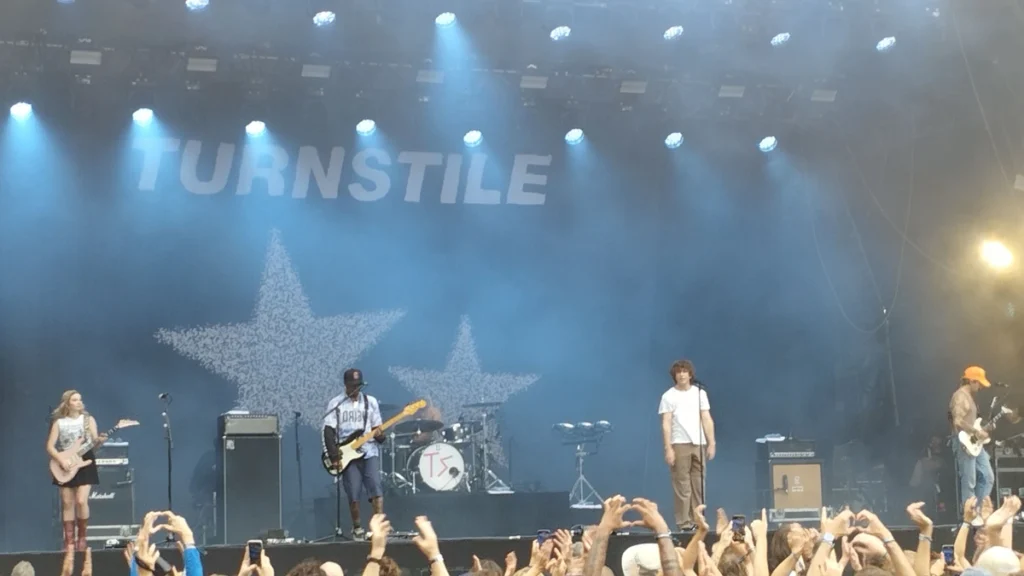
Somewhere on the guest list for Never Enough: Versions, Elton John’s name sits a few lines away from Dying Fetus, a death metal band from Maryland whose song titles are not printable in most contexts. Both are reworking material from the same album. That single fact tells you more about where Turnstile have arrived than any chart position does.

The record is out today, 28 August 2026, and it reinterprets Never Enough, the band’s fourth album, which came out on Roadrunner in June 2025 and won Best Rock Album at the 68th Grammy Awards. More than twenty artists contribute. When the project was announced a week ago, the band had not said which guest had taken which song, and that omission looks deliberate.

The Guest List Is the Statement

Read it in full and the logic emerges. There are pop figures of the largest possible scale and there is extreme metal. There is electronic music from several unrelated corners: Four Tet, Floating Points, A. G. Cook, Kettama, Dan Deacon. There are songwriters working in confessional registers, Julien Baker and Mustafa and Faye Webster, alongside Blood Orange, Oklou, Porches, Alex G, Chanel Beads and Nourished by Time.

Then there are the Baltimore inclusions, which are the ones that explain the rest. Rod Lee is a Baltimore club producer. Brandon Woody is a Baltimore trumpeter. Angel Du$t is a band Turnstile members play in. A remix album assembled purely for reach would not bother with any of them, and their presence turns the project from a marketing exercise into something closer to a map of where the band actually come from.

What They Are Reworking

Never Enough runs fourteen tracks and forty-five minutes, produced by the band’s singer Brendan Yates, with Will Yip engineering and contributing additional production, and A. G. Cook adding production to Dull. It arrived after three singles: the title track in April 2025, then Seein’ Stars paired with Birds later that month, and Look Out for Me in May.

The album is already an unusual object for a hardcore band. Look Out for Me runs nearly seven minutes; Ceiling lasts seventy-three seconds. Kerrang! called it cinematic in scope and execution and made it their album of the year. The Guardian, giving it four out of five, described a profusion of ideas deftly handled. Metacritic settled at 83 from nineteen reviews. Pitchfork was cooler at 7.8, hearing 1980s nostalgia in it.

The structure is what makes it reworkable. A record built from uniform three-minute songs offers a remixer one obvious job: change the drums, extend the intro, deliver a version. Never Enough does not offer that. Its lengths run from Ceiling at seventy-three seconds to Look Out for Me at six minutes forty-four, and the album keeps interrupting itself with short instrumental passages that function as breathing room rather than transitions. Handing that to twenty-three artists produces twenty-three different problems rather than one repeated exercise, which is presumably the point.

Five reviewers gave it full marks, including Kerrang!, NME and The Arts Desk, while Rolling Stone stopped at three and a half out of five and AllMusic gave four and a half. That spread of enthusiasm without consensus is characteristic of records that cross over from a scene: the outlets closest to the genre were the most emphatic, and the general-interest press admired it at a slight distance.

A Hardcore Band at Number Nine

Commercially the record did something the genre rarely does. It entered the Billboard 200 at nine, the highest placing of the band’s career, on 38,000 album-equivalent units of which 27,500 were pure sales. It went to number one on both the US Top Hard Rock chart and the UK Rock and Metal chart, eleven in the UK overall, five in Australia and seven in Germany.

Then the year-end lists arrived and the spread was telling: first at Kerrang!, fourth at Exclaim!, eighth at NME, tenth at Billboard, fifteenth at The Guardian, eighteenth at Consequence, thirty-first at Rolling Stone. Publications with no shared readership all found room for the same hardcore record, which is the precondition for a guest list this wide.

Two Grammys, and Which Ones

At the 68th Grammy Awards the band won Best Rock Album, and Birds won Best Metal Performance. They were also nominated for Best Rock Performance for the title track and Best Alternative Music Performance for Seein’ Stars.

Those four nominations sit in three different genre families, which is the institutional version of the same point the guest list makes. Birds runs two minutes and twenty-six seconds and was judged metal; Seein’ Stars, from the same session and the same album, was judged alternative. The band did not change between tracks. The categories simply could not agree on what they were listening to.

Ninety-Four Shows and Counting

The touring has been relentless. The Never Enough Tour opened in Nashville on 15 September 2025 and ran to 94 shows across nine legs, through North America, Europe, Australia and New Zealand, Latin America and Asia, originally closing in Australia in January. Venues climbed accordingly, from clubs to Forest Hills Stadium in Queens, Alexandra Palace in London and the Palau Sant Jordi in Barcelona.

More than thirty-five support acts appeared across it, and the choices repeat the pattern: hardcore institutions like Hatebreed, Terror and Agnostic Front on some nights, Blood Orange, Yves Tumor, Clipse and Vince Staples on others. The 2026 festival run took in Coachella across both weekends, Lollapalooza in Chicago, Austin City Limits across two weekends in October, Fuji Rock, Outside Lands and Osheaga.

Ninety-four shows across five continents in roughly sixteen months is a workload closer to a legacy act’s than a hardcore band’s, and it explains why the reissue arrives when it does. The album has been played nightly for a year; the songs have already been reshaped once by the road before any guest touched them. A remix collection released at the end of that cycle is documenting a record that has stopped being fixed rather than one that was ever finished.

Pt. 2, and the Nonprofits

Never Enough Tour Pt. 2 opens on 9 September in Milwaukee, a sixteen-date headline run with curated bills rather than a single support act. The lineups again refuse to pick a lane, mixing Clipse and Vince Staples with Hatebreed, Pennywise, Ceremony, Cold World and Texas Is the Reason.

The detail worth noting is that the band are partnering with local nonprofit organisations at every date, with an on-the-ground presence at each stop. That is a hardcore-scene convention scaled up to amphitheatre level, and it is the clearest sign that the band’s growth has not come with a change of operating principles.

Why the Anonymity Matters

Withholding which artist took which track is the most interesting decision in the whole project. A remix album normally sells itself on exactly that information: you go to the track by the person you already like. Removing the index forces a listener through the record in order, which is how the band sequenced the original, with its seventy-three-second interludes and its seven-minute centrepiece.

It also protects the thing that made Never Enough work. This is a band who won a metal Grammy and an alternative nomination for two songs recorded in the same room, in the same way Leon Thomas took Best R&B Album for a record he produced himself after years of being credited on other people’s. Turnstile have spent an album cycle refusing to be sorted. Handing twenty-three artists the same fourteen songs, and declining to label the results, is the most consistent thing they could have done next.

Ezra Furman Made an Orchestral Emo Record About Losing Control

The first sound on Goodbye Small Head is a string section, and the second is a synth humming somewhere underneath it. Then a breakbeat arrives, skittering and slightly wrong-footed, and a voice starts asking to be let out of a moving car. Ezra Furman has a phrase for the combination: an orchestral emo prog-rock record sprinkled with samples. It is an unwieldy description, and it is accurate.

The album came out on Bella Union on 16 May 2025, produced by Brian Deck and recorded in Chicago, where Furman is from. Twelve songs run forty-two minutes. It reached number three on the UK Independent Albums chart, and in January she takes it across Europe and Britain for fourteen nights, opening at Arena Wien in Vienna on the 19th.

Where the Songs Came From

Furman has been open about the circumstances. The material arrived in a rush after a period of illness in early 2023, and she has described the writing as happening inside the experience rather than after it: “This poetry, my poetry, arrived in the midst of the storm. It was written as I teetered toward the edge.”

She is precise about what that does and does not mean for the songs. “They’re not about someone going off the rails,” she has said, “they are inside that person’s heart.” That distinction matters to how the record works. It is not a set of case notes written in retrospect, and it does not resolve, because it was not made from a position where resolution was available.

The Sound of Losing Control

The production carries the argument. Sweeping strings sit against low synths and chopped-up voice samples, and the rhythm section keeps declining to settle. Furman has said the twelve songs delineate a loss of control through means both conventional and not, listing weakness, heartbreak, mysticism, drugs, and living in society with your eyes open.

Set against that lyrical content, the arrangements are unexpectedly lush. Mojo called it her calmest record, flecked with ballads and strings, which is a fair reading of the surface and slightly misses what is underneath. The calm is the frame, not the subject. Putting an unravelling into an orchestral setting is a compositional decision that makes the unravelling more legible, not less.

Four Songs That Show the Method

Jump Out opens on buoyant strings and that low hum, with Furman wailing at a driver who has no intention of stopping. Grand Mal is the most developed of the openers in her catalogue, lush and swaying, and, as The Line of Best Fit observed, oddly lullabying for a song about a seizure.

You Mustn’t Show Weakness sets brooding breakbeats under a mantra Furman directs at herself, an instruction not to fold. A World of Love and Care is the album’s most affecting stretch, built on questions about what a society actually guarantees anyone. The record closes on I Need the Angel, the one song here Furman did not write, an electric reading of an Alex Walton composition delivered with heartland rock riffage.

The rest of the running order keeps widening the palette rather than settling it. Sudden Storm and Power of the Moon sit early, the latter the longest thing on the first half at four and a half minutes. Submission, Veil Song and Slow Burn run consecutively through the middle, and You Hurt Me, I Hate You is the bluntest title on a record otherwise inclined toward metaphor. Strange Girl follows it. The bossa nova influence that reviewers kept noting surfaces in the rhythmic feel of these central tracks rather than in any single arrangement, which is why the album can move between genres without ever sounding like a compilation of styles.

What the Reviews Landed On

The reception was strong and unusually consistent about why. DIY gave it four and a half out of five and called the lyrics some of her finest, unafraid of the darkest corners. Hot Press scored it eight out of ten and identified the theme precisely: the songs are explicitly about the act, and the art, of losing control.

The Line of Best Fit’s Dom Lepore gave it seven out of ten and framed it as a novel and necessary display of fervour in a hypervigilant era. MusicOMH went four out of five, describing Furman as one of the most exciting songwriters working. Nobody found it an easy listen, and nobody suggested it should have been.

The commercial pattern matched that critical one. Number three on the UK Independent Albums chart is a genuine result for a record on a label the size of Bella Union, and it sits alongside 23 on UK Album Downloads and 38 in Scotland. Those are the numbers of an artist with a committed audience rather than a broad one, which is the position Furman has occupied for most of a career now spanning more than a decade and a half, first with bands and latterly under her own name.

Fourteen Nights in Winter

The touring plan is dense. January runs Vienna, then Graz’s Dom Im Berg, Linz’s Posthof and Munich’s Strom on consecutive nights, followed by Prague, Berlin’s Columbia Theater, Hamburg’s Molotow, Amsterdam’s Paradiso Tolhuistuin, Antwerp’s Trix Club and Le Cabaret Sauvage in Paris. February brings Glasgow’s Art School, New Century Hall in Manchester, Bristol’s Electric, and the O2 Forum Kentish Town in London on the 4th.

Those are club and mid-size rooms rather than arenas, which suits material this intimate, and the routing is the compact European circuit an independent-label artist plays when the record has done well without crossing over. North American dates ran through the second half of 2025, so the UK and European leg is the album’s long tail rather than its launch.

Winter routing of that density also tells you something about how the show is built. Ten European dates inside eleven nights leaves no room for elaborate staging or a large touring party, which points to a set carried by the songs and a small band rather than by production. For a record this dependent on strings and samples, reproducing it live is the interesting problem, and the venues suggest the answer is rearrangement rather than replication.

Why It Reads as Queer Music

Furman is a trans woman and has written about faith, gender and belonging across her catalogue, but the reason this record belongs in that conversation is structural rather than topical. Very little of it is about identity in a declarative way. It is about being unable to trust your own footing, and about the gap between how you are managing and how you are required to appear.

That is a queer record in the sense that matters: it treats the pressure to present as composed as the actual subject, rather than as background. You Mustn’t Show Weakness is the clearest statement of it, an instruction delivered to oneself in a voice that plainly does not believe it.

An Artist Who Kept the Framing

What comes through across the album, the interviews and the reviews is how firmly Furman has held onto her own account of the record. She named the genre, defined the subject and drew the line between writing from inside an experience and reporting on it afterwards. Critics have largely adopted her terms, which does not always happen.

It puts her among a set of artists currently insisting on authorship over the frame as well as the music, in the way Leon Thomas spent two decades producing for other people before making the record with his own name on it. Furman’s version is quieter and harder to sell, and the fourteen January dates suggest an audience that turned up for exactly that.

Leon Thomas Won Best R&B Album With a Record He Produced Himself

There is a moment in most producers’ careers where they stop giving the good idea away. Leon Thomas reached it late. He had spent two decades in the industry, much of it writing and producing for other people, and in 2024 he won a Grammy for production work on a single that carried somebody else’s name. Two years later he won Best R&B Album for Mutt, a record he made largely for himself.

The 68th Grammy Awards also nominated Mutt for Album of the Year, which is a different order of recognition. Best R&B Album is a genre prize; Album of the Year is a claim about the whole field. For a record released in September 2024 on EZMNY and Motown, arriving without a marketing campaign of the size those nominations usually imply, that is an unusual trajectory.

The Long Approach

Thomas was born in Brooklyn in 1993 and has been working since 2003. He started as a child actor on Broadway, appeared in The Lion King, then moved into television. The music came alongside, and for years it came mostly on other people’s records. He signed to EZMNY in 2022 and released his own debut, Electric Dusk, the following year, with Victoria Monet, Benny the Butcher and Ty Dolla $ign among its guests.

The acting was not a footnote either. He appeared on Nickelodeon’s Victorious and later on HBO’s Insecure, and his label history runs through Columbia and Rostrum before EZMNY and Motown. He is also a member of the group The Rascals. A career that scattered is usually a sign of someone searching for the right format; the interesting thing about Mutt is how settled it sounds by comparison, as though the searching finished somewhere before the recording started.

That is a twenty-year run-up to a breakthrough, and it shows in the record. Mutt does not sound like a first attempt at anything. The arrangements sit low and unhurried, the vocal is mixed close, and the writing assumes a listener who will stay for a whole album rather than a playlist placement. Those are choices made by someone who has watched a lot of records get built.

What the Album Actually Sounds Like

The palette is neo-soul with harder edges. Across fourteen tracks the record moves between the hushed and the abrasive, with hip-hop drum programming underneath and psychedelic textures at the corners. The Recording Academy’s own write-up reached for D’Angelo, Musiq Soulchild and Maxwell as reference points, which locates the vocal lineage accurately without quite capturing how much rock guitar is in it.

The guest list is used sparingly for a modern R&B album: Masego on Lucid Dreams, Wale on Feelings on Silent, Ty Dolla $ign on Far Fetched, Baby Rose on I Used To. Nine of the fourteen tracks have no feature at all. AllMusic gave it four stars out of five. The production credits run long, including James Fauntleroy, Conductor Williams, Aaron Paris and Khristopher Riddick-Tynes, with Thomas himself among them throughout.

The Title Track Did the Work

Mutt arrived as a single on 8 August 2024, seven weeks before the album, and it became the thing that carried the record. It reached number one on Billboard’s Hot R&B Songs chart, number one on Adult R&B Airplay and on the UK R&B singles chart, and climbed to 13 on the Hot 100. It is certified platinum in the United States.

The record also closes with a remix of the title track featuring Freddie Gibbs, which is a deliberate move: putting a rapper on the last version of the song that broke the album lets the project end by pointing outward rather than resolving inward. The album’s own chart performance was more modest: 35 on the Billboard 200, 8 on Top R&B/Hip-Hop Albums, 30 on the UK R&B albums chart, with a gold certification. That gap between a platinum single and a gold album is the ordinary shape of contemporary success, and it makes the Album of the Year nomination more striking rather than less. The voters were not following the sales.

A Deluxe That Changed the Argument

On 30 May 2025 he released Mutt Deluxe: Heel, adding nine tracks. Deluxe editions are usually a streaming-era manoeuvre, a way of restarting a release cycle with offcuts. This one behaved differently, bringing in Kehlani, Big Sean, Halle and Chris Brown and pushing further into rock textures than the original had.

It also extended the record’s life through the awards window, which matters. Two more singles came off the project long after release, Rather Be Alone in April 2025 and Yes It Is that September, a full year after the album. Sustaining a campaign across eighteen months is how a record that opened at 35 ends up nominated for Album of the Year.

The Producer Who Kept the Song

The 2024 production Grammy is the detail that reframes everything else. Winning as a producer establishes that the industry already trusted his ear; the people making the biggest R&B records were hiring him. What it did not establish was whether he could carry a record as the voice on it.

Plenty of successful producers never manage that transition, and the failure mode is predictable: an album that sounds expensively made and emotionally vacant, because the person assembling it is more comfortable solving problems than exposing anything. Mutt avoids that by being unusually direct about wanting things, being unsure, and behaving badly. The title is not flattering, and it is not meant to be.

The Tour That Sold Out

The Mutts Don’t Heel world tour sold out across the United States, and the live setting suits the material. This is a record built on musicians rather than sequencing, so the songs survive being played by a band without the arrangements thinning out. He has also worked the television circuit hard, from late-night appearances to a Tiny Desk session that became one of the most-watched entries in that series.

The rollout around it was relentless in a way that album campaigns rarely are two years after release: a Billboard Hip-Hop and R&B Power Players cover, MTV PUSH Artist of the Month in March 2025, a late-night debut, and performances of the deluxe material on network television. Recognition arrived in a run: Billboard’s Breakthrough Artist of the Year, Best New Artist at the 2025 BET Awards, then the Grammys. Best New Artist is a strange category to win at thirty-one after twenty-two years of work, and it says more about when an industry decides to notice someone than about when they started.

What It Signals for the Genre

Best R&B Album going to a self-produced record made cheaply, on a small imprint inside a major, is a useful marker. It sits alongside a broader pattern of artists taking ownership of the apparatus around their music rather than only the music, in the same way Igor Levit has just launched his own label from inside a major classical company.

What makes Thomas’s version interesting is that he had the production credentials first and the platform second, which is the reverse of the usual order. Most artists reach for control after success. He had the skills the whole time and spent twenty years applying them to other people’s records before making the one with his name on it.

Igor Levit Named His New Label After a Concert He Gave in Berlin

Somebody had to decide how many copies to press. The answer, for Igor Levit’s recording of Erik Satie’s Vexations, is 840, and it is not an arbitrary number. Satie’s manuscript carries a note suggesting the short motif be repeated 840 times, which is why complete performances run past twelve hours. The edition size is the piece’s own instruction, turned into a manufacturing decision.

That album is one of the first three releases on No Silence, the label Levit has founded in partnership with Sony Classical. All three arrive on 23 October, trailed since 19 June by a single: Satie’s Gymnopedie No. 1. For a pianist who has recorded exclusively for Sony since 2013, starting a label inside the same company is less a departure than a change of authorship over what gets made.

Where the Name Came From

No Silence takes its name from a concert. After the attacks in Israel on 7 October 2023, Levit performed at the Berliner Ensemble in an event titled Against Silence, Against Anti-Semitism. The label carries that title forward, and Levit has been direct about the implication: “NO SILENCE is not simply a label. NO SILENCE is a stance.”

Naming a record label after a protest concert is unusual, and it sets an expectation the catalogue will have to meet. Levit has spent much of the last decade placing his playing inside public argument rather than beside it, from streamed house concerts during lockdown to programming that pairs canonical repertoire with pieces written in response to catastrophe. The label formalises a position he already occupied.

The Eroica, but for One Pianist

The second of the three releases is the most technically curious. Levit plays Liszt’s piano transcription of Beethoven’s Third Symphony, the Eroica, a piece Liszt reduced from a full orchestra to two hands without simplifying it. Transcriptions of that kind are a strange genre: the pianist has to imply an orchestra rather than imitate one, and the writing frequently asks for more notes than a player has fingers.

It is paired with Schoenberg’s Ode to Napoleon Buonaparte, performed with the conductor Antonello Manacorda, the Kammerakademie Potsdam and the actress Dorte Lyssewski. Schoenberg wrote the Ode in 1942 as a setting of Byron, and its subject is a tyrant’s fall. Programming it against Beethoven’s Eroica, a symphony whose dedication to Napoleon Beethoven famously withdrew, makes the pairing an argument rather than a coupling.

The forces involved also explain why this is not simply a solo record. Schoenberg scored the Ode for a speaker, piano and string quartet, with the text delivered in Sprechstimme, the half-spoken, half-sung delivery that sits between recitation and melody. Casting an actress rather than a singer in that role is the orthodox choice and the more demanding one, because the part has to carry Byron’s contempt while staying tied to written pitches. Placing it after forty-five minutes of solo Beethoven transcription gives the album an abrupt change of texture at exactly the point a listener might have settled.

The Label’s First Signing

The third album belongs to someone else entirely. Lukas Sternath, a winner of the ARD Music Competition and a BBC New Generation Artist, makes his debut with a programme of Liszt and Schubert. That choice says as much about the label’s intent as Levit’s own releases do: a new imprint led by an established soloist could easily have been a vehicle for his catalogue alone.

Sony’s executives have framed the partnership in the language labels use, with Per Hauber, who runs Sony Classical, describing it as the next milestone in a long relationship. The more informative signal is structural. Levit is not leaving a major to go independent; he is being given an imprint inside one, which is a different arrangement and a rarer one in classical music.

What Levit Already Built

The catalogue behind this is substantial. Levit signed to Sony at twenty-five and made his debut on the label in 2013 with Beethoven’s late sonatas. His complete Beethoven sonata recording, released in September 2019, went straight to number one in the official classical charts. Along the way he has collected four Opus Klassik awards, Gramophone’s Artist of the Year in 2020, Musical America’s Recording Artist of the Year the same year, and both the Recording of the Year and Instrumental awards from BBC Music Magazine.

He has also built institutional roles rather than only touring. Since the 2022-23 season he has been co-artistic director of the Heidelberger Fruhling festival, and a year later he initiated the Piano Fest with the Lucerne Festival. Those are administrative jobs as much as artistic ones, and they suggest someone comfortable running things, which is the temperament a label demands.

His repertoire choices have pointed this way for years as well. On DSCH, released on Sony in 2021, paired Shostakovich’s 24 Preludes and Fugues, a cycle running about two and a half hours across every major and minor key, with Ronald Stevenson’s rarely played Passacaglia on DSCH, itself built from more than three hundred variations on Shostakovich’s musical monogram. Issuing two such demanding cycles together is the kind of decision a label normally resists and an artist-run imprint exists to make. The pattern repeats across his catalogue: Life in 2018 ran from Busoni and Bach to Bill Evans, and Tristan in 2022 set Henze against Wagner and Mahler.

Satie, Twice Over

Vexations is not new territory for him. In spring 2025 Levit performed the piece for thirteen hours at London’s Southbank Centre with the performance artist Marina Abramovic, a decade after the two collaborated on Bach’s Goldberg Variations at the Park Avenue Armory in New York. A recording of a work built on endurance is a paradox: the thing that makes a live Vexations extraordinary is the duration a listener shares with the player.

The physical edition acknowledges that. The 840 copies carry an NFC chip and signed sheet music, which turns the release into an object rather than a document. Whether that translates the experience or simply commemorates it is a fair question, and it is the same one facing any recording of music designed to happen in a room, including the three volumes Immanuel Wilkins cut at the Village Vanguard.

What Vexations Actually Asks For

It helps to know how little music is involved. Vexations is a single page: a bass line, then two harmonisations of it, built from intervals that refuse to settle into a key. Played once it lasts somewhere between one and two minutes depending on the tempo taken, and taken alone it would be a curiosity rather than a landmark. The instruction to repeat it 840 times is what converts it into an ordeal, and Satie left no explanation for the number.

The piece went largely unperformed for decades, and its modern life began when John Cage organised a relay performance in New York in 1963 using a rotating team of pianists. Most complete accounts since have worked the same way, which makes a solo traversal the harder proposition and the reason Levit’s Southbank performance drew attention. Recording it raises a further question that a concert does not: a listener can stop a recording, and the composer’s instruction assumes they cannot.

The Season That Follows

The label arrives at the start of a heavy stretch. From October 2026 through June 2028, Levit returns to his complete Beethoven sonata cycle, presented as eight-recital sets in New York, London, Vienna, Berlin, Munich, Hamburg and North Rhine-Westphalia, timed towards the Beethoven anniversary in 2027. Further Beethoven recitals in the 2026-27 season take him to Amsterdam, Frankfurt, Leipzig, Lisbon, Milan, Paris, Prague, Rome, Warsaw and Zurich, alongside a North American tour.

In December he plays the Nobel Prize Concert in Stockholm with Sir Antonio Pappano and the Royal Stockholm Philharmonic. Set against that schedule, launching an imprint looks less like a side project than a consolidation: the recitals, the festivals he directs and now the recordings all run through decisions he makes himself. His own website describes him in three words, in this order: citizen, European, pianist.

Immanuel Wilkins Made Three Albums in Two Nights at the Vanguard

On the evening of 15 May 2025, four musicians carried their instruments down the stairs into a basement room on Seventh Avenue South that holds about 130 people. They played there that night and again the next. Between the two evenings they recorded thirteen pieces of music, and rather than choose among them, Blue Note put out all thirteen across three separate volumes.

That decision is the story here. A live album is normally an act of compression: you play a run of nights, you take the best version of each tune, and you assemble a single record that sounds like one great evening. Immanuel Wilkins Quartet: Live at the Village Vanguard refuses that. Vol. 1 arrived on 20 March on vinyl, CD and digital, Vol. 2 on 17 April and Vol. 3 on 15 May, the last two digital only. Almost nothing was left out.

Two Nights, Thirteen Tracks

The maths explains part of it. These performances stretch. One piece on the first volume runs eighteen minutes, and it is not an outlier so much as a statement of how the group works. Four tracks fill Vol. 1, five fill Vol. 2 and four fill Vol. 3. Compress that into a single seventy-minute record and you would be cutting roughly two thirds of what happened in the room.

The sequencing across the volumes is deliberate rather than chronological tidying. Vol. 1 opens with Warriors, moves through Composition II and the Alice Coltrane cover Charanam, and closes on Eternal. Vol. 2 gathers The Big Country, Waiting Pt. 1, Citrine, Grace and Mercy and Go ‘Head Get Down. Vol. 3 holds Ring Shout, Composition IX, Dolla$ and Put 100 on the Blue Chain. Each set has its own arc.

The titles carry their own logic across the three records. Ring Shout, which opens Vol. 3, names a ritual form that predates jazz entirely, a circle dance from the Black American church built on shuffling feet and call-and-response. Grace and Mercy and Go ‘Head Get Down point the same way. Set against those are Composition II and Composition IX, deliberately plain labels for the most formally constructed pieces here. The pairing of devotional language with numbered exercises is not accidental, and it maps closely onto how the music actually behaves.

The Room Is Part of the Instrument

The Village Vanguard has been recorded so many times that its sound is itself a reference point, a slightly boxy warmth with the audience close enough to hear. Sonny Rollins, John Coltrane and Bill Evans all made records there that people still study. Playing a first live album in that room is a decision about lineage as much as acoustics.

Tina M. Campt, who wrote the liner notes, framed the project as an attempt to summon the room’s own recorded history and make it audible again. That is a fair description of what these performances do. The quartet is not imitating anyone who played there before, but the room keeps supplying the context, and the group plays into it rather than around it.

There is a practical dimension too. The Vanguard is small and its stage is shallow, so a quartet stands close enough to hear each other without monitoring. Groups that play there often describe it as the easiest room in New York to listen in, which matters enormously for music built on reacting rather than executing. Much of what sounds telepathic on these recordings is really just four people who can hear every detail of what the others are doing.

What Wilkins Means by Practice

Wilkins has described these sessions as practice, and he defines the word in a specific way: “working things out without a certain set of key variables; a refusal of the conditions expected of your production.” That is a working method, not modesty. It explains why passages are allowed to run past the point where a studio take would be cut, and why the group is comfortable letting an idea fail in public.

It also explains the three-volume structure better than the running times do. If the sessions are practice, then editing them into a highlights record would misrepresent what happened. Releasing everything keeps the searching in, including the parts that do not resolve.

The Alice Coltrane Cover at the Centre

Charanam is the only piece on Vol. 1 that Wilkins did not write. It comes from Alice Coltrane’s Turiya Sings, and its roots are in kirtan, the devotional practice built on call-and-response chanting. That structure survives the translation to a jazz quartet: the music moves in circles, with rhythmic repetitions gathering around Kweku Sumbry’s beat and Micah Thomas’s wide chords.

Over that, Glide Magazine noted Wilkins using a fluttering technique more commonly heard from trumpet players than saxophonists, alongside the spiralling solo lines that have become his signature. Choosing Alice Coltrane rather than a standard says something too. It places the record in a devotional tradition rather than a repertory one.

Where the Length Becomes the Argument

Not everything lands, and the reviews have been honest about it. Eternal builds on an eleven-note phrase that recurs for thirteen of its eighteen minutes, descending in volume over a two-chord bed. Glide found it ponderous, and suggested that what works as hypnosis in a room does not necessarily survive the trip to a recording.

That is a real limitation of documenting practice rather than editing it. But the same approach produces Composition II, modelled on Bach’s Well-Tempered Clavier and played with deliberate restraint: Ryoma Takenaga’s bass handled gently, Wilkins in a clear and unhurried tone, Thomas accompanying rather than filling. The record asks for attention and rewards it unevenly, which is what a real night in a club is like.

The Quartet Doing the Work

Micah Thomas has his own trio and three solo piano albums, and his playing here moves between wide harmonic support and near-silence depending on what the piece needs. Sumbry’s drumming is the engine on the faster material, kinetic without crowding. Takenaga anchors the quieter passages, which on this record is the harder job.

Wilkins came to the instrument through a community church in Upper Darby, Pennsylvania, then the Clef Club of Jazz and Performing Arts in Philadelphia, then Juilliard, where he studied with Bruce Williams, Steve Wilson and Joe Temperley. He is not yet thirty. This is his sixth album for Blue Note, after Omega in 2020, The 7th Hand in 2022 and Blues Blood, which earned him a Grammy nomination for Best Alternative Jazz Album.

He has also spent a substantial part of his twenties as a sideman, and the list is a good map of where contemporary jazz has been concentrated: four albums with the vibraphonist Joel Ross, two with the drummer Johnathan Blake, sessions with Kenny Barron, James Francies and Orrin Evans. That volume of collaborative work is audible in how he leads. He does not play like a soloist with a rhythm section behind him, which is the default shape for a saxophone-led quartet, and the long pieces here only function because the other three are given room to determine where things go.

Why the Label Backed the Long Version

Don Was, who runs Blue Note, has said that like Coltrane, people will be listening to Immanuel Wilkins sixty years from now. Labels say things about their artists, but the release strategy is the more reliable signal: issuing three volumes of long-form live improvisation, two of them digital only, is not a commercial play. It is an archival one.

It also fits where instrumental music has been heading. The most interesting records in this space keep refusing the shapes that streaming rewards, in the same way Nala Sinephro built a film score that declines to behave like one. Wilkins had two nights in a small basement room and thirteen pieces of music. Rather than decide which four mattered most, he let all of them stand.