Year: 2026

Olivia Dean Found a House Where No Music Had Been Made

The decision that shaped The Art of Loving was made before a note was written. Rather than book studio time, Olivia Dean and her collaborators found an ordinary house in East London, set a studio up inside it, and she moved in.

“No music had ever been made there before,” she told Numero. “We found a house and I lived in it for eight weeks… I needed to focus to imagine stories that felt honest and warm.”

Why an Empty House and Not a Studio

The detail that matters in that sentence is the first clause. A recording studio is a room with a history: other people’s sessions, other people’s habits, a house engineer with opinions, and a clock. Every decision made in one is made against the memory of what has worked there before.

A house with no musical past has none of that, and it also has none of the affordances. There is no live room, no isolation, no glass between the performer and the person listening. What you get instead is proximity and time, which are the two things a record about intimacy would actually need.

Living in it for eight weeks removes the other constraint. Studio time is billed and therefore rationed, and the rationing shapes the songs: you arrive with the idea already formed, because working it out on the clock is expensive. Moving in inverts that. The idea can be worked out at two in the afternoon or not at all that day, and nothing is lost either way.

The Record That Came Out of It

The Art of Loving is Dean’s second studio album, released in September 2025, following Messy in 2023. It moves along the line between traditional soul and pop, and it takes love as its subject in the widest available sense: romantic, platonic and self-directed, rather than only the first of those.

That breadth is the choice most second albums do not make. A follow-up to a well-received debut usually narrows, because the artist now knows which parts worked. Widening the definition of the subject instead is a decision to be less certain in public, and the house is where that decision became practical rather than theoretical.

Dean has described her writing as grounded in reality rather than fiction, and her songs as small portions of life. Born in 1999 in Haringey to a British father and a Jamaican-Guyanese mother, she grew up in Walthamstow surrounded by gospel music, and the arrangements carry that inheritance without imitating it.

What the Record Has Already Won

In February 2026 she won at both the Grammy Awards and the BRIT Awards. Two ceremonies in the same month, in two countries with different tastes, is an unusually clean result for a second album.

What that does to an artist’s next move is the interesting part. Awards create an expectation of continuity, and continuity is the enemy of the process described above. The method that produced this record depended on nobody knowing what it was going to be, including her.

The album also introduced a large young audience to a set of sounds it had not necessarily sought out. Marie Claire described the effect as bringing classic, romantic sounds to a generation that found them through streaming rather than through a parent’s record shelf.

The Long Route to a Second Album

Nothing about the path here was quick, which is part of why the house made sense. Dean has been writing since her teens; she has named a song called “Slowly”, written when she was sixteen, as the one that best captures her vulnerability, while pointing to “Carmen” as the more accomplished piece of craft.

That distinction, between the song that is most honest and the song that is best made, is the working problem of her whole catalogue. Soul is a form in which technical polish can quietly remove the thing the listener came for, and a singer who can hear the difference between the two spends a career managing the gap. A record made in a house is one answer to that problem: the arrangements can be careful without the performance becoming careful too.

She has also been candid about the limits of the studio as a social space. Describing a session in Los Angeles alongside far more established figures, she has said that being intimidated by another artist makes creativity difficult, that you freeze and cannot speak up, and that out of ten ideas offered, nine will be bad. The good one only arrives if the bad nine are survivable.

Read that alongside the eight weeks in an empty house and the logic closes. If most of the work of writing is producing material that will be discarded, then the single most valuable property of a room is that discarding costs nothing in it. No hourly rate, no engineer waiting, no other artist in the corner. Just the same four walls tomorrow.

A Second Mercury Nomination, and What It Is Up Against

The Art of Loving is on the Mercury Prize shortlist, the second time Dean has been nominated. The winner is announced on 22 October at the Utilita Arena in Newcastle, where the prize returns after Sam Fender won last year for People Watching.

NME’s rundown of the twelve albums shows what she is against: Paul McCartney on the shortlist for the first time, Dave returning after winning in 2019, Florence + The Machine nominated for a fourth time, RAYE back again, and the War Child charity compilation Help(2) among the nominees. Eligible albums had to be released by British or Irish artists between 30 August 2025 and 17 July 2026.

A second nomination reads differently from a first. The first says an artist has arrived; the second says the arrival was not a coincidence, and it puts a record in front of a jury that has already assessed the person who made it.

What the Method Costs

It would be easy to present the house as a straightforwardly better way to work, and it is not. Eight weeks living inside your own project is a long time to be unable to leave the job, and the absence of a clock removes the pressure that finishes records as often as it ruins them.

There is also the matter of what a house cannot do. Rooms built for recording exist because untreated domestic spaces are acoustically difficult: parallel walls, low ceilings, windows. Choosing one anyway means accepting a specific character in the sound and building the arrangements around it rather than fighting it. On a soul record that trade is usually worth making, because the genre rewards air and imperfection. On a different kind of record it would be a serious handicap.

Dean has spoken about the difficulty of being creative when intimidated, describing a Los Angeles session where nerves made it hard to contribute at all, and noting that most ideas offered in a room are bad ones on the way to a good one. That is the clearest argument for the house there is. A space with no history and no audience is a space where the nine bad ideas cost nothing.

What Happens After 22 October

Whether the Mercury goes to The Art of Loving or elsewhere, the more interesting question is what the third record does with the lesson of the second. The house was a solution to a specific problem: how to write honestly and warmly on demand. That problem does not go away, and the solution is not obviously repeatable, because the value of the room came partly from its being unfamiliar.

What can be carried forward is the principle underneath it, which is that the conditions of making are part of the writing rather than logistics arranged around it. Plenty of records are shaped by a room without anyone deciding it should be; this one was shaped by a room chosen on purpose. Records built around a single deliberate constraint tend to be the ones worth returning to, as with Markus Nokio, The Orphan and the violin that answers the piano.

The Mercury Prize winner is announced on 22 October at the Utilita Arena in Newcastle.

Flixton: Te Quiero Aqui and the Case for A Five-Minute Dance Track

The Devon-Based Producer Comes From Manchester and Releases Across Six Drum and Bass Labels

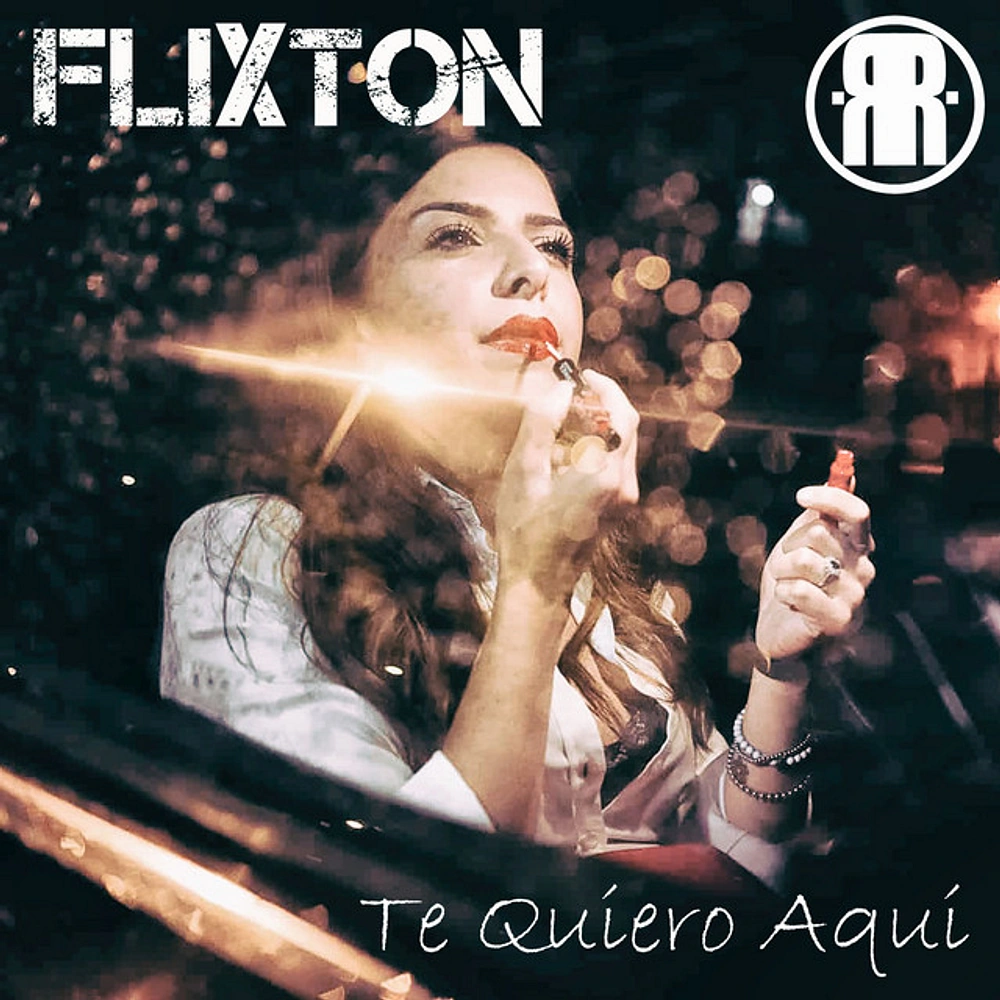
Te Quiero Aqui runs five minutes and twelve seconds. That is a long time for a vocal dance record, and it is the first thing worth knowing about it, because everything else follows from the decision to leave it that length. Flixton released it on 24 November 2023, and a drum and bass producer writing a Spanish-titled, pop-leaning track was not the obvious next move for him.

Flixton’s music is in the playlist below, and this desk’s coverage of him is collected on the Flixton profile. Te Quiero Aqui reached NewMusic.News through PopHits.Co Music Charts, which verifies independent artists and places their releases across its network of music news titles. Start it playing, then read on.


Flixton: Te Quiero Aqui and the Case for A Five-Minute Dance Track

Where Flixton Comes From, And What Te Quiero Aqui Is

He is from Manchester and lives in Bideford, on the north Devon coast. That is a long way from any drum and bass scene worth the name, and the distance shapes the catalogue.

Producers who cannot walk to a club night tend to write for the record rather than for the room. It shows here: most of his output goes out through labels rather than through sets.

There is a lot of it. His own pages list releases on Lizplay, Mathematica Records, Liquid Brilliants, Nexxus Recordings, Ransom Recordings and UltraTech Liquid NRG. The Bandcamp catalogue reads like a working producer’s ledger: Spectrums, Through The Woods, Real Murda and Sniffer on Ransom, Afterlife and I Don’t Want on Ultratech, The Only Religion, Dark Skies and Broken Reality on Nexxus. Each carries a catalogue number.

Alongside them sit free bootlegs and dubs. That is what a producer does when a track works on a floor but cannot be cleared.

Why Five Minutes Twelve Is The Point

Against that background, Te Quiero Aqui is a departure. It has a sung lead and a Spanish title. Its structure gives the vocal room to arrive rather than dropping straight into the break.

It gets filed as commercial vocal dance, drum and bass, and electronic pop all at once. For once that triple tag is doing real work rather than hedging, because the track genuinely sits between the three.

Five minutes twelve is the tell. A pop record would have been cut to three. A club record would have kept the intro long and the vocal short. Flixton did neither on Te Quiero Aqui, which suggests he wrote it as a song and arranged it as a dance track, in that order.

Flixton: Te Quiero Aqui and the Case for A Five-Minute Dance Track

What Te Quiero Aqui Answers

The question a catalogue track poses is whether it found the audience it was built for. The coverage suggests it found a slightly different one.

Tape Ranger ran an artist spotlight in December 2023. They called it a catchy tune with a dynamic instrumental, and credited the songwriting and the production work separately, which is a distinction worth noticing. They then added it to their Indie POP! playlist. Inspot Music picked it up for a daily discovery round-up in the same period.

Neither of those is a drum and bass outlet. A producer with six DnB label affiliations made a track that indie-pop curators reached for. That is the most interesting thing that happened to this record, and it suggests the song survives being taken out of its genre context.

From the Curator Team: “We keep this one on file because of where it landed rather than where it came from. A drum and bass producer whose track gets picked up by a pop playlist has written something with a spine that holds up without the sub underneath it. That is the harder skill, and it is why the record is still worth putting in front of people two years on.”

Who It Is For, And Where To Hear Flixton

His wider catalogue backs the reading. Alongside the label output sit Breaking Up, Angel In My Bed, XTC, More Forgiving, Future Thoughts, In My Lair, Didn’t Wanna Lie, New Beginnings and Freedom, plus Realize with Platnum. Those are song titles, not track titles. He has been writing toward this for a while.

So this suits listeners who want dance music with an actual vocal performance in it. It suits people comfortable with a record that takes its time. You do not need to know the difference between liquid and jump-up to enjoy it.

Te Quiero Aqui is on Spotify, and the label catalogue is on Bandcamp.

Follow Flixton across platforms: Spotify artist page, Instagram, Facebook and X.


Markus Nokio the Orphan and the Violin That Answers the Piano

A Self-Taught Finnish Composer and the String Line That Opens up a Solo Piece

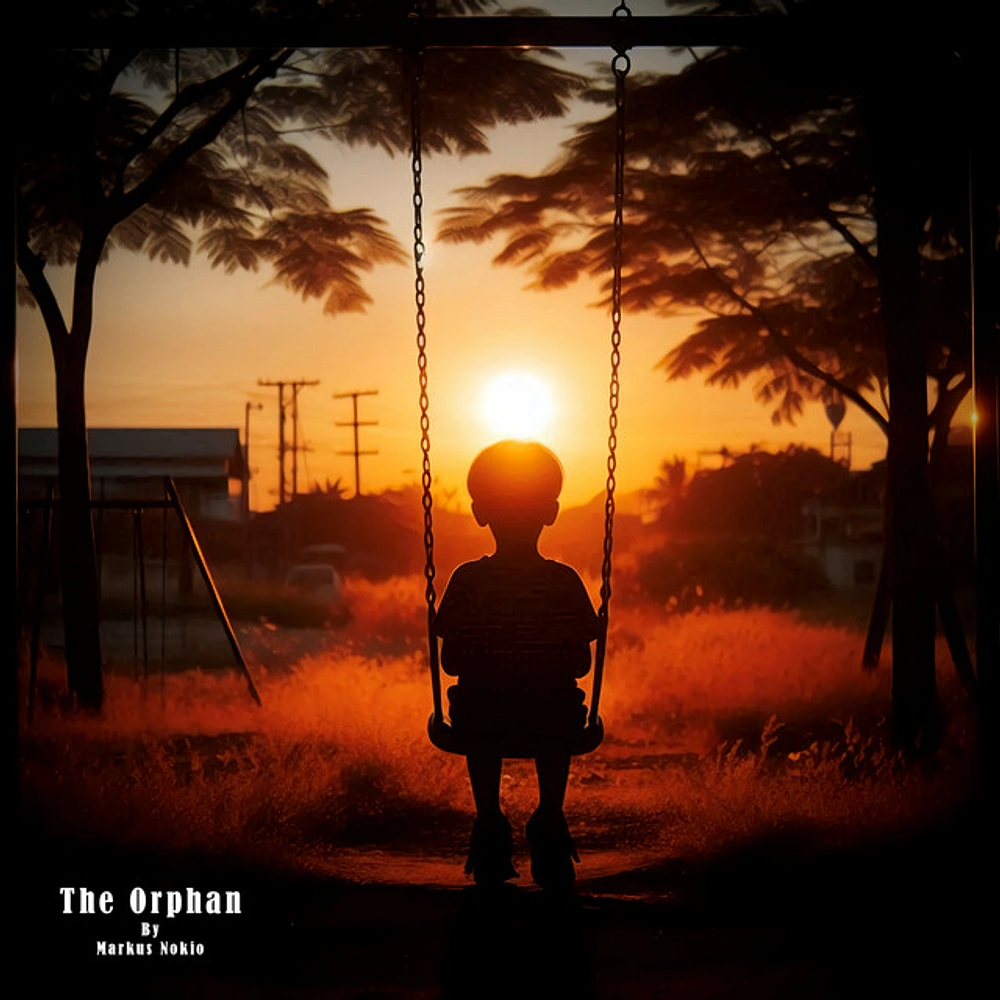
Markus Nokio built The Orphan around a single decision, and two reviewers found it independently. Writing five days apart, in different countries and different languages, both stopped at the same place. Not the opening piano figure, which circles quietly under everything. They stopped at the moment a violin enters over it. That kind of agreement between strangers usually points at a decision rather than an accident.

Markus Nokio’s music is in the playlist below, and his full coverage history sits on his artist profile. The Orphan reached this desk through PopHits.Co Music Charts, which verifies independent artists and places their releases across its network of music news desks. Press play, then read on.


Markus Nokio the Orphan and the Violin That Answers the Piano

The Moment Markus Nokio Built The Orphan Around

Nokio taught himself to compose, works out of Finland, and describes what he does in plainly commercial terms: music for media, television, film and games. That detail explains a good deal about The Orphan. Writing to picture teaches a particular discipline. You learn to hold one line steady while something else moves against it. You also learn that a second voice entering is an event, and that a listener feels it whether or not they can name it.

The Orphan runs on exactly that principle. The piano underneath holds a continuous melody, which Good Music Radar described as flowing at the base like a river. On purpose, it does not do very much. It is a bed. The violin, when it arrives, does not compete with the piano so much as reply to it, and the piece opens outward from there. Nokio keeps faint vocal echoes behind the strings, far enough back that they read as colour rather than as singing.

The Year That Produced The Orphan

The Orphan did not arrive out of nowhere, and for its composer it was not a rare event. It went up on 9 October 2024 as his fifth release of that year. Earlier singles included Love, Rage and Misery and After It’s Too Late. Five pieces in ten months is a working pace rather than a careful one, and that changes how you hear this one. Markus Nokio writes steadily and puts the results out. So The Orphan reads less as a statement than as an entry in a run, and the run is where the craft accumulated.

People use the self-taught label loosely, so it is worth being precise about what it buys and what it costs. Nokio writes, by his own account, about his experiences in life, and the titles match. A conservatory would have handed him a vocabulary for the thing he does anyway. Its absence left him incurious about the rules governing what a contemporary classical piece ought to withhold. The Orphan is unembarrassed about its feeling. It states a mood early, then deepens it rather than complicating it, which is a choice a more schooled writer might have talked themselves out of.

Markus Nokio the Orphan and the Violin That Answers the Piano

Where The Orphan Sits, and What Markus Nokio Answers With It

Contemporary classical is a wide and slightly awkward label. It covers severe modernism at one end and piano music written for headphones at the other. The Orphan belongs firmly to the second group, and its neighbours are easy to name. Listeners who have spent time with Ludovico Einaudi will recognise the method: hold a simple figure, and let repetition do the work that harmonic surprise does elsewhere. Anyone who follows Ólafur Arnalds knows the particular pleasure of a string line entering over a piano that has already established the room. And Max Richter has spent a career showing that a piece built to be usable in film still works with nothing on the screen.

That last point is the one The Orphan answers most clearly. Critics often dismiss music by composers who score to picture as merely functional, as though supporting a scene were evidence of thinness. Both reviews argued the opposite. Both reached for stories rather than for other records to do it. Good Music Radar heard Oliver Twist and Annie. INDIEOCLOCK, writing in Brazil, described walking through empty woods, and found something medieval in the harmony between the violin and the keys. Nobody prompted either reading. That both writers went looking for a narrative suggests the piece supplies one.

NewMusic.News’s curator team: “The interesting thing about The Orphan is how little it spends. One piano figure, one violin answering it, and some vocal colour kept well back. A composer with more training might have added a development section and lost the whole effect. Markus Nokio trusted the entrance to carry it, and it does.”

Where to Hear The Orphan and Follow Markus Nokio

The Orphan is on Spotify, and the wider catalogue sits on the Spotify artist page, on Apple Music, on YouTube Music and on SoundCloud.

For the working side of things, which for a composer who writes to commission is most of it, Markus Nokio posts to YouTube, Instagram, Facebook, TikTok and Threads.


Perpetual Violence Machine: How Hydra Vein Turned One Last Show Into A Third Act

A Brighton Thrash Band Reformed for One Night in 2020 and Never Actually Stopped

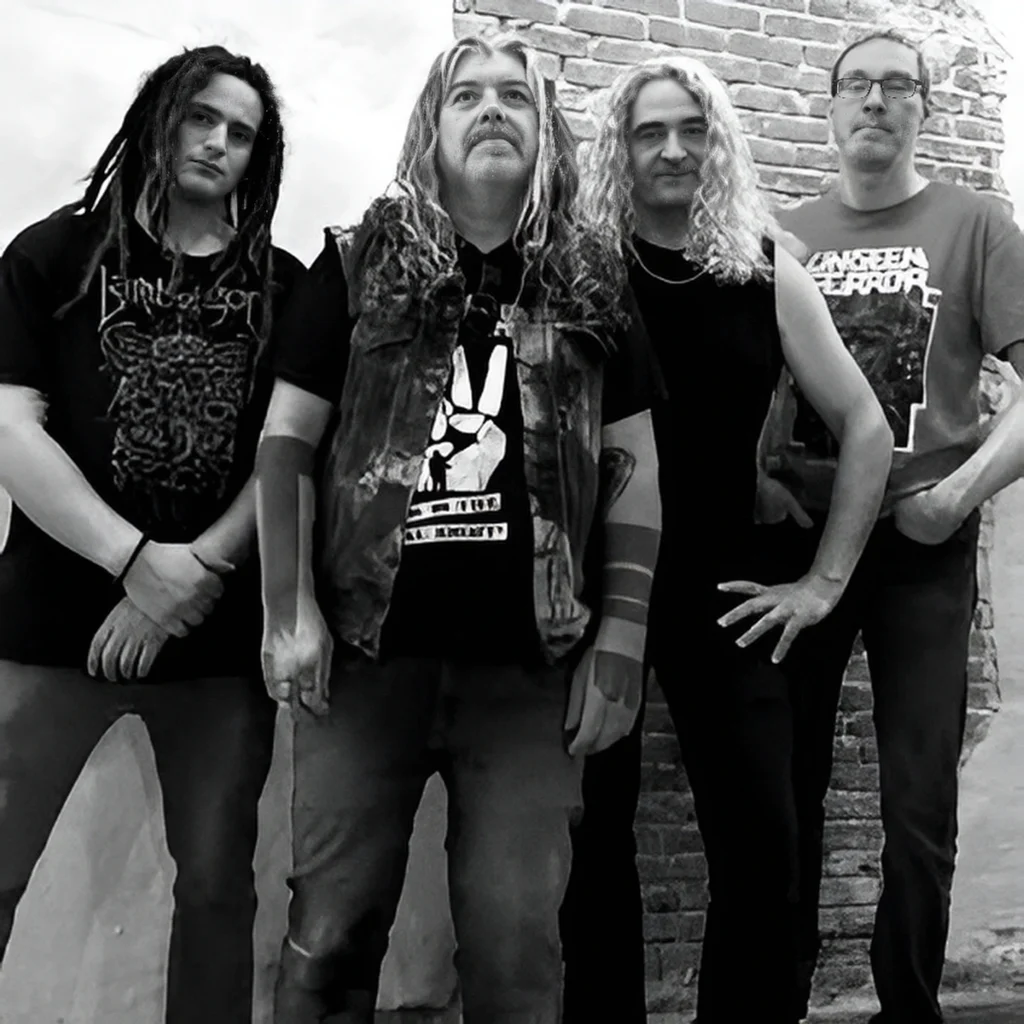
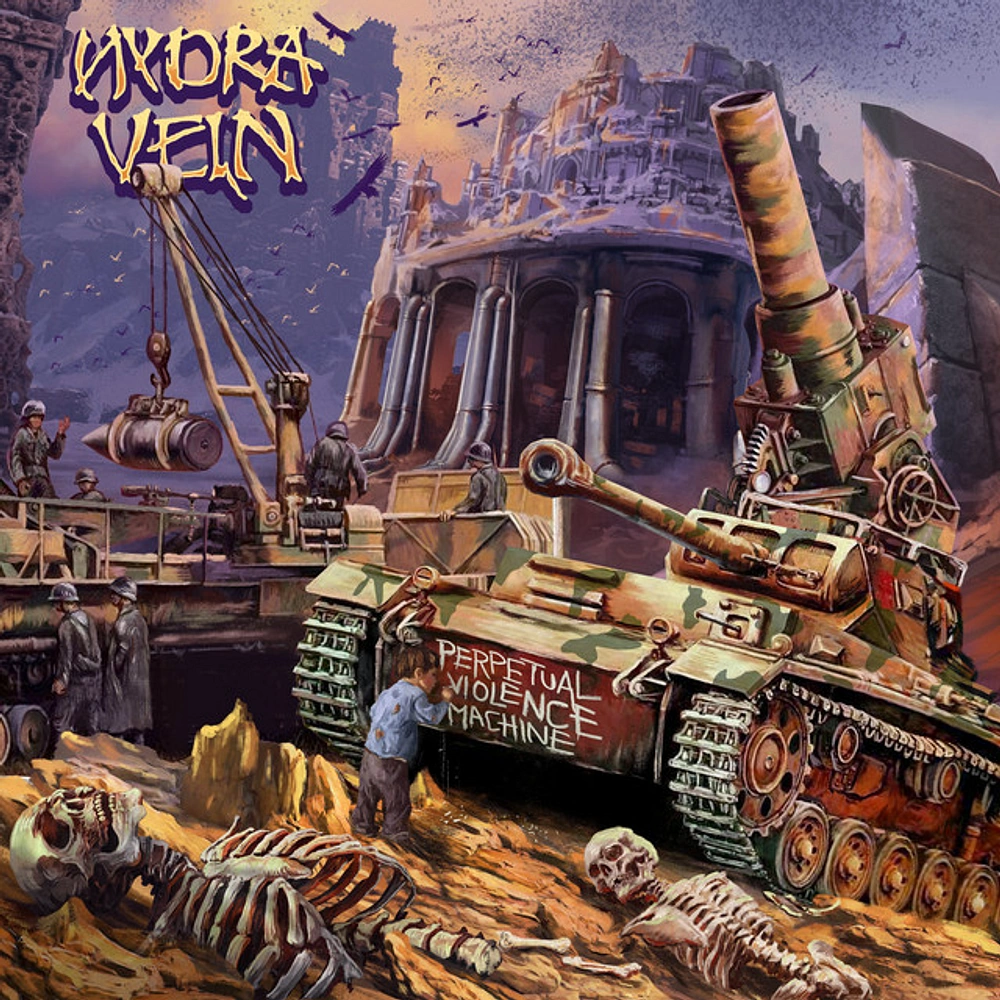
On 29 February 2020, Hydra Vein walked onto a stage at Newcastle University for the first time in more than thirty years. The show was not a comeback. It was meant to be a goodbye, and the band said so plainly at the time. Five years later there is a new EP. Perpetual Violence Machine runs five thrash tracks and roughly twenty-three minutes, out on Iron Shield Records.

Five tracks by Hydra Vein sit on the playlist below, and the band’s artist profile records what these titles have published on the thrash group. Perpetual Violence Machine was logged with this network by PopHits.Co Music Charts, the vetting scheme that verifies independent artists and places their releases across its network of music news desks. Play it straight through, then read what changed.


Perpetual Violence Machine: How Hydra Vein Turned One Last Show Into A Third Act

Before Perpetual Violence Machine, Hydra Vein Reformed To Say Goodbye

Hydra Vein formed in Brighton in 1987 around bassist Damon Maddison and his brother Nathan on drums. Two records followed, in 1988 and 1989, and then the band stopped. Most British thrash groups of that decade stopped around the same time. They had never found the label support their American and German contemporaries enjoyed.

What brought them back was not a label offer. It was a pub conversation with Stu Bartlett, who promotes Brofest. That Newcastle festival is built around veterans of the new wave of British heavy metal, plus the younger bands who returned to that material. The Maddisons had been going for years as paying customers.

The reunion also had a specific purpose, and it was not commercial. Guitarist Jon Balfour, who played on the second album, died in 1992. The band’s original singer, Mike Keen, died in 2003. The Brofest set became a tribute to both, and the line-up reflected that. The Maddison brothers played alongside guitarists Stephen Davis and Dan Ranger from the first record, Paul Bate from the second, and singer James Manley-Bird. It read less like a booking than a gathering of everyone still around to play the songs.

Nathan Maddison explained the thinking to RushOnRock in the days before the show.

“For me personally, it is to put a line under Hydra Vein, to properly sign off with those old tunes and a celebration of the memory of Mike and Jon.”

He was blunter later in the same conversation: “We thought it would be fun to bring the curtain down properly and to pay tribute to the guys who are no longer with us. Closure, I suppose.” The piece recorded, plainly, that there were no plans for a follow-up performance.

That sentence is worth sitting with, because everything after it happened anyway.

Perpetual Violence Machine: How Hydra Vein Turned One Last Show Into A Third Act

What Perpetual Violence Machine Answers About A Band That Meant To Stop

The EP arrived in October 2025 on Iron Shield Records. The band recorded and mixed it at IJland Studios in Amsterdam, across March and May of that year. Five tracks: Perpetual Violence Machine, Iron Men, Black Slammer, Strive For Life and A Thousand Forms of Fear.

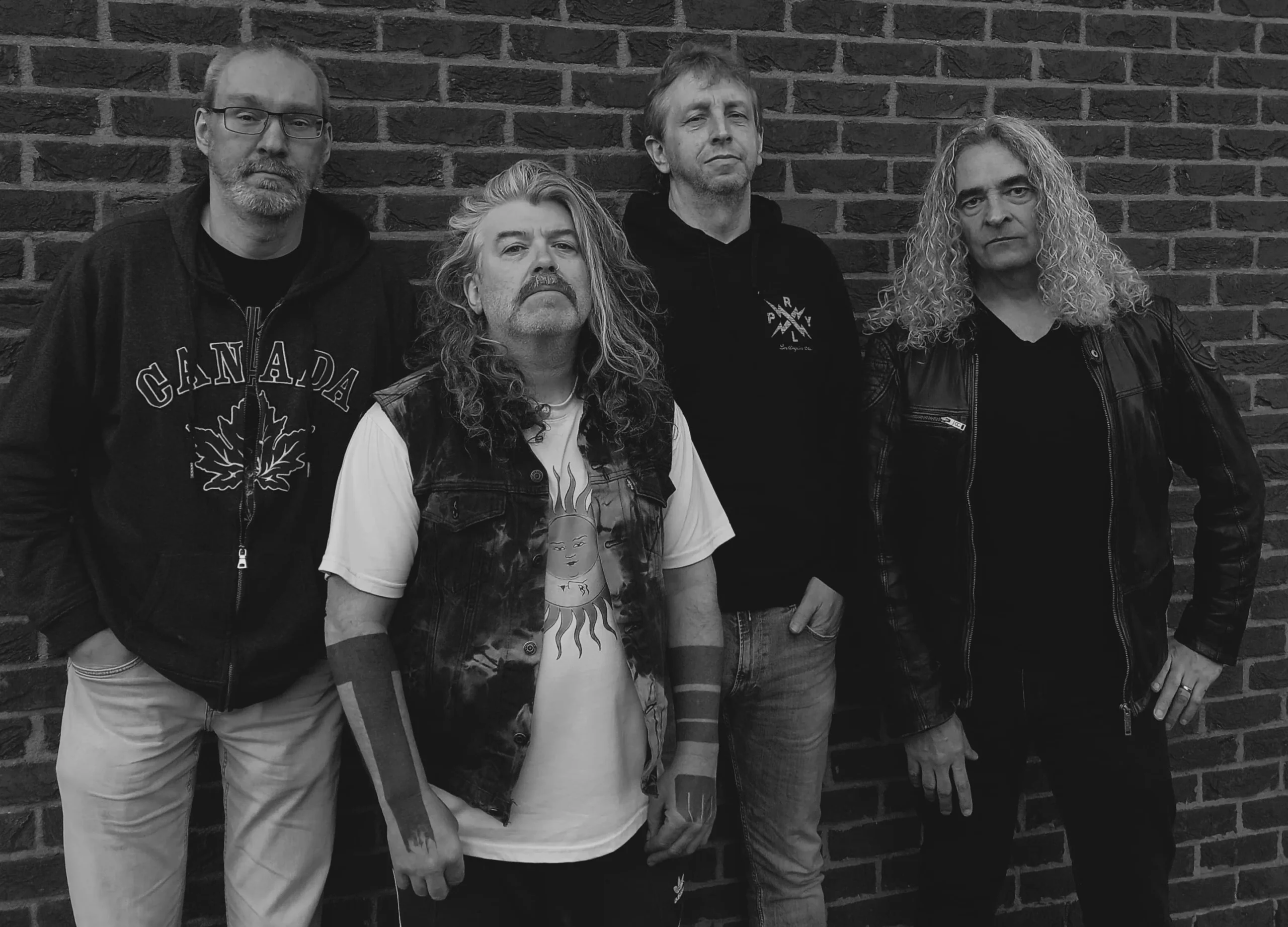
The line-up is not the one that stood on the Brofest stage either. Damon Maddison is the constant. Around him now sit Ross Curry on vocals, Henry Pol on guitar and John den Buitelaar on drums. That makes this less a legacy act touring its own back catalogue, and more a working band carrying an old name.

So the EP quietly answers the question the 2020 show left open. A reunion staged as closure could easily have settled into an annual heritage booking. Instead the band wrote new material and recorded it in another country with a different singer. They also kept it short enough that nobody could mistake it for a victory lap.

The reference points here are domestic rather than American. Listeners who follow Onslaught or Xentrix will recognise what Hydra Vein are doing. Those are the other British thrash bands of that generation who came back and then kept working. It is a scene that never got its own Bay Area moment and has spent the last decade quietly assembling one anyway.

Where To Hear Perpetual Violence Machine And Follow Hydra Vein

NewMusic.News’s curator team on why it earned a slot:

“Most reunions are about an audience. This one began as a farewell for two friends who had died, and turned into new material almost by accident, which is a stranger and far more interesting reason for a band to still exist.”

You can hear the EP on Spotify and Bandcamp, or across Apple Music, Deezer and Amazon Music. The full EP is also streaming on YouTube.

Keep up with the band on Facebook and Instagram.


Licensed to Ill Reopens in 176 Pages and 200 Photographs

The Beastie Boys on stage at SXSW

The book opens where the record did: in a room in New York in the mid-eighties, with three young men who had started out playing hardcore punk and a producer who had decided that rap records should sound like rock records. Forty years later, someone has gone back through it song by song and asked the people who were there what actually happened.

Beastie Boys: Licensed to Ill – 40 Years arrives on 13 October, written by Ben Merlis for The Great Albums series with a foreword by Prince Paul. It is a 176-page hardcover in a slipcase carrying more than 200 images, and it lands a few weeks before the album itself turns forty in November.

What Is Actually in the Book

The structure is the part that matters. Rather than a general band biography, this is a track-by-track examination of a single record, which is a form that either works completely or not at all. It works when the songs have enough documented history behind them to sustain the attention, and Licensed to Ill has that in unusual quantity, from the sample clearances to the arguments over what the album was supposed to be.

Around the track analysis sit fresh interviews with producers, collaborators and cultural critics, plus candid studio and tour photographs and memorabilia. Consequence reported the details when the book was announced, including that Merlis had already written its Cover Story on Mike D’s debut solo album Thank You.

Merlis explained the commission simply. “When I was asked by the publisher to write this book, I had to say yes because there is no other story that wholly encompasses my two biggest passions,” he said, adding that “Licensed to Ill still knocks, forty years later.” That second sentence is the honest test any anniversary book has to pass, and it is a fair claim.

The Record That Moved the Ceiling

The commercial facts are the reason the album gets a book rather than a feature. Licensed to Ill was the first rap LP to top the Billboard 200, and one of the fastest-selling debuts in history. Before it, a rap record could sell well within its own audience. After it, a rap record could be the biggest-selling album in the country.

That distinction sounds academic and was not. Chart position determines what a label will finance, what a radio programmer will risk and what a retailer will stock at the front of the shop. A number-one rap album in 1986 changed all three at once, and every artist who signed a major-label deal in the years that followed was working inside a door that this record opened.

The wider setting is worth stating plainly. As Live For Live Music set out in its anniversary retrospective, hip-hop had emerged less than a decade earlier in the Bronx through DJ Kool Herc, Grandmaster Flash and Afrika Bambaataa, and the mid-eighties golden age belonged to Run-D.M.C., Eric B. & Rakim, EPMD and Boogie Down Productions. Three white punks from New York arriving at the top of that chart was, at the time, genuinely unexpected.

The other reason it endures is that the songs are still funny. No Sleep Till Brooklyn, Girls and Brass Monkey are built on jokes as much as on beats, which is a hard thing to sustain for four decades. Comedy ages faster than almost anything in music, and a surprising amount of this album’s has not.

The People Behind the Desk

Any serious account of this record has to deal with the two men who were not in the group. Rick Rubin produced it and co-founded the label. Russell Simmons managed the band and co-owned that label. Between them they built the commercial and sonic logic the album runs on, and the record is as much a document of their approach as of the three performers on the sleeve.

Rubin’s contribution was a production philosophy that has since become so standard it is hard to hear as a choice: strip the arrangement down, put the drums enormously loud at the front, and let a guitar riff do the work a sample might otherwise do. The result made the album legible to a rock audience that had not previously bought rap, which was the commercial unlock.

The foreword from Prince Paul is a well-judged piece of casting. He was building his own reputation as a producer in the same period and went on to make records that argued with everything this one stood for while sharing its sense of humour. A foreword from someone who took the form somewhere else is more useful than one from a peer who simply agrees.

Why Anniversary Books Are Getting Better

The album-anniversary book used to be a reliably thin object: a reprinted press cycle, a few contact sheets and an essay by someone who liked the record. The better ones now do something closer to oral history, going back to the people who worked on it while enough of them are still available to ask.

That window is the whole argument for doing this at forty rather than fifty. Engineers, session players, art directors and label staff are the people who remember what the room smelled like and which take was kept, and their accounts are the material that cannot be reconstructed later from reviews. A book that gets them on the record while it can is doing archival work, not just marketing.

It also places the record in a lineage rather than treating it as a one-off. The Great Albums series already covers Run-DMC and Raising Hell, Prince and Purple Rain, Bruce Springsteen and Born to Run and Fleetwood Mac and Rumours, which is the company the publisher thinks this album keeps. Putting a rap debut in that sequence is itself an editorial argument, and a defensible one on the chart evidence.

What a Reader Actually Gets

For someone who already knows the album, the value is in the granularity: which decisions were deliberate, which were accidents that got kept, and what the people making it thought they were doing at the time. Those are usually the details that get flattened out of the standard narrative, in which every choice looks inevitable in hindsight.

For someone who arrives via a streaming playlist and has no memory of 1986, the value is context. Understanding why an album mattered requires knowing what the alternative sounded like, and a book with 200 images of the period does that faster than any amount of description. NewMusic.News has made a similar point about catalogue records reaching new listeners, as when Mariah Carey waited twenty-five years for a number one.

The practical detail is the format. A slipcased hardcover with more than 200 images is a designed object rather than a reference text, which tells you it is meant to be looked at as much as read. Full specifications are on the publisher’s page, which prices it at $50 in the United States and £35 in the United Kingdom, 10 inches square, published under the Motorbooks imprint.

The Question It Leaves Open

What a track-by-track book cannot settle is how the record should be heard now. It was made by three very young men working in a register of provocation, and forty years is long enough for some of that to read differently. A serious account has to hold two things at once: an album that moved an entire form forward, and one whose humour was of its moment.

The most interesting version of this book is the one that lets the interviewees disagree about that rather than resolving it. Producers, collaborators and critics will not have a single view, and the honest record of a forty-year-old album is a record of an argument that is still going.

Either way, the archival case is strong and the timing is right. The album turns forty in November, the people who made it are increasingly the only source for how it was made, and 176 pages is a reasonable amount of space to ask them. The alternative is waiting another decade and asking fewer of them.

Andrea Bocelli Made a Christmas Album With His Children

Virginia Bocelli was ten years old when she took a solo on her father’s Christmas album. The track is When Christmas Comes To Town, from The Polar Express, and it sits on a Decca release alongside her brother Matteo, then twenty-four, who sings I’ll Be Home For Christmas alone.

A Family Christmas came out on 22 October 2022, produced by Stephan Moccio, and was the first record Andrea Bocelli had made with his children. Thirteen tracks move between English and Italian and between solos, duets and trios, and it went on to be the best-selling Christmas album of that year.

What Is Actually on It

The repertoire is standard by design: Do You Hear What I Hear?, Feliz Navidad, Have Yourself A Merry Little Christmas, Joy To The World, Happy Xmas (War Is Over), and, less predictably, Over The Rainbow.

The inclusion of a song from The Wizard of Oz on a Christmas record is the kind of decision that only makes sense in a family context, where the selection is governed by what three people can sing together rather than by what belongs in a carol service. The same logic explains giving the ten-year-old a solo from a children’s film.

Moccio is a considered choice of producer. He is best known for co-writing Wrecking Ball and Earned It, which is a long way from Tuscan tenor repertoire, and the result is a record that sits closer to contemporary pop production than Bocelli’s classical work does.

How It Performed

It reached number one in Ireland in the week of 23 December 2022 and twenty-two on the Billboard 200, where it spent five weeks across that December and the following January. Those are not spectacular chart positions, and they still made it the year’s best-selling Christmas album, which says something about how thinly that market is spread across a very large number of releases.

A thirty-seven-minute documentary film accompanied it, shot at Castel Savoia in Italy. A Disney+ short with The Simpsons followed on 15 December 2022, and the 2023 deluxe edition expanded the album to twenty-two tracks with nine additions, including that Simpsons collaboration and one with Pentatonix.

Recording with Pentatonix, who now book twenty-eight arenas for six weeks of Christmas every year, is a fairly precise indication of which market the deluxe edition was aimed at. The two acts occupy the same December territory from opposite ends: one an a cappella group built entirely for the season, the other an opera tenor who visits it.

Putting a Child on a Major Label Album

Giving a ten-year-old a solo track on a Decca release is a decision worth examining, because the obvious version of it would be indefensible. A child’s voice on a commercial record is usually either a novelty or a liability, and the industry has a poor history in both directions.

What makes it work here is the choice of song. When Christmas Comes To Town was written to be sung by a child in an animated film; it sits in a comfortable range and asks for nothing a young singer cannot deliver honestly. Nobody is being asked to perform beyond their means, which is the difference between including a child and exploiting one.

Matteo’s position is entirely different. He was twenty-four, already recording under his own name, and a solo on his father’s album functions as a professional credit rather than a family cameo. The album therefore does two separate things at once: it introduces one child and it platforms another.

Where He Came From

Bocelli was born in Lajatico in Tuscany in 1958 with congenital glaucoma, and lost his sight completely at twelve after being hit in the eye during a football match. He began piano at six and went on to learn flute, saxophone, trumpet, trombone, guitar and drums.

He studied law at Pisa and briefly worked as a court-appointed lawyer, singing in piano bars in the evenings for money. The break came in 1994 when he won the newcomers’ section at Sanremo, followed in 1996 by Time to Say Goodbye with Sarah Brightman.

Romanza arrived in 1997 and became one of the best-selling albums ever made. He has since sold more than ninety million records, and Sacred Arias is the biggest-selling classical album by any solo artist. Sì, in 2019, went to number one in both Britain and the United States.

Thirty Years of Romanza

The current tour marks that album’s thirtieth anniversary and is unusually long. It opened in North America in February 2026 with Columbus, Hollywood in Florida, Tampa, Raleigh, Birmingham, Nashville and Chicago, the Nashville date shared with Michael W. Smith and Lauren Daigle.

European summer dates take in Piazza San Marco in Venice in June, Gdansk and the PGE Narodowy in Warsaw in August, and the Ernst-Happel-Stadion in Vienna. A second American leg in September runs from Seattle down the west coast to two nights at the Hollywood Bowl and two at Red Rocks.

Then, in December, the tour becomes a Christmas run in all but name: Boston on the tenth, Buffalo, Montreal, two nights at Madison Square Garden on the sixteenth and seventeenth, Hamilton, Pittsburgh and Philadelphia on the twenty-second.

He also sang at the opening ceremony of the Milano Cortina Winter Olympics at the San Siro on 6 February, which is the kind of booking that follows from having spent three decades as the most recognisable classical voice in the world.

The venue mix across the year is the interesting part. Piazza San Marco and Red Rocks are open-air spaces chosen for their setting; the United Center and Madison Square Garden are chosen for capacity; the Hollywood Bowl manages both. Very few artists can move between a Venetian square and an American ice-hockey arena within a single tour without one of them feeling wrong, and the reason he can is that the show travels with an orchestra rather than a band.

The December Business

Eight arena dates in the twelve days before Christmas is a deliberate structure, and it explains why a family Christmas album made sense commercially as well as personally. An artist who can fill Madison Square Garden twice in December has an annual seasonal audience whether or not he has a seasonal record, and having one converts that audience into sales.

It is the inverse of how the format usually works. Mariah Carey’s Christmas record created her December; Bocelli already had one and made the album to serve it. The children were presumably not a commercial calculation, but putting them on it is what gave the project a reason to exist beyond the calendar.

It also solves a succession problem that most classical crossover artists never address. A voice like his has a finite working life, and the audience that fills arenas in December has been following him for thirty years. Recording an album that introduces the next generation of the family, rather than simply announcing them separately, hands that audience over rather than hoping it transfers.

Whether it works is a question for the next decade. What is already clear is that a record made in a Tuscan castle with a ten-year-old singing a song from a Christmas film outsold every other holiday album released that year, which is not the outcome anybody would have predicted from the description.

Mariah Carey Waited Twenty-Five Years for a Number One

When All I Want for Christmas Is You came out on 29 October 1994, it could not enter the Billboard Hot 100. The chart at that time required a commercially available physical single, and Columbia did not release one. The biggest holiday record of the modern era was, by the rules then in force, ineligible.

It first appeared on the Hot 100 in January 2000, at number eighty-three. It reached number one on 21 December 2019, twenty-five years after release, which is the longest climb to the top the chart has ever recorded.

Twenty-Two Weeks at Number One

Since then it has returned every December. It topped the chart in every holiday season from 2019 to 2025 and has accumulated twenty-two weeks at number one as of January 2026, more than any other record in the history of the Hot 100. It is also the first song to reach number one across five separate chart runs.

The British trajectory was slower still. It spent seventy weeks in the top forty before finally reaching number one on 11 December 2020, twenty-six years after release, which is a UK record of its own. It first topped the Australian chart in December 2018 and the Canadian one in January 2019, having originally peaked at two in Australia.

On Billboard’s Holiday 100, which launched in 2011, it has spent seventy-one of the chart’s seventy-nine cumulative weeks at number one. In November 2021 it was formally ranked the greatest Holiday 100 song of all time. It also holds the longest run at number one in both Germany and Austria, at twenty-two and nineteen weeks respectively, and has topped charts in more than thirty countries.

What Changed Was the Rules

None of this reflects a change in the song. What changed was how charts count.

The physical-single requirement disappeared, download sales were incorporated, and then streaming was added and weighted. A record that is played enormously for six weeks a year but bought by almost nobody was invisible under the old system and dominant under the new one. The song did not climb to number one so much as the measurement finally caught up with the listening.

That makes it an unusually clean case study. Almost every other chart record is entangled with promotion, radio and release strategy. This one is a straightforward demonstration that the Hot 100 measures whatever it has decided to measure.

Recorded in August

Mariah Carey and Walter Afanasieff wrote and produced it, recording at The Hit Factory in New York in August 1994. Carey has described the session as amazing and unlike any other, and has said she is a festive person who has sung Christmas songs since she was a child.

Her brief for the album was practical: a balance between standard Christian hymns and fun songs, with at least a few new ones. Merry Christmas duly mixes Silent Night, O Holy Night, Joy to the World and Santa Claus Is Comin’ to Town with three originals, including Miss You Most (At Christmas Time) and Jesus Born on This Day, and pushes the arrangements toward soul and gospel rather than orchestral pop.

The reviews at the time were mixed. Jon Pareles objected to what he heard as narcissistic vocal display; Steve Morse thought it might be her best record and praised her cutting loose with unbridled soul.

Why the Song Itself Works

Chart mechanics explain the number one; they do not explain why anybody wanted to hear it two billion times. The construction does.

It runs on a wall-of-sound arrangement descended from Phil Spector’s Christmas records, with sleigh bells, piano triplets and layered backing vocals arriving in the first few seconds, which means the song identifies itself almost instantly. That matters enormously for seasonal music, where most listening happens in the background and a track has a second or two to register.

The lyric does something rarer. Almost every Christmas standard is about the occasion itself: snow, bells, home, family, a saint. This one uses the season only as a setting and spends its whole length rejecting all of it in favour of one person. That is closer to a pop love song than to a carol, which is why it works in contexts where Silent Night would not.

The vocal is also, deliberately, not the hardest thing Carey has ever sung. She is known for a five-octave range and the whistle register, and neither is the point here; the melody sits in a range most people can attempt, which is a significant part of why the record gets sung along to rather than merely played.

The Numbers Underneath

The album has sold eighteen million copies, the most of any holiday record by a female artist, and Billboard describes it as the most successful Christmas album of all time. It is certified diamond in the United States and sold 2.8 million copies in Japan alone, where it went to number one.

The song itself is eighteen times platinum in America, having become the first holiday record certified diamond in December 2021, and ten times platinum in the United Kingdom, where it is the highest-certified song by any female artist. It has sold over sixteen million copies, passed two billion Spotify streams, and in December 2022 became the first song to exceed twenty million streams there in a single day.

The Associated Press estimated its royalty earnings at around a hundred million dollars as of 2023. In the same year the Library of Congress added it to the National Recording Registry.

Why Nobody Has Repeated It

Carey is credited with changing what a Christmas album is for. Before Merry Christmas, the form was largely a late-career exercise for established singers; she made one at twenty-five, at the commercial peak of her run, and demonstrated that it could be a serious release rather than a contractual filler.

Every young artist who has since made a holiday record is working inside that precedent, and none has produced anything approaching the same result. The reason is partly that the canon has room for very few additions. The New Yorker called it one of the few worthy modern additions to the holiday canon, and the Guardian ranked it first among fifty Christmas songs while noting that it is a rare modern Christmas song that has become a standard.

The wider career context makes the point sharper. Carey has nineteen number ones on the Hot 100, more than any other solo artist, eighteen of them as a songwriter, and has spent a record hundred and one weeks at the top. Twenty-two of those weeks come from one song she wrote in her twenties about wanting nothing except a person.

The First of November

She now posts a video every 1 November marking the start of the season, which has itself become an annual news event. It is a small piece of scheduling that formalises what the charts already show: for six weeks a year this record is unavoidable, and for the other forty-six it is not.

That is precisely the arrangement Michael Bublé built into a sixteen-million-selling album two decades later, and his version of it includes a cover of this very song. The difference is that his record was designed for the seasonal cycle from the start. Hers created it, without anybody involved intending to.

Michael Bublé’s Christmas Album Keeps Returning to the Charts

In the first week of January 2012, Michael Bublé’s Christmas fell from number one on the Billboard 200 to number twenty-four. That remains the sixth-largest single-week drop from the top of that chart, and the explanation requires no analysis at all.

It is also the most instructive fact about the record. An album that can occupy the top of the American chart for five weeks and then become almost unsellable overnight is operating on a completely different commercial logic from everything around it, and fourteen years later it is still doing so.

Twenty Countries at Number One

Released in late October 2011 through 143 Records and Reprise, produced by David Foster, Bob Rock and Humberto Gatica, it went to number one in twenty countries: the United States, the United Kingdom, Canada, Australia, Germany, Italy, Ireland, the Netherlands, Austria, Denmark, Hungary, Iceland, Norway, Poland, Portugal, Sweden, Switzerland, Croatia and New Zealand among them.

In the United States it was the second best-selling album of 2011 on 2,452,000 copies, behind only Adele’s 21. Worldwide sales have passed sixteen million.

The certifications describe an unusually even global spread rather than one dominant market: six times platinum in the United States, eleven times platinum in the United Kingdom, diamond in Canada, double diamond in Australia, fourteen times platinum in New Zealand and eight times platinum in Italy. It is the best-selling holiday album Britain has ever had.

Six Separate Decembers at Number One in Australia

The recurrence is the part with no real precedent. It topped the ARIA albums chart in December 2011, 2012, 2013, 2014, 2016 and 2019, making it the first album to reach number one there on six separate occasions.

In Britain it became the first seasonal album to place inside the top ten in three consecutive years. It has re-entered charts every year from release through to 2024, and it finished the 2010s at number two on Australia’s decade-end chart, five in the United Kingdom and twenty-four in the United States. On the all-time American holiday albums chart it sits at number two.

An album that sells for six weeks a year for fourteen years accumulates figures that annual releases cannot match, and it does so without any of the promotional spending a new record requires.

Sixteen Tracks, One New Song

The construction is conservative by design. It’s Beginning to Look a Lot Like Christmas opens, followed by Santa Claus Is Comin’ to Town, Jingle Bells with The Puppini Sisters, White Christmas as a duet with Shania Twain, and versions of All I Want for Christmas Is You, A Holly Jolly Christmas, Santa Baby, Have Yourself a Merry Little Christmas, Christmas (Baby Please Come Home), Silent Night, Blue Christmas, I’ll Be Home for Christmas and Ave Maria.

Thalía joins for Mis Deseos and Feliz Navidad. A hidden track carries a spoken greeting. Only one song, Cold December Night, is new.

Fifteen standards and one original is a precise ratio. A holiday album succeeds by being familiar, and the single new song exists so the record has something of its own rather than to carry the release. Later editions added Winter Wonderland, Frosty the Snowman, Silver Bells with Naturally 7, and eventually a seven-track bonus disc for the tenth anniversary in 2021.

The one genuinely contentious decision was rewriting Santa Baby’s pronouns for a male singer, which produced Santa buddy, Santa pally and an instruction to wait up that has been widely mocked ever since.

Why This One and Not Another

Dozens of singers with comparable voices have made Christmas albums, and almost all of them sell for one season and disappear. The reasons this one persisted are mostly structural rather than musical.

The first is timing. It arrived in 2011, at the point where streaming was beginning to make seasonal playlists automatic, so an album already positioned as the default benefited from a distribution mechanism that had not existed for earlier Christmas records. The second is the production team: David Foster and Humberto Gatica had spent decades making exactly this kind of large, warm, orchestral pop, and the record sounds expensive in a way that survives repeated exposure.

The third is the least discussed. A Christmas album has to work as background. It is played in kitchens and shops and cars by people who are not listening to it, and anything demanding or idiosyncratic fails at that job. The relentless conservatism of the arrangements, which would be a criticism of any other record, is the specification being met.

What that produces is an unusual commercial object: an album with almost no critical standing that outsells nearly everything reviewed favourably in the same year, and then does it again annually for over a decade.

He Learned It From Bing Crosby

Bublé was born in Burnaby, British Columbia in 1975, and his interest in this music started at about five, when his family played Bing Crosby’s Christmas album. That is a direct line: the record that shaped him is the one his own record was eventually measured against.

His grandfather, Demetrio Santagà, traded plumbing work for stage time at local nightclubs so his sixteen-year-old grandson could sing. The break came in 2000 at Caroline Mulroney’s wedding, where he performed Mack the Knife and met David Foster, who signed him to 143 Records and later produced the Christmas album.

The Television Half

The album is inseparable from the specials that followed it. NBC broadcast A Michael Bublé Christmas in 2011, a third annual special in 2013 featuring Mariah Carey, Mary J. Blige and Queen Latifah, then Christmas in New York in 2014, Christmas in Hollywood in 2015 and Christmas in the City in 2021.

An annual television slot is what turns a seasonal album into an institution. Each broadcast reintroduces the record to an audience that was not shopping for it, which is precisely the mechanism behind those chart re-entries.

What He Does the Rest of the Year

Nine studio albums have sold more than seventy-five million records between them, and he has won five Grammys, all of them for Best Traditional Pop Vocal Album. His own touring is built around a thirty-six-piece orchestra on tiered staging, and the sixth tour ran to a hundred and fifty-one shows across four years.

He returns to the United Kingdom and Ireland between late June and early July 2026, playing outdoor venues, castles and estates, with a first Maltese date at Ta’ Qali National Park in July. Those are his only British and Irish shows of the year.

Playing castles in July and dominating December is a career shape almost nobody else has. It is a version of the arrangement Pentatonix have built by booking twenty-eight arenas for six weeks of Christmas, with one difference: their touring is the business, while Bublé’s Christmas record does the work whether he tours it or not.

He has also spent the past two years coaching on The Voice, winning with Sofronio Vasquez in his first season and Adam David in his second, which is the modern equivalent of the annual television special: a way of being visible to a large general audience without releasing anything.

All of which points at the same conclusion. The most valuable thing Michael Bublé owns is not a touring operation or a current single but a sixteen-track album of mostly other people’s songs, recorded in 2011, that a substantial part of the world has agreed to treat as furniture for one month a year.

Lang Lang Recorded Game Soundtracks for Piano Book 2

Somewhere across the two discs of Piano Book 2, between Bach and Satie, Lang Lang plays Rush E. That is a piece by Andrew Wrangell written to be effectively unplayable, a joke about virtuosity that circulated as an internet video before anybody attempted it seriously, and it is now on a Deutsche Grammophon release.

The album came out on 17 October 2025 and contains thirty-two pieces. The rest of the list is almost as unusual: Nobuo Uematsu’s music from Final Fantasy X, Yu-Peng Chen’s writing for Genshin Impact and Black Myth: Wukong, themes from Naruto, Amélie, La La Land and Cinema Paradiso, and a jazz standard associated with Thelonious Monk.

Where the Repertoire Came From

The selection method is the point. Lang Lang has said the pieces were chosen from messages sent by listeners, from school music syllabuses, from what he has learned teaching, and from works that matter to him personally. He calls the thirty-two miniature masterpieces.

School syllabuses are the giveaway. This is a record aimed squarely at people who are learning the instrument, which is why the limited CD edition carries an NFC chip linking to downloadable sheet music and tutorials, and why Faber Music is publishing a companion book with the scores, photographs and his commentary.

Very few artists at his level design an album around whether the audience can play it themselves. It reframes the release as a teaching object rather than a recital, and it explains the presence of pieces that no concert programme would touch.

Classical, Contemporary and a Game Composer

The traditional half of the album covers Bach, Mozart, Chopin, Liszt, Rachmaninoff, Satie and Debussy. The first single, released on 5 September 2025, was Liszt’s second Consolation, which is about as gentle an entry point to Liszt as exists.

The contemporary half runs through Ludovico Einaudi’s Fly, Joe Hisaishi’s Spring, and Tony Ann’s Icarus, the last in a new four-hands arrangement made for the album and premiered with the composer at the Beijing launch.

Yu-Peng Chen is the most interesting inclusion. He composes for Chinese games with enormous international audiences, and his music is heard by far more people than most living concert composers manage, almost entirely by players who would never describe themselves as classical listeners.

A Cartoon Started All of This

Lang Lang was born in Shenyang in 1982 to a Manchu family; his father, Lang Guoren, plays the erhu. He began lessons at three, having been set off by the Tom and Jerry episode The Cat Concerto, which is built around Liszt’s second Hungarian Rhapsody.

The Beijing launch event for Piano Book 2 featured an appearance by Tom and Jerry. That is a piece of promotional staging with an unusually direct justification: the cartoon is the reason there is a career to promote.

The rest of the training was conventional and difficult. At nine he was thrown out of his tutor’s studio for a supposed lack of talent. He continued with another teacher, studied under Zhao Ping-Guo at the Central Conservatory in Beijing, won the Xinghai National Piano Competition in 1993, and moved to the United States in 1997 to study with Gary Graffman at Curtis.

What Rush E Actually Is

It is worth being precise about the strangest thing on the album, because the joke only works if you know the setup. Rush E began as a demonstration of what music notation software will happily print but no pair of hands can execute: a cascade of notes at a density beyond human reach, produced to be watched as a scrolling video rather than performed.

It became a fixture of piano internet culture, and a genre of response videos grew around pianists attempting to play as much of it as physically possible. Recording it for a major classical label collapses that whole ecosystem into a single track, and it does so without any explanatory apparatus: it simply appears between pieces by composers who have been dead for a century.

There is a serious point buried in it. The virtuoso tradition Liszt invented was always partly about spectacle and the appearance of impossibility, and Rush E is that instinct running without a human performer at the centre. A pianist of Lang Lang’s standing playing it is a comment on his own tradition as much as on the internet.

The First One Did 1.2 Billion Streams

Piano Book, in 2019, has passed 1.2 billion streams and is among the most successful classical albums released this century. Lang Lang has more than four and a quarter million monthly listeners on Spotify, which is an order of magnitude beyond almost any other classical soloist.

Those numbers explain why Deutsche Grammophon would release a follow-up containing game music. An artist delivering that kind of audience earns the right to define what goes on the record, and the label’s calculation is presumably that the people who streamed the first one are not primarily concert-goers.

Two Labels and Back Again

He recorded for Telarc and Deutsche Grammophon early on, signed to Sony in 2010 for a reported three million dollars, and returned to Deutsche Grammophon under Universal in 2017. His Beethoven first and fourth concertos with the Orchestre de Paris went to number one on the traditional classical Billboard chart.

The institutional recognition has followed: Time named him among the hundred most influential people in 2009, Gramophone put him in its Hall of Fame in 2012, UNICEF made him a goodwill ambassador in 2004, and the United Nations named him a Messenger of Peace in 2013.

The Argument About Accessibility

Lang Lang has spent two decades being described as evangelical about widening the audience for classical music, and just as long being criticised for it. The Lang Lang International Music Foundation, launched in New York in October 2008, is the formal version of that project.

Piano Book 2 is the least ambiguous statement of the position he has made. Putting Final Fantasy and Chopin on the same release argues that the distinction between them is a matter of where a piece came from rather than what it is worth, and pairing it with sheet music makes the argument practical instead of rhetorical.

It is a different route to the same destination as Víkingur Ólafsson recording Bach in a studio under his house. Both are pianists with very large streaming audiences reorganising how the music reaches people: one by removing the recording studio’s formality, the other by removing the repertoire’s.

The counter-argument is the obvious one, that an album containing a viral internet piece is chasing attention rather than serving music. The response is in the track list. Rush E sits among Bach, Debussy and Rachmaninoff, played by somebody who could programme anything he wanted, and nothing about its inclusion prevents a listener from finding the Liszt.

The formats reinforce it. Two CDs, two LPs including a marbled vinyl edition, a score edition, signed art cards, and the NFC chip with the tutorials: this is a release designed to be bought in a physical form and then used. That is an odd strategy in 2025 and a coherent one for a record whose audience is expected to sit at an instrument afterwards.

Kacey Musgraves Opened an Arena Tour on Her Birthday

Kacey Musgraves turned the opening night of an arena tour into her own birthday party. The Middle of Nowhere Tour began at the United Center in Chicago on 21 August 2026, the day she was born, and runs for thirty-six dates ending at the OVO Arena Wembley on 26 February.

Between those two points sit two nights at Madison Square Garden, the Bridgestone Arena in Nashville, the Moody Center in Austin, Crypto.com Arena in Los Angeles and Climate Pledge Arena in Seattle, plus an Australian run at the Longhaul Festival in January and British dates in Glasgow and Manchester.

Eight Opening Acts

The support is unusually broad: Midland, Flatland Cavalry, Carter Faith, Charles Wesley Godwin, Estevie, William Beckmann, Gabriella Rose and The Brudi Brothers, rotating across the run.

Eight openers on a thirty-six date tour means the bill changes region by region, which is a deliberate way of using an arena headline slot. A single support act across a whole tour is cheaper and simpler; rotating eight of them turns the tour into a platform, and several of those names are considerably earlier in their careers than a Crypto.com Arena stage would normally allow.

The Album Takes in Zydeco

Middle of Nowhere, her seventh, arrived on 1 May 2026 through Lost Highway Records, a label relaunched the previous year. The stated range is country, pop, bluegrass, Zydeco and Norteño, which is wider than any of her previous records attempted.

The guest list follows the same logic. Willie Nelson and Miranda Lambert are country institutions from either side of her own generation. Billy Strings is the most technically formidable bluegrass player currently working. Gregory Alan Isakov comes from the quiet, folk end of Americana. Nobody on that list was chosen for streaming reach.

Zydeco and Norteño are the genuinely unusual inclusions. Both are regional American traditions with deep audiences and almost no presence on country radio, and reaching for them on an album that will be played in arenas is a choice that could easily have gone wrong.

The label matters as well. Lost Highway was the imprint that housed a particular strand of serious American roots music in the 2000s before being folded away, and relaunching it in 2025 was a statement about what kind of records it intended to release. Putting a seventh album by an artist of Musgraves’s commercial standing on a revived catalogue label, rather than on a major country division, tells you which audience the record was aimed at.

It also explains the album’s second single sharing the album’s title, a move that reads as confidence in the whole rather than in any individual track. An artist chasing radio picks the most obviously playable song; naming the single after the record signals that the album is the unit.

A Single About Being Bored

Dry Spell led the campaign on 11 March, produced by Musgraves with Daniel Tashian, Ian Fitchuk and Luke Laird. It is a comic song about romantic frustration built on a run of agricultural double meanings, with a chorus that gets to nobody’s tool up in my shed and nobody’s boots under my bed.

She trailed it by posting a question about whether it is possible to die of horniness, asking for a friend, which sets the register accurately. Consequence called the result boldly hilarious and self-aware; American Songwriter said it was full of the witty wordplay that made her famous; Pitchfork called it a playful confession of boredom; Billboard settled for humorous and twangy.

It reached fifty-five on the Hot 100, fifteen on Hot Country Songs and thirty-four on Country Airplay, and charted in Canada, the United Kingdom, New Zealand, Japan and across Europe. The video, co-directed with Hannah Lux Davis, sets her in a grocery store surrounded by visual innuendo.

Why the Radio Number Matters

The gap between fifteen on Hot Country Songs and thirty-four on Country Airplay is the whole story of her career in one comparison. The first chart counts streaming and sales; the second counts what programmers choose to play.

Musgraves has never been a country radio artist in the way her sales suggest she should be, and a comic single about not having sex was never going to change that. What she has instead is an audience that buys tickets, which is why the tour is in arenas regardless of the airplay position.

How the Route Is Built

The North American leg is paced unusually carefully for an arena run. Chicago on 21 August is followed by Toronto on the 24th, Boston at the end of the month and two nights at Madison Square Garden across 31 August and 1 September, then Philadelphia and Baltimore.

A gap follows before Minneapolis and Kansas City on 22 and 23 September, then Nashville and Atlanta at the end of that month, Austin and Dallas in the second week of October, Phoenix and Los Angeles the following week, and Oakland and Seattle to close on 26 and 27 October.

That is roughly two shows a week rather than the four or five a hard-touring act would attempt, with clear rest blocks built in. Spacing an arena tour that generously costs money in crew and venue holds, and it is the sort of schedule an artist sets when the priority is finishing the run in the same condition it started.

The overseas dates are separated by months rather than tacked on. Australia comes in late January, three Longhaul Festival appearances at the Melbourne, Sydney and Brisbane showgrounds on consecutive days, and the British leg follows a month later: Glasgow on 22 February, Manchester on the 24th and London on the 26th.

Three Shows Came Off the Calendar

On 26 July three dates were cancelled without explanation: Chicago on 20 August, Boston on 29 August and the Barclays Center in New York on 2 September. The Chicago cancellation is the interesting one, because it removed the night before the opener rather than a date buried in the run.

Dropping a Barclays Center show while keeping two nights at Madison Square Garden also suggests a routing adjustment rather than a demand problem, particularly since additional dates were added on 8 May because of demand after the tour was announced in April.

Where This Sits

Before August, the only thing on her calendar was three nights at Gruene Hall in New Braunfels, Texas, in early May. Gruene Hall is the oldest continuously operating dance hall in Texas and holds a few hundred people.

Playing three nights there and then opening an arena tour four months later is the same instinct behind Sierra Ferrell playing the State Fair of West Virginia between festival dates: an artist at arena scale deliberately keeping one foot in rooms that cannot possibly pay. Both will be at Bridgestone Arena in Nashville this autumn, from opposite ends of the bill.

What the two have in common beyond the venues is a refusal to let country radio define the ceiling. Neither is a mainstream airplay artist, both fill large rooms, and both did it by building an audience through records and live performance rather than through format. That is now a viable route to an arena, which it was not fifteen years ago, and the thirty-six dates on this tour are the clearest available proof of it.